The Most Significant Global Majority Exhibitions of 2025 and the Unresolved Challenges of 2026
In 2025, Global Majority artists moved beyond mere participation in institutional spaces; they actively transformed them. From blockbuster retrospectives to diverse group exhibitions and prominent solo shows, these artists challenged imperial legacies, addressed diasporic experiences, and shifted the discourse from visibility to structural and institutional critique. The central issue has shifted from whether equal representation is occurring in the art world, to identifying who is driving this change and how authority is being redistributed within institutional frameworks.
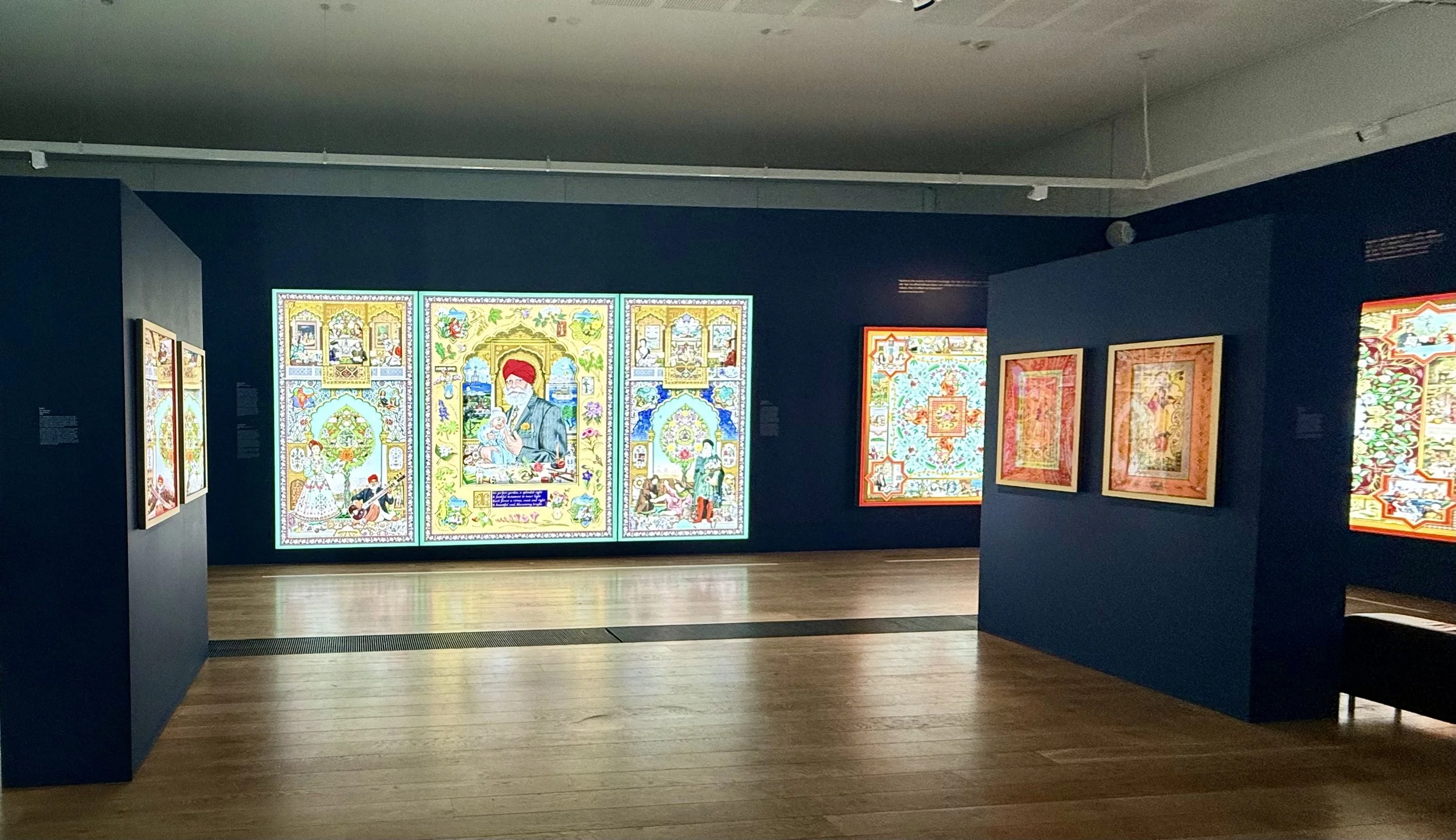
Exhibition View: The Singh Twins: Botanical Tales and Seeds of Empire. Photo credit: the author
2025 marked a pivotal moment for Global Majority exhibitions in London, evidenced by a pronounced increase in large-scale solo and group exhibitions featuring artists of colour. Major institutions including the Royal Academy, White Cube and Southbank Centre foregrounded Global Majority artists in headline programming. Blockbuster shows by established artists dominated institutional calendars in 2025: Kerry James Marshall: The Histories, Howardena Pindell: Off the Grid and Yoshitomo Nara. These exhibitions demonstrated clear public interest in Global Majority artists within London’s mainstream art scene. These blockbuster projects received critical acclaim and strong visitor numbers, indicating a notable shift in public appetite.
Yet these projects were predominately orchestrated by established institutions and weighted toward already canonised artists. While increased visibility is significant, the issue of sustained support for Global Majority artists remains unresolved. Are institutions merely incorporating Global Majority artists into pre-existing frameworks? Early announcements for 2026 indicate potential expansion, yet it remains to be seen whether this reflects a market trend or signals the beginning of substantive structural change.
Kerry James Marshall: The Histories @ The Royal Academy of Art (20 September 2025 – 18 January 2026)
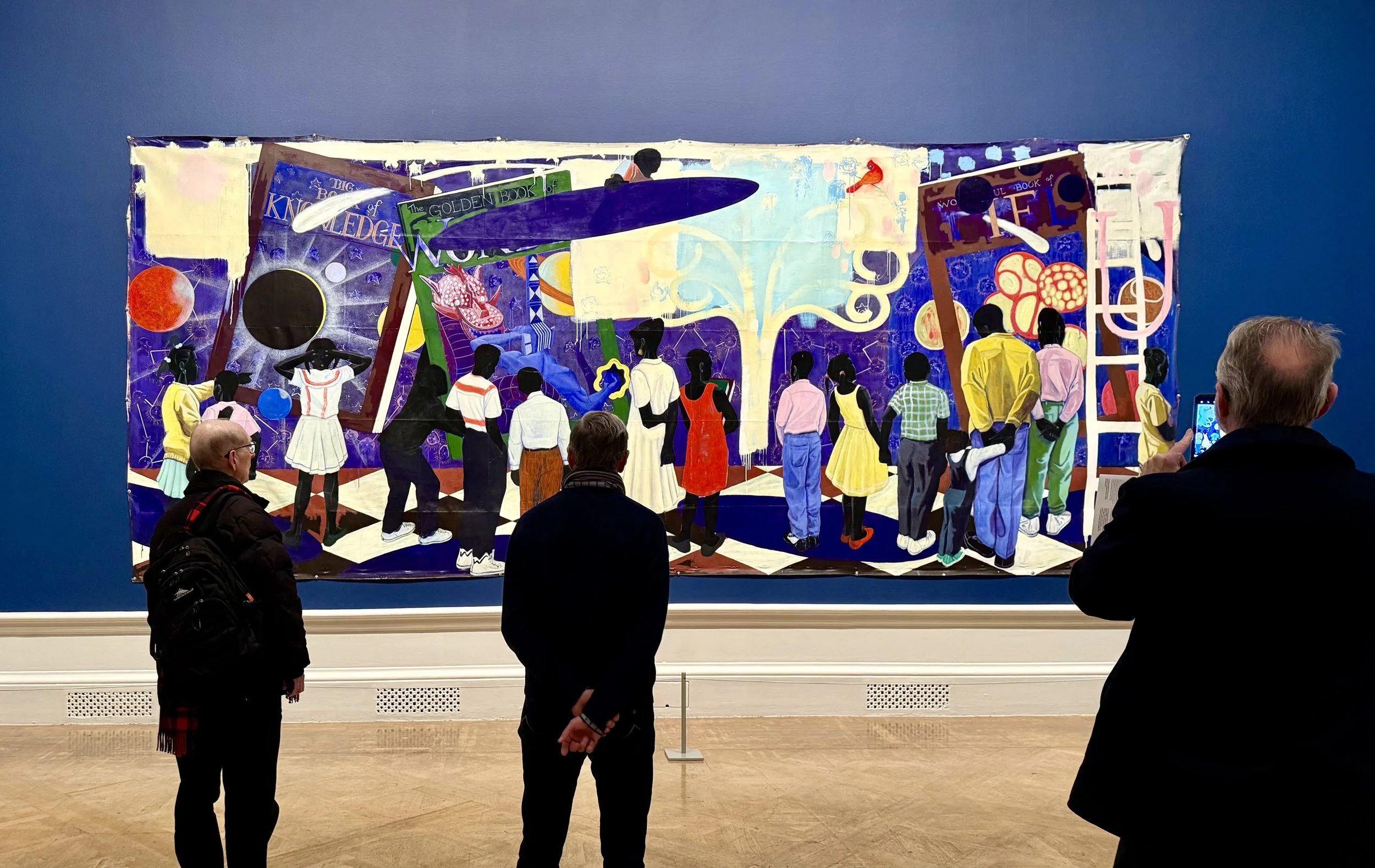
Exhibition View: Kerry James Marshall: The Histories. Photo credit: the authour
Marshall’s largest UK exhibition to date assembled over 70 works spanning four decades. Foregrounding Black American life through references to art history, civil rights, comics and science fiction, the exhibition consolidated Marshall’s position within the global canon. That this marked the RA’s first large-scale solo exhibition by a Black artist in its 250+ year history—a milestone that is celebratory yet indicting—underscored both progress and institutional delay. It also reflects a broader pattern: recognition arrives at the point of indisputability, once an artist’s significance is firmly established within international art-historical discourse.
Howardena Pindell: Off the Grid @ White Cube (21 November 2025 – 18 January 2026)
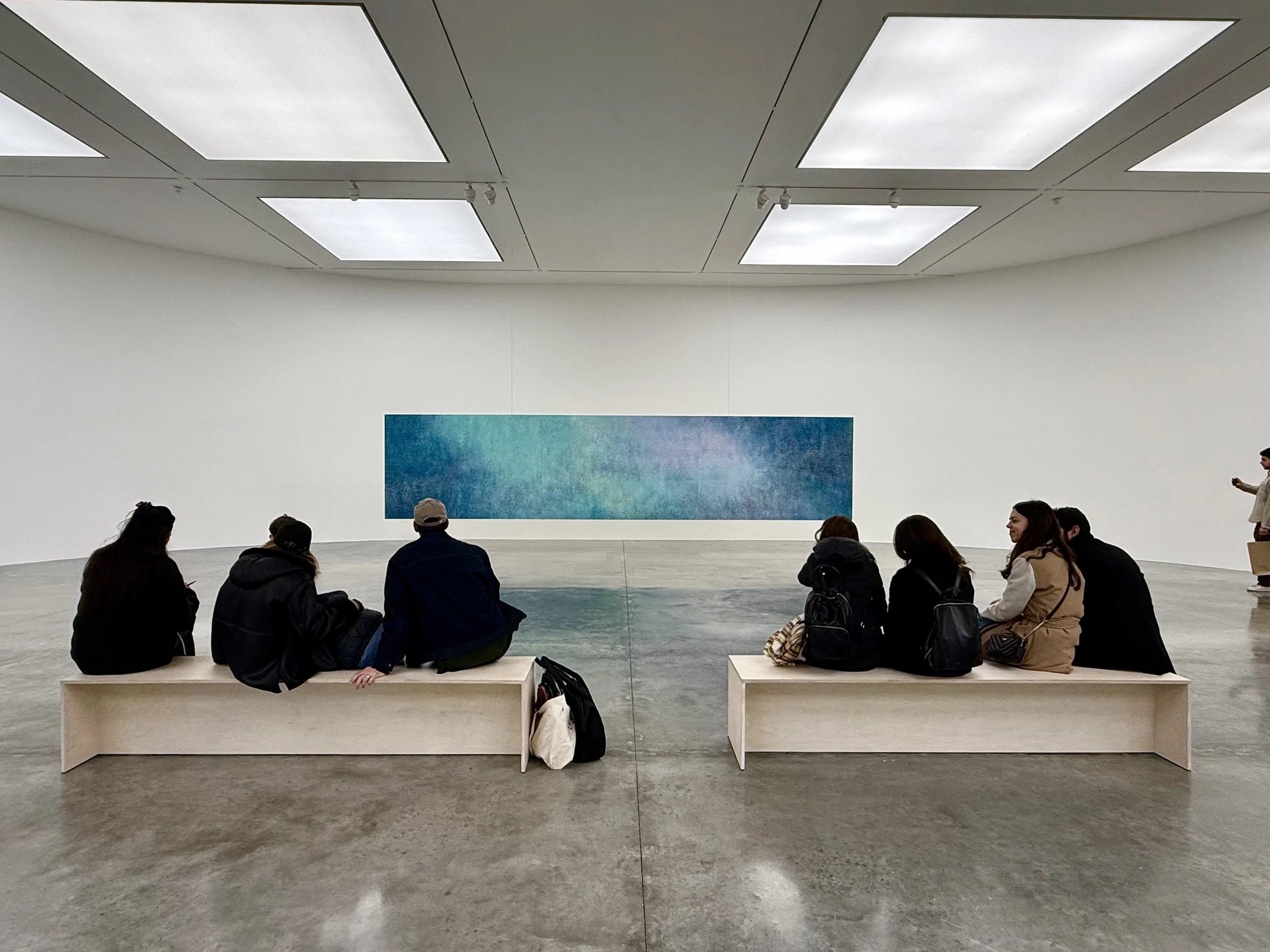
Exhibition View: Howardena Pindell: Off the Grid. Artwork: Oceanic Underwater, 2025. Photo credit: the author
This major, career-spanning retrospective reaffirmed Pindell’s conceptual and political rigour, featuring early abstract works alongside her seminal video Free, White and 21 (1980). While Pindell’s work was historically marginalised within mainstream American art history, her prominence in 2025 reflects the institutional embrace of a figure already canonised. The exhibition reads less as risk-taking than as overdue consolidation.
Yoshitomo Nara @ Hayward Gallery (10 June – 31 August 2025)
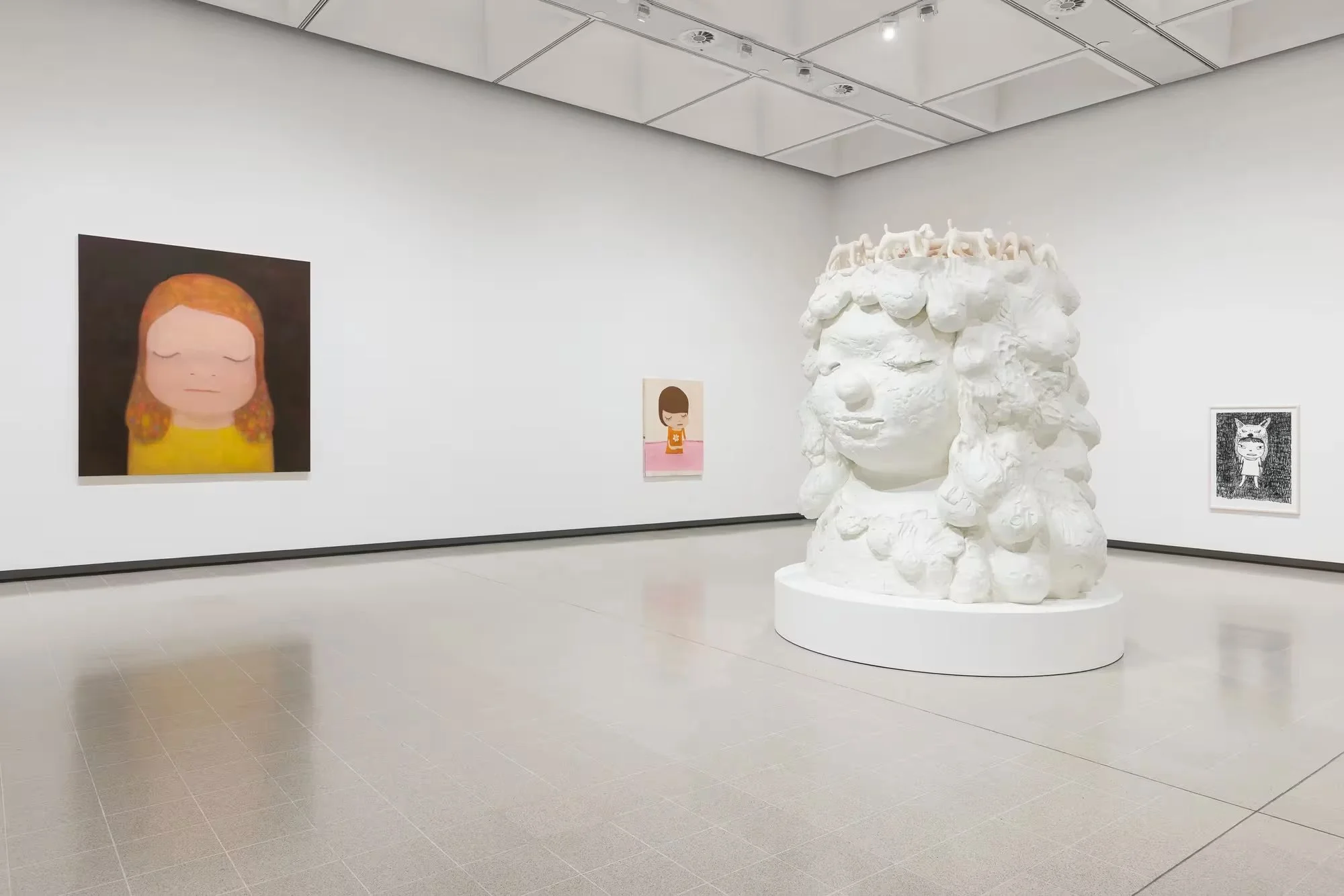
Installation view: Yoshitomo Nara. Photo: Mark Blower. Photo Credit: Courtesy the artist and the Hayward Gallery.
Nara’s London presentation reaffirmed the global market’s appetite for established non-Western artists. The largest ever European retrospective of one of Japan’s most celebrated artists, this exhibition consolidated a career spanning four decades, showcasing Nara’s globally recognisable figures. Far from representing institutional risk, the retrospective underscored how thoroughly Nara’s practice has been canonised within global contemporary art discourse; his once countercultural aesthetic is now a stable pillar of international museum programming.
Despite the increased visibility of Global Majority artists within major institutional exhibitions, a deeper issue persists: whether institutions prefer celebrating the established work of already canonised figures, rather than investing in younger, emerging artists. The critical issue, therefore, is whether institutions are willing to extend that same degree of ‘risk’ to emerging Global Majority artists.
Beyond the blockbuster retrospectives, a number of smaller-scale exhibitions offered more measured, yet structurally significant interventions.
A Story of South Asian Art: Mrinalini Mukherjee and Her Circle @ The Royal Academy (31 October 2025 - 24 February 2026)
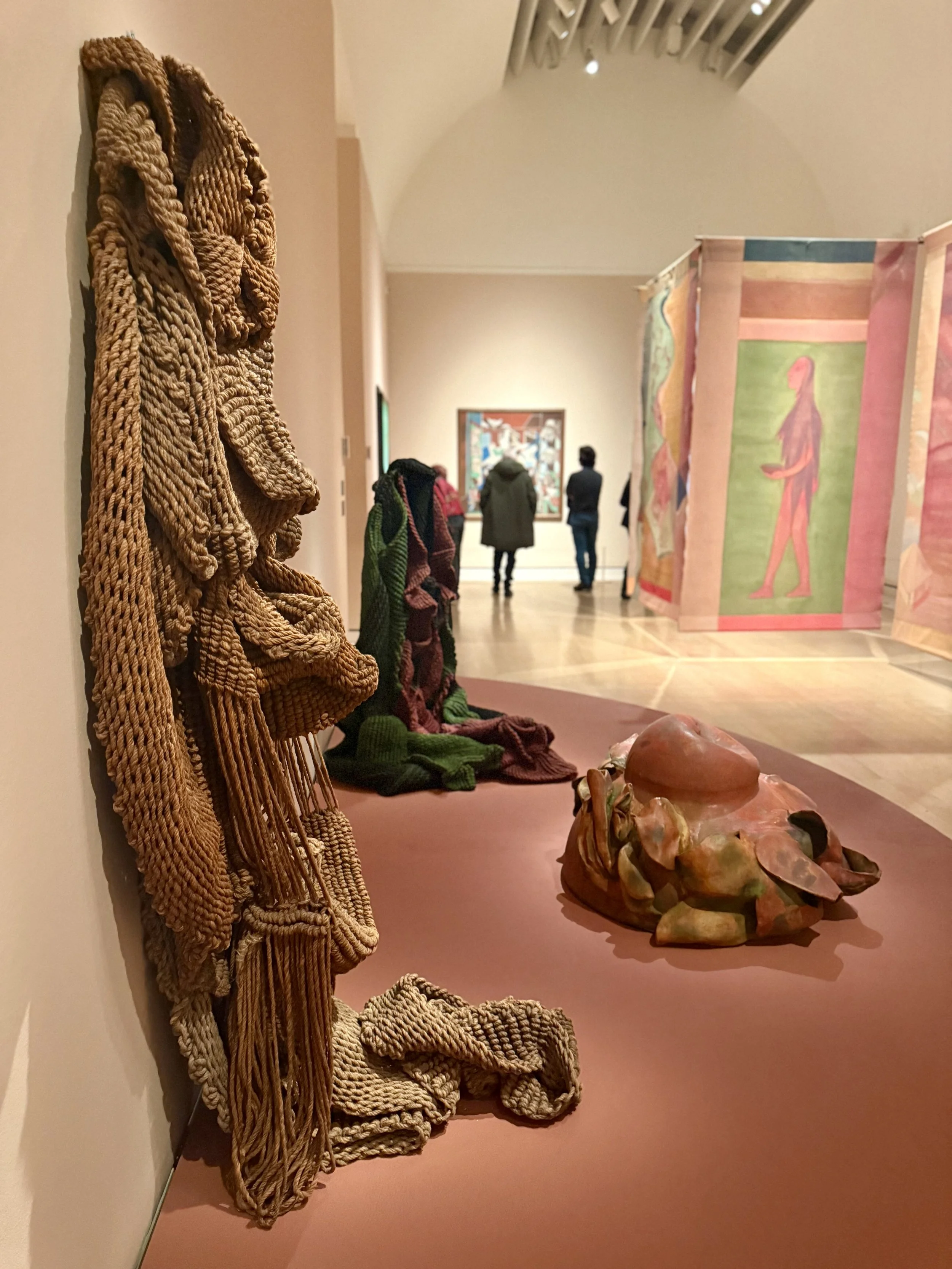
Exhibition View: A Story of South Asian Art: Mrinalini Mukherjee and Her Circle. Photo credit: the author
Positioned as both a retrospective and contextual study, this exhibition expanded the canon of post independence Indian art beyond painting-dominated narratives. Mukherjee’s monumental hemp fibre sculptures are materially rooted in craft traditions yet formally aligned with global modernism. By presenting her work alongside contemporaries, the exhibition framed South Asian modernism as internally diverse rather than stylistically unified.
The Singh Twins: Botanical Tales and Seeds of Empire @ Kew Gardens (1 October 2025 – 12 April 2026)
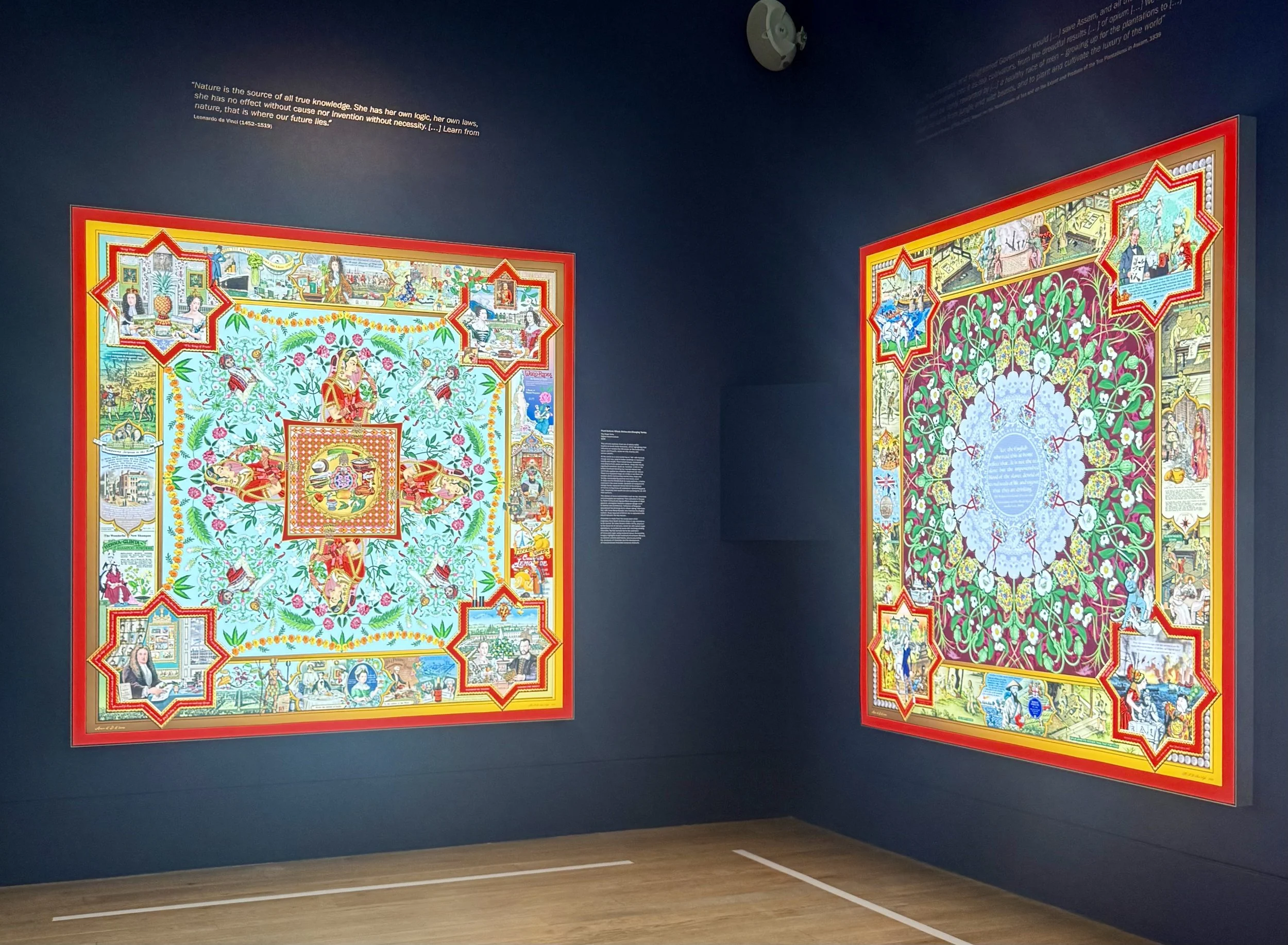
Exhibition View: The Singh Twins: Botanical Tales and Seeds of Empire. Photo credit: the author
Installed within the context of Kew’s botanical and imperial histories, The Singh Twins’ intricate narrative paintings interrogated Britain’s colonial trade networks and their ecological consequences. By embedding critique within a heritage site deeply entangled with imperial collecting, the exhibition activated its location as subject matter. The work’s fusion of Indo-Persian miniature traditions with contemporary political commentary foregrounded hybridity not as an aesthetic device but as historical testimony.
Cato @ Saatchi Yates (13 November 2025 – 14 January 2026)
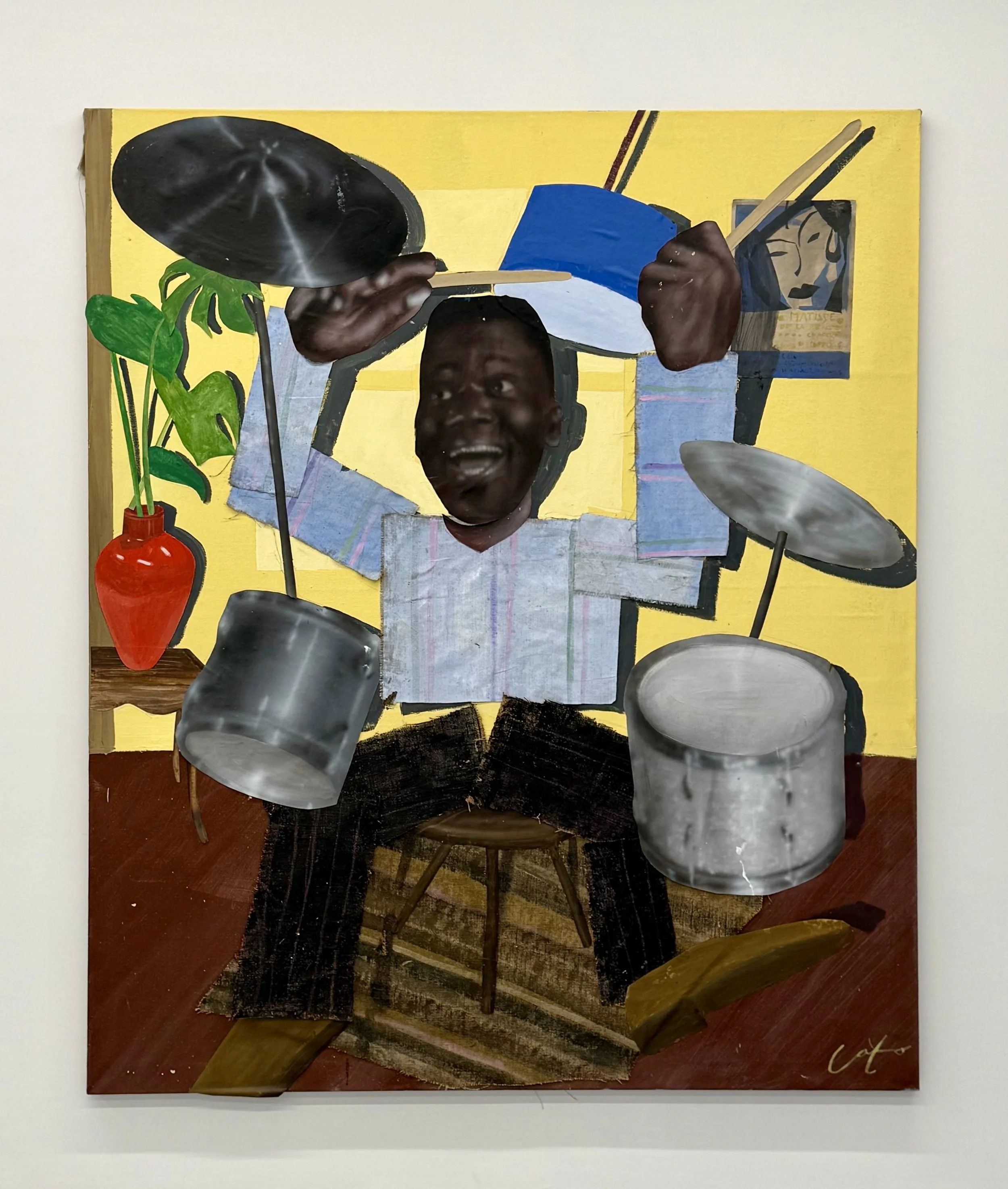
The Racket, 2025 Photo credit: the author
Toby Grant, known professionally as CATO, presented paintings that interrogate authorship and cultural inheritance through humour and appropriation, critically examining the commodification of Black figuration in contemporary painting. The show demonstrated how younger Global Majority artists navigate the intersections of influence, market expectations, and identity politics.
Joy Gregory: Catching Flies with Honey @ Whitechapel Gallery (8 October 2025 –1 March 2026)
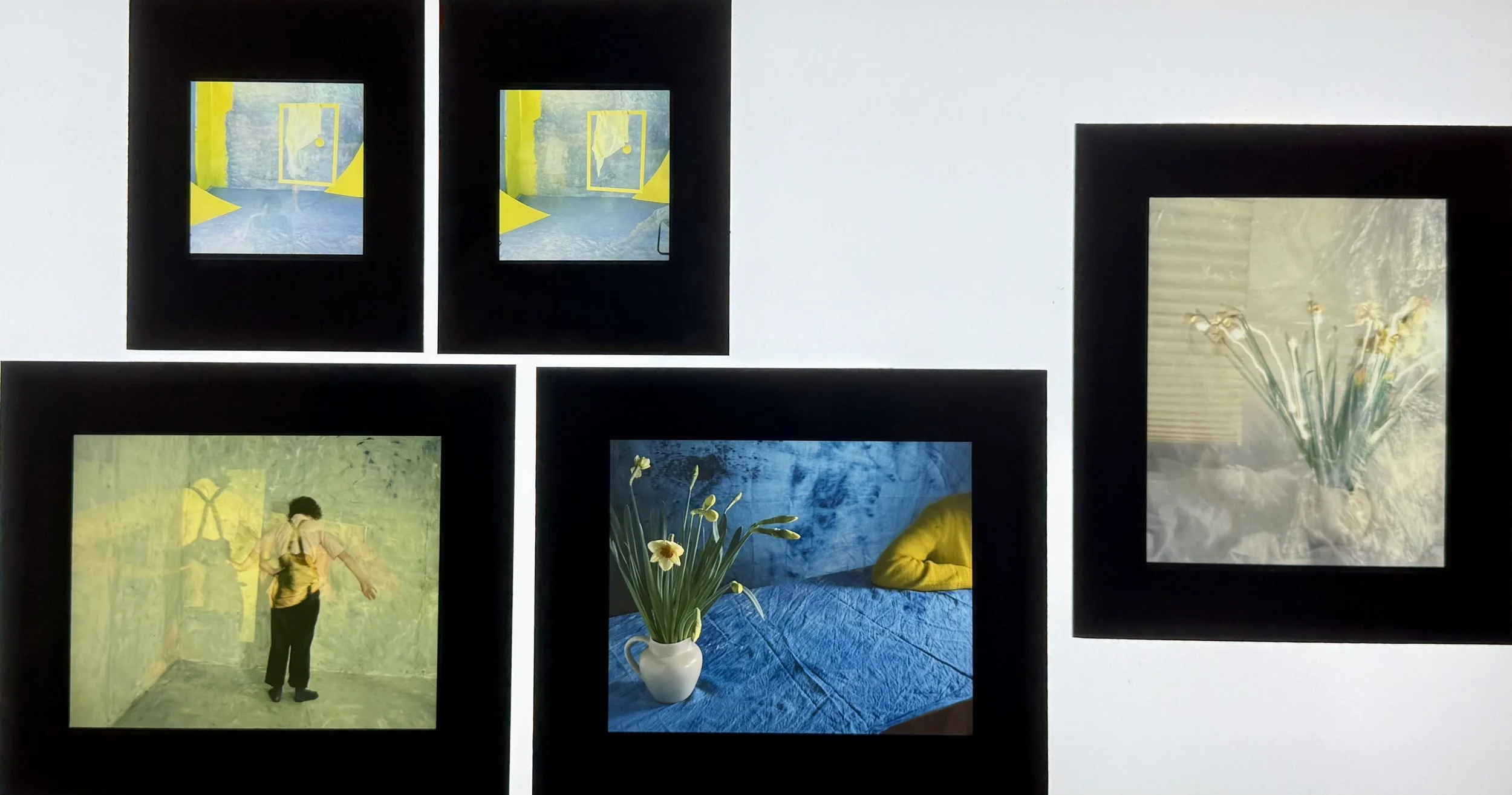
Exhibition view: Joy Gregory: Catching Flies with Honey. Photo Credit: the author
Gregory’s photographic practice has consistently interrogated representation, race, and the politics of visibility. This exhibition foregrounded archival strategies and portraiture to examine how Black British histories are constructed, erased and reclaimed. Its strength lies in its honest studies of Black life, demonstrating that institutional change often occurs through sustained engagement rather than through overt gestures.
More telling than the blockbuster retrospectives were several group exhibitions that foregrounded collective practice and emerging voices.
I Still Dream of Lost Vocabularies @ Autograph (10 Oct 2025 – 21 March 2026)
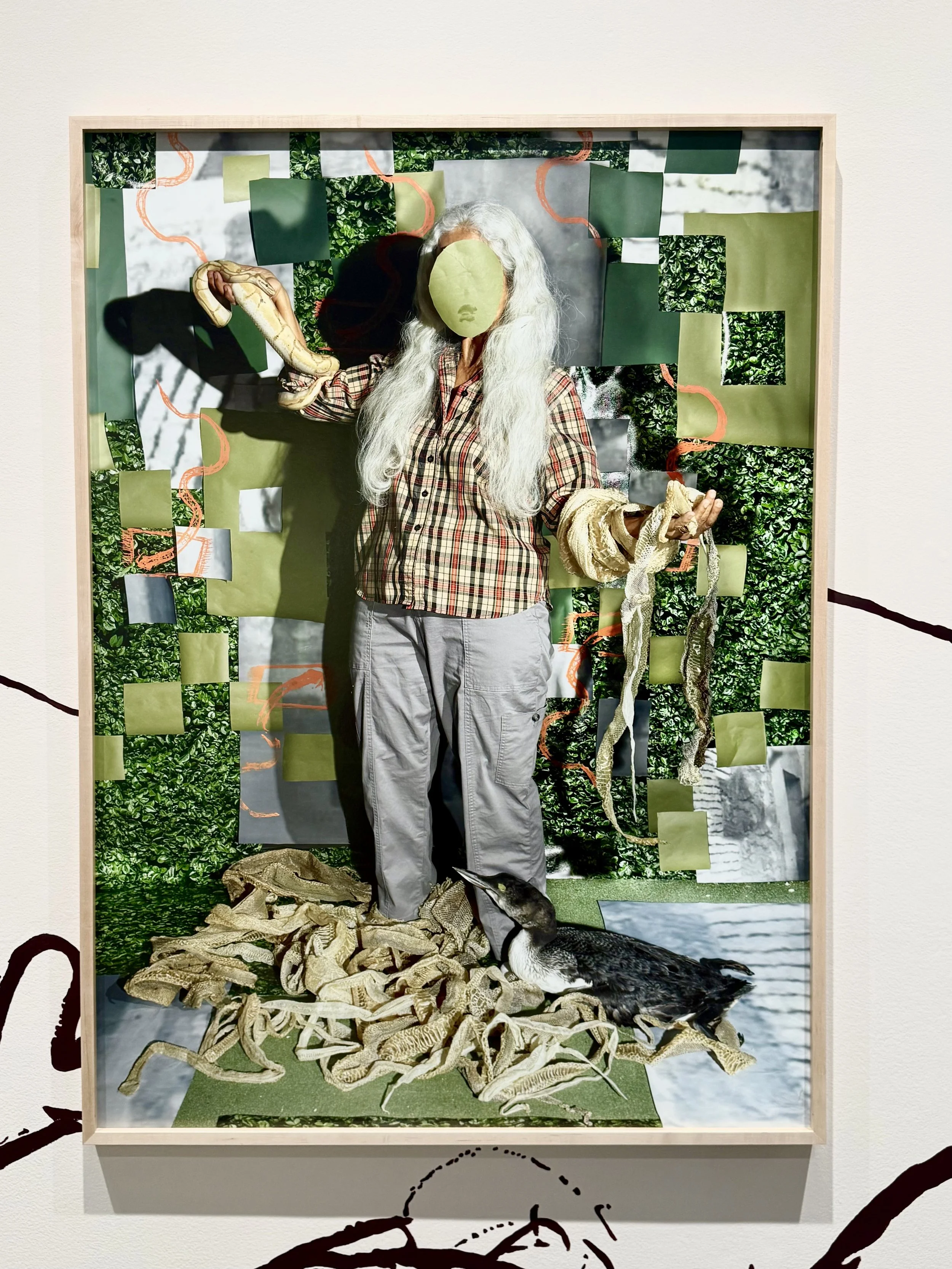
Sheida Soleimani, Magistrate (from the series Flyways), 2024. Photo credit: the author
I Still Dream of Lost Vocabularies connected artists through materiality, uniting thirteen international artists, including Qualeasha Wood and Sheida Soleimani, who work across collage and assemblage. The exhibition wove together diverse narratives to interrogate social histories, cultural erasure, migration, gender, memory, and reparative storytelling—positioning collage as both method and metaphor. Its strength resided not in individual prominence but in its collective structure, prioritising dialogue over singular authorship.
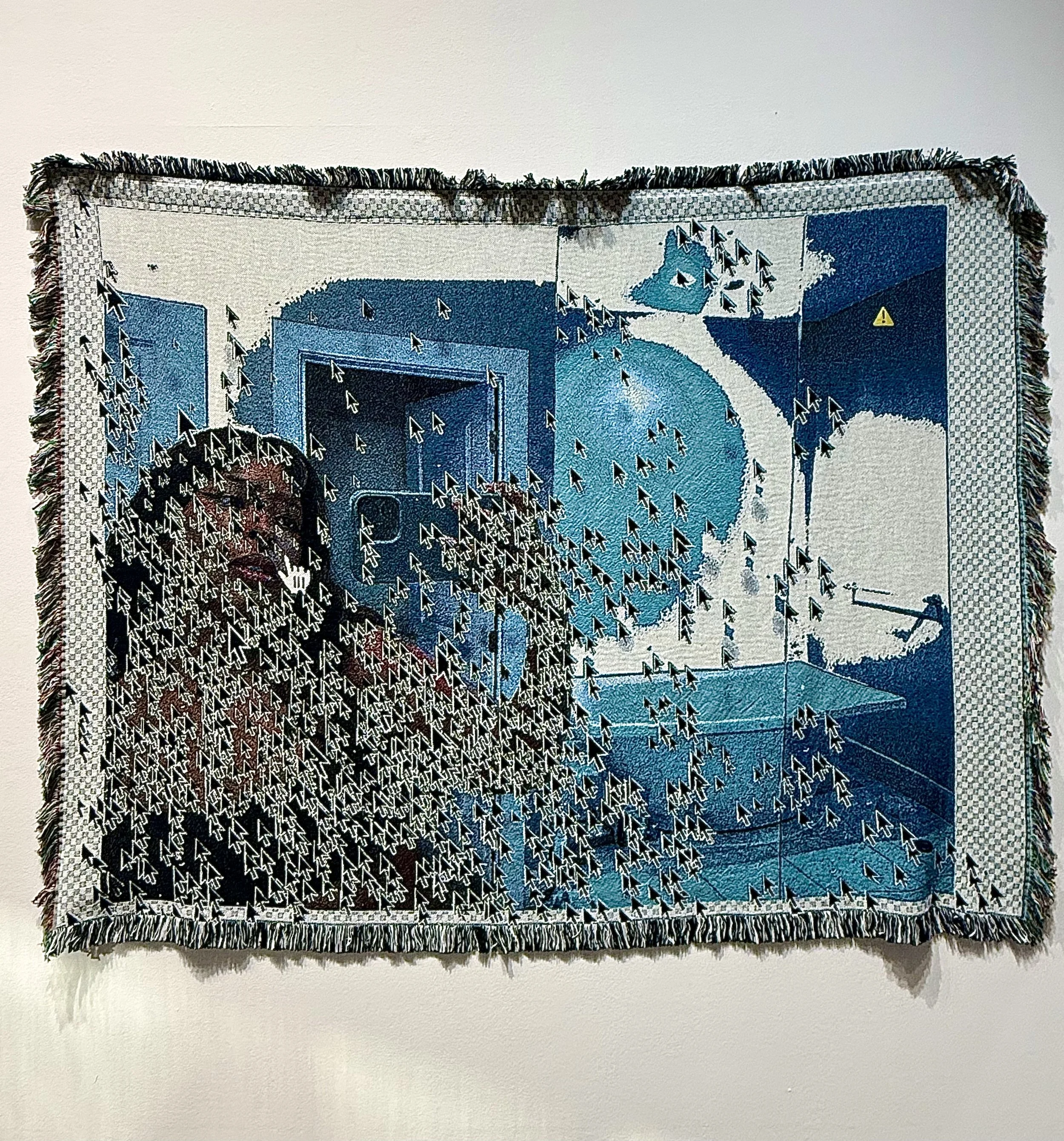
Qualeasha Wood, a flaw in my code, 2025. Photo Credit: the author
The Stories We Tell @ Victoria Miro (14 November 2025 – 17 January 2026)
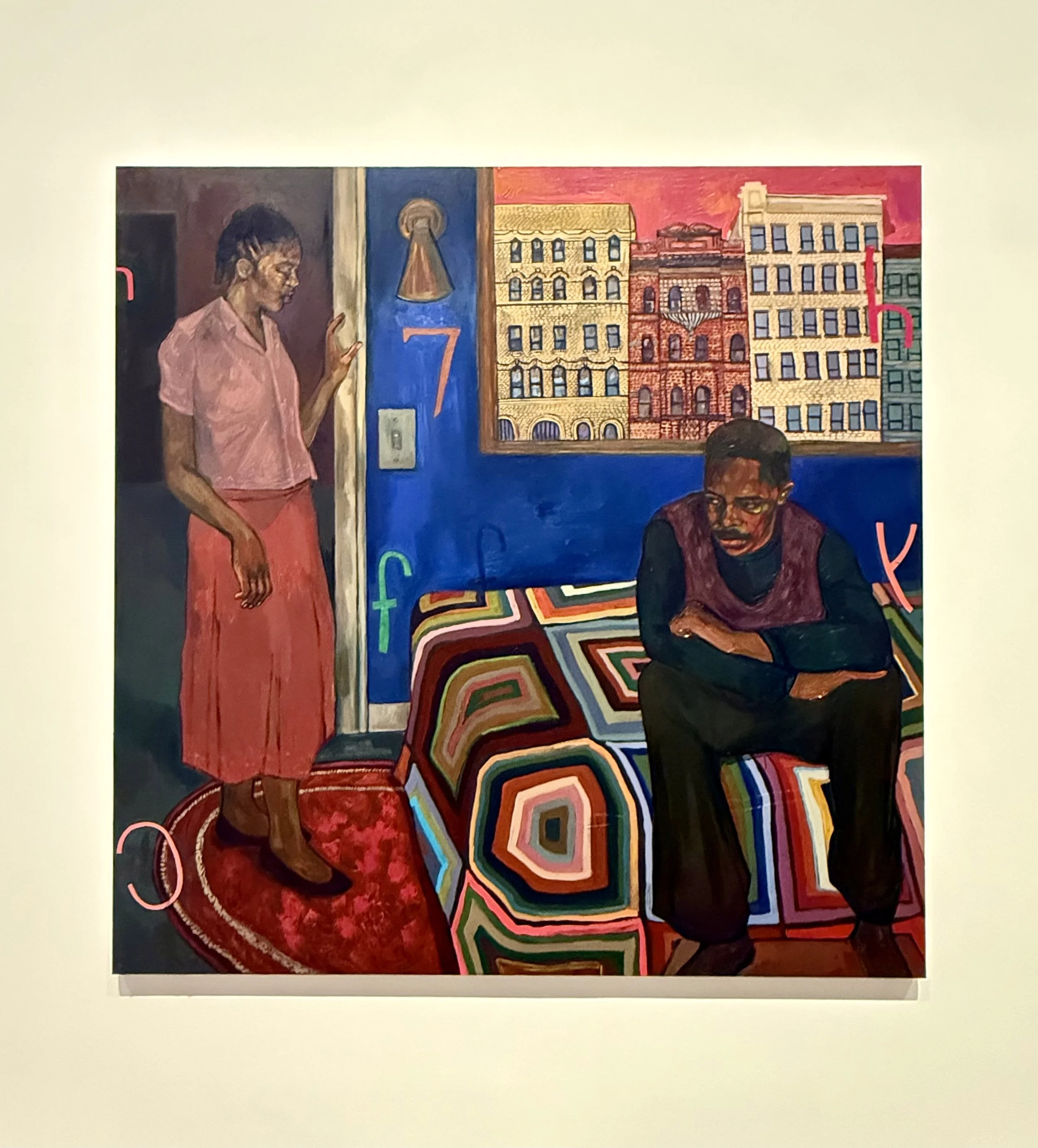
Khalif Tahir Thompson, Pink Clouds, 2025 Photo Credit: the author
The Stories We Tell introduced three young artists—Tidawhitney Lek, Emil Sands, and Khalif Tahir Thompson, all born in the 1990s—providing one of the few large-scale platforms for emerging Global Majority artists within a commercial gallery context. Although modest in scale relative to blockbuster institutional retrospectives, its generational focus suggests potential sites for future structural change. The exhibition explored memory, identity and family life, foregrounding autobiographical and personal narratives through figurative representation.
Following these exhibitions, a crucial distinction emerges. Shows such as I Still Dream of Lost Vocabularies and The Stories We Tell showcased young and emerging artists, where more radical shifts might emerge through collective structures, intergenerational dialogue, and investment in younger practices. However, these platforms remain modest in scale when compared to blockbuster retrospectives that continue to dominate critical and market attention. This pattern reinforces a cycle in which arts organisations champion an already established name, the ‘sure thing,’ rather than assume institutional risk by investing in the work of young and emerging practices.
These exhibitions represented a diverse, but not exhaustive, range of Global Majority artists at the forefront of the London art world. We included some honourable mentions who also contributed to these important dialogues.
Danielle Brathwaite-Shirley: The Delusion @ Serpentine Gallery (30 September 2025 – 18 January 2026)
Brathwaite-Shirley’s work extends beyond exhibition-making into digital activism, archiving and interactive storytelling centred on Black trans lives. By requiring audiences to actively participate in narrative decision making, the exhibition disrupted passive spectatorship and repositioned institutional space as a site of accountability.
Christina Kimeze: Between Wood and Wheel @ South London Gallery (31 January – 11 May 2026)
Kimeze’s solo exhibition offered one of the year’s most significant platforms for a younger London-based artist. Unlike retrospective models, this exhibition represented investment in an evolving practice, suggesting that meaningful institutional change may lie in early-stage support rather than post-canonisation celebration.
Emily Kam Kngwarray @ Tate Modern (10 July 2025 – 11 January 2026)
Kngwarray’s retrospective at Tate Modern repositioned her work not as an ethnographic artefact but as a modernist abstraction of global significance.
Nigerian Modernism @ Tate Modern (8 October 2025 – 10 May 2026)
This landmark exhibition situated Nigerian art movements, including artists such as Ben Enwonwu and Uche Okeke, within global modernist discourse rather than regional specificity. By reframing Nigerian modernism, Tate contributed to dismantling Eurocentric art-historical narratives.
While 2025 saw an undeniable increase in exhibitions centred on Global Majority artists, much of the large scale institutional programming remained focused on established, already canonised figures. While these retrospectives are necessary and overdue, they are also safe. 2025 demonstrated that the most compelling exhibitions were those that moved beyond visibility and toward demonstrable proactive institutional forward thinking.
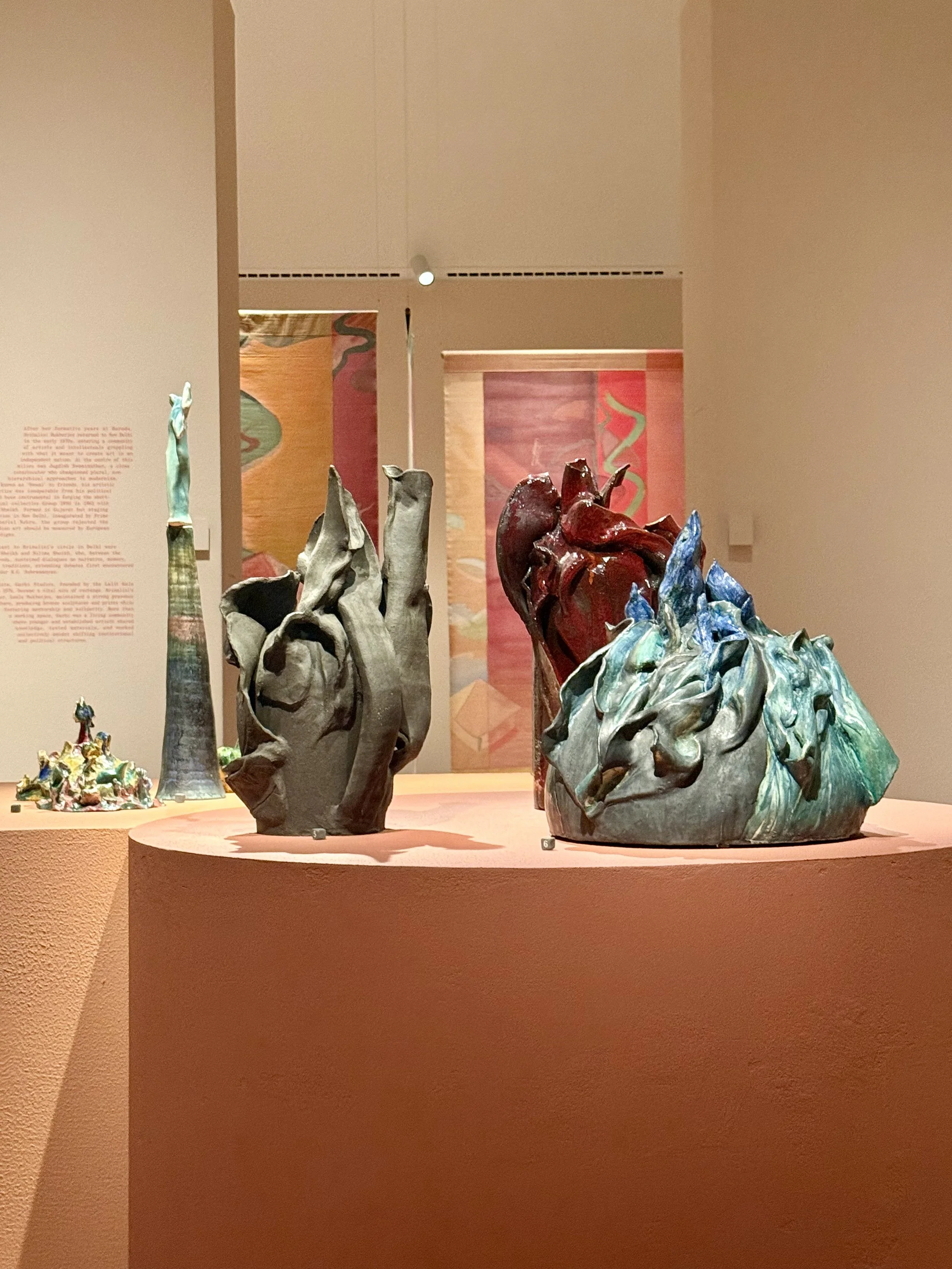
Exhibition View: A Story of South Asian Art: Mrinalini Mukherjee and Her Circle. Photo credit: the author
In 2026, exhibitions by artists including Kwaku Yaro, Umi Ishihara and KV Duong will test whether institutions are prepared to extend ‘risk’ beyond retrospective celebration and toward sustained investment. Equal representation will not be measured by headline retrospectives, but by the consistency with which emerging artists are platformed, collected and supported. We included some of the best solo and group shows to keep an eye on this year.
Kwaku Yaro: Son of Man, Can These Bones Live? @ Gallery 1957 (22 January 2026 – 7 March 2026)
Yaro’s figurative paintings interrogate masculinity, spirituality and diasporic identity. His London solo presentation marks a growing transnational dialogue between West African and UK art scenes. Importantly, this exhibition foregrounds an artist mid-career rather than post-canonisation — precisely the type of investment that suggests structural evolution.
Umi Ishihara: Nocturnal Melody @ Gasworks (22 January 2026 – 22 March 2026)
Ishihara’s practice bridges performance, music and immersive installation. Her forthcoming exhibition promises to challenge traditional object-based display models, foregrounding sensorial experience and interdisciplinary exchange—expanding what representation can look like beyond painting-led programming.
KV Duong: Where Wound Becomes Water @ Pippy Houldsworth Gallery (30 January - 14 March 2026)
Duong’s materially layered paintings explore displacement, memory and inherited trauma. Exhibiting within a commercial London space, this show tests whether market infrastructure can sustain nuanced diasporic narratives without aesthetic flattening.
New Contemporaries @ South London Gallery (30 January – 12 April 2026)
As a long-standing platform for emerging UK-based artists, New Contemporaries remains one of the few institutional structures consistently supporting artists at formative stages of their careers. Its 2026 iteration will be closely watched: whether it meaningfully reflects demographic shifts within UK art education will signal the depth of systemic change beyond headline retrospectives.
Rising Voices: Contemporary Art from Asia, Australia and the Pacific @ V&A (16 May 2026 – 31 December 2026)
Framing contemporary practices across Asia and the Pacific within a design and decorative arts context, the exhibition offers the V&A an opportunity to interrogate its colonial collecting histories. Whether this presentation critically engages with provenance and power structures, will determine whether it functions as a celebration or a genuine institutional reflection.
The question is no longer whether Global Majority artists are gaining visibility; it is whether institutions are prepared to redistribute risk. If 2025 was the year of recognition, 2026 must be the year of commitment—commitment to emerging artists, to structural investment, and to sustained change beyond celebratory milestones.
Arielle Etheridge
Agents of Change Editor, MADE IN BED
Disclaimer: The views, thoughts, and opinions expressed in MADE IN BED are solely those of the individual authors and not those of MADE IN BED magazine or of Sotheby’s Institute of Art.