

The Provenance Premium: Selling a Story
After a captivating 20 minutes of bidding at Sotheby’s, the hammer finally fell marking the record breaking sale of Gustav Klimt’s Portrait of Elisabeth Lederer for $236.4 million. The historic sale at the Lauder auction made headlines in November as Portrait of Elisabeth Lederer became the most expensive work of modern art and the second most expensive piece of art ever sold at auction. But what can we learn about art market value drivers from massive success stories like this?
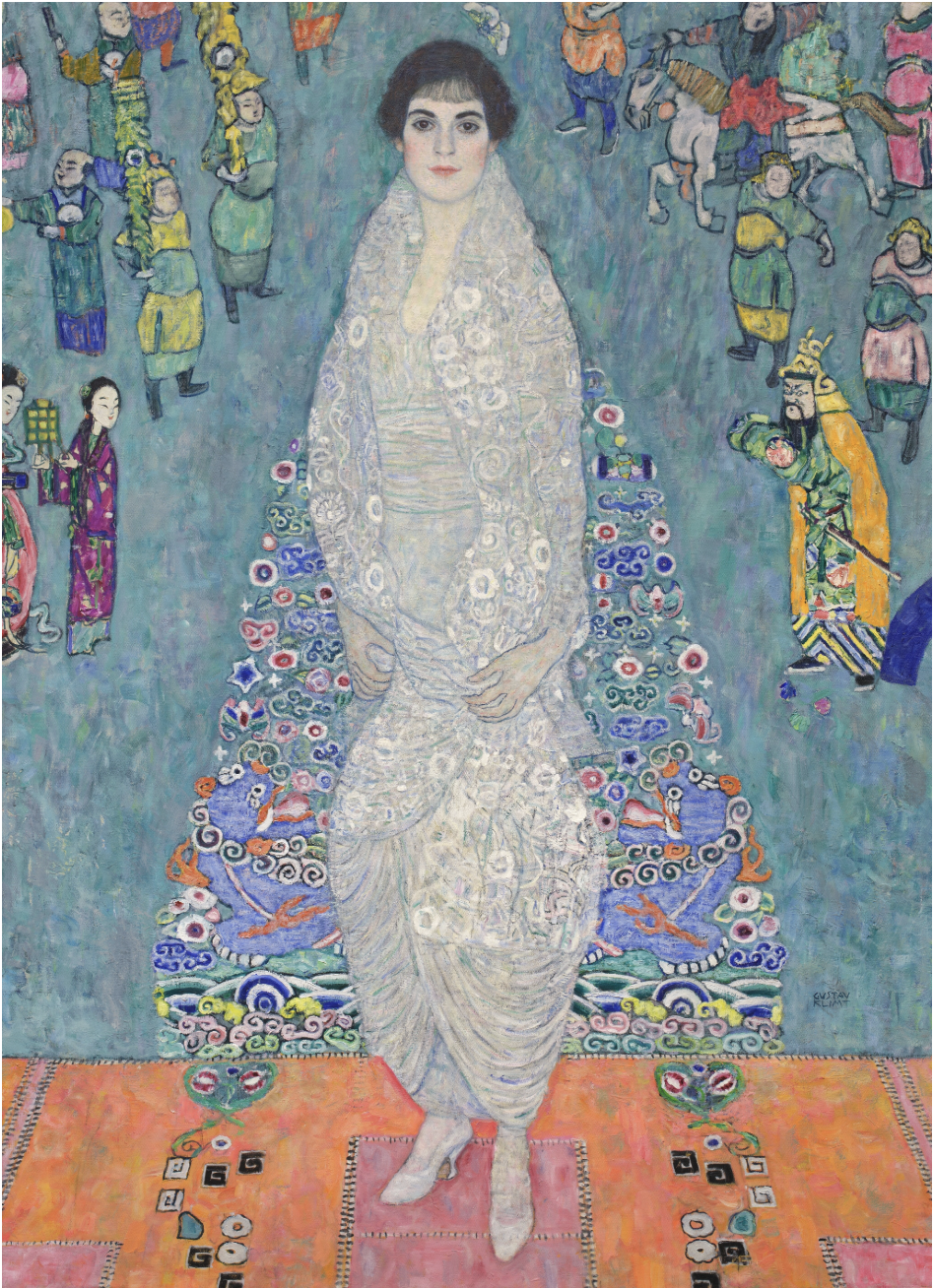
Gustav Klimt, Bildnis Elisabeth Lederer (Portrait of Elisabeth Lederer), 1914-1916, Courtesy of Sotheby's.
So many factors contribute to value in the art market that it can be difficult to analyze what differentiates a record breaking piece from its peers. Yet beyond condition, rarity, and market timing, provenance emerges as a defining force. More than documentation, provenance acts as a narrative. Even in a time where collectors are increasingly looking at art as an investment rather than for purely collection purposes, the story that provenance tells carries great value.
When defined in the traditional sense provenance is simply an artwork’s history of ownership. While this may seem straightforward, the numerous studies and researchers dedicated to analyzing provenance indicate otherwise. Provenance was tracked historically as a means of verifying authenticity, but came to the forefront of the art world after World War II as a tool for restitution of Nazi looted art. It has since expanded in scope to include research into the colonial era and various forms of illegal trafficking. Aside from spurring its own field of research, provenance has led to the adoption of new technologies in the art world including blockchain-based tools to certify authenticity and ownership developed by companies like Fairchain and Arcual. Beyond its educational and historical value, provenance carries significant legal, ethical, and financial implications in today’s art market.
It is easy to see how a chain of ownership is important to the value of a work. It helps verify the piece is by a particular artist and it ensures the work is being purchased legally and ethically, preventing ownership debates down the line. However while the basic chain of ownership that provenance traditionally provides is crucial in the art world, there is another component of provenance that is harder to clearly define: the story of a work. November’s Lauder auction and the Klimt sale in particular is a prime example of how this aspect of provenance can create immense enthusiasm around a piece.
Sotheby's took full advantage of this when marketing the collection which included a number of high profile pieces belonging to Estee Lauder heir Leonard Lauder who died in June 2025. The crown jewel of the collection was Gustav Klimt’s Portrait of Elisabeth Lederer. The work was commissioned by Elisabeth’s parents Serena and August Lederer who were Klimt’s most important patrons. It was initially hung in the Lederer family home before being looted by Nazis in 1938. As a Jewish woman, Elisabeth faced extreme persecution under the Nazi regime. To protect herself, she leveraged her family’s close relationship with Klimt and claimed him as her biological father thereby positioning herself as ‘Aryan’.
After the war, the portrait was restituted to Elisabeth’s brother Erich, who had fled to Switzerland. Erich owned the portrait for much of his life before selling it to Serge Sabarsky gallery in 1983. Shortly thereafter it was purchased by the Lauder family and remained in their collection until this past November. Opening at $130 million, the piece ultimately sold for a staggering premium inclusive $236.4 million, making it the most expensive work of modern art ever sold at auction.
But what makes this particular piece so special? Of course there are many factors that contribute to the value of a piece. But for pieces that sell at astronomical prices is a particularly compelling provenance a common thread?
By comparing Portrait of Elisabeth Lederer to a comparable work with a lesser provenance we can understand the provenance premium attributable to this sale. Lady with a Fan provides a useful comparison: a late-career Klimt whose provenance lacks the layered narrative surrounding Portrait of Elisabeth Lederer. The portraits were both made toward the end of Klimt’s life, with Portrait of Elisabeth Lederer created between 1914-1916 and Lady with a Fan created between 1917-1918. While both works depict women and draw on Asian artistic motifs there are a number of key differences. For one, the sitter in Lady with a Fan is unidentified. By comparison, we have a lot of detail surrounding Lederer and her family’s rich backstory. Additionally, Lady with a Fan has a less compelling chain of ownership and the family selling it was unidentified. In contrast, Portrait of Elisabeth Lederer tells a harrowing story of a family close to Klimt escaping Nazi persecution. In addition, the esteemed Lauder family owned the portrait and the sale marked the historic opening of Sotheby's new Manhattan headquarters.
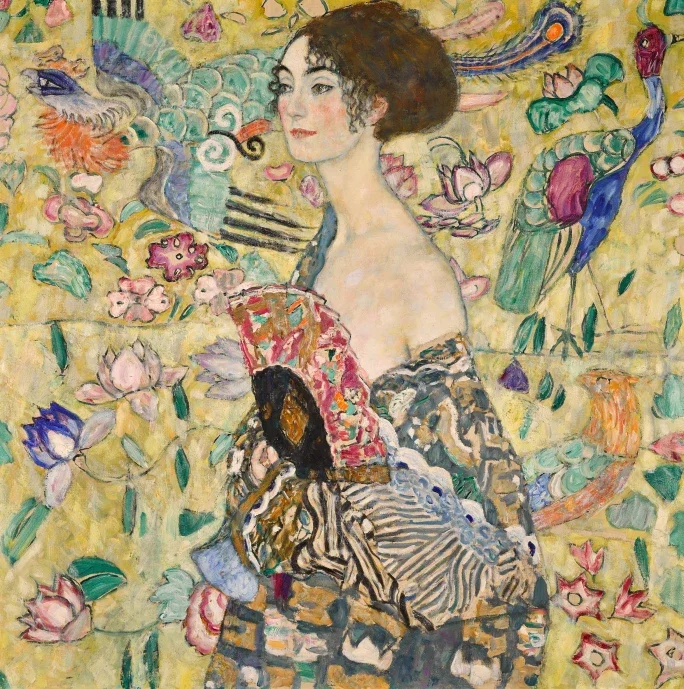
Gustav Klimt, Dame mit Fächer (Lady with a Fan), 1916-1918, Courtesy of Sotheby's.
In 2023, Lady with a Fan sold for £85.3 million inclusive of premium which was $108.4 million at the time. Adjusted for inflation this would be around $115 million at the time of the Lauder auction in November. Portrait of Elisabeth Lederer commanded roughly a 100% premium to this. Of course, we can’t necessarily attribute this premium to provenance alone. Art values can be impacted by many other factors including date of creation, aesthetic value, condition of the work and shifting market trends that favor certain artists or styles. However, by comparing two works sold only two years apart, painted in the same era, with a similar style and similar subject matter we are attempting to control for as many alternate factors as possible.
The Lauder sale is not the only instance of this type of premium—in fact this is prevalent in the art world. In record breaking sales, a unique and interesting backstory is a common feature. The other two paintings in the top three most expensive works ever sold at auction have similarly intriguing backstories. Salvator Mundi’s fame and dramatic, albeit questionable provenance was almost certainly a key value driver leading it to sell for over $450 million. Similarly, Shot Sage Blue Marilyn gets its name from an incident where performance artist Dorothy Podber shot a gun at a stack of Warhol’s works in his studio. The piece ended up selling for over $195 million in 2022.
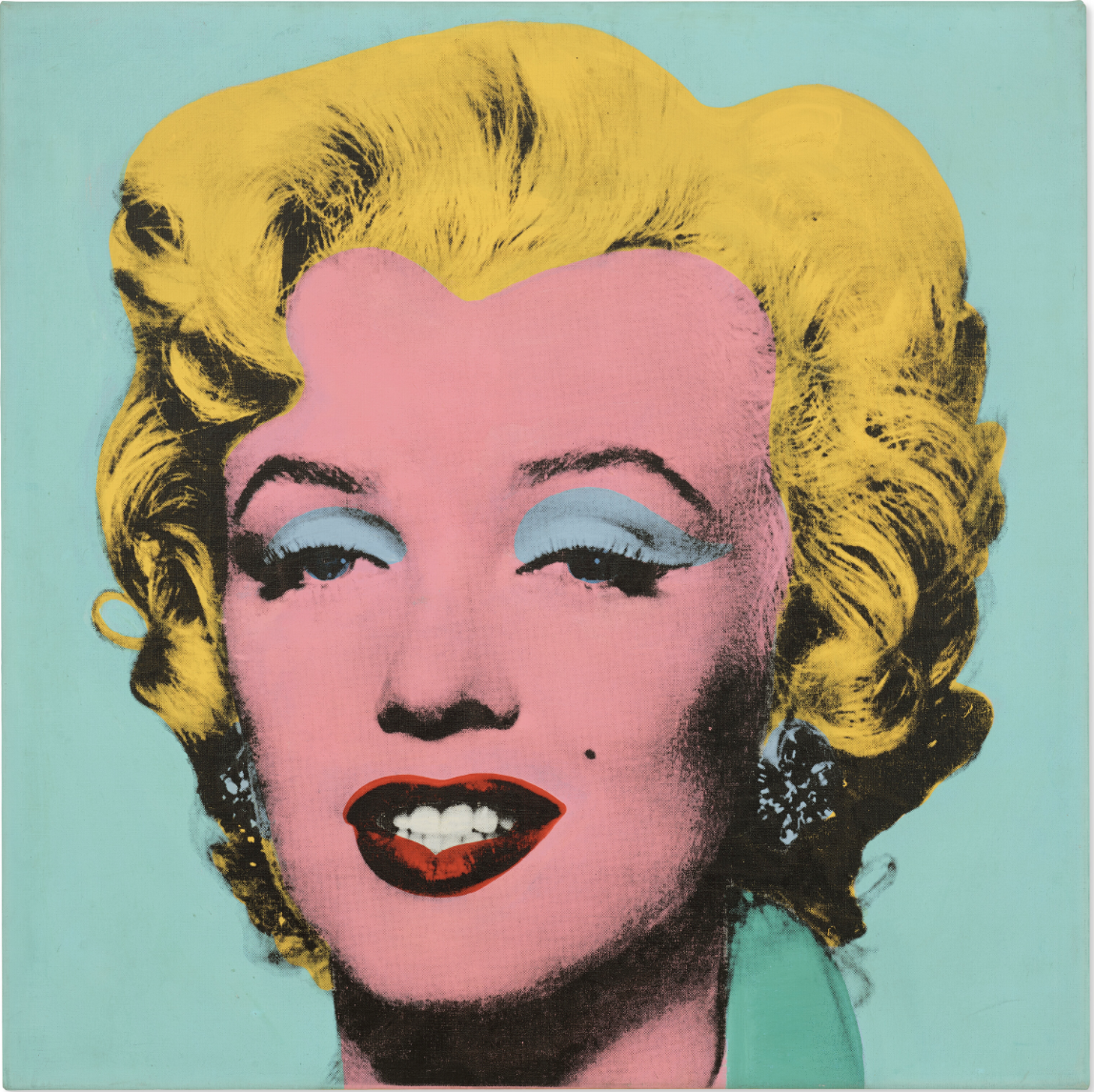
Andy Warhol, Shot Sage Blue Marilyn, 1964, Courtesy of Christie’s.
Given the opacity of the art market it is difficult to quantify provenance’s exact financial impact. However, record-breaking sales consistently reveal that value is not driven by aesthetics or rarity alone, but by the narratives that surround a work—something auction houses capitalize on. This trend underscores how storytelling is often amplified through strategic marketing and has become one of the most powerful value drivers in an otherwise opaque art market.
Caroline Carey
Art Markets Editor, MADE IN BED
Disclaimer: The views, thoughts, and opinions expressed in MADE IN BED are solely those of the individual authors and not those of MADE IN BED magazine or of Sotheby’s Institute of Art.