

BUTCHERED At Sea: Anish Kapoor and Climate Activism
Art has long served as a powerful vehicle for activism, but recently it has taken bold new forms. Passionate creators challenge the fossil fuel industry and other major contributors to climate change through works strategically located en plein air. Traditionally, such works are displayed in public spaces, inviting audiences to engage, reflect, and respond in real time. Yet, on 13 August 2025, Sir Anish Kapoor’s BUTCHERED was controversially installed on Shell’s Skiff platform in the middle of the North Sea, 45 nautical miles off the coast of Norfolk. As ‘the world’s first artwork to be installed at an active offshore gas site’, Kapoor demonstrated that impact does not require physical proximity to send a powerful message. Created in collaboration with Greenpeace, its daring placement and striking originality captured global attention, sparking critical conversations and debate on the oil and gas industries’ negative contributions to climate change.
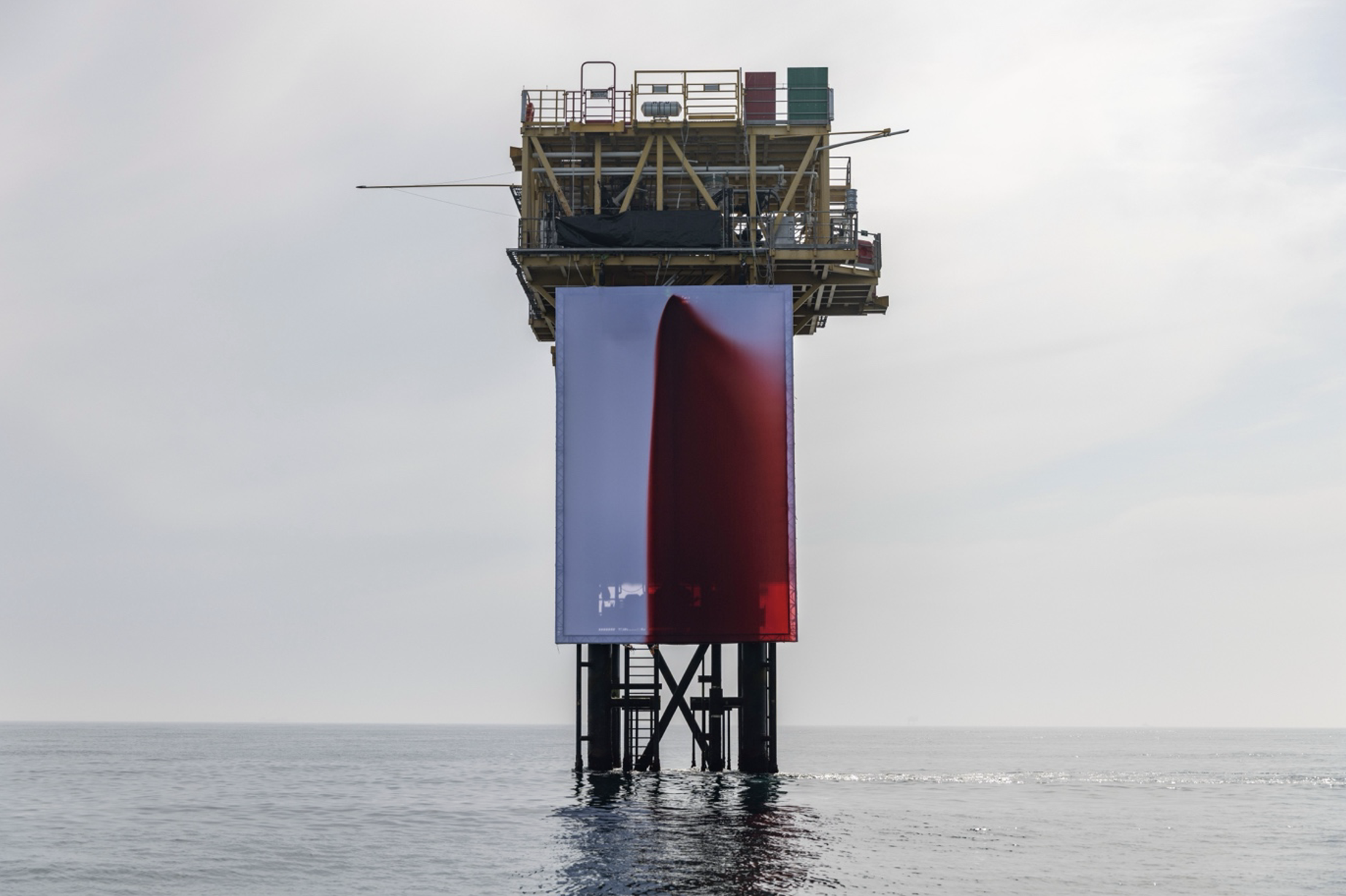
Anish Kapoor, Installation view of BUTCHERED (2025) in the North Sea. 12m x 8m. Photo courtesy of Andrew McConnell / Greenpeace.
Sir Anish Kapoor (b. 1954) is a British-Indian installation artist and sculptor whose practice first gained international recognition in the 1980s through biomorphic sculptures incorporating natural materials. Over time, he expanded his practice to include stone, developing a sustained interest in the manipulation of form, space, and perception. His growing reputation was further recognised upon being awarded the Turner Prize in 1991. More recently, Kapoor has become renowned for blurring the boundaries between art and architecture, receiving major commissions for striking large-scale installations in cities such as Paris, Berlin, and New York. While he is not typically labelled an activist, Kapoor has consistently engaged with significant political and social issues through his art.
Measuring 12 x 8 metres, BUTCHERED reflects a new direction in his practice: an urgent commentary on environmental concerns. Although this particular work was not publicly accessible, its message remains clear: fossil fuel companies must be held accountable for the environmental damage they have caused, and government intervention is essential to ensure responsibility and remediation.
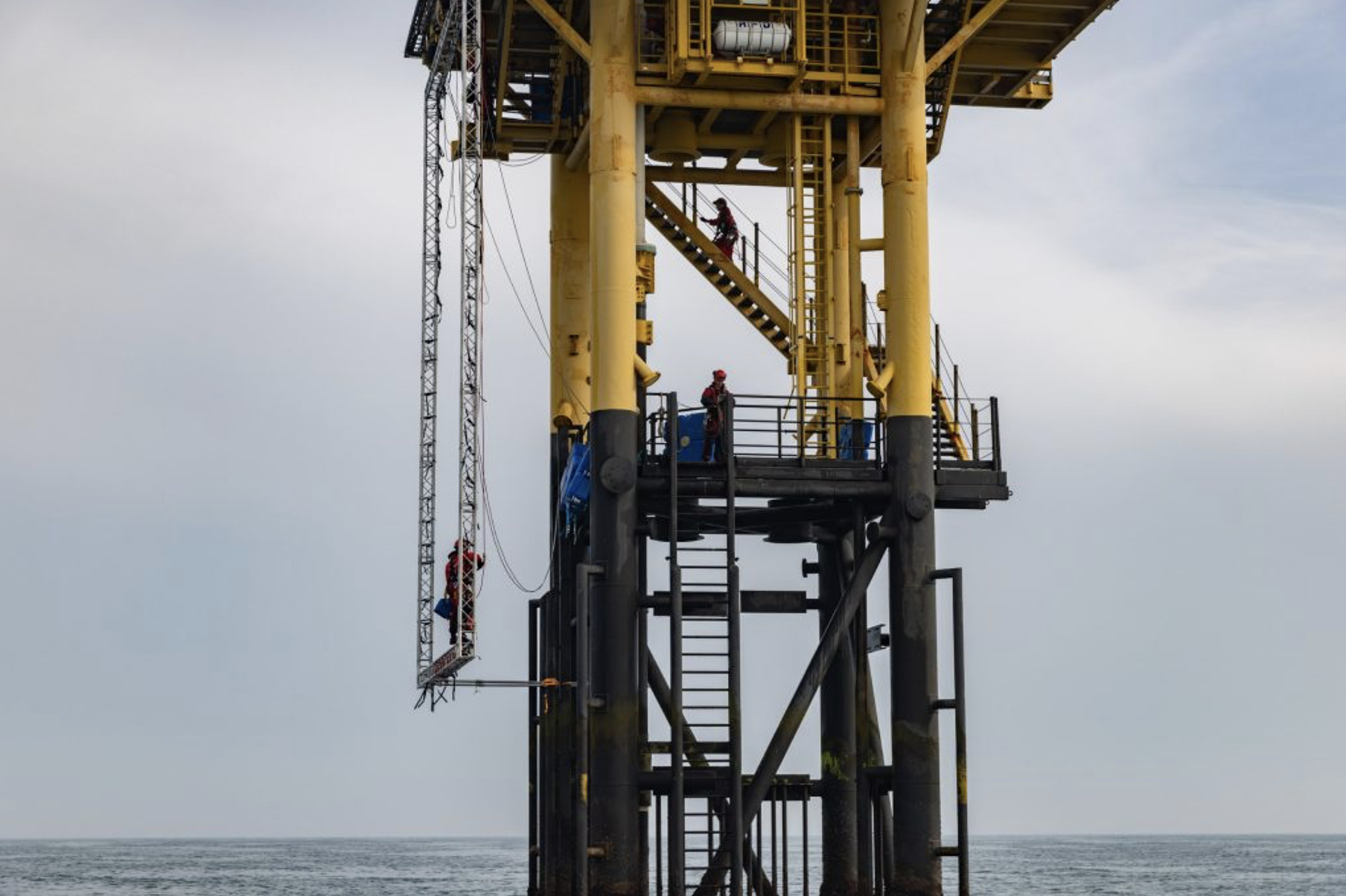
A towering 12 x 8-metre truss forms the dramatic canvas backdrop on the Skiff gas platform. Photo Courtesy of Greenpeace.
In the early hours of the morning, Greenpeace activists transported the rolled canvas and its supporting truss by boat to the site. The timing was deliberate, installed in the middle of the fourth UK heatwave last summer to enhance impact. Upon scaling the rig, the group unfurled the blank white canvas 52 metres above the water, before using high-pressure hoses to cover it in 1,000 litres of ‘blood-red liquid’ combining seawater, beetroot powder, organic coffee granules, and non-toxic pond dye. The deep red of the liquid is symbolic of blood, a visual representation of the earth bleeding as a result of the damage caused by the oil industry burning fossil fuels in excessive amounts.
Kapoor explained that he had long been ‘deeply interested’ in Greenpeace’s ‘heroic’ efforts and had been collaborating with Greenpeace for several years to find a way to be more actively involved in their campaigns. He recalled: ‘And then there was this idea about a year ago to do something on the gas rig, oil rig. I thought about what one could do and came up with BUTCHERED.’ This artwork fortifies the idea that although the damage may not be visible, its consequences remain ongoing, inescapable, and must be stopped. However, despite the red liquid conveying such a powerful message, one could argue that BUTCHERED undermines Kapoor’s intended statement, as the excess liquid spilling into the sea may itself cause further environmental harm.
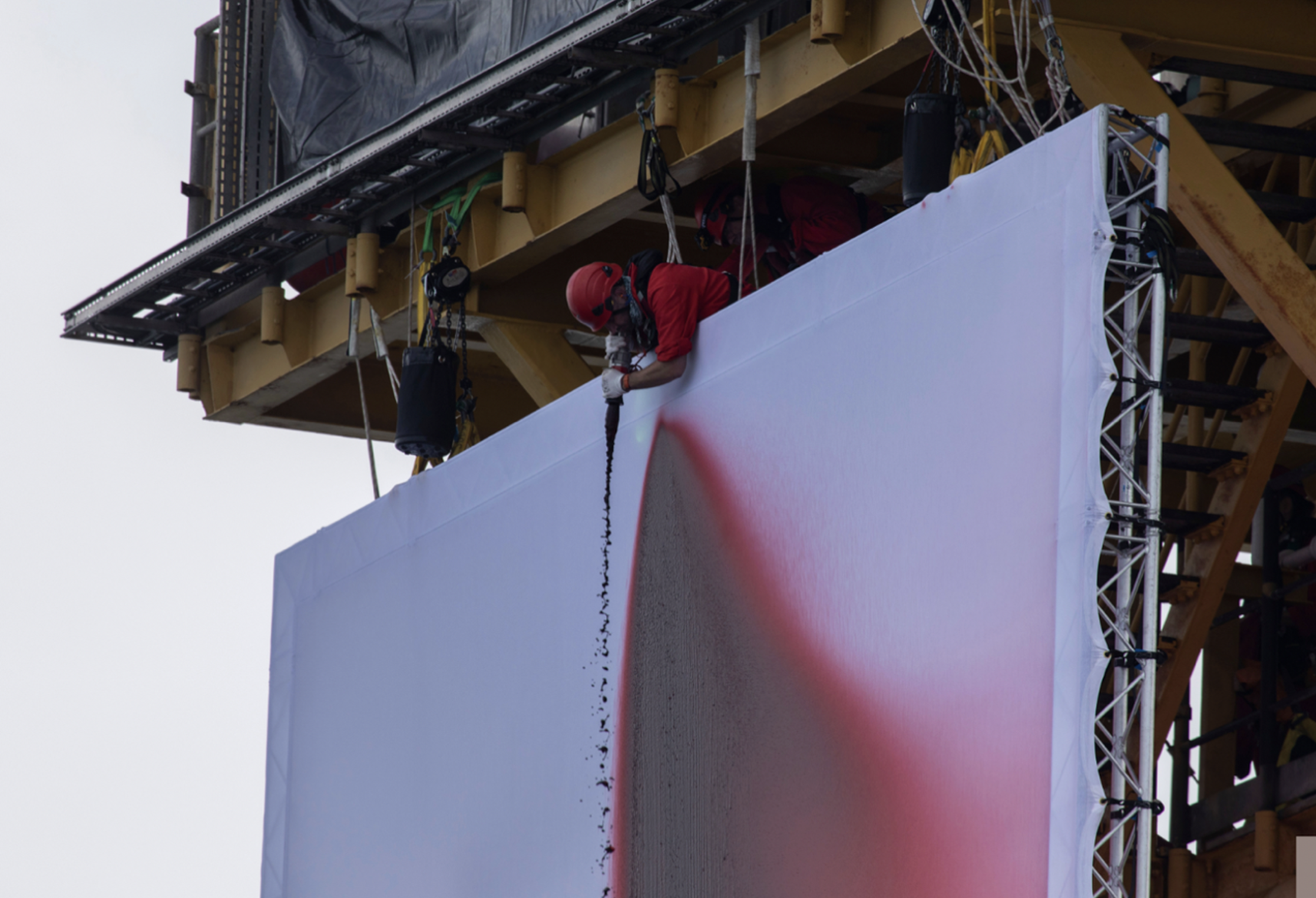
Anish Kapoor, Installation view of BUTCHERED (2025) in the North Sea. 12m x 8m. Photo courtesy of Andrew McConnell / Greenpeace.
Greenpeace collaborated with Kapoor to highlight Shell’s undeniable contribution to climate change. The group estimated that Shell has already caused at least $1.42 trillion in climate damage, yet continues the planning of 700 new oil and gas fields, potentially releasing ‘10.8 billion tonnes of CO2 into the atmosphere—enough to exceed 5% of the world’s remaining carbon budget.’ In a supporting video, Greenpeace activists further emphasised how Shell is ‘extracting it for profit—22 billion last year, more than the gross national product of many countries.’ Through this work, Greenpeace calls on governments to impose new taxes or fines on major polluters to prevent further environmental harm and to invest in sustainable climate solutions. Confronting viewers in an unexpected context, the location of BUTCHERED sets it meaningfully apart from all prior activist art.
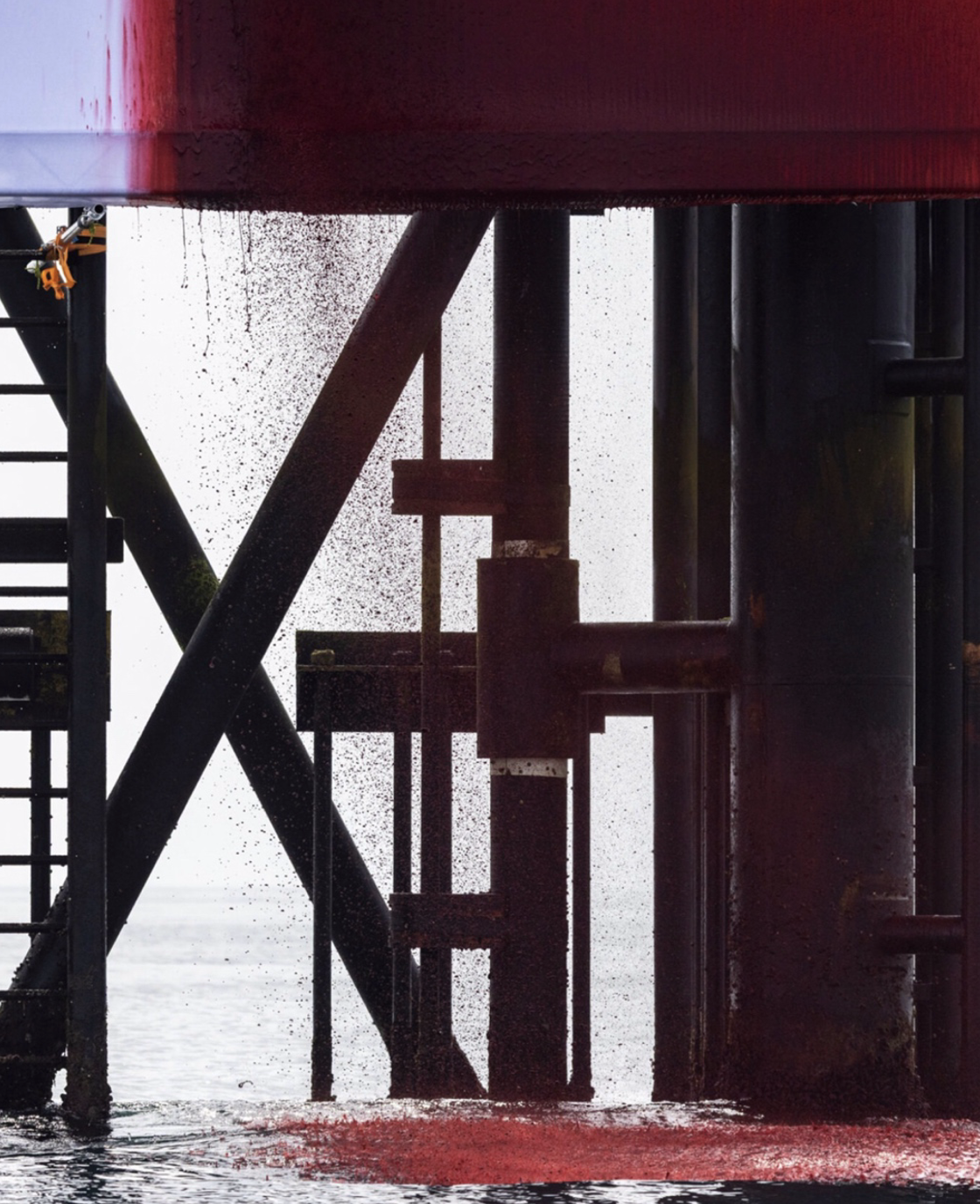
Anish Kapoor, Installation view of BUTCHERED (2025) in the North Sea. 12m x 8m. Photo courtesy of Andrew McConnell / Greenpeace.
Kapoor’s installation not only reflects his bold approach to critiquing the oil industry, but also highlights Greenpeace’s commitment to the causes they champion, with activists risking arrest and even their lives to spark conversation and stimulate change. Yet, such extreme lengths were questioned in the media, as they unmistakably blur the line between creative and criminal acts. Shell responded swiftly to the protest, noting that its installation breached UK maritime regulations and condemning it as ‘illegal trespassing’ and ‘highly dangerous’. Furthermore, Section 12 of the Petroleum Act 1998 establishes a 500-metre safety zone around offshore platforms, making unauthorised access a prosecutable offence.
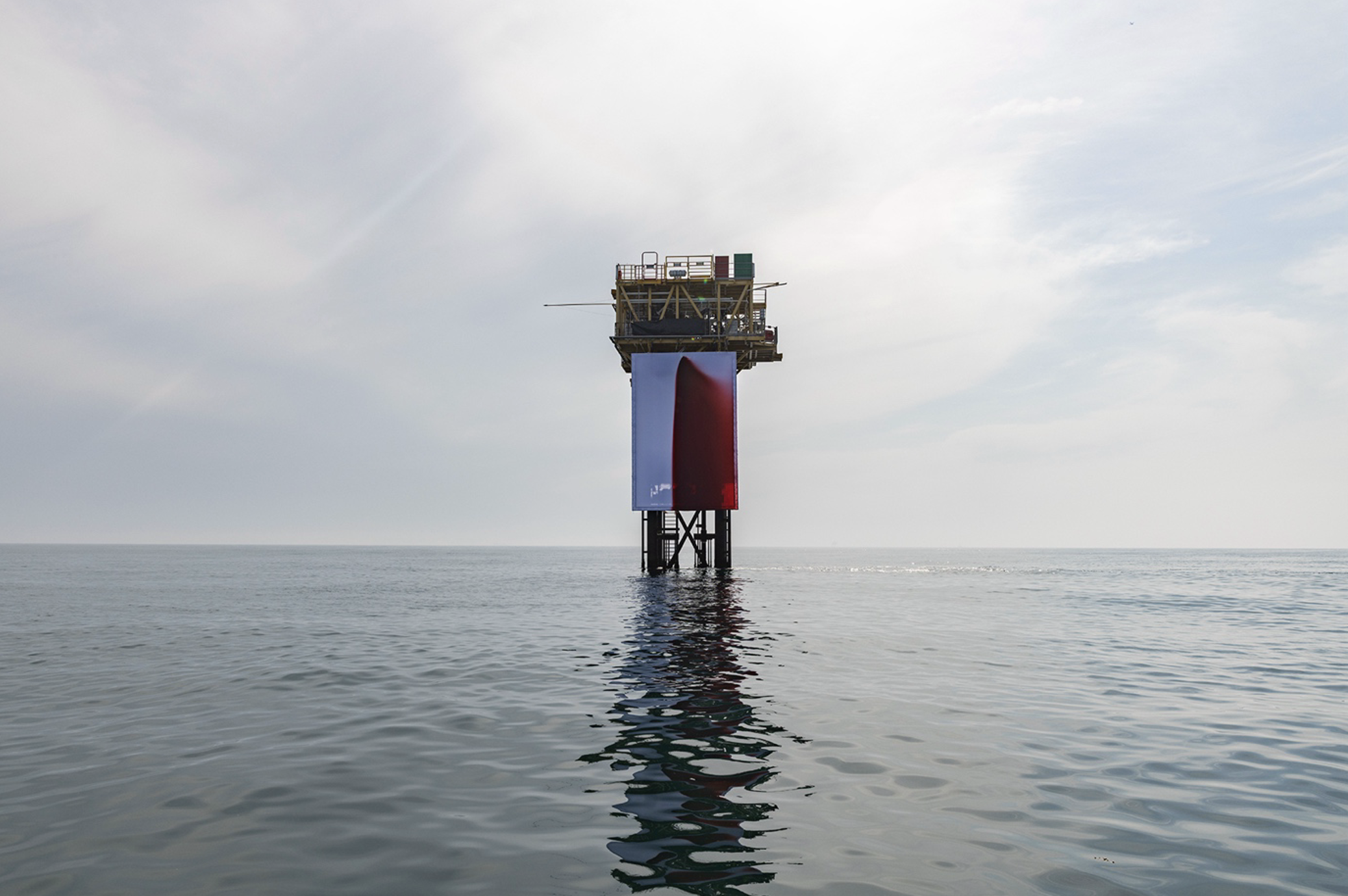
Anish Kapoor, Installation view of BUTCHERED (2025) in the North Sea. 12m x 8m. Photo courtesy of Andrew McConnell / Greenpeace.
Greenpeace publicly claimed responsibility for BUTCHERED, marking yet another action in their ongoing campaign against North Sea oil infrastructure. In October 2019, the group blocked an oil rig from leaving a port in Inverness, bound for the Vorlich oil field, which could access up to 30 million barrels of oil. This was not Greenpeace’s first engagement with the authorities; they had previously paid fines and temporarily suspended protests to avoid arrests and resolve disputes with other organisations. There is also no indication that Kapoor faces any legal action, as UK law generally focuses on individuals who physically commit unlawful acts, rather than the conceptual artists whose work forms part of a protest.
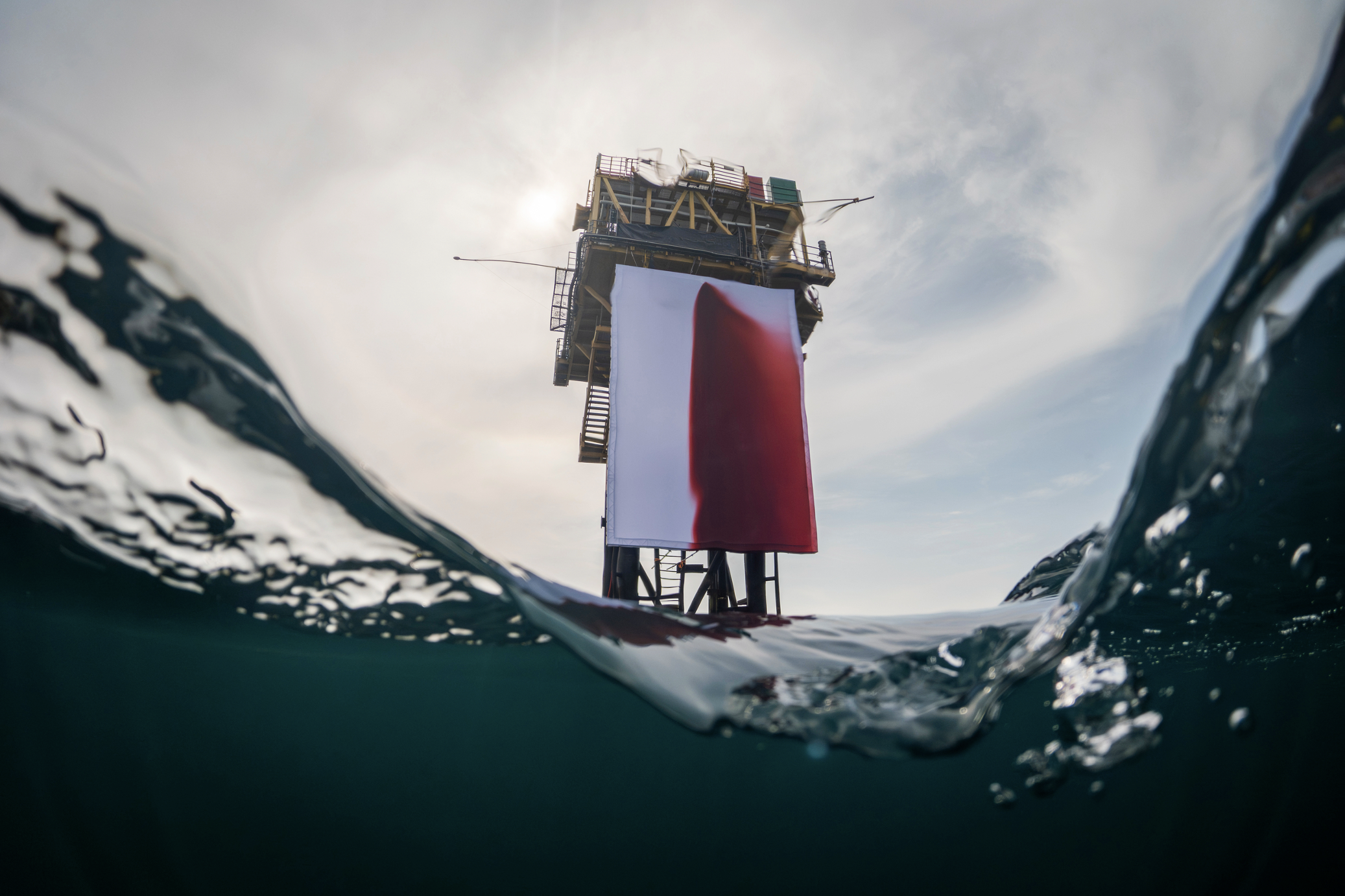
Anish Kapoor, Installation view of BUTCHERED (2025) in the North Sea. 12m x 8m. Photo courtesy of Andrew McConnell / Greenpeace.
Through BUTCHERED, Kapoor encourages contemporary artists to use their platforms to address pressing issues like climate change and to call out the destructive impact that powerful actors have on the environment. His installation demonstrates the vital messages that can be communicated through en plein air practice, and the significant influence that bold, innovative approaches to installation art can have on activist discourse. However, despite activism being central to these efforts, questions remain about how the law may respond: will future artists be constrained by stricter regulations around public and site-specific practice, or will authorities continue to recognise that such interventions contribute meaningfully to public debate and environmental action?
Sophie Harris
En Plen Air Editor, MADE IN BED
Disclaimer: The views, thoughts, and opinions expressed in MADE IN BED are solely those of the individual authors and not those of MADE IN BED magazine or of Sotheby’s Institute of Art.