Selfsame @ Art’otel Gallery, London Hoxton
‘To thine own (her) self be true.’ Inspired by the Shakespearean term Selfsame, curated by Zoë Goetzmann, the exhibition explores the tension between individuality and collective identity amongst female artists. The works reflect the shared experience of being seen as ‘the same’ while asserting the multiplicity, nuance, and autonomy of each artist’s voice. To be selfsame is not to be identical, but to be wholly oneself, again and again.
Artists include: Anne von Freyburg, Abbie Griffiths, Lidia Russakova-Hasaya, Marina Renée Cemmick, Fiona G Roberts, Lea Rose Kara, Karolina Dworska, Elena Unger, Olivia Strange.
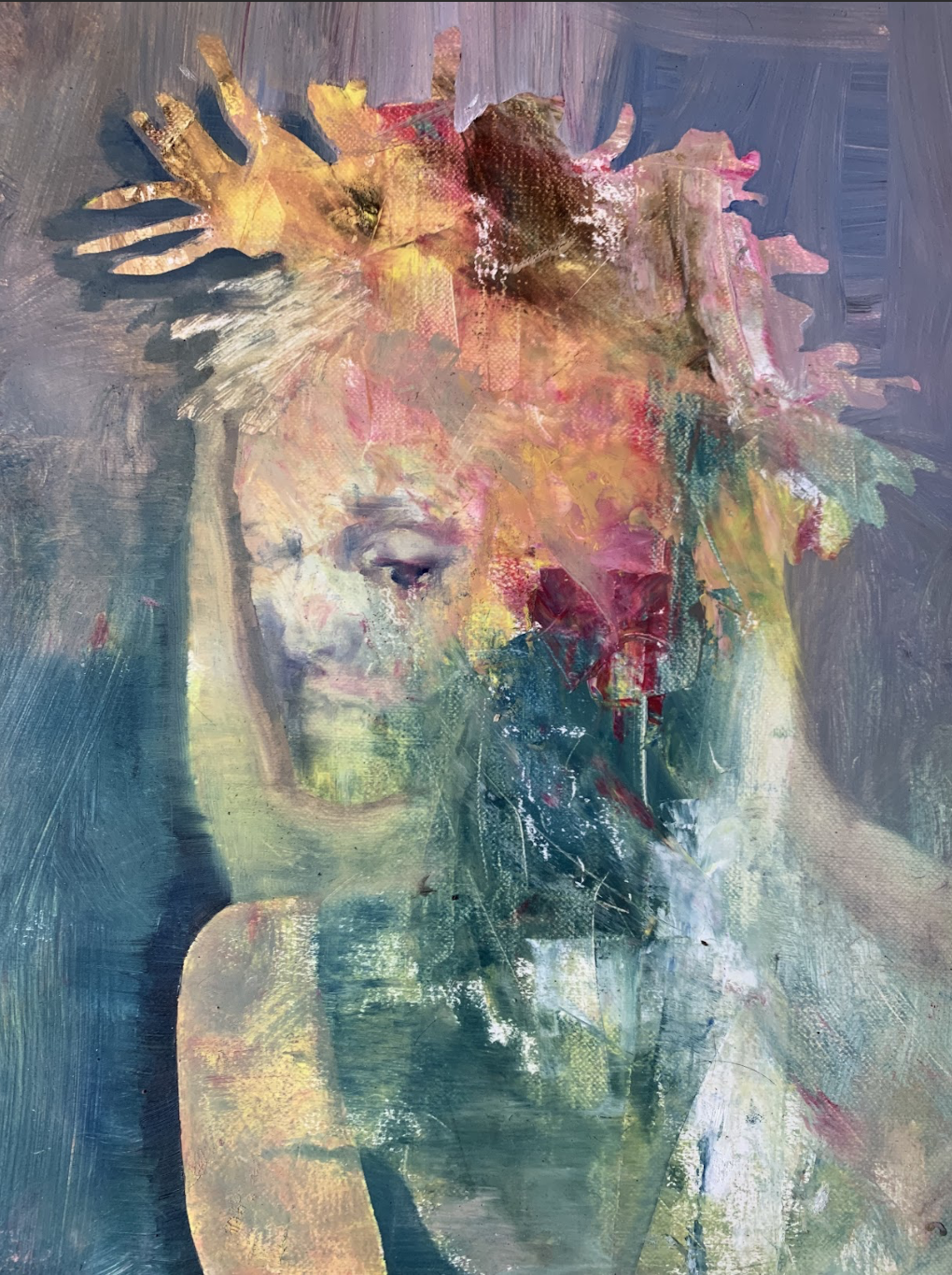
Marina Renée-Cemmick, Forest Spirit, 55 x 43 cm, Oil on Canvas. Courtesy of Artist.
Zoë Goetzmann is a London-based curator and director of The Artist Workspace Gallery, a platform supporting emerging and mid-career artists through exhibitions and commissions. Her curatorial practice centres on accessible contemporary art, community engagement, and artist-led storytelling, shaped through projects in Soho and collaborations with partners including art’otel London Hoxton and Hypha Studios. Alongside her curatorial work, she is also an arts writer and podcaster.
Bringing together nine artists working across painting, sculpture, textiles, performance, and installation, the exhibition unfolds as a constellation of voices rather than a singular narrative. Common themes include embodiment, memory, ritual, labour, and myth, which surface across the works, but they do so through different visual languages and material approaches. This multiplicity is one of Selfsame’s central strengths. The exhibition acknowledges the ways women’s experiences are often collapsed into monolithic categories, while actively resisting that flattening through difference, nuance, and contradiction. Goetzmann’s curatorial approach is notably restrained. Rather than imposing a dominant framework, the exhibition allows relationships between works to emerge organically. Sculptural gestures sit alongside figurative painting; tactile textiles converse with ritualistic performance and video. These encounters feel intentional but unforced, encouraging viewers to slow down and engage with the depth and quiet power of each work. The exhibition’s engagement with myth, ritual, and the reclaiming of feminine power is immediately foregrounded in the work of Olivia Strange.
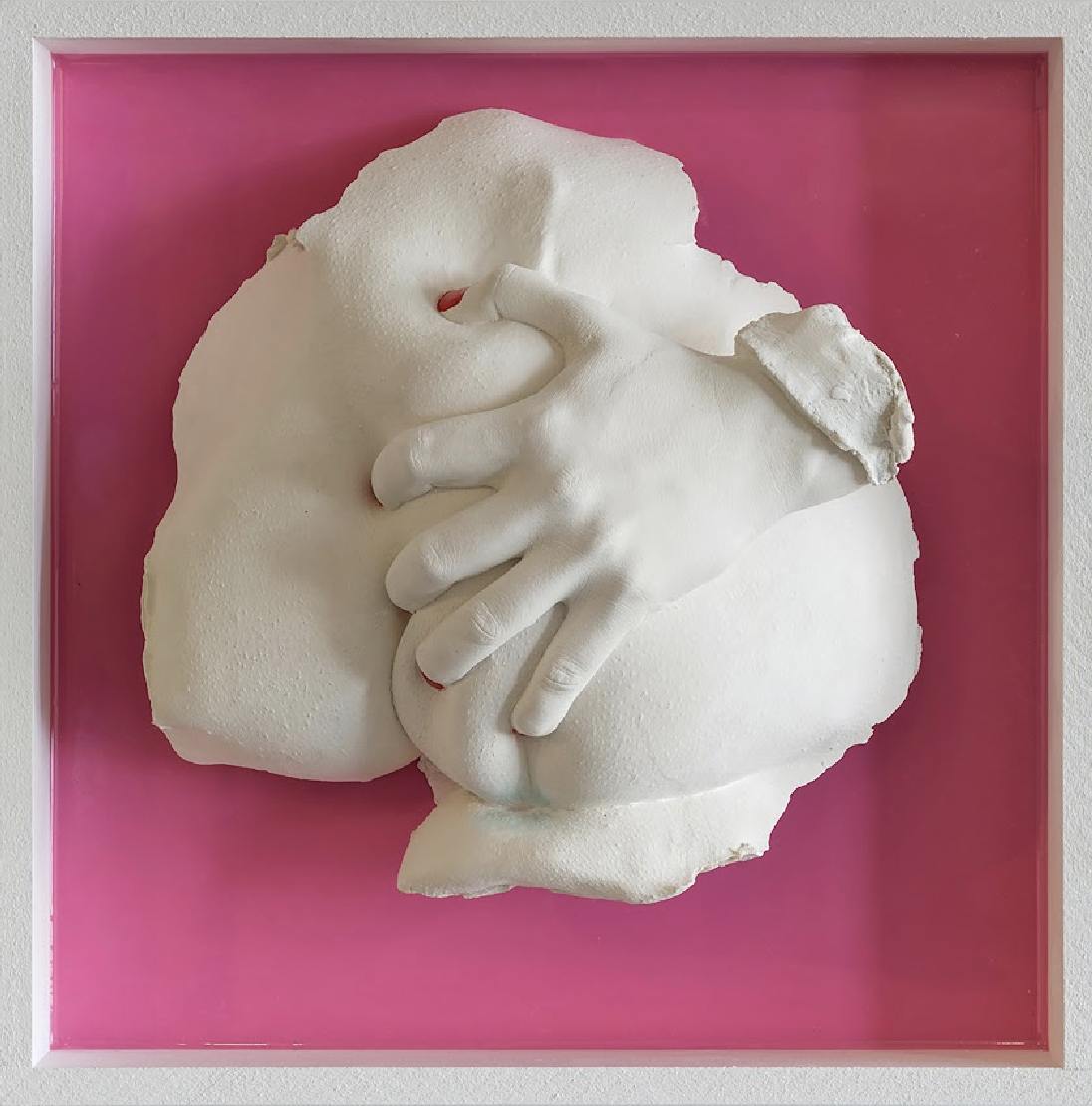
Olivia Strange, Witch, Crone, Slut Wisewoman (2022), 36.5cm x 36.5cm x 17cm, Wall Mounted Sculpture: plaster, marble powder, nail varnish, wood frame, steel bolts. Courtesy of the Artist.
Olivia Strange’s multidisciplinary practice spans sculpture, installation, moving image, painting and poetry, marked by a visceral, layered aesthetic. Working through a queer feminist lens, she reclaims and re-writes ancient mythologies to dismantle hetero-patriarchal narratives. Drawing on histories of witchcraft and the persecution of gender-marginalised bodies, her work explores feminine power, desire, spirituality and fantasy. Through the subversion of familiar symbols and gestures, Strange constructs empowering images of queer subjectivity that invite empathy for continually othered experiences.
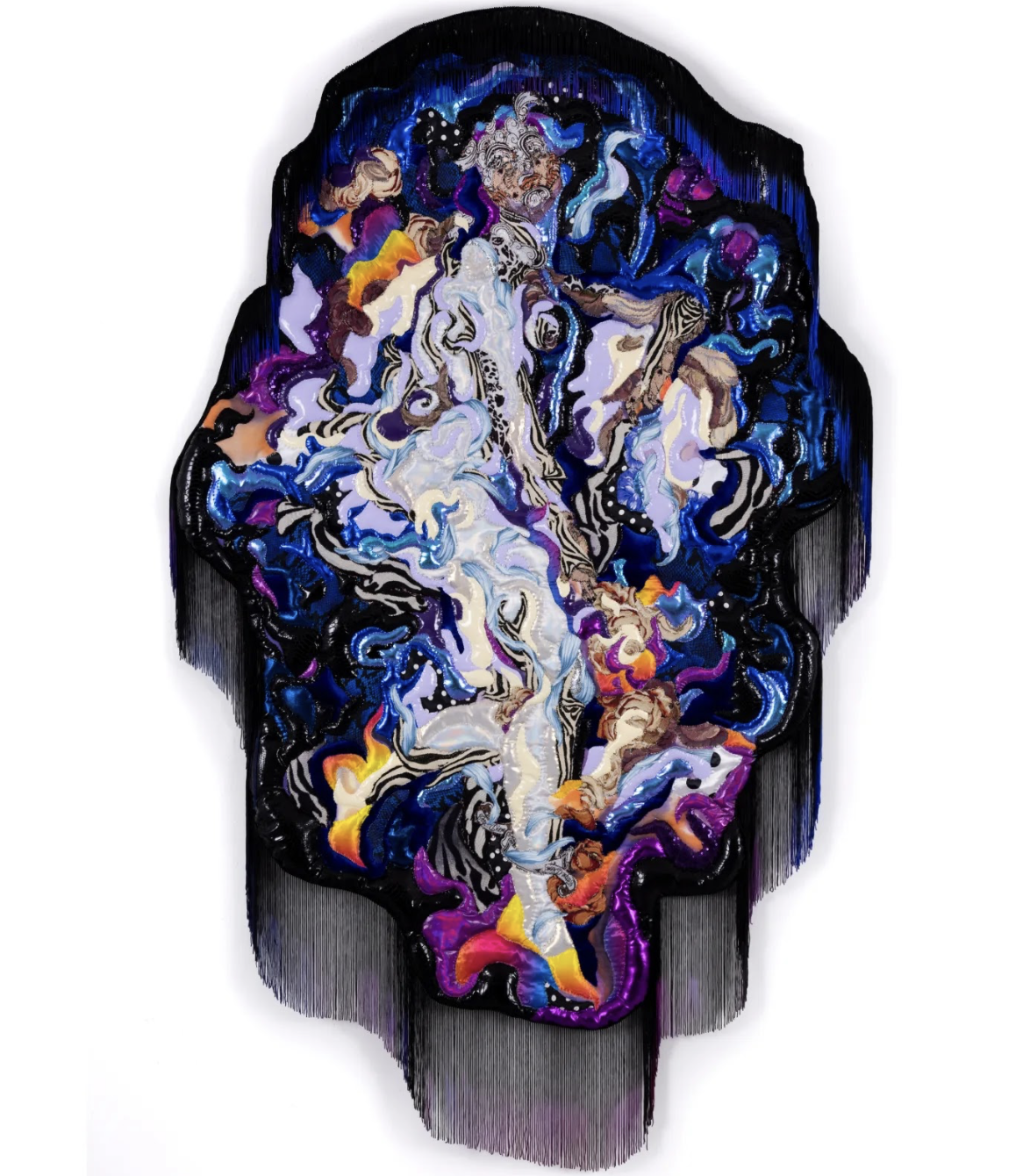
Anne von Freyburg, Trickster, (2022), Fabric Painting: acrylic, synthetic fabrics, spray-paint, tapestry fabric, hand-embroidery, polyester wadding, and hand-dyed tassel fringes on canvas. 195 x 115 cm. Courtesy of the Artist.
From symbolic confrontation and mythic reclamation, the exhibition shifts toward material processes that carry their own histories of gendered labour. Anne von Freyburg is a Dutch artist based in London whose practice centres on textiles and embroidery as tools for interrogating femininity and female identity. Working against the historical marginalisation of so-called feminine materials, her richly layered works reclaim craft as a site of power and authorship. In Selfsame, von Freyburg’s work speaks to shared constructions of gender while asserting the agency embedded in making by hand. At first glance, the figure within von Freyburg’s work is not immediately apparent. The richness of colour, texture, and surface detail initially dominates the viewer’s attention, requiring a moment of pause before the body begins to emerge. This delayed recognition invites a slower, more attentive mode of looking, where figuration is gradually revealed through layers of fabric, embroidery, and pattern. In this way, the figure resists instant legibility, asserting itself not as an image to be consumed at once, but as something discovered through sustained engagement.
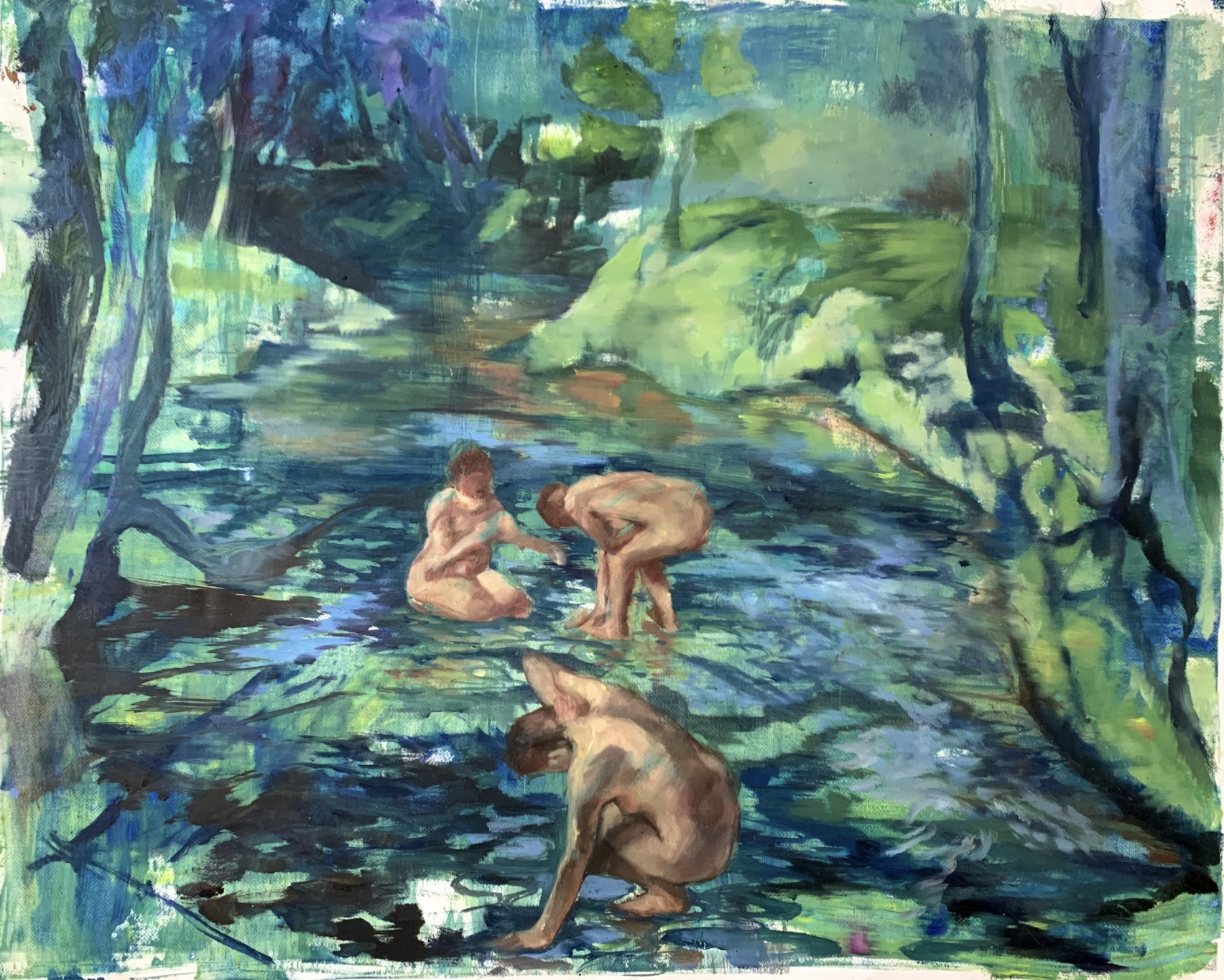
Marina Renée-Cemmick, River Bathing, 44 x 55 cm, Oil on Canvas. Courtesy of the Artist.
This focus on the body as a site of expression and identity continues through figuration, where inner life becomes visible on the painted surface. As a figurative artist, Marina Renée-Cemmick’s work centres on the human body and the psychological spaces it inhabits. Drawing from life, memory, and imagination, her paintings and drawings balance realism with a quiet dream like theatricality. Her use of line work and bold colours presents the figures as a direct expression of what she sees. In Selfsame, her work reflects the subtle tension between inner life and outward presence.
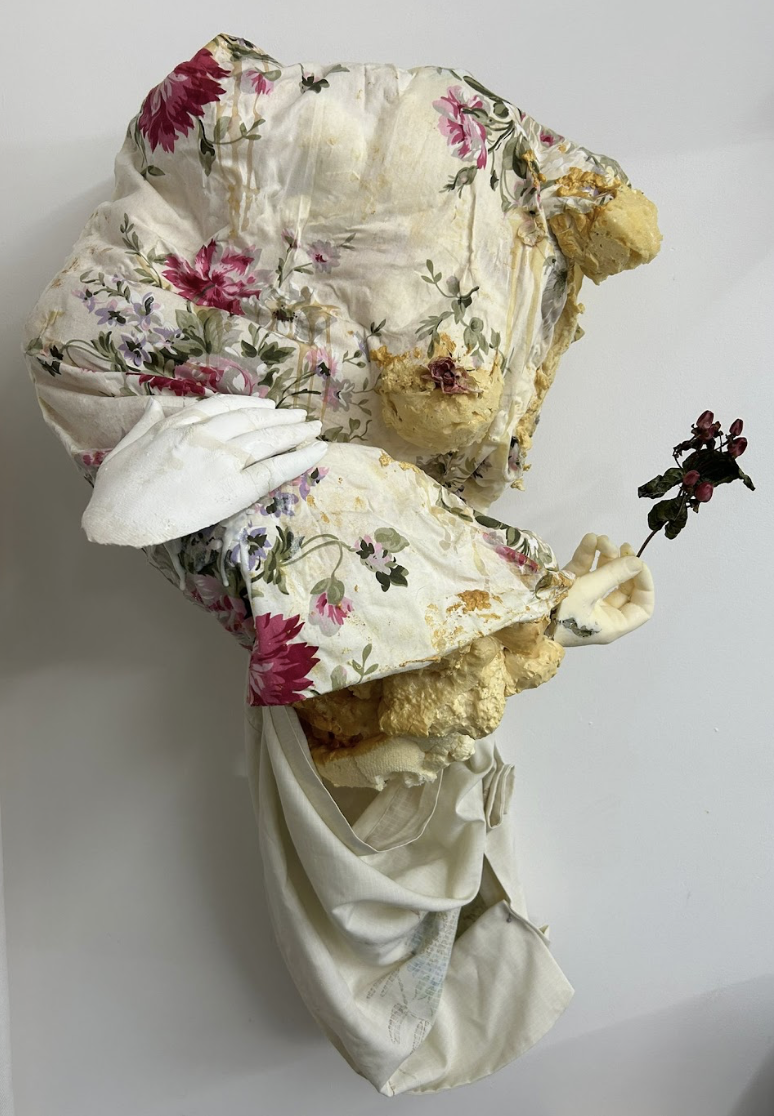
Abbie Griffths, Pregnant Pause, 40 x 98 x 60 cm, Mixed Media Sculpture. Courtesy of the Artist.
That tension between interior states and physical form is carried into three dimensions in the sculptural work of Abbie Griffiths, a British artist based in London whose practice explores the seen and unseen forces that shape human experience. Working with construction materials and second-hand domestic fabrics, she traces the imprint of memory, myth, and emotion on material surfaces. Drawing on a family lineage of manual labour, Griffiths transforms the familiar and overlooked into bodily, vulnerable forms, where plaster becomes gesture and polyurethane reads as flesh. From bodily form to bodily action, the exhibition turns toward ritual, repetition, and spatial experience.
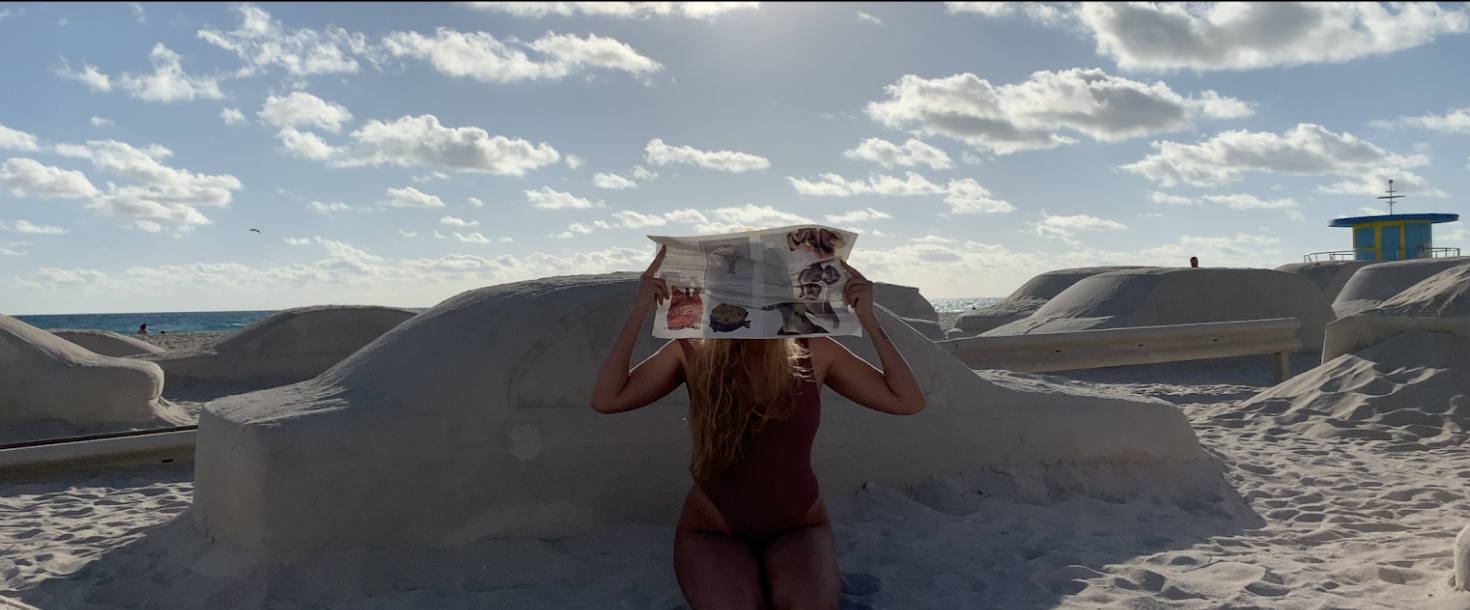
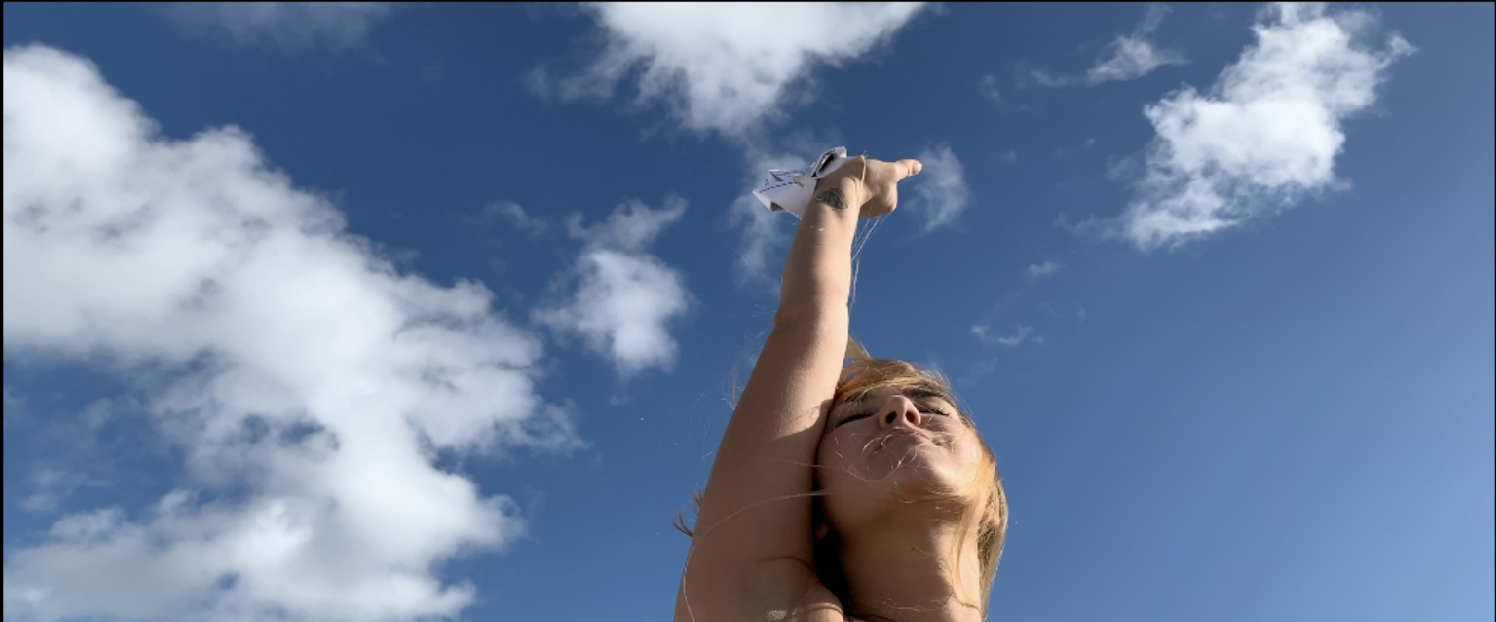
Lidia Russkova Hasaya, Cleansing (2018), Video Installation, Sky 111 (2025), Video Installation, ROOMS (2025), Performance. Courtesy of the Artist.
Lidia Russkova-Hasaya is an interdisciplinary artist working across sculpture, installation, performance, and video. Her practice explores transitional states and spatial rituals, approaching art as a form of emotional architecture, structures designed to be encountered, inhabited, and felt. In Selfsame, works from her ongoing series Cleansing foreground repetitive, site-responsive gestures that treat purification as a physical act rather than a metaphor, offering moments of pause and embodied presence within saturated environments. In episode V, the artist uses Art Basel Miami as the centre stage, collecting discarded art pamphlets as a way to cleanse herself against the sandy background, Order of Importance by Leandro Erlich in 2019. This focus on ritual and interiority is extended through her live performance ROOMS, which centres on inner architecture, memory, and acts of cleansing. The performance space is divided with tape into symbolic zones; kitchen, bathroom, bedroom, corridor, and living room, Forming a metaphorical home in which emotions, experiences, and personal histories reside. Moving methodically from room to room, Russakova-Hasaya performs minimal gestures of cleansing, each space holding a distinct emotional state: need, vulnerability, intimacy, and transition. As the performance unfolds, these states begin to shift and dissolve, gradually emptying the space. In the final moment, the artist exits the symbolic apartment, crossing a boundary between past and present.
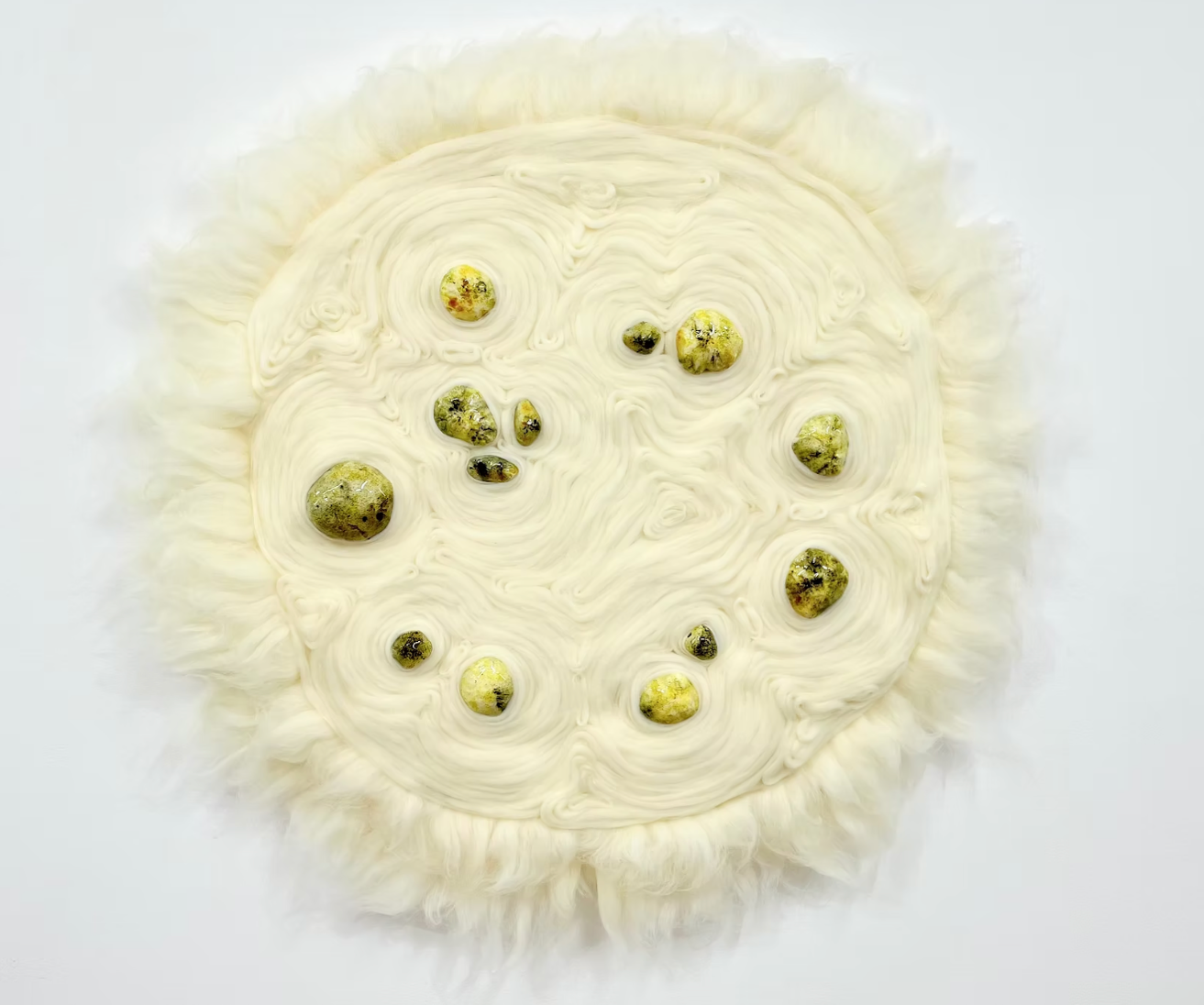
Lea Rose Kara, Stone Circle, (2025), 90 x 90 x 11 cm, wood, hard foam, wool, resin and handmade flower pigments: roses and chrysanthemums. Courtesy of the Artist.
Ritual and material memory take on a quieter, tactile form in the sculptural practice of Lea Rose Kara, whose practice draws on biology, archaeology, and archaic magic to explore transformation and material memory. Working with resin, bronze, wool, and natural pigments, she employs a self-developed technique of ‘pressure stitching’ to create forms that feel both bodily and ritualistic. In Selfsame, her work evokes shared ancestral knowledge while remaining deeply tactile and personal.
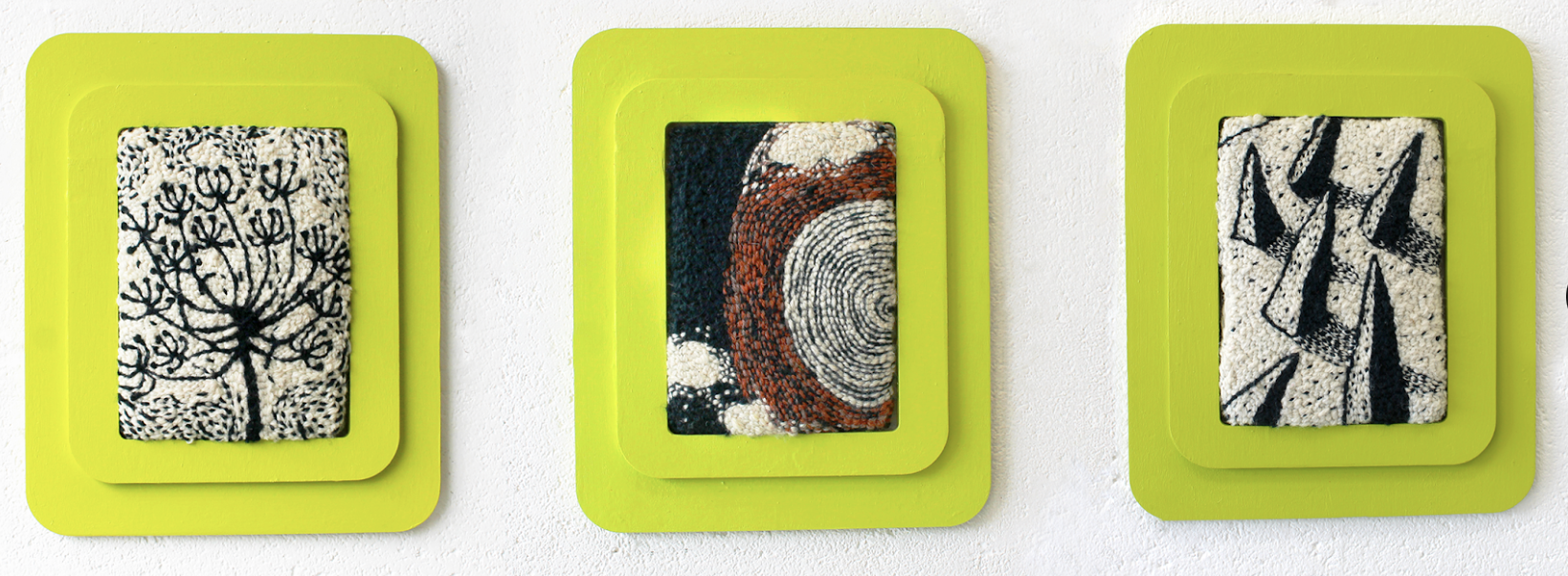
Karolina Dworska, Heavenly Fire (2025), 25 x 30.5cm, Axminster yarn, polyester and plywood and Red Forest Blight (2025), 25 x 30.5cm, Axminster yarn, polyester and plywood and Spike Field (2025), 25 x 30.5cm, Axminster yarn, polyester and plywood. Courtesy of the Artist.
Textiles re-emerge as carriers of psychological and emotional states in the work of Karolina Dworska; the London-based Polish artist’s multidisciplinary textile practice explores dreams, myth, and liminal spaces between the unconscious and reality. Her surreal, often unsettling dreamscapes examine the strangeness and euphoria of embodied existence, where fantasy and discomfort coexist. In Selfsame, Dworska’s work reflects the shared psychological terrain of femininity while remaining distinctly otherworldly. From interior dreamscapes, the exhibition expands outward toward collective vision and imagined futures.
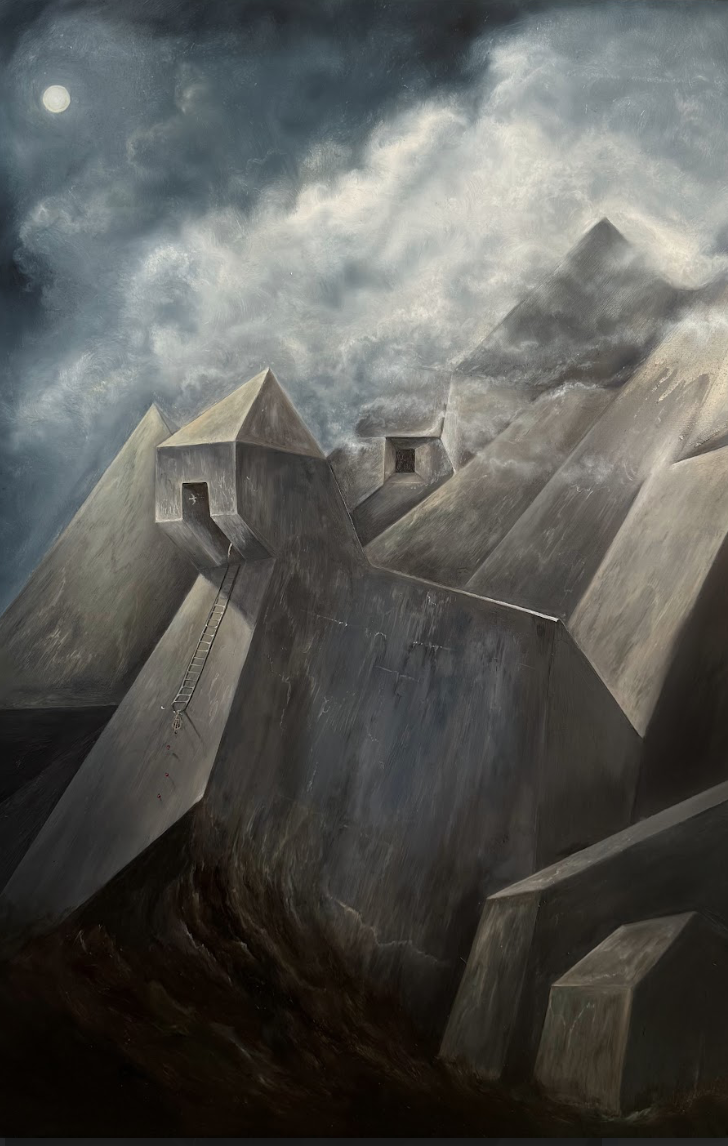
Elena Unger, The Angel of History, Fragment 1, (2025), Oil on Canvas framed, 76 × 51 cm. Courtesy of the Artist.
In a converse way, Elena Unger’s detailed oil paintings construct an interconnected, apocalyptic world viewed through a documentary lens. The London-based artist works across varied scales, her practice blending precision with narrative intensity. In Selfsame, Unger’s work expands personal vision into collective myth, suggesting how individual perspectives can coalesce into shared, imagined futures.
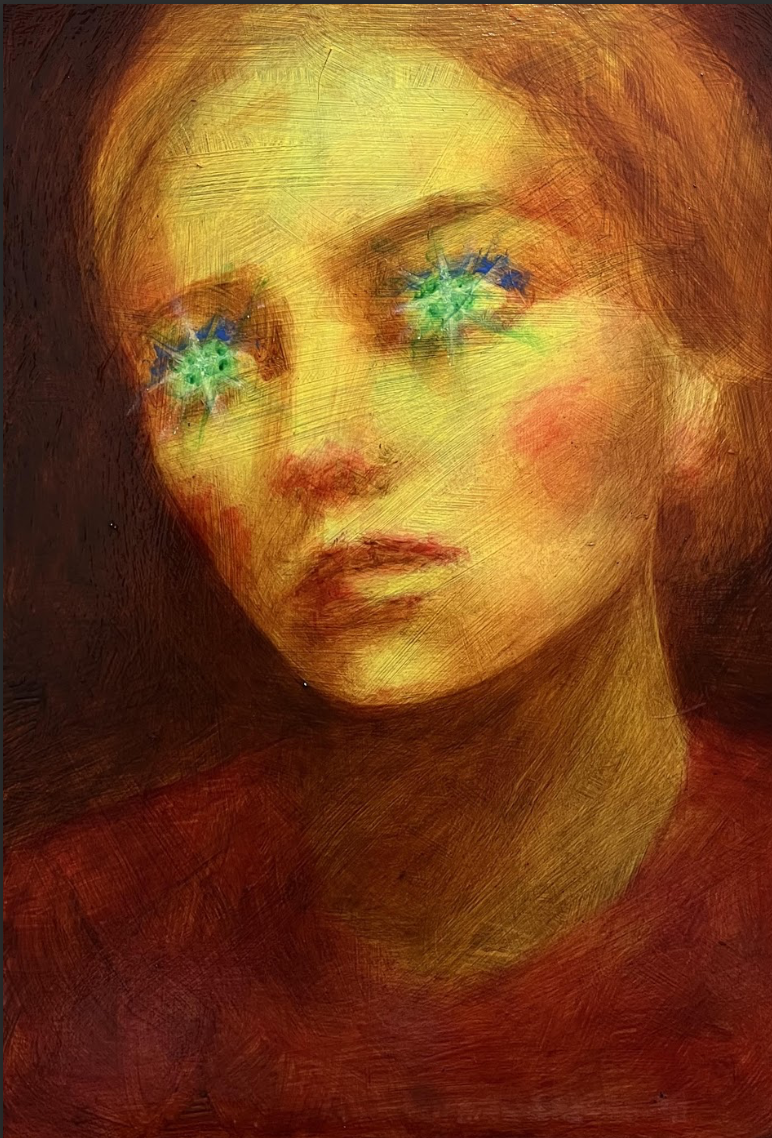
Fiona G. Roberts, Untitled 171, (2025), 60cm x 42cm , Oil on cradled board. Unframed. Courtesy of the Artist.
As Zoë Goetzmann reflects, to be ‘selfsame’ is not to be identical, but to return to oneself again and again, a notion that resonates across the exhibition’s multidisciplinary practices and embodied gestures. Through textiles, painting, sculpture, mixed media, film, video, and performance, the works resist singular definition, instead embracing the breadth and complexity of each artist’s distinct practice while amplifying their collective presence. In bringing these voices into dialogue, Selfsame foregrounds the diversity, agency, and creative force of women and female-identifying artists, offering an exhibition that is less about cohesion than about coexistence, where individuality is not dissolved, but celebrated.
Selfsame is on display from Thursday 8 - Sunday 25 January at Art’otel Gallery in Hoxton.
Amelia Holdsworth
Reviews Co-Editor, MADE IN BED
Disclaimer: The views, thoughts, and opinions expressed in MADE IN BED are solely those of the individual authors and not those of MADE IN BED magazine or of Sotheby’s Institute of Art.