The Work Doesn't Stop: Alayo Akinkugbe on Writing, Institutions and Cultural Shifts
In the wake of 2020, following the murder of George Floyd and the global resurgence of the Black Lives Matter movement, the art world witnessed a surge in attention towards Black cultural production. This moment prompted an urgent reckoning with histories of exclusion, reshaping exhibitions, publishing, and institutional priorities. Yet as quickly as that momentum gathered, it began to recede. In this interview, writer, curator and art historian Alayo Akinkugbe reflected on writing her book Reframing Blackness, navigating the shifting visibility of Black cultural production, and the limits of institutional change. Speaking with us, she considered what remains after the ‘wave’ passes, and why, for many practitioners, the work was never about the trend in the first place.
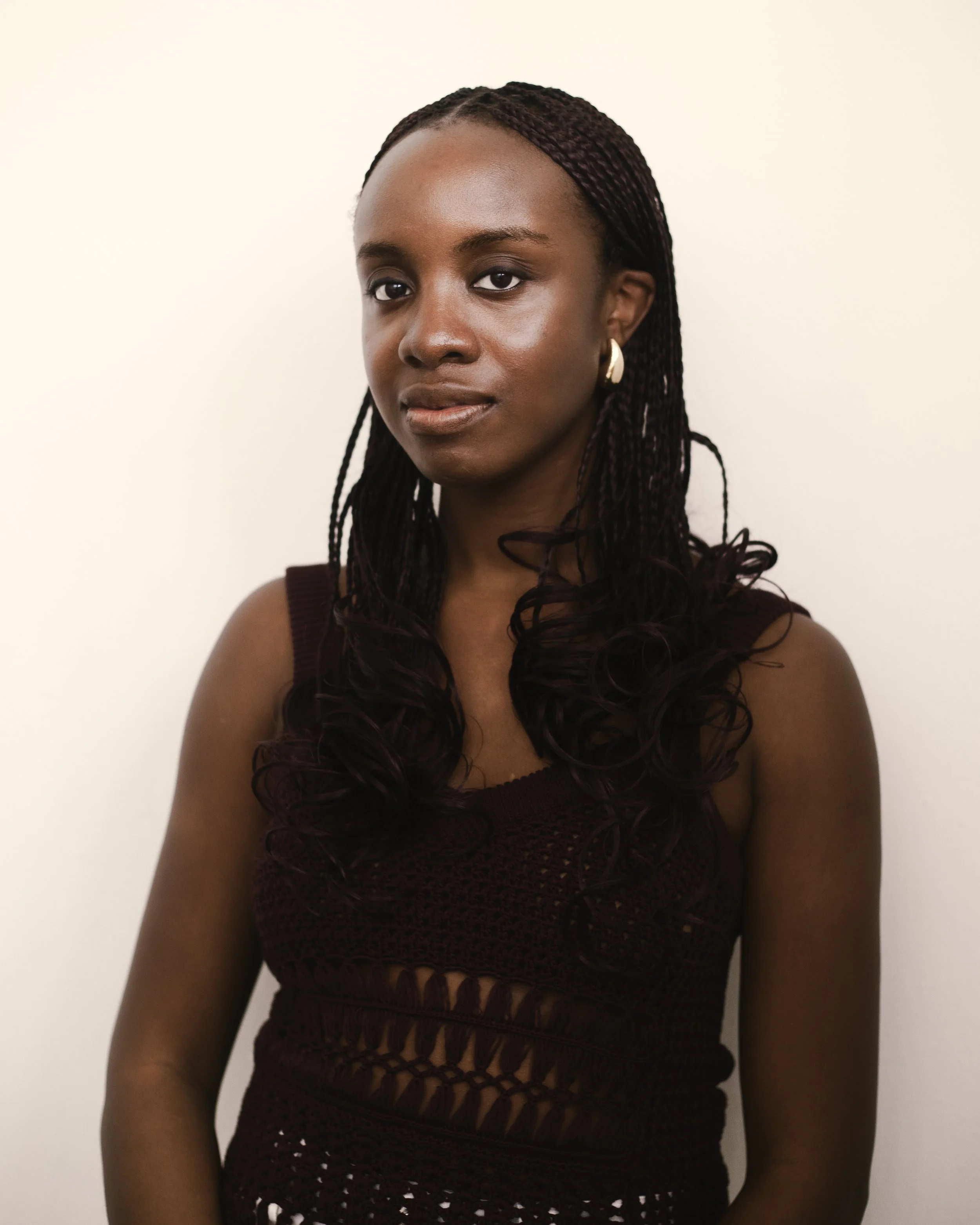
Alayo Akinkugbe © Cameron Ugbodu
Rather than focusing on the visibility of 2020 itself, Akinkugbe’s work turns to what happens after that moment passes. For Akinkugbe, the important question is not only whether institutions can respond to pressure, but whether they can sustain that work once public attention moves elsewhere.
For Akinkugbe, this shift is not surprising. Through her work—from @ABlackHistoryofArt to Reframing Blackness—she navigates the unstable terrain between visibility and erasure, asking what remains once institutional attention moves on. Her practice intervenes in the gap between academic art history and public access, challenging both who art history is for and how it is communicated.
Akinkugbe’s Instagram platform @ABlackHistoryofArt, launched in 2020, highlighting Black artists, sitters, curators, and thinkers from art history and the present day. Developed while studying for her undergraduate degree in History of Art at Cambridge, the platform grew rapidly in 2020 as public interest in Black representation and cultural production intensified.
Akinkugbe described a cultural ‘pendulum’—swinging from hypervisibility in 2020 to a more resistant landscape today—revealing how quickly institutional commitments can shift. While some change has taken place, she was clear that institutional responses are often reactive rather than sustained.
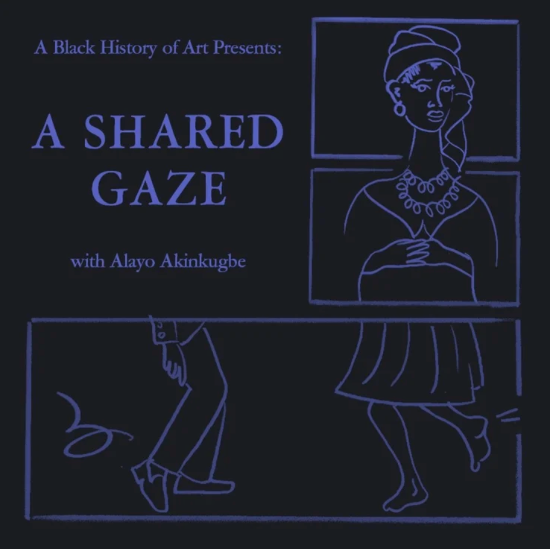
Cover Art: A Black History of Art Presents: A Shared Gaze
Following the success of her Instagram page, Akinkugbe launched A Shared Gaze, a podcast featuring conversations with Black contemporary artists from across the globe. Her first book, Reframing Blackness, was published in 2025. She has also written for publications including Dazed and Tate Etc., The World of Interiors and AnOther Magazine, where she writes for the column ‘Black Gazes.’
The platform began, she explained, from a frustration with the lack of Black authors and narratives on university reading lists. While she was aware of important texts by writers such as Eddie Chambers and Denise Murrell, she wanted to create ‘something that sits between academic writing and something that speaks to a wider audience, without requiring prior knowledge’. This came from what she described as an early critical view of art institutions, which often felt ‘closed off to Black artists and audiences’.
Akinkugbe highlighted, ‘all of the things like the New York Times and Vogue actually came before the book. I think that reflects something I discuss in the book—the wave that emerged in 2020, when there was heightened interest in Black cultural production.’
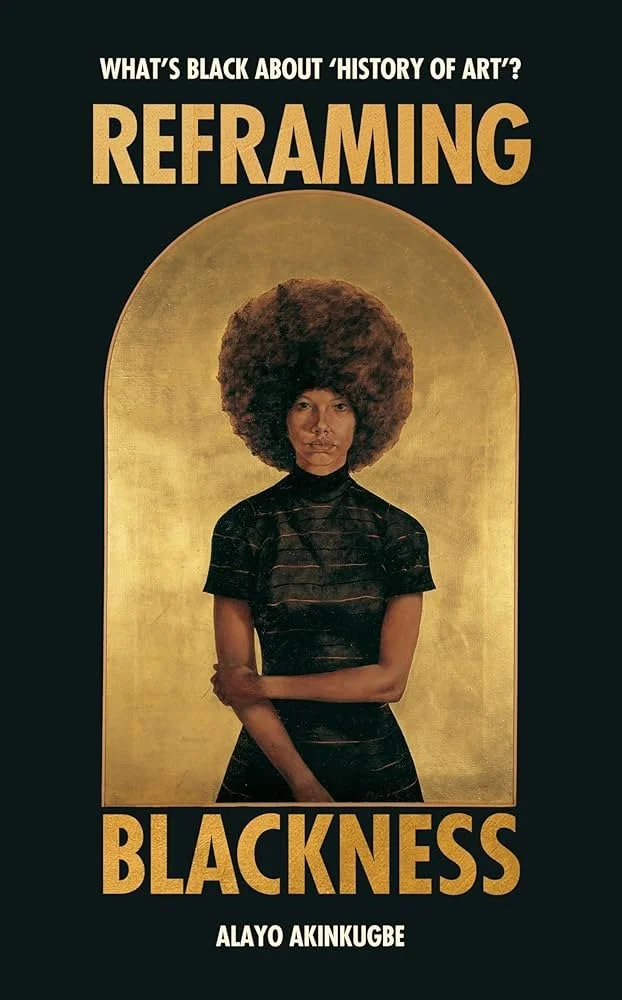
Book Cover Reframing Blackness: What’s Black about “History of Art”? by Alayo Akinkugbe
Writing Reframing Blackness has, Akinkugbe said, ‘opened a new chapter’ in her career. ‘I remember speaking to people while I was writing it, especially other writers or artists, and they kept saying once you have a book, it will place you in this tier that is different to just writing articles, writing on Instagram, making social media content or working on exhibitions.’ For her, the book has allowed her to reach ‘a much broader audience of people who just read books and aren’t necessarily into art history’. This accessibility is central to the project. Rather than producing a niche academic text, Reframing Blackness brings questions of Black representation, art history and institutional exclusion to readers beyond the specialist art world. ‘That's one of the things that surprised me while writing the book: those doors suddenly opened.’
Commissioned in 2021 and published in 2025, the book spans a period marked by dramatic changes in the cultural landscape. Akinkugbe described this as a pendulum swing: from heightened interest in Black cultural production to a more resistant and restricted climate.
She recalled recently pitching a children’s book and being told it could not be specifically about Black history: ‘If this were 2020, we could.’ For Akinkugbe, this revealed ‘how far the pendulum has swung’. Although she knew there had been a trend, she said she did not expect the cultural landscape ‘to swing so far in the opposite direction so quickly’.
The speed of this shift has been one of the most surprising aspects of the process. Where conversations around representation once felt highly visible, Akinkugbe now sees them becoming less mainstream, despite the fact that the structural issues remain. She remarked, ‘After 2020, institutions were holding exhibitions that critically reflected on their own histories. It felt like a mirror had been held up to them. But that's how institutions tend to operate—they respond to social and political moments. It takes a few years, and then they move on.’
Exhibitions and research may emerge in moments of pressure, but the question remains whether this work continues beyond the lifespan of the exhibition itself.
She also reflected on how young she was when the book began. ‘I was very young to be writing a book — I was 20,’ she says. At first, she imagined it as something more academic, having only written university essays before. But Murky Books was not publishing a niche academic text. The aim was to take a subject specific to the art world and make it accessible to a wider audience: ‘to create something tangible that could reach more people than Instagram’.
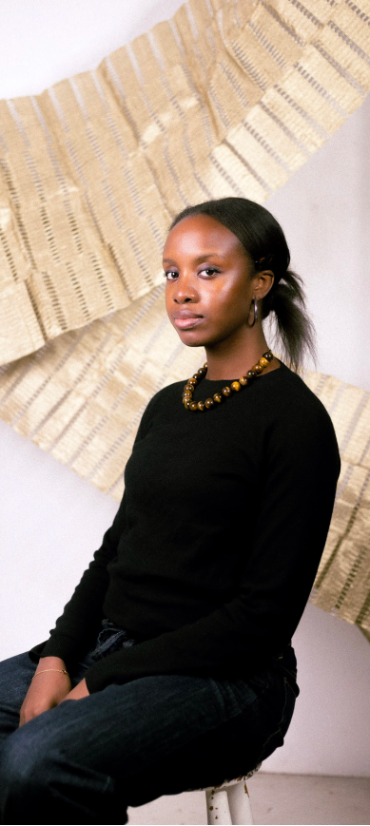
Alayo Akinkugbe photographed by Fikayo Adebajo @fikayoadebajo
When asked what institutional change could look like in the future, Akinkugbe was careful not to dismiss the progress that has already been made. ‘Some change did happen, which is important,’ she said. ‘Even if there was performative action, some progress was made.’ Exhibitions happened, catalogues were produced, and research was conducted. But for her, the question remains as to whether institutions remain committed once the immediate pressure has passed.
‘They need to continue the research and reflection,’ she said. ‘When institutions do exhibitions that critique their own histories, does that work continue afterwards? Or does it stop once the exhibition ends?’ This question sat at the centre of the interview. The issue was not only whether institutions can produce moments of visibility, but whether they can build long-term structures that prevent erasure.
When we asked whether this is something that will change in our lifetime, or something practitioners will always have to fight for, Akinkugbe was realistic in her answer. ‘I think there will always be a level of struggle,’ she said, especially given the current political direction. But she also made clear that people do not stop doing this work when the trend disappears. ‘The passion was there before 2020, and it remains now.’ Many curators, she noted, describe this work as a calling: something they feel compelled to do because of the gaps that exist. ‘So even when the attention fades, the work continues. And when interest returns, there is already a foundation to build on.’
Akinkugbe’s approach to institutions is critical but not dismissive. When we asked whether she feels she is treading on eggshells, she explained that institutions remain important because they provide platforms. But, she said, they need ‘radical reform’. ‘One of the biggest issues is the lack of diversity behind the scenes,’ she insisted. ‘In my experience, many problems institutions face when dealing with subjects like empire or race could be addressed if there were more diverse teams.’ Her position is therefore one of nuance: institutions matter, but they must change.
Looking ahead, Akinkugbe is working on a documentary in Lagos, alongside two further book projects — one more visual, and another aimed at younger audiences. Her advice to young people entering the art world is simple: ‘Remember why you’re doing it.’ For Akinkugbe, what matters is not the noise of the art world, but the love of art and artists. ‘That passion—communicating art, engaging with it—that’s what matters.’
For Akinkugbe, the work was never about the moment of visibility. It existed before 2020 and continues beyond it.
In this sense, her practice reflects a broader reality: that meaningful change in the art world is not driven by trends, but by sustained, often unrecognised labour. If the institutional ‘wave’ has receded, what remains are the practitioners who continue to build, write, and challenge from within and beyond these structures.
Many thanks to Alayo Akinkugbe on behalf of MADE IN BED.
Learn more about Alayo Akinkugbe's career and work on Instagram.
Arielle Etheridge
Agents of Change Editor, MADE IN BED
Disclaimer: The views, thoughts, and opinions expressed in MADE IN BED are solely those of the individual authors and not those of MADE IN BED magazine or of Sotheby’s Institute of Art.