Is Luxury the Future of Museum Funding?
On May 14 2026, the Frick announced their new sponsorship from Louis Vuitton. The same day, the Neue Galerie announced it would be acquired by the Metropolitan Museum of Art. Within hours two historic New York institutions secured their futures in distinct ways. These major announcements show two contrasting paths towards financial security and raise the question: What does the future of museum funding look like?
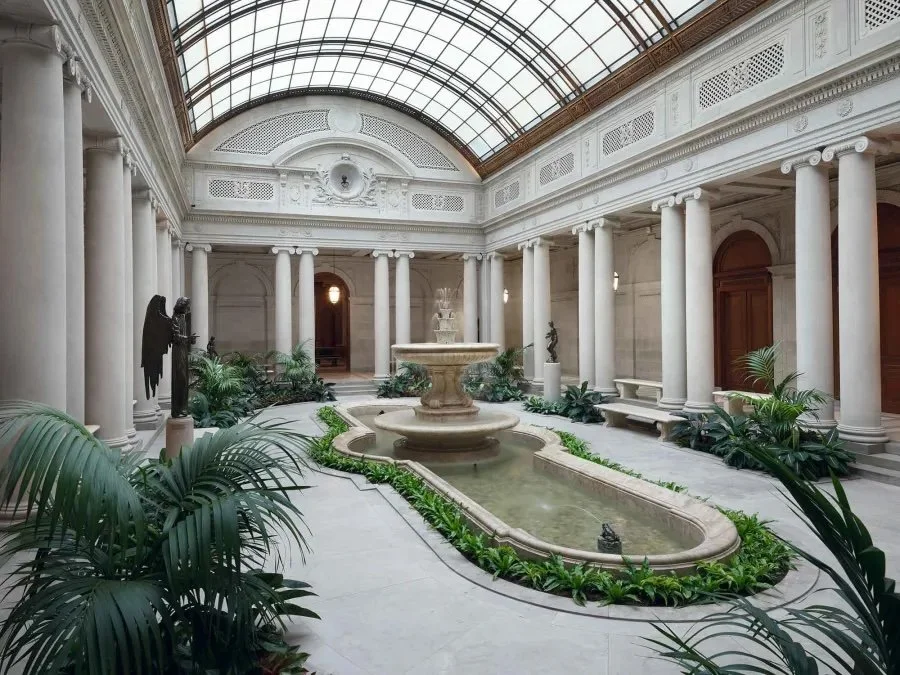
The Frick’s Garden Court. Courtesy of The Frick Collection.
Museums by definition are meant to focus their missions on education, conservation and accessibility. As non-profit institutions, they need funding to be able to serve the public in the way they are intended to. While many museums make money from museum stores or ticket sales, they also rely on public grants, donations and sponsorships. This money allows museums to be more accessible, offering lower ticket prices, improved programming and more. However, where this money comes from can be a source of concern and controversial donors or sponsors have historically garnered public criticism. This tension between accessibility and autonomy leave museums in a difficult position when it comes to financial planning.
While in some countries including the UK, museums are state run institutions, in the US museums are generally privately run. Complicated public-private dynamics surround nearly all of the country’s most prominent museums. Though there are some public grants and the government offers tax benefits to incentivize donations, major US museums are reliant on private money. According to a survey by the American Alliance of Museums, 30% of museum funding comes from donations.
However, a lack of government funding is not a problem that is exclusive to the US museum model. Across the US, UK and Europe public funding for museums is stretched thin as governments cut back on cultural spending. This combined with lagging attendance post-Covid has led museums to look to alternative financing strategies often pioneered by US museums including building up large endowments and corporate sponsorship opportunities., As museums across the world set out to strategize to secure their financial futures, the choices being made now by institutions like the Frick and by the Neue Galerie are particularly relevant as examples of the strategic alternatives available in the space.
Mixing of public and private interests in the museum space is nothing new. Private collections have long been the source of new museum collections or new institutions entirely. Both the Neue Galerie and the Frick were founded this way as were other prominent institutions like the Guggenheim.
However, sponsorship by companies raises the question of commercialization in the museum sphere. With museums struggling for funding, they are increasingly reaching for corporate sponsorship to keep them afloat particularly in the luxury space.
The Frick’s partnership with Louis Vuitton is a prime example of sponsorship being taken to new heights. The details of the sponsorship include a 3 year contract. Louis Vuitton will support the Frick’s First Fridays which will provide visitors free evening admission on the first Friday of each month. They will also support 3 major exhibitions and fund a new curatorial position at the museum. At a high level, Louis Vuitton’s sponsorship gives the Frick economic capital, as well as the ability to pursue its mission of increasing accessibility. In return Louis Vuitton gets the cultural capital associated with a prominent museum like the Frick. This can manifest itself in various ways.
For instance, to launch their new partnership, Louis Vuitton hosted their cruise runway show in the Frick Collection. The event marked the first time in the museum’s history that a show had been hosted within the galleries itself rather than the museum courtyard. Already, Louis Vuitton has gained access to a space no one else has been able to in the past.
In some ways, deals like the one between the Frick and Louis Vuitton seem like the perfect partnership. Both parties come from creative industries which facilitates complimentary branding. As the art world is traditionally less commercialized, the fashion industry provides an opportunity to find a partnership that still values a similar creative vision while also providing financial support. But corporate sponsorship can also raise questions about curatorial independence and the commercial influence on spaces often seen as educational authorities. As commercialization seeps into our everyday lives in new ways, where does the line get drawn?
While the Neue Galerie’s approach provides a pathway without corporate involvement it may not be a viable path for peer institutions to follow. By integrating with the Met, the museums will be able to share resources and given the Met’s global prominence, the Neue Galerie’s future will be secure. However, institutions like the Met are few and far between. While this scenario of museum consolidation may sound appealing, most museums will have to explore alternative paths.
If government funding is stretched thin and earned revenue does not cover what is needed to run a non-profit museum, private funding is the natural solution for many museums. And when searching for sponsors that align with a museum’s vision, luxury partnerships often make the most sense. For museums looking to secure their future funding, this path has promise. But institutional leaders need to carefully consider where leaning into commercialization becomes commoditization of culture.