Scarlett Budden
Scarlett Budden is a British figurative artist whose work explores a liminal space where beauty and the uncanny coexist in harmony. In her paintings, she presents and challenges viewers with a series of images and compositions that serve as symbolic gateways to the subconscious. Her practice focuses on depicting the fragmented female body as a symbol of resistance, agency, and continuous transformation, challenging traditional notions of what the body should reveal, how it should be seen, and who controls its visibility.
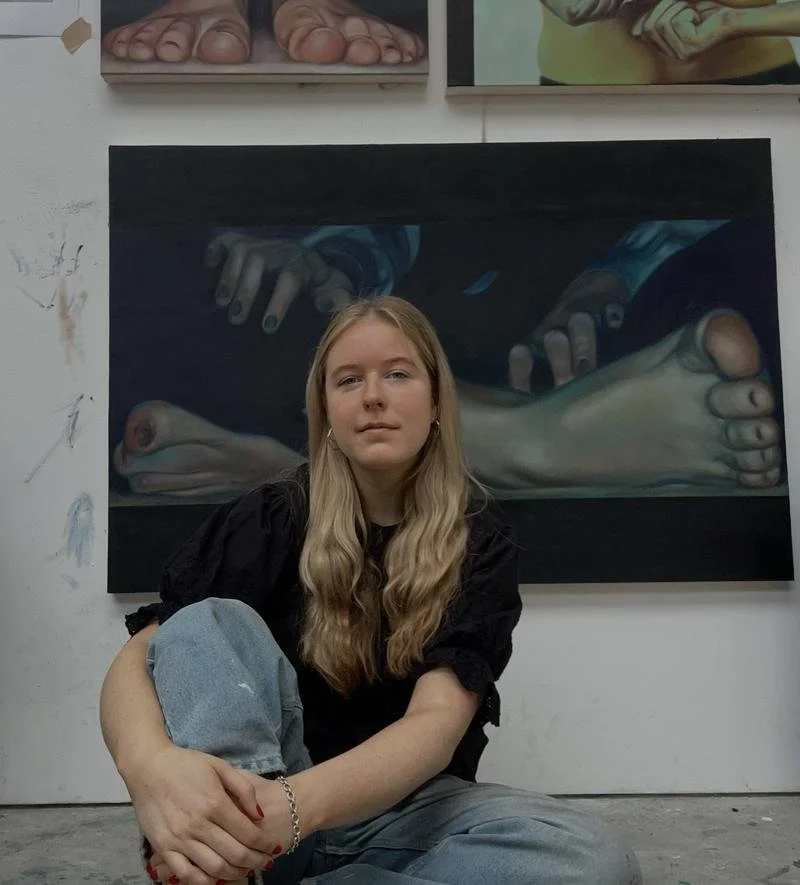
Scarlett Budden in her studio. Courtesy of the artist.
From a very young age, art has been an important part of her life, having spent endless hours filling sketchbooks with drawings. Her relationship with art was also shaped by her mother, who worked within the London art world and used to take her to visit exhibitions. This early contact with artistic visual narratives and exhibition spaces established a deep connection with art which over time would evolve into her career.
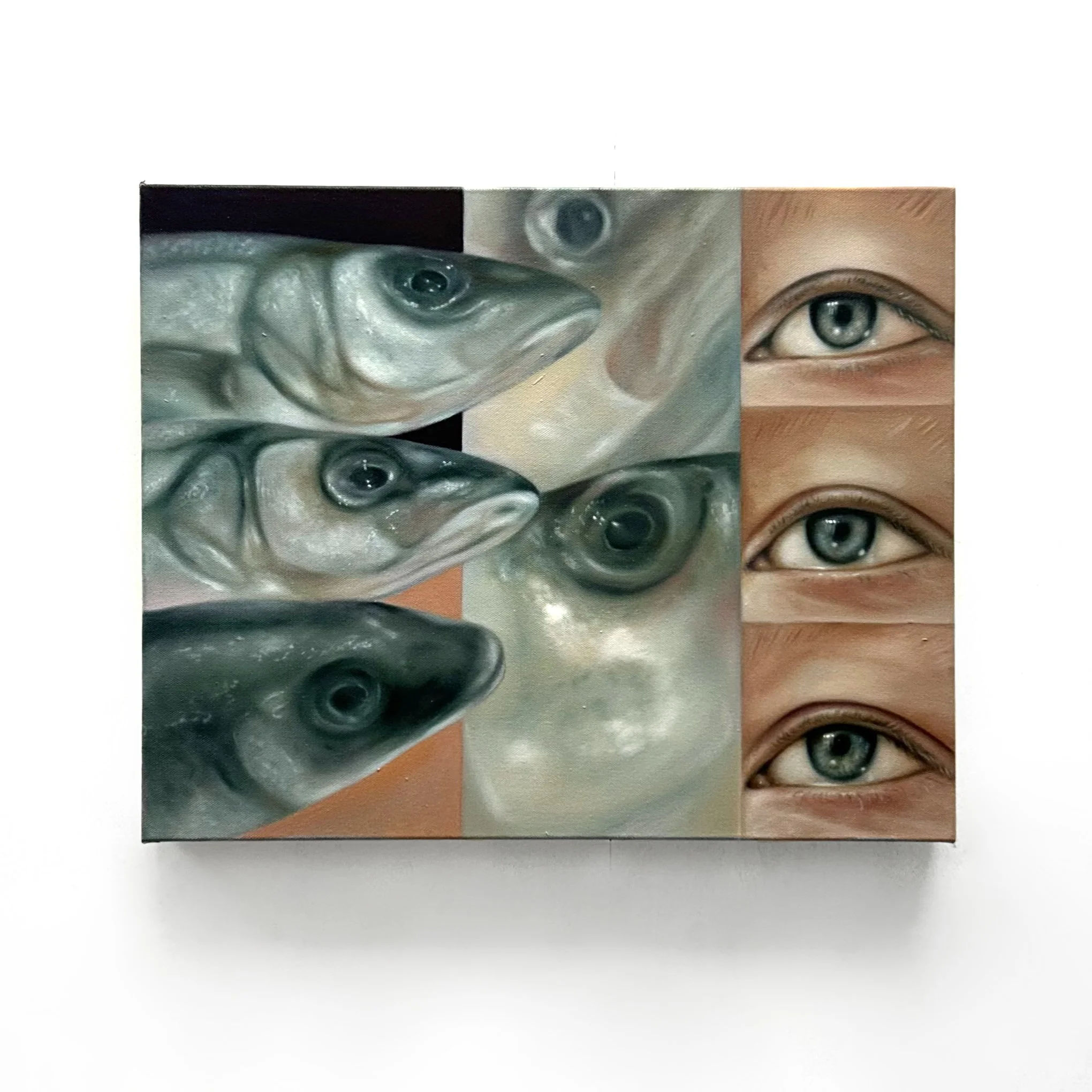
Scarlett Budden, Casting a line, 2025, oil on canvas, 40 x 50cm. Courtesy of the artist.
Her training as an artist started with a foundation course at Leeds College of Art. As Scarlett explains, the school encouraged her to explore disciplines outside of painting, which influenced her to study film and sculpture during her BA in Newcastle. It was not until the last year of her studies that she came back to painting. Working with other artistic disciplines enriched her practice, particularly through her engagement with cinematic montage—a film editing technique in which a series of unrelated short shots are juxtaposed to condense a new meaning. The influence of this technique is evident in her compositions, which are assembled like jigsaws.
After her graduation, she moved to London, where she began an MA at the Royal College of Art, which marked a turning point in her practice. It was at the RCA that she shaped and refined her practice, encountered her own artistic voice, and found a community and a space within the art ecosystem.
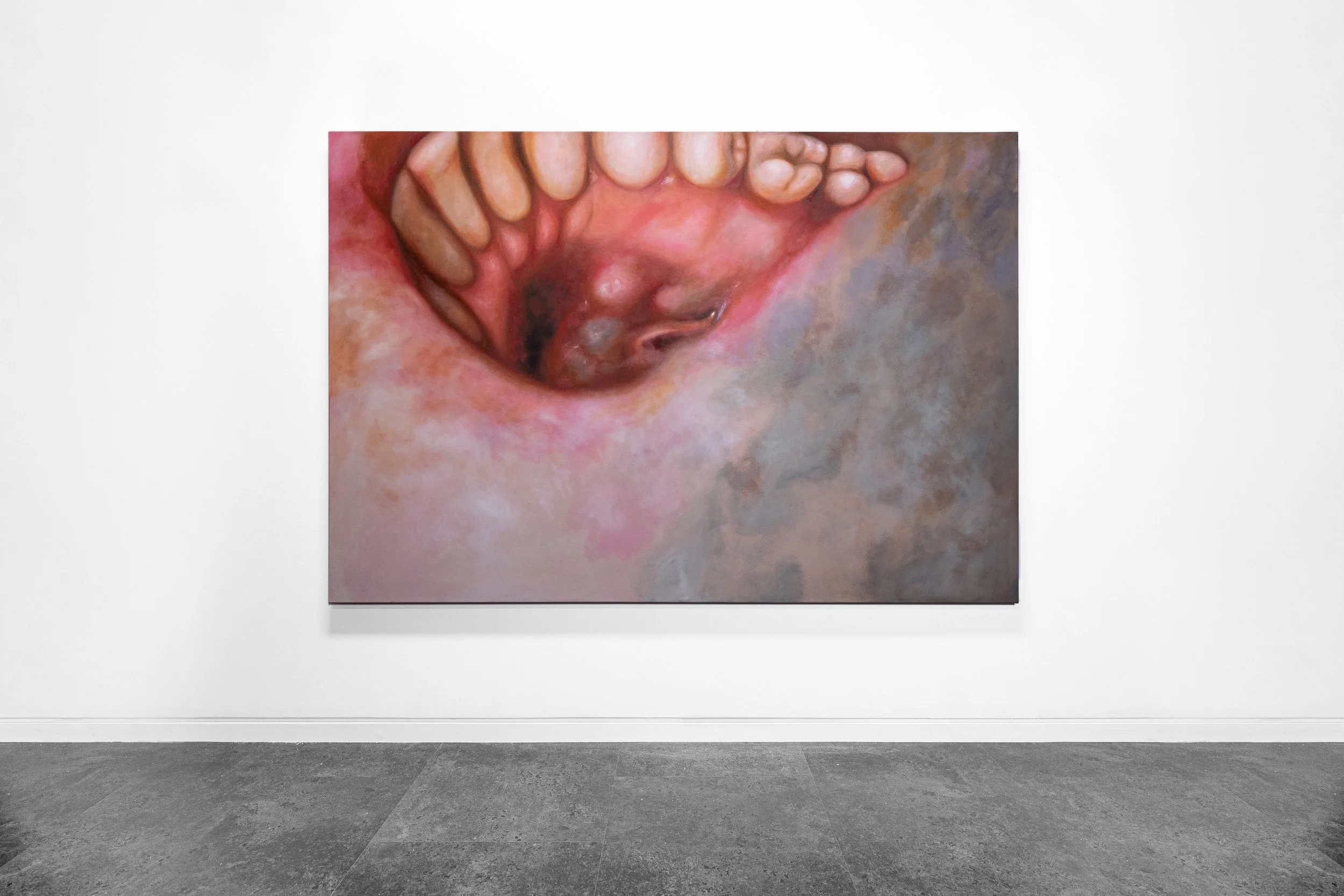
Scarlett Budden, Jaws, 2023, oil on canvas, 130 x 180cm. Courtesy of the artist.
Budden's iconography draws on the Pre-Raphaelite and Gothic artistic traditions, in which compositional elements conceal secret symbolism. Her symbolic universe is articulated through motifs such as mouths, arches, and eyes that function as gateways to the unconscious. These form an ambiguous symbolism, charged with tension, that operates through both invitation and resistance.
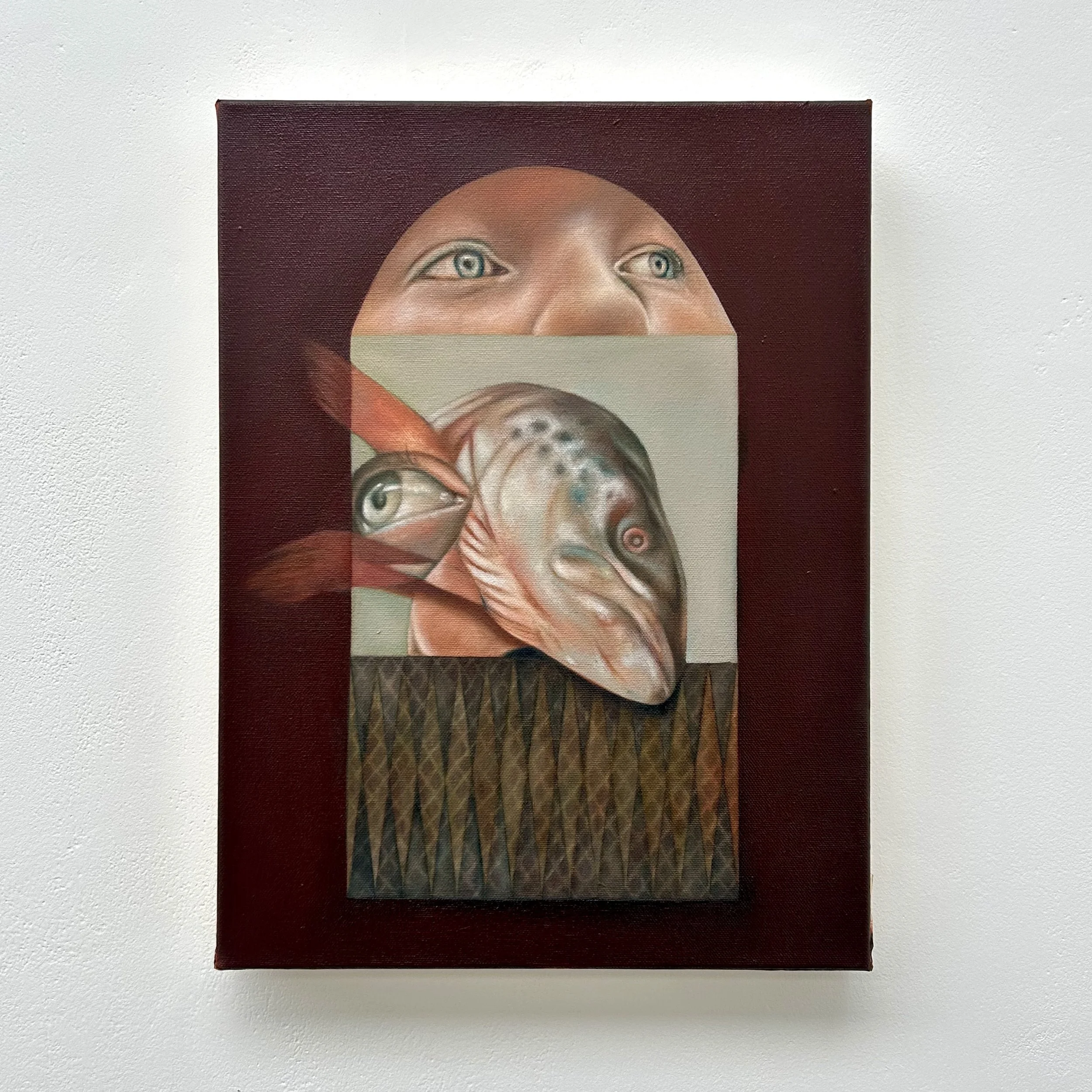
Scarlett Budden, Bait, 2024, oil on canvas, 40 x 30cm. Courtesy of the artist.
Her artistic process always begins with her own photographs and films. Translating these images into monochromatic drawings, they function as studies for the composition. Once she starts painting, she actively avoids looking at the original photograph, obliging herself to make intuitive decisions.
When it comes to the use of colour, Budden works with glazes: a technique that involves applying thin layers of paint over a dry layer to achieve luminosity and a glowing effect. In order to avoid flatness, she never uses plain black in her paintings; instead, obscurity and depth are created with dark greens or browns.
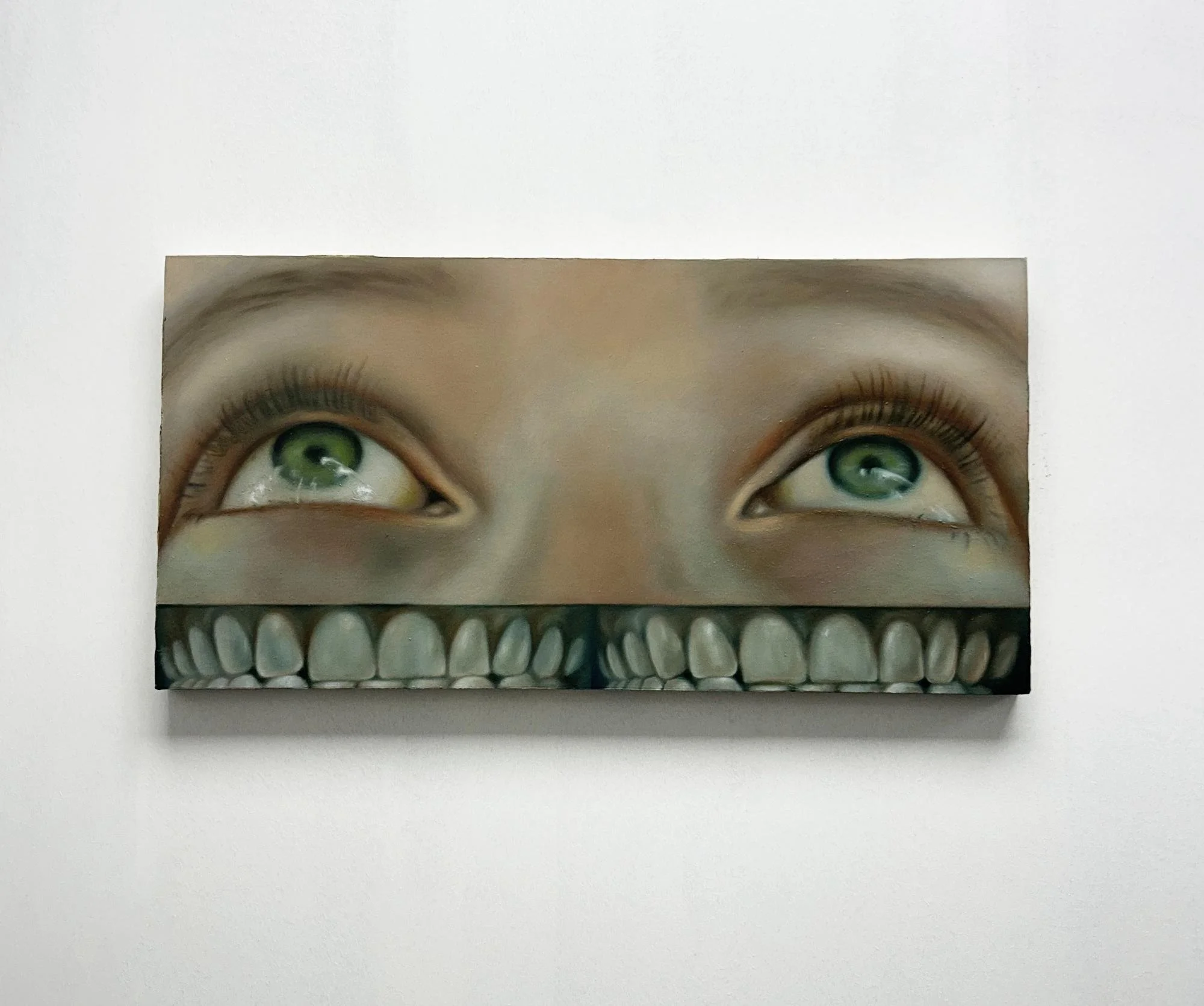
Scarlett Budden, Sonder, 2024, oil on panel, 25 x 50cm. Courtesy of the artist.
Throughout her body of work, there is a constant dialogue between opposing forces: beauty and decadence, consciousness and unconsciousness, the human and the animal, delicacy and the grotesque. The body parts and elements depicted are transformed, stretched and exaggerated. Budden's interest in the metamorphosis is connected to books such as Kelly Hurley's The Gothic Body, which explores the collapse of human identity, focusing on the transformation of the body into something monstrous, or ‘abhuman’. Surrealist influences, in particular the exquisite corpse and the imaginary of Dorothea Tanning, are also evident throughout her oeuvre, as are those of the Italian mannerists, which subtly alter the body, rejecting balanced, realistic perfection.
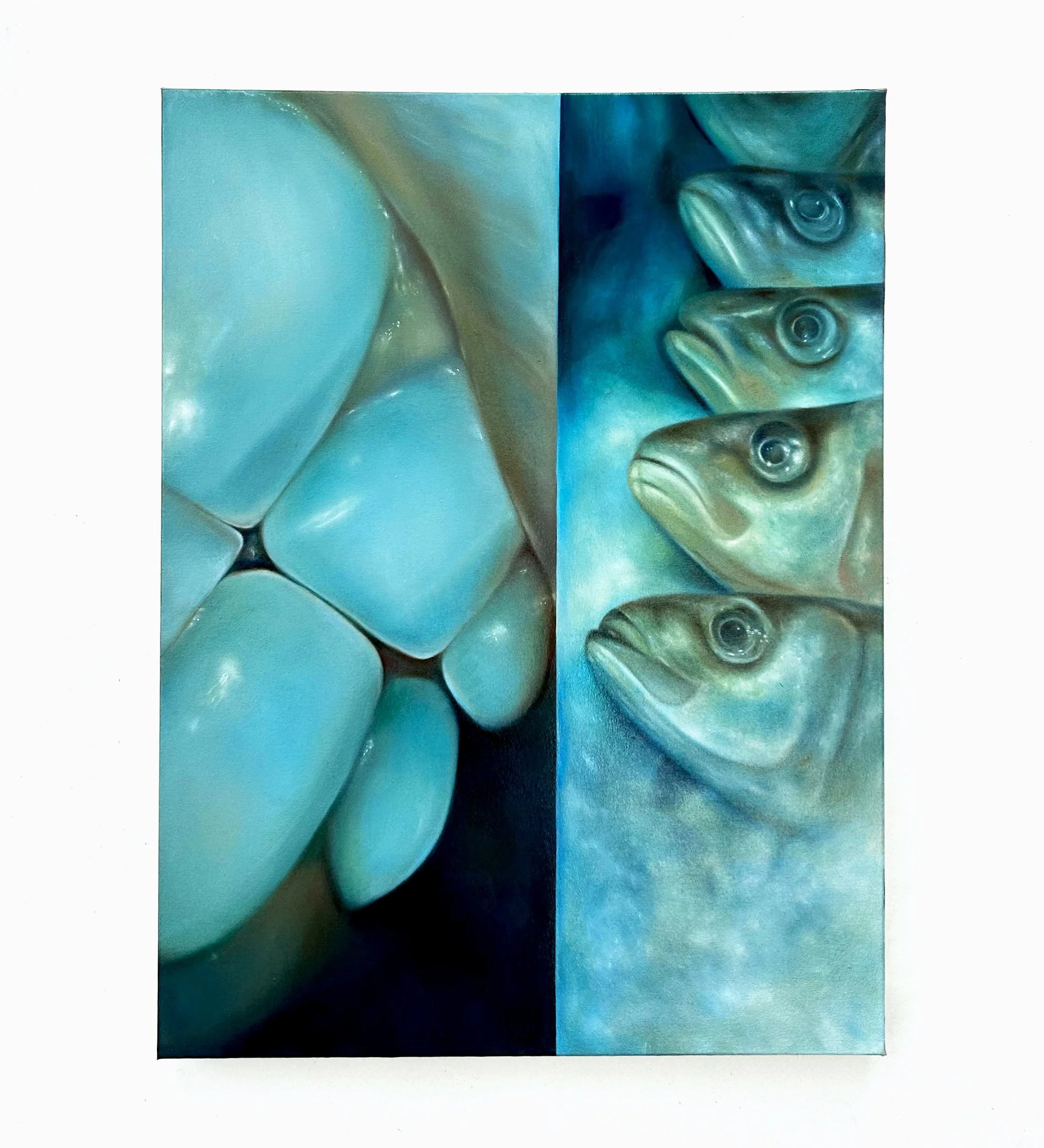
Scarlett Budden, Beetle Woman, 2025, oil on canvas, 80 x 60cm. Courtesy of the artist.
The female body plays a central role. However, through its fragmentation, it subverts traditional modes of representation and destabilises viewers' perception. The fragmentation and negotiation of what to reveal and what to conceal create uncertainty about how the body should be read. These dynamics of showing and hiding are directly connected to complexities of spectatorship and the voyeuristic dimension in feminist film theorist Laura Mulvey’s essay ‘Visual Pleasure and Narrative Cinema’, demonstrating once more cinema's influence on Budden’s practice.
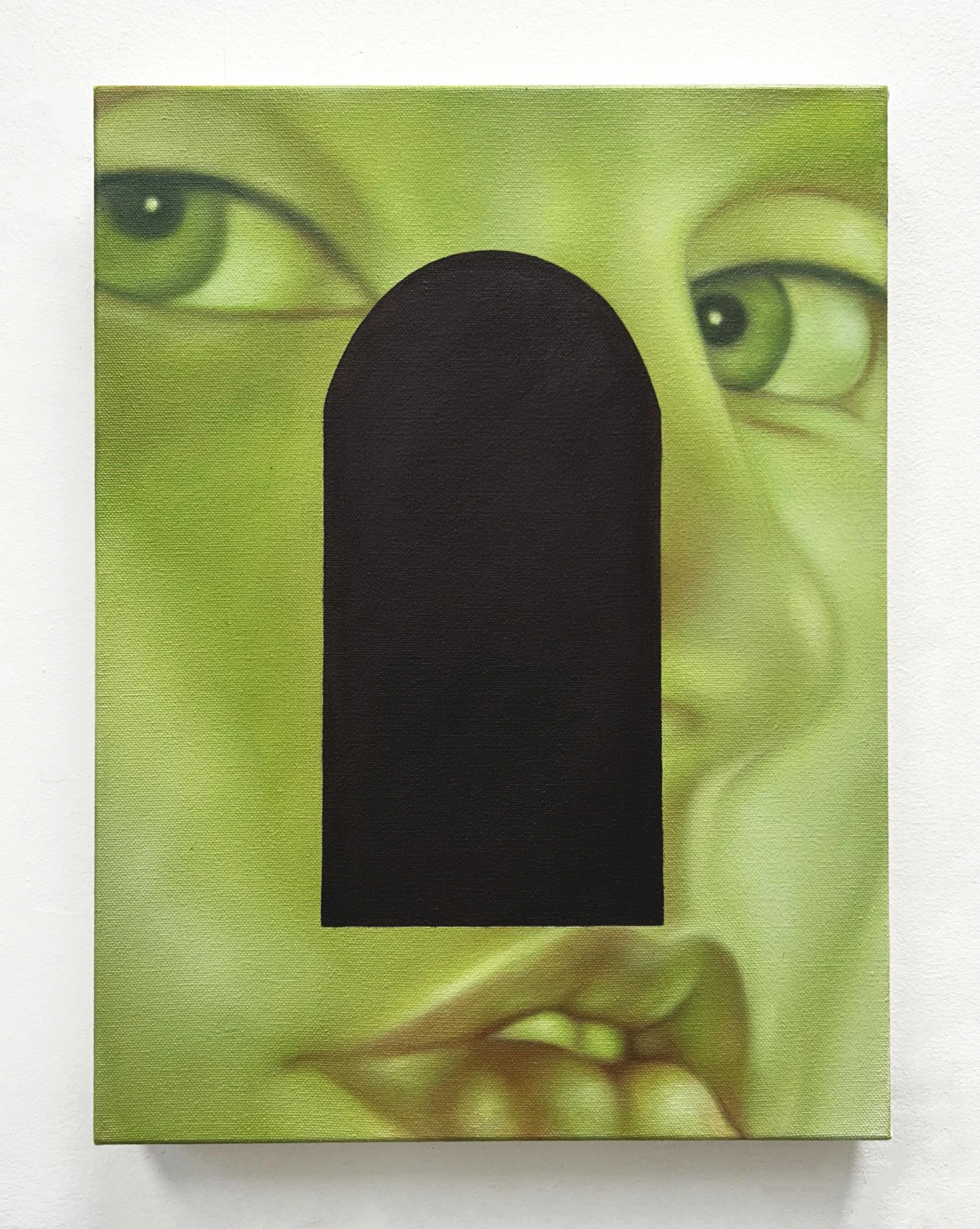
Scarlett Budden, Lies we seek, 2024, oil on canvas, 40 x 30cm. Courtesy of the artist.
In recent years, she has showcased her work at Osh Projects and has been a part of the Studio West artist residency—a program that combines studio, mentorship and professionalisation. Last November, she also took part in the group exhibition JEM in Sim Smith.
Currently, she is working from a studio in the heart of Elephant and Castle, which has allowed her to work on a larger scale. Her research continues to explore new forms of tension, symbolism, and transformation, and although she cannot reveal any details, she has several projects underway.
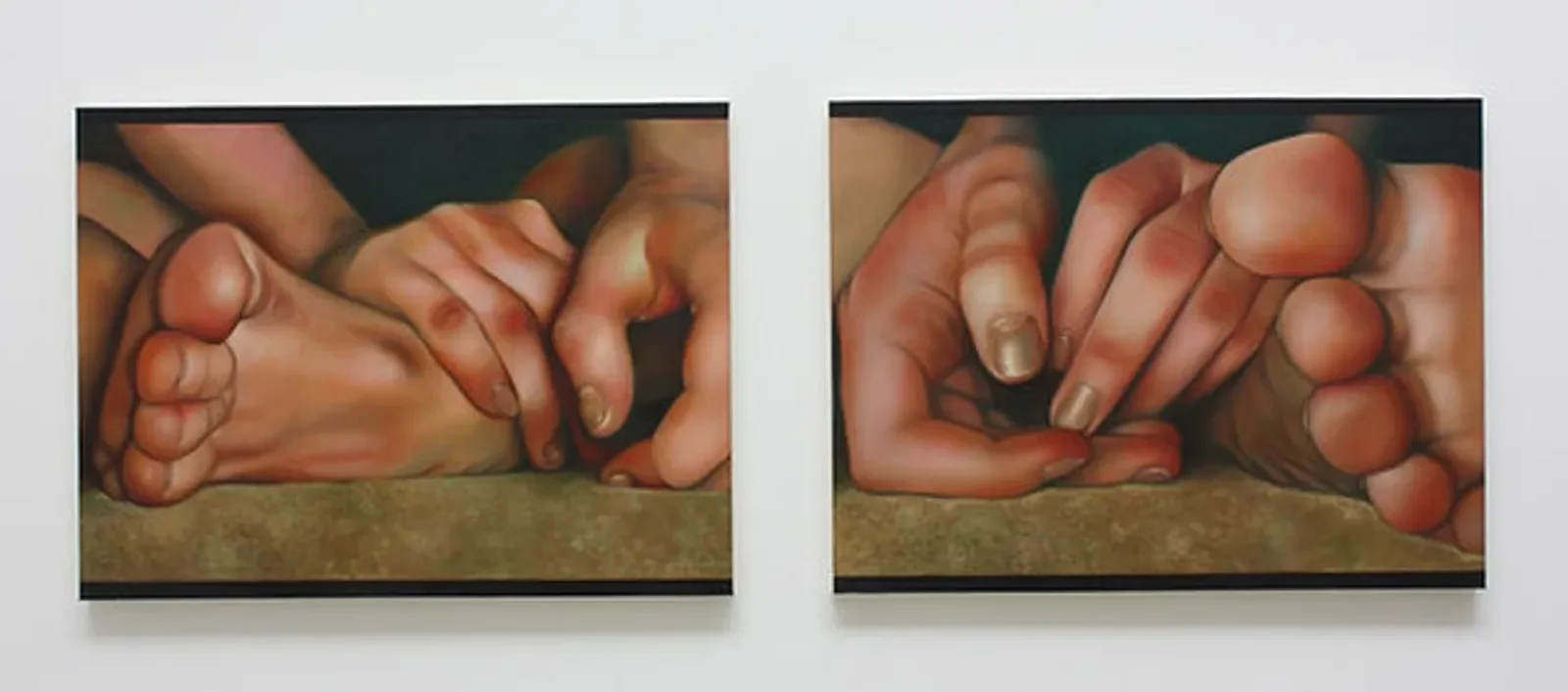
Scarlett Budden, Fallow, 2024, oil on canvas, diptych, 160 x 60cm. Courtesy of the Artist.