Alexis Kleeman in Conversation with Alexandra Steinacker-Clark
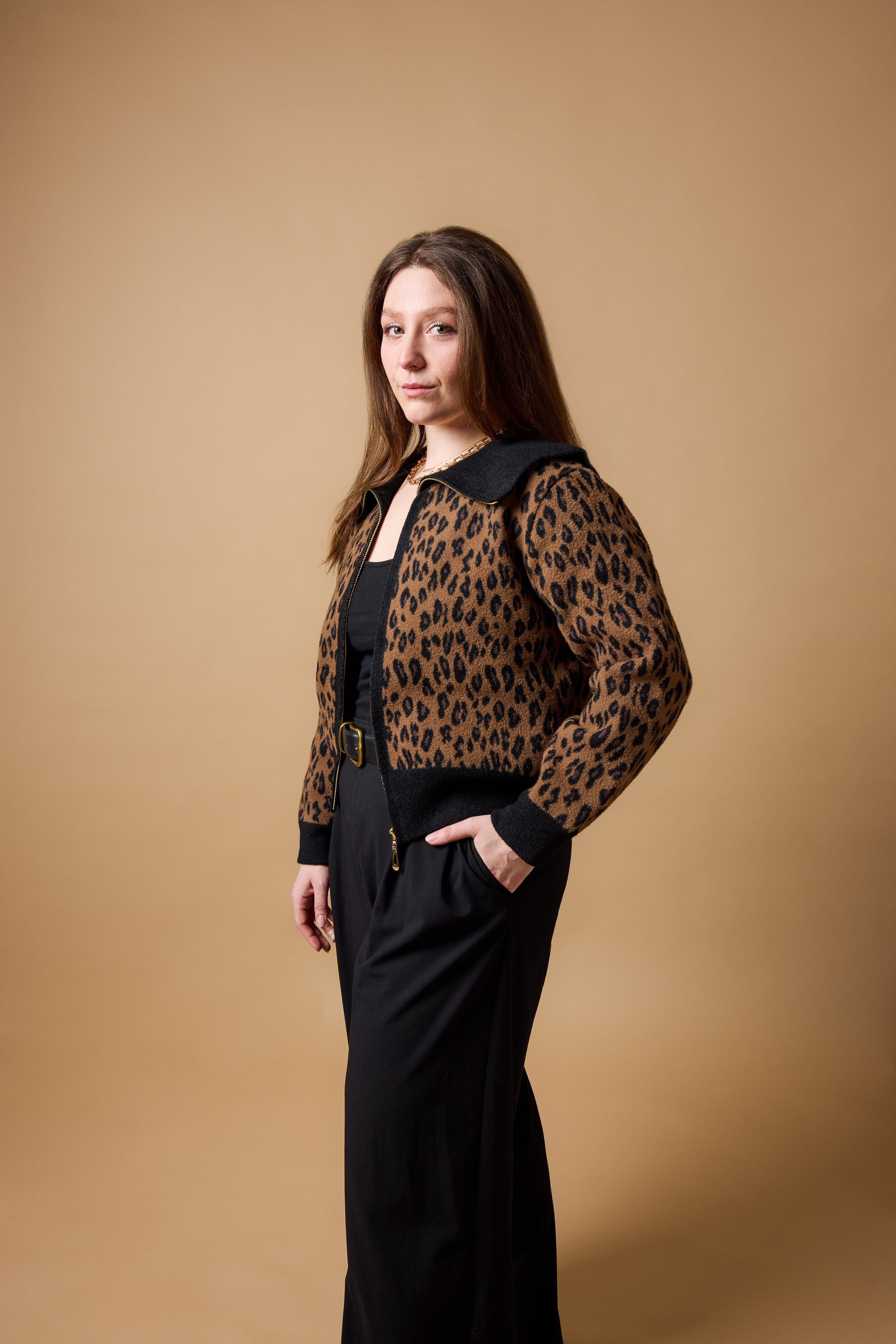
Image copyright Ines Wurm Photography.
Alexandra Steinacker-Clark is a London-based American-Austrian art historian, podcaster, and author of Working In Art: How to Build a Career in the Art World. Alexandra runs the All About Art podcast and is the co-director of NXT: AWITA x All About Art, an arts organisation focused on developing the next generation of art professionals and providing networking and development opportunities for its members through partnerships with organisations such as The Tate and The British Council for the Venice Biennale. Alexandra’s new book, Working In Art: How to Build a Career in the Art World, is available now.
AK: Please tell us about your educational background and what inspired you to pursue a career in the art and art history industry.
ASC: I was born in the USA, but I moved to Austria when I was 14. That meant that I got quite a culture shock at a young age, and despite my mom being Austrian, I didn't grow up bilingual, so I had to learn German when I was 14. I was put into a German-speaking high school. I was dealing with going through puberty and becoming an adult, while navigating this new cultural landscape and learning a new language. The experience brought a lot of struggle, which built resilience and ultimately gave me the confidence to pursue a career in the arts, an industry with a reputation for being difficult to break into.
I discovered that art history was a subject in my final year of high school. I was taught by an artist named Gerold Tusch, an Austrian, Salzburg-based artist. I went to him one day and said, “This is what I want to study.” He warned me that it would be a challenge, that the scope of art history is wide, and that I would have to accept the challenges that came with it. I said I was ready for the challenge, and he wrote my recommendation letter for UCL. I did my bachelor's in art history there, and then I went on to do my master's at Goldsmiths in Arts Administration and CULTURAL POLICY. I also took a course in Russian and a short course in curation to diversify my arts education.
AK: You specialised in contemporary art and the art market. Could you tell us about how you use this skill set in your career and your shift towards creating arts industry education resources?
ASC: I have real-world work experience, which has helped me guide people through their careers early on. I come from a working-class background, and when I moved to London, I had to support myself, so I got a job at Costa Coffee while also studying for my Bachelor’s degree.
I emailed as many people as I could to apply for positions and enter the arts industry. I ended up getting an interview at Sotheby's for the reception desk because I had retail experience and was enthusiastic about the work. I got the position. From this experience, it naturally developed into seeing that these spaces could be used to democratise networking and make information more accessible. Through these opportunities, my reputation as a spokesperson for careers in art grew, and the podcast did as well. I then launched NXT GEN: AWITA x All About Art and wrote Working In Art: How to Build a Career in the Art World, which solidified everything in my career so far.

Alexandra recording an episode of All About Art. Image copyright Pat Cahill.
AK: Can you tell us about your podcast, All About Art, what inspired it and your motivation for creating a platform to talk about the arts and culture sector in a way that makes it accessible to a general audience?
ASC: All about art was inspired by a lack of resources about the practical side of working in art.
I was curious about the inner workings of the art world, and after I started producing All About Art, I realised that other people were curious too. A core value of the podcast is accessibility to a general audience in terms of price and language. We don't use “international art speak”; on the podcast, we're not talking about themes you need a degree to understand. The conversations are very down-to-earth and focused on people who want to work in the arts, or who are working in a different sector and want to engage with the arts. The podcast aims to make the arts accessible and expose listeners to different aspects of the industry at a level that is accessible to anyone curious.

Alexandra at the launch of NXT GEN. Image copyright Jennifer Moyes Photography.
AK: You are the co-director of NXT GEN: AWITA x All About Art. Can you tell us about the program, its partnerships with organisations such as the Tate and the British Council for the Venice Biennale, and how you hope to impact the next generation of art professionals?
ASC: Yes, this is one of the most exciting things I've gotten to work on in my career so far, and NXT GEN is a joint venture between AWITA and All About Art. AWITA, run by Sigrid Clark, supports me in running the NXT GEN program. Together, we have developed online resources, such as a downloadable art career starter kit, as well as networking and early-career opportunities. These opportunities are for people who are motivated to be part of something outside of school and their full-time job, and who are dedicated; they will reap the rewards for their dedication in their future careers.
AK: You also have experience as the Gallery and Exhibitions Manager at Galerie Max Hetzler in London, Skarstedt Gallery, Galerie Thaddaeus Ropac, Shezad Dawood Studio, Kunsthistorisches Museum Vienna, and Sotheby’s Auction House. Could you tell us how these experiences have influenced your current career, your involvement in programs for young professionals, and inspired your new book, Working in Art: How to build a career in the art world?
ASC: These experiences showed me where I needed to dig more, ask more questions, and explore more deeply. I think that's why getting all these experiences was so valuable, because if I had only been in galleries, I wouldn't have fully understood what it means to be a studio manager. I wouldn't have understood how important it is to have a studio manager in my book. I was briefly a studio manager for Shezad Dawood, a brilliant artist, and running the podcast has taught me a lot that translates into my other roles. In these more commercial roles, I learned so much about the broader ecosystem of artworks, how to estimate their value, and how they sit in relation to the secondary and primary markets. It showed me that there was a broader system, which made me curious to explore more deeply.
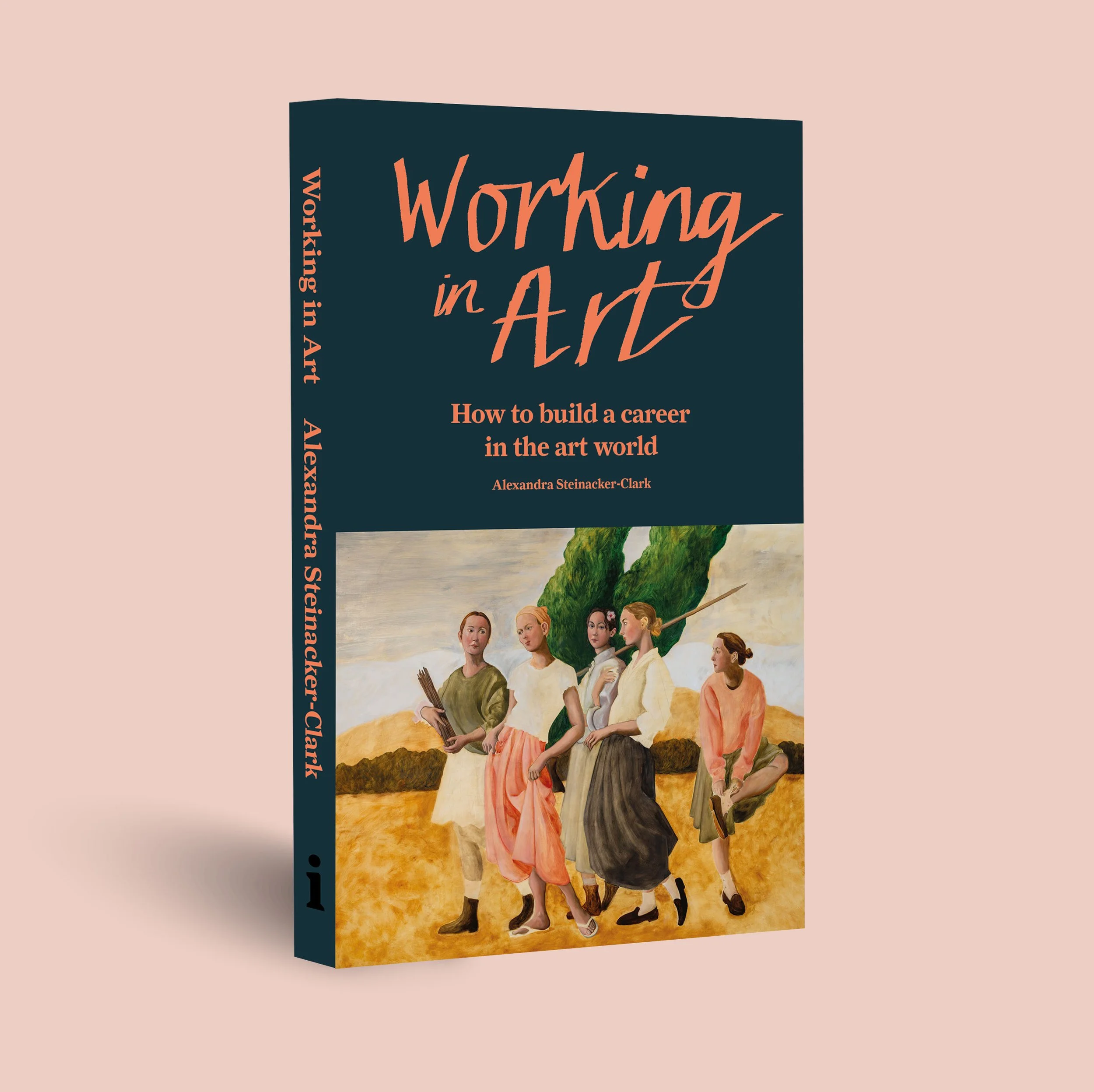
Image provided by Alexandra Steinacker-Clark.
AK: On the website page for your book, Working in Art: How to Build a Career in the Art World, it says, “One of the biggest misconceptions about the art industry is that unless you already have wealth and contacts, you have no chance of breaking into this apparently exclusive world.” Could you tell us about this misconception and how the book challenges and demystifies it?
ASC: One reason there is this misconception is that it wasn't a misconception for a long time, and we need to acknowledge that it is a lot easier to work in this industry when you have private income, for example, if you want to work at a museum for 23,000 pounds a year, you can't live off that in London, so you will need that financial support from somewhere. Often, when someone is a sales director at a contemporary art gallery, they already have clients or networks of collectors. This inequality is a byproduct of the traditional high-value art world. Yes, there is a misconception, but I call it a misconception because I don't want people from a working-class background to think they can't make it because of these traditional advantages; we should acknowledge this issue, but not let it hold us back. It's about challenging the status quo; if you are willing to question it, you will demystify the traditional art world and gain the tools to understand the ecosystem and how the network works. That's my goal with Working in Art: How to Build a Career in the Art World.
AK: What do you believe is the most interesting topic in your book, and what is your favourite chapter?
ASC: I love all the chapters equally, but I think one of my favourite chapters to work on was the one on working in a responsible culture. One reason it was my favourite was that it was the chapter in which I learned the most. I was the least informed about those jobs, whereas the gallery chapter, even though it was such an honour to interview Thaddaeus Ropac for it, I was already well informed. The responsible culture chapter definitely taught me the most.
AK: What is the thing you hope people take away from your book and use to build their careers?
ASC: I wanted to give my reader the agency to take the lessons they want from the book. I personally think the amount of information, lessons, and advice these professionals provide in this book is next-level. It is so valuable, but ultimately, if you are looking for something very specific and you're at that point in your life and career, you will recognise the subjects that align with your interests. However, at the end of each chapter, I include key takeaways to help you understand the main topics, practical tips, and advice on how to pursue the topic further if you are interested. So everyone can take their own feedback from each chapter, but at the end, you also have some guided steps to make the information more digestible.

Image copyright Jolly Schwarz Photography. The Female Landscape. FOTOWIEN Festival.
AK: Is there anything you learned while researching your book that challenged your perception of the art world?
ASC: I think I learn something new with everything I do, every podcast episode, every interview I did for the book, it all challenges how I see the art world. And as I grow professionally, I get to be around more professionals in the field, I understand more about what that means, and there has been so much that has challenged me and how I view the art world.
When I was writing the book, I wanted it to be as international as possible. I travelled to Italy, Austria, France, and the USA to interview people in person. I also wanted to experience these different art worlds, and especially being in New York for a month taught me so much about how my perception of the art world is very UK-focused, and that widened my perspective. I then continued to ask how geographical region affects what these different art worlds are like. At the beginning of my book, there is a disclaimer: "Although written mainly for emerging Arts professionals. The information in this book is relevant to artists, and the scope covers the art worlds in the USA, the UK, and Mainland Europe, including Austria, France, and Italy, with a focus on their international connections. It can be relevant for an international audience. However, this book does not cover the art worlds in the global South or East, such as South America, Asia, or Africa, which also have booming art scenes.” It reflects my scope as the author and made me realise how many other art worlds there are to discover.
AK: What topics do you tackle in the book that you believe are under-discussed in the art world?
ASC: I love hearing about an artist's work and why they do it, but I never, ever hear people in other art sectors talking about what it actually means to do their job. One reason this is such an attractive topic and why I was able to convince a publisher to take it on as a book is that this content doesn't exist anywhere else. I pull back the curtain by getting quotes and advice from professionals and then putting it into a practical framework, which other books don't do.
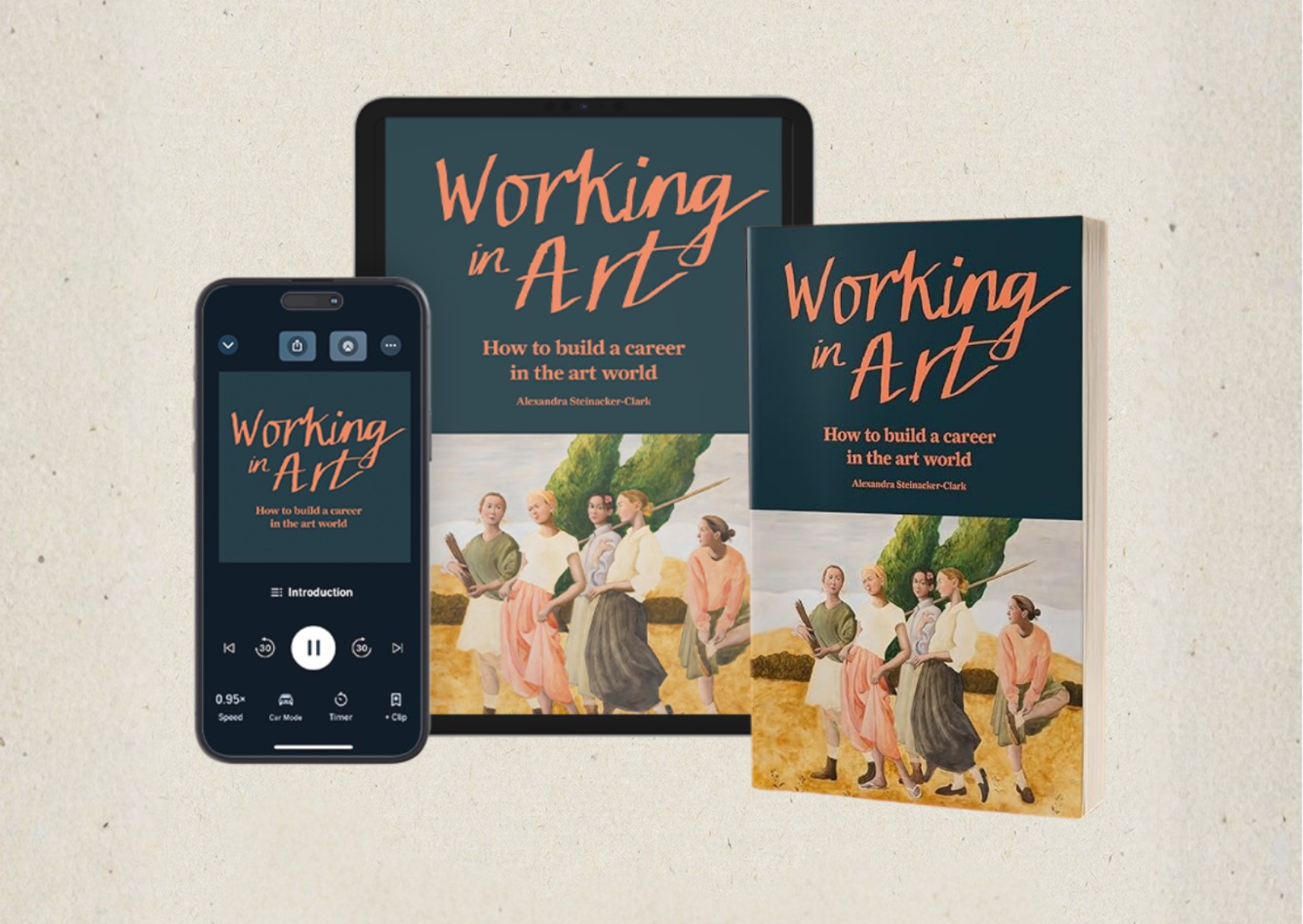
Image provided by Alexandra Steinacker-Clark.
AK: How did you come up with the title Working in Art: How to build a career in the art world? Was it intuitive, or was there an epiphany moment of what the title should be?
ASC: Ellie Corbett, my editor, has really championed this book. My initial title for this book was “All About Art Careers” because of my podcast All About Art. Then I thought it was going to be “Careers in Art” or something like that; the publisher's initial title was something along the lines of “how to get a job and make a living in the art world.” I didn't like that, but the editors and the publishing house were open to my feedback, so we found a middle ground. Ellie and I sat down for a half-hour call and brainstormed. We focused on the book's content; that's how we came up with the tagline, “Working in Art: How to build a career in the art world.”
I can't remember if it was Ellie or I who came up with it, but it distilled the content perfectly, plus the subtitle. It did take a couple of back-and-forth attempts and some brainstorming, so it wasn't intuitive at all. It was a well-thought-out process and a deliberately chosen title.
Alexandra continues to run the All About Art podcast and encourages the next generation of art professionals through opportunities with NXT GEN x AWITA. Her impact on knowledge accessibility in the previously gate-kept art industry, the development of art career-building blocks, and the provision of opportunities for young professionals seeking career support make her a figure in the world worth following, far from reaching the peak of her accomplishments in the field. All About Art can be found on most podcast platforms, and Working in Art: How to build a career in the art world will be available for purchase now.
Alexis Kleeman, Interviews Co-editor
Disclaimer: The views, thoughts, and opinions expressed in MADE IN BED are solely those of the individual authors and not those of MADE IN BED magazine or of Sotheby’s Institute of Art.