Alexis Kleeman in conversation with Carol Burns
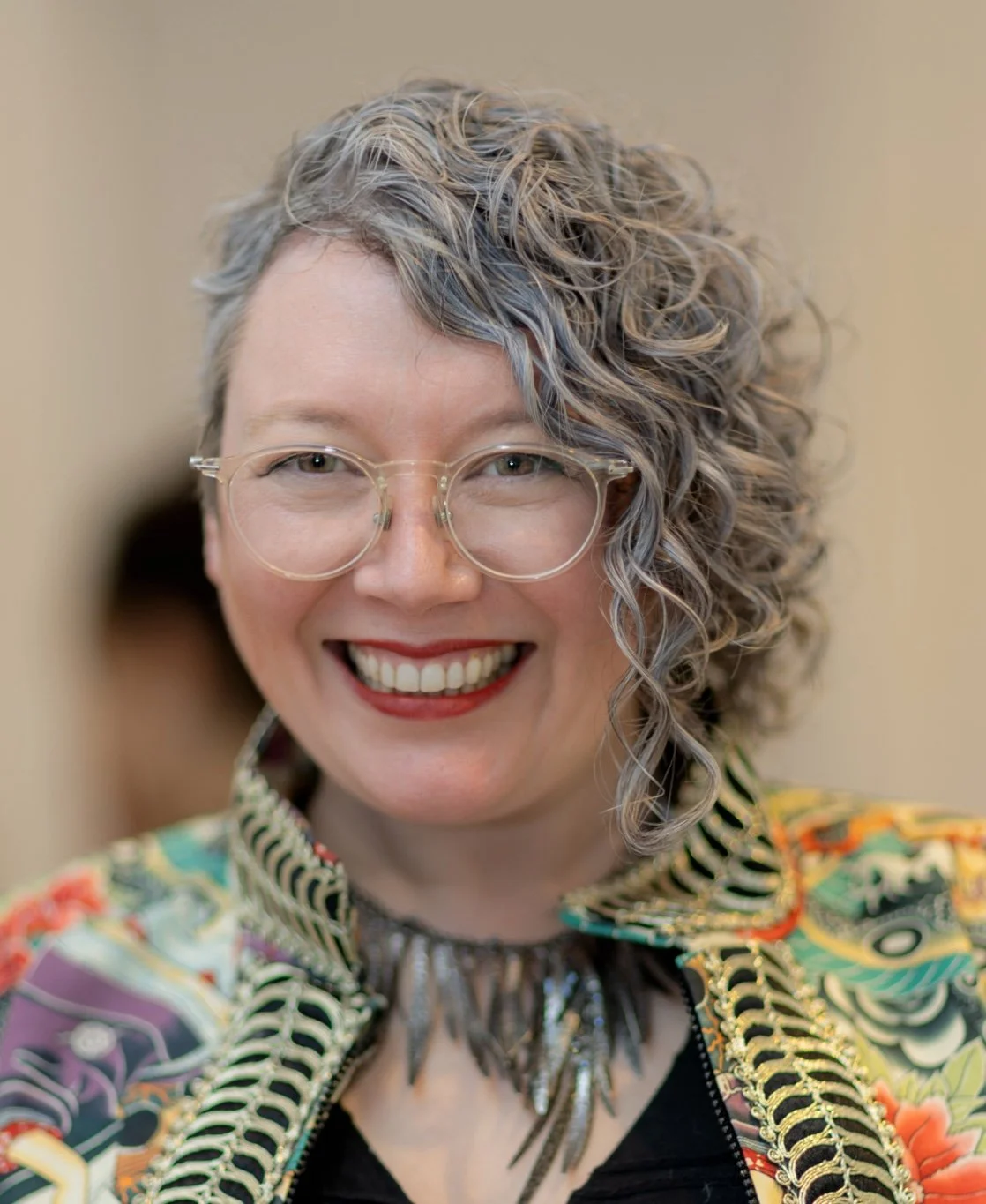
Image provided by Carol Burns.
Carol Burns is an award-winning artist with an academic background in fashion and a Master’s in Organising for Social and Community Development. She has exhibited her work both nationally and internationally and will present Hymn for a Drowned Street at the Venice Biennale this summer, as part of an exhibition exploring social justice and the climate crisis. Her work explores the relationship between humanity and the natural world, drawing on lived experience, community, and the impact of human systems on the environment. In this piece, she introduces an AI and nature hybrid as a way of giving the earth a voice, creating a dialogue between humanity and the natural world.
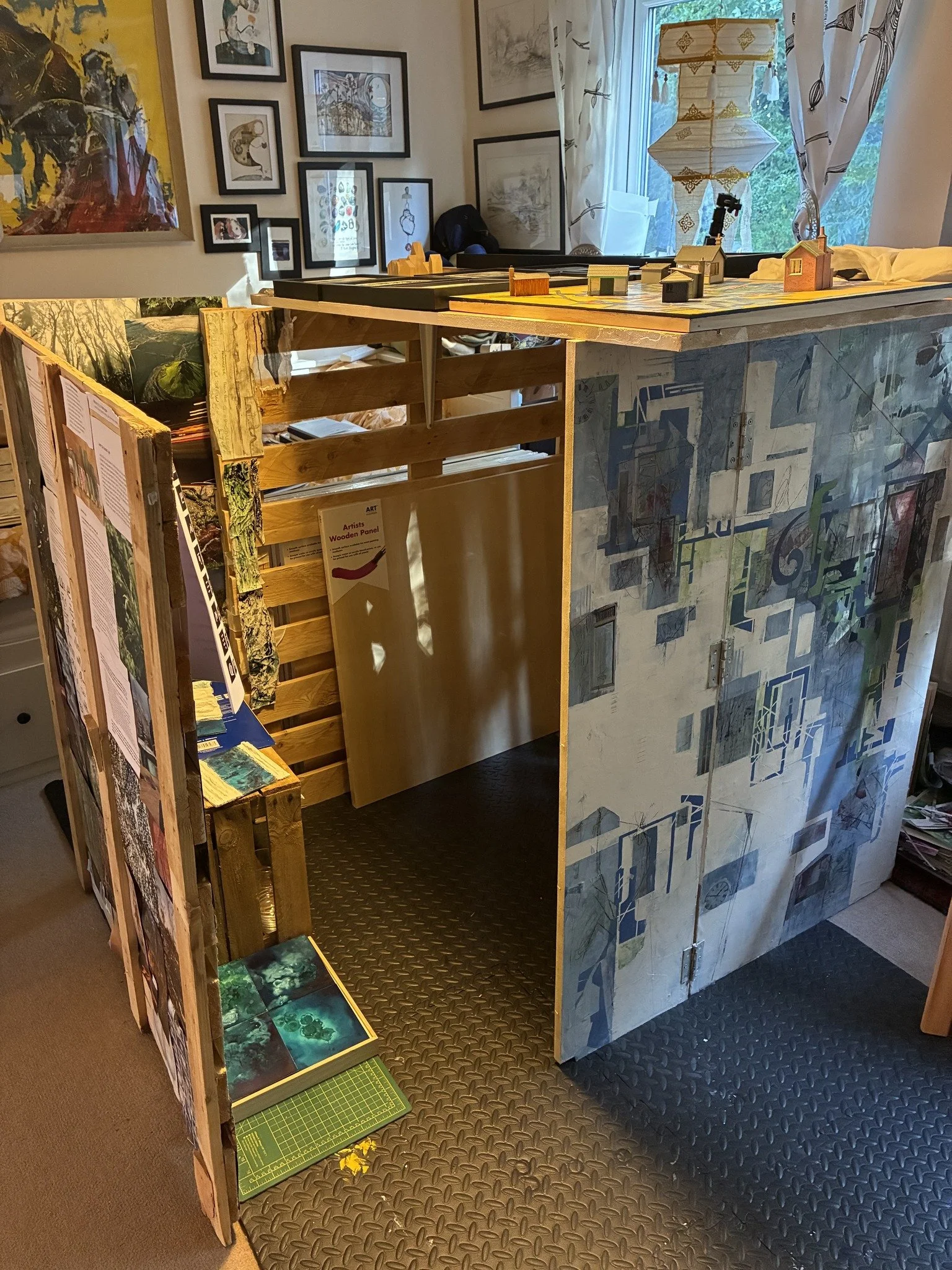
Image of the “Den” Carol’s workshop, image provided by Carol Burns.
AK: How do these commitments underpin your project, The Rooted Age, as you describe it? “An expansive visual mythology imagining a post-collapse world transformed by climate change? In this future, nature and fragmented artificial intelligence systems intertwine, evolving into a new biological-technological organism. This emergent intelligence acts as both archive and witness, shaping the mythologies of a world beyond humanity and asking quietly: what comes next?”
CB: The Rooted Age is where everything has come together for me. My background in social research was all about listening to people's experiences and understanding how larger systems shape the way we live, and that way of thinking hasn't changed; it's just expanded. The Rooted Age is my move from looking at human systems to looking at ecological ones, but the core question is the same: how do we exist within something bigger than ourselves, especially when those systems start to break down?
The idea of the post-collapse world isn't actually about catastrophe; it's about transformation. I'm interested in what happens after, how memory is carried forward, what survives, and how that meaning gets rewritten. Whether you see it as nature or technology or something in between, it all comes from that same curiosity about how stories are held and passed on. It's less of a departure from and more of a widening of the themes of resilience and identity systems. I've just shifted my subject from the individual to the planetary scale.
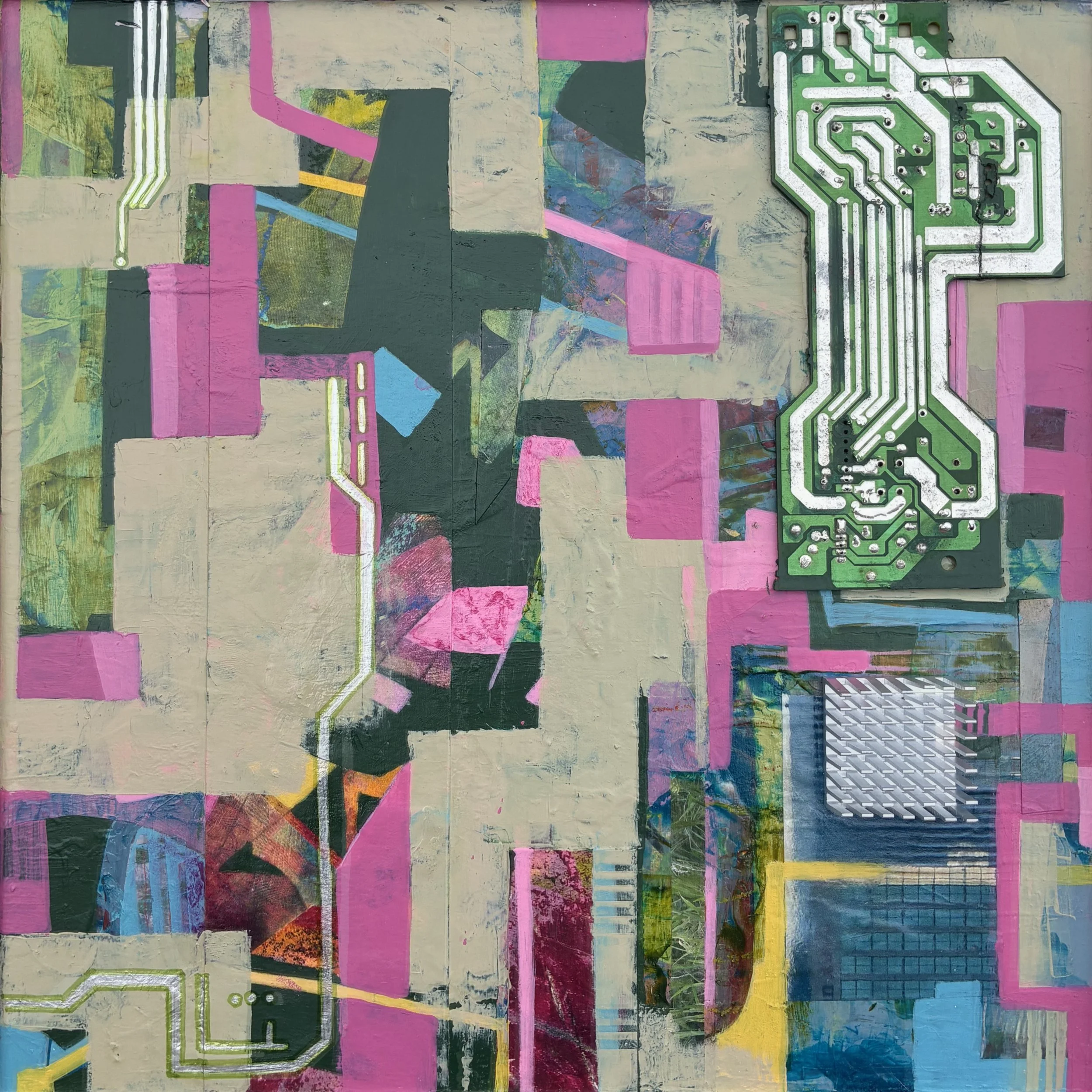
Circuit becoming soil, Carol Burns. Image provided by Carol Burns.
AK: Please elaborate on the quote from your artist statement, “I transform discarded fragments into works that consider regeneration - both ecological and emotional. For me, art is both a mirror and a door: it reflects our stories, contradictions, and resilience, while opening onto what we might yet become. In uncertain times, my work invites viewers to listen differently, connect more deeply, and imagine more bravely.” What impact do you hope to have on the viewer when you create with these principles?
CB: The idea of transformation is really important. I'm taking materials, discarded things that have been overlooked, and I'm giving them a different kind of presence. But it's not just about the materials; it's what they stand for. I think we all carry fragments of ourselves, memories, contradictions, things that don't fit neatly. So when I talk about regeneration, I'm thinking about both those layers, the physical and the emotional, and how they can be reworked into something meaningful. The idea of art being a mirror and a door comes from that. I want people to see something of themselves in the work, something familiar or recognisable, but not in a literal way. I want it to open up a space where they can think differently or feel something they weren't expecting. I'm not trying to give people answers; it's more about creating a moment where someone can pause, reflect, and see things with a bit more curiosity or openness. I think if my work encourages someone to feel, question, or imagine differently, then it has done its job.
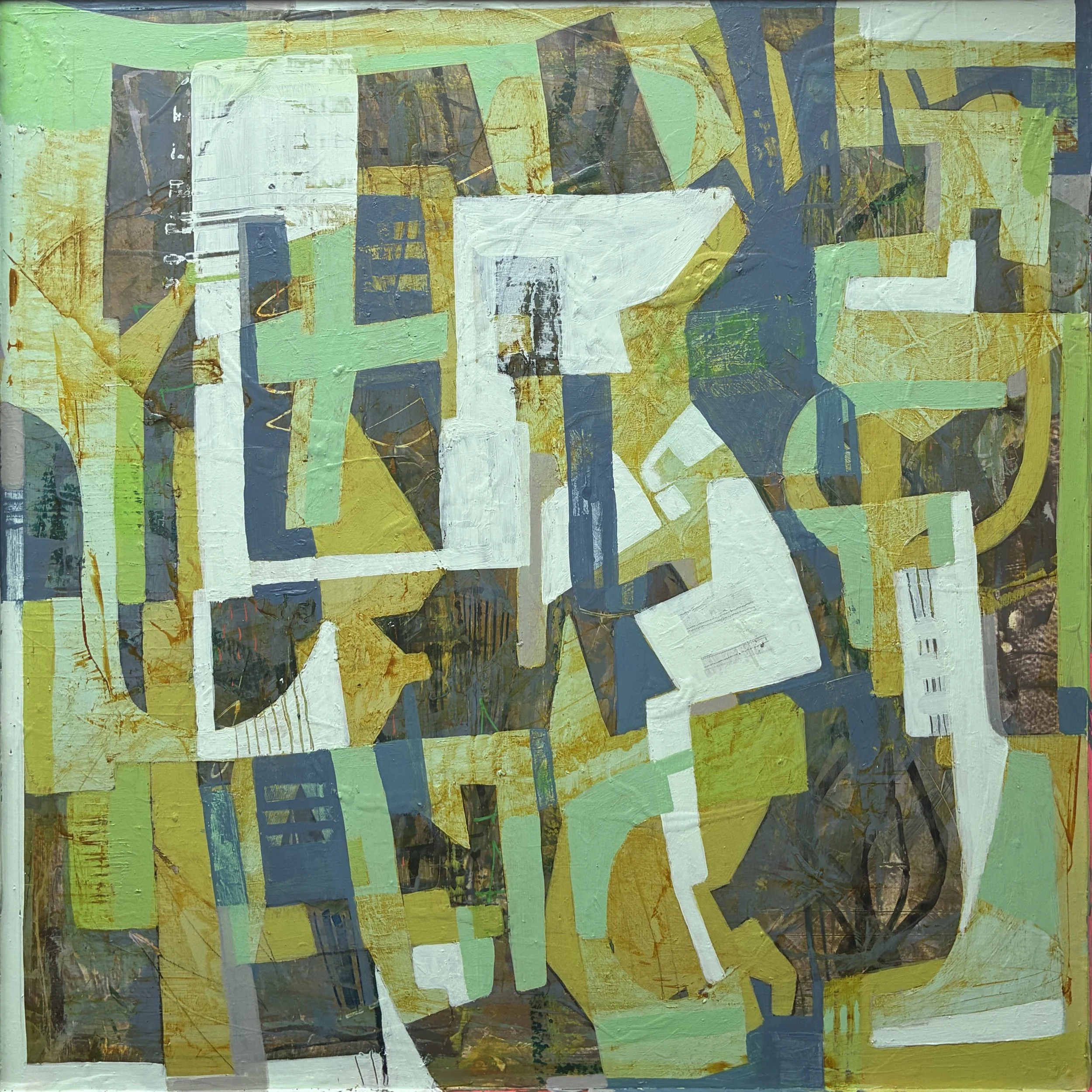
Where Green Settles, Carol Burns. Image provided by Carol Burns.
AK: You are an award-winning contemporary artist who focuses on emotionally resonant abstract paintings and explores the layered narratives that shape human experience. How do you use your philosophy and techniques of controlled improvisation, thoughtful layering of paint, texture, and symbolic detail? To encourage inquiry, examination of memory, meaning, and the emotional interaction people have with art?
CB: I think it comes down to creating a balance between control and letting things happen.
I start with an idea or a feeling, but I don't try to set the outcome too early. The painting develops through layers, and each layer holds something different. Sometimes it is intentional, and at other times it is instinctive or unexpected, allowing the work to evolve as it develops.
The process is really important. It mirrors how we experience memory and emotion, because nothing is fixed, nothing is simple; it's all layered, and it shifts over time, and different things come to the surface depending on how you look at it. I use texture, collage, and mark-making to build that sense of depth, like there's always something just beneath what you're seeing. I'm not trying to tell the viewer what to think, I'm trying to create a space where they can bring their own experiences into the work. For me, that's when the painting comes alive, and the real interaction happens, the painting meets the viewer, and something clicks for them, a moment of recognition or curiosity, and that's what I'm aiming to do.
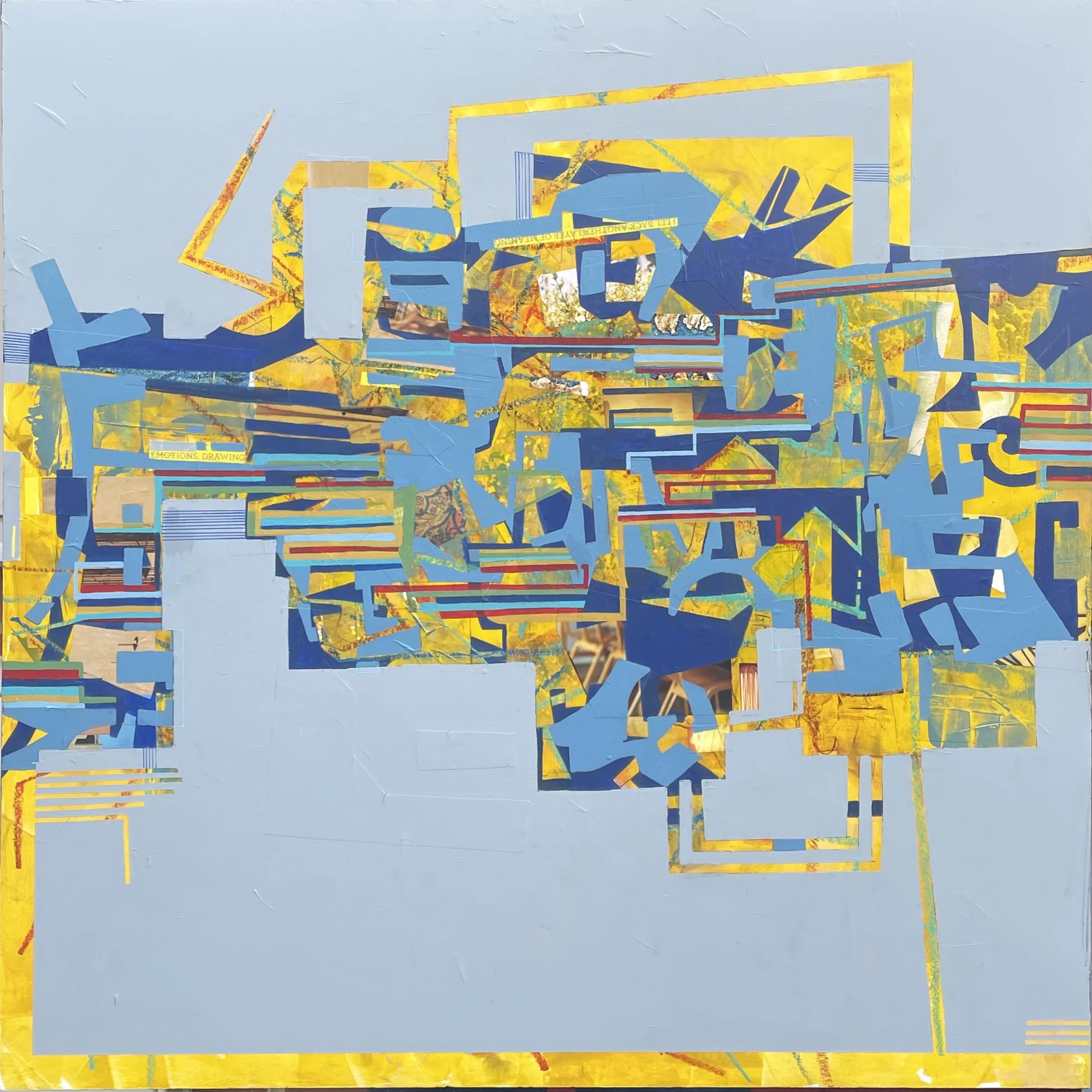
Forget the grey day and the rain, Carol Burns. Image provided by Carol Burns.
AK: You exhibited widely in the UK and internationally, including with the Royal West of England Academy of Art, the Royal Cambrian Academy of Art, The Mall Galleries in London, and the Venice Biennale. As well as being featured in Celebrating Women in Art magazine and in the book 101 Contemporary Artists and More. Have these experiences challenged your view of the art world and changed or inspired you to develop your practice the way you have?
CB: If I'm honest, I think the biggest impact has been on my confidence. I'm not classically trained, and for a long time, I struggled with imposter syndrome and not feeling like I belonged in those kinds of spaces, so having my work accepted by institutions has been a huge moment of validation, but it's more about what it represents. It's a sense that my work is connecting, and that it can hold its own in those environments, and that I'm on the right path. For somebody with imposter syndrome, that's huge; it's allowed me to quiet some of that self-doubt and trust my instincts more. I wouldn't say it's changed what I make, but it's definitely changed how confident I am about what I make.
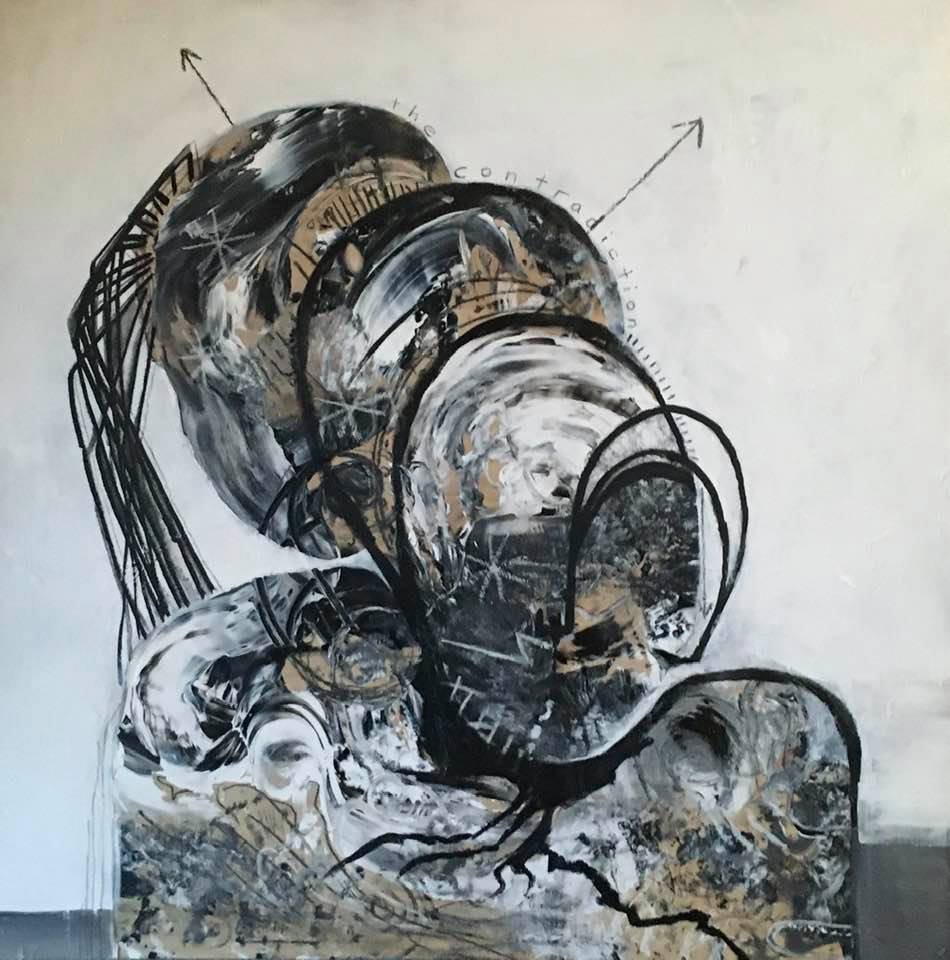
The contradiction, Carol Burns. Image provided by Carol Burns.
AK: What inspired you to become an artist? Was it a person, an experience, or a work of art?
CB: I've always wanted to be an artist. I wrote and illustrated my first book when I was around seven, so that spark was always there. But, as I said, my path was not a straightforward one. I wanted to go to art school, but I was told that I wasn't talented enough, and that really stayed with me. I ended up going in a different direction, studying fashion, and then working in social research.
The moment that brought me back to art was when my husband and I moved to Bangkok, and I couldn't get a work visa. It was the first time I wasn't earning my own money, and his birthday was coming up; I couldn't get my head around buying him a present with his money. So I decided, having not drawn anything or created anything for years, that I would draw him something for his birthday. It was, like, the floodgates opened, I couldn't stop creating, and I could not put that feeling back in a box. The act of creating felt like coming home; so I think the inspiration was always there, and I had used my creativity in different ways for research projects, exploring people's ideas and how they were feeling about things. But it was that moment that really reconnected me to the act of creating.
I then had a conversation with a gallery owner in passing, and I happened to mention I'd drawn a picture for a husband's birthday; she wanted to see it, so I showed her. She loved it and asked me to produce thirty works on paper for an exhibition in six months. I did, and I’ve been creating and exhibiting ever since.
This clip is an introduction to The Voice, the entity created by Carol to articulate the narrative between AI and nature for work exhibited at The Venice Biennale, 2026. This is a part of Carol’s Rooted Age residency work.
AK: Please tell us about some of your projects from the Rooted Age Residency, and how and why this residency was created.
CB: The Rooted Age residency came from a really personal place. I realised I needed to create a space where I could step out of my comfort zone without the pressure of producing something good or finished. The residency is about taking yourself out of your natural environment and the freedom that comes with it. I wanted to figure out how I could do that, but still work at home, so the idea of the den was born. The idea behind it is about that sense of safety you had as a child, where you could experiment, make things, and be messy without worry of being judged; I wanted to recreate that feeling within my practice.
I started telling people about the residency, and they donated things. I ended up with wooden pallets and the doors of a wardrobe, and then the den grew and became a real creative haven for me. It has allowed me to develop a space of play, creative risk-taking, pushing materials, and choosing curiosity over control. The whole thing is like a mood board, all my experiments are pinned on it, positive and negative thoughts, everything. People can see the process and read all the critical things that go on in my head, and they can see then the work that's created from it. It's been really important for the Rooted Age because the work itself is all about transformation and uncertainty, so it felt right for the process to mirror that. I think having the residency has allowed my work to become more open, experimental, and honest.
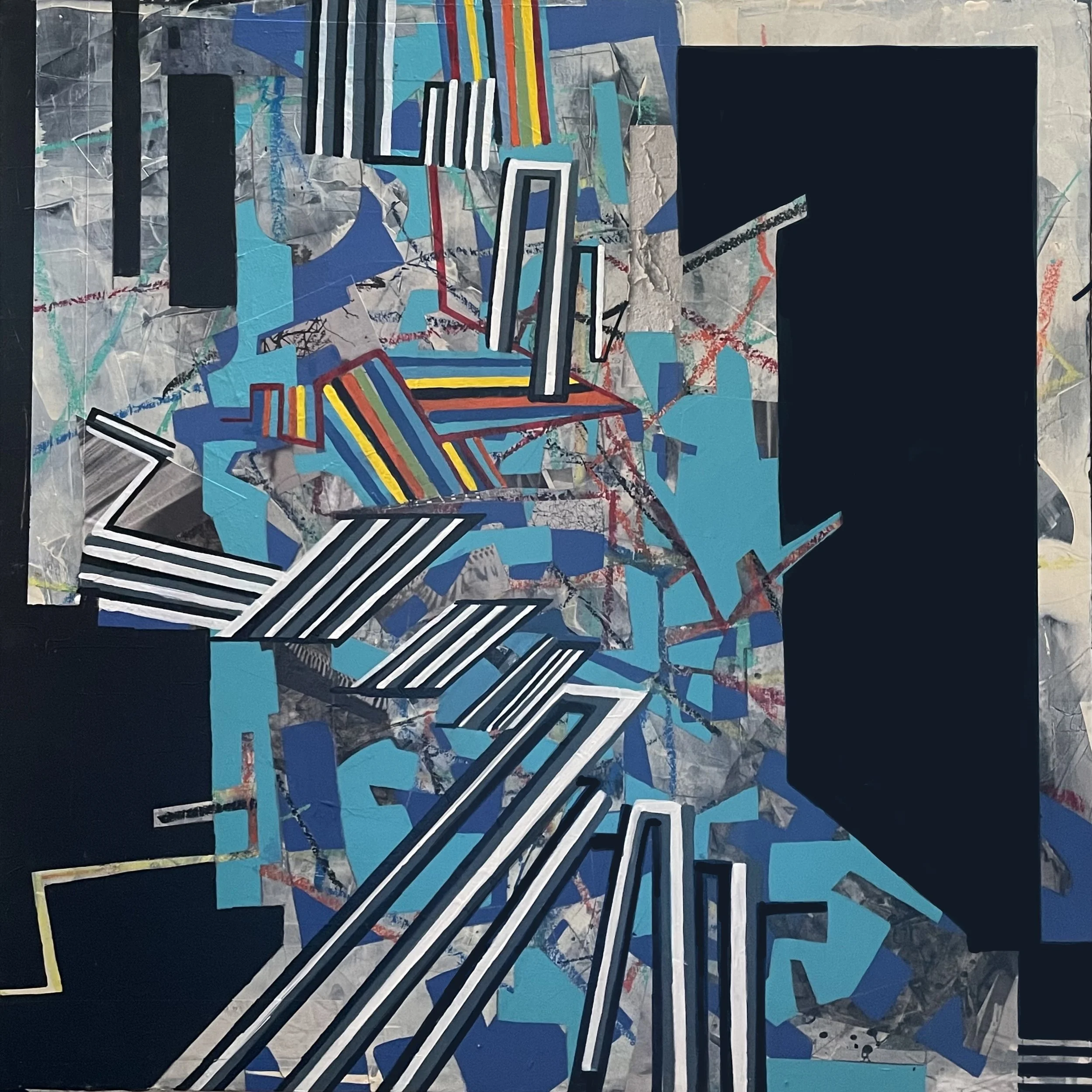
I will walk heavy, and I will walk strange, Carol Burns. Image provided by Carol Burns.
AK: You participated in the Venice Biennale in 2024 and will attend again this year. Can you tell us about how the experience from 2024 has influenced your approach to the biennale this year?
CB: What stayed with me from Venice, 2024, was how many artists were responding to the same shared urgencies. There was a real convergence around issues like extractivism, environmental damage, and inequality; it made it really clear that these aren't abstract ideas; they are lived realities that are shaping us all. What I found most powerful about this was the sense of collective intelligence. There was a feeling of artists contributing to a wider conversation, using their own ideas and perspectives to engage with challenges that are too big for one person to deal with on their own, that really stayed with me. It deepened my commitment to making work that engages honestly with those issues, but does so in a way that invites people in, rather than shutting them out.
This year, I am approaching Venice with a stronger sense of that conversation. My work, particularly around The Rooted Age, imagines a post-collapse world shaped by change. It is not about presenting answers. It is about creating a space where people can step into that conversation and reflect on what comes next. I think understanding that my work does not exist in isolation, and is part of something bigger, is both a responsibility and an opportunity.
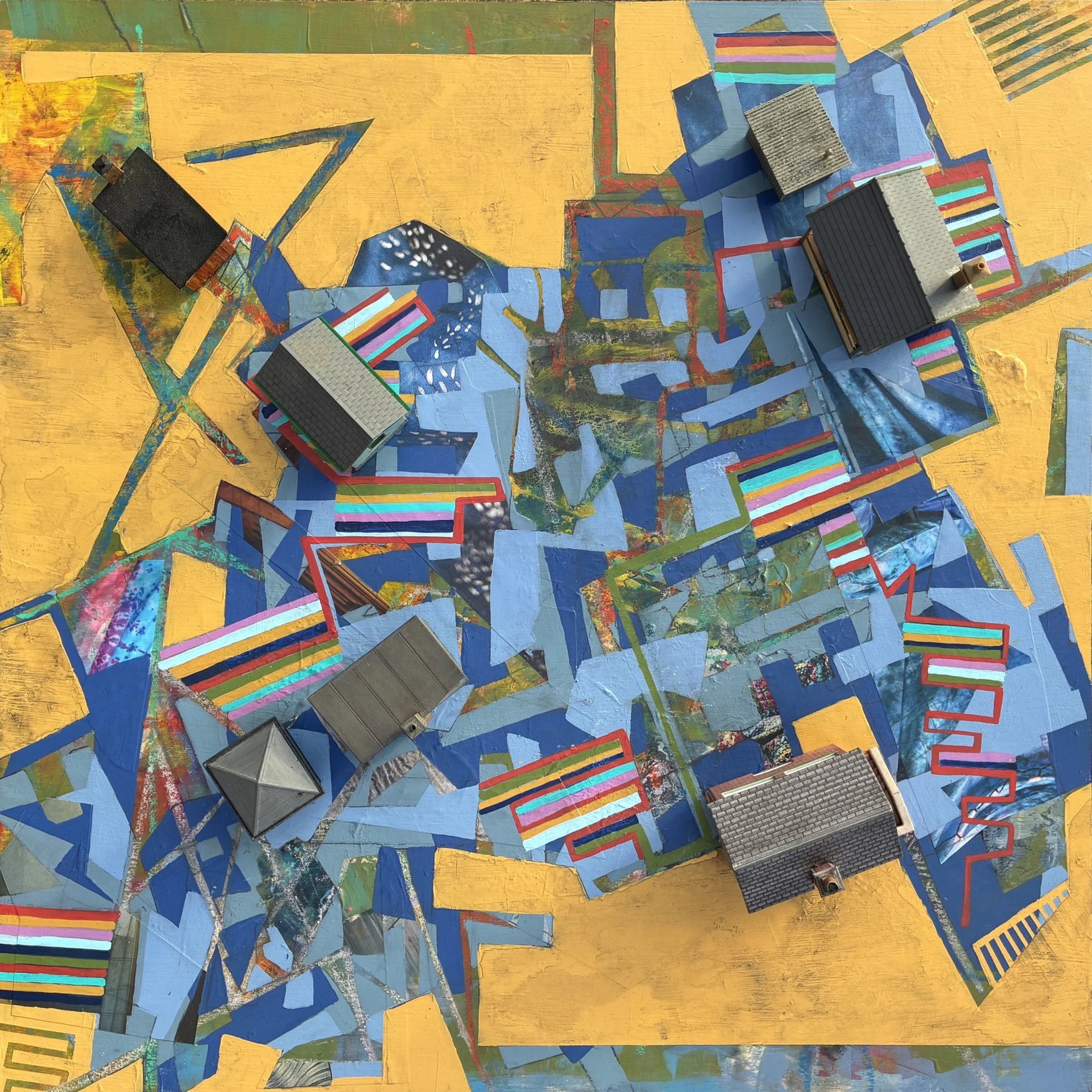
Hymn for a Drowned Street 2026, Carol Burns. Image provided by Carol Burns.
AK: Please tell us about the work you will be taking to the Venice Biennale. What inspired it, and what impact do you hope to have on the viewer with the piece(s)?
CB: Alongside the painting, I have created a fragment of text that reads almost like scripture, as well as a dialogue between a human voice and the earth’s voice, to sit with the work. That dialogue explores two different ways of understanding loss, one rooted in grief, and one that sees it as part of a longer process. From the human perspective, it is rooted in grief. The loss of home and community, of places once lived in and known. From the perspective of the earth, it becomes part of a longer cycle, something that continues, shifts, and regenerates. This connects to the idea of the work as both a mirror and a door. The mirror reflects the reality of the climate crisis, which is already happening. The door invites the viewer to step into a possible future and imagine what that might actually feel like. It asks questions rather than giving answers. How would I feel if that were my home? How would I feel if that were my community? In doing so, the work aims to turn something as abstract as climate change into something that can be felt, creating a moment to pause, reflect, and perhaps see our relationship with the world a little differently.
“Hymn For A Drowned Street
The city did not vanish. It sank into silence, and the earth sang over it.
Fragment:
The asphalt cracked beneath salt and time.
Streetlights swayed like willows in the tide.
And somewhere beneath the moss and mud,
A traffic signal blinked its last benediction.
The hymn rose, not in voices, but in waves.
-Tide Psalms, Vol. II”
So, in that painting, the mirror reflects the reality of the climate crisis, which is real and already happening. The door element is looking and stepping into a possible future, imagining what that might actually feel like. You look at the piece, you listen to the conversation, and it makes an abstract thing like climate change into something that you can feel and reflect on. How would I feel if that were my home? How would I feel if that were my community? So it's a work that creates a moment for someone to pause and see things a little bit differently, or imagine their relationship to the world in a new way, that's the impact I'm looking for.
This audio is an excerpt from the conversation Carol has created between nature and AI that inspired her work for the Venice Biennale.
Carol will be exhibiting A Hymn for a Drowned Street at The Venice Biennale and continuing her Rooted Age residency with the spirit of exploration, creativity, and pioneering new ways to reflect humanity and show the future and its possibilities through her emotional and open-to-interpretation works that will continue to be exhibited internationally. For further information on Carol and her art, please visit ArtisbyCarolBurns.com.