

Alexis Kleeman in Conversation with Rachel Parker
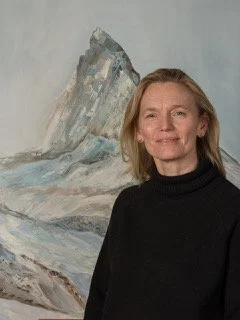
Image provided by Rachel Parker.
Rachel Parker is the President of The Society of Women Artists and holds a degree from Cambridge University in Land Economy, focused on property, economics, and law. Rachel first worked as a Chartered Surveyor, then later in Asset Management for nearly ten years, where she learned the importance of communication, relationship management, strategic thinking, and uniting people for a cause. Rachel then took a break from this industry to focus on her family, before pursuing a Diploma in Portraiture at Heatherley’s School of Fine Art in Chelsea. She developed her professional network and exhibition standards, as well as pursuing her passion as an artist inspired by her mother.
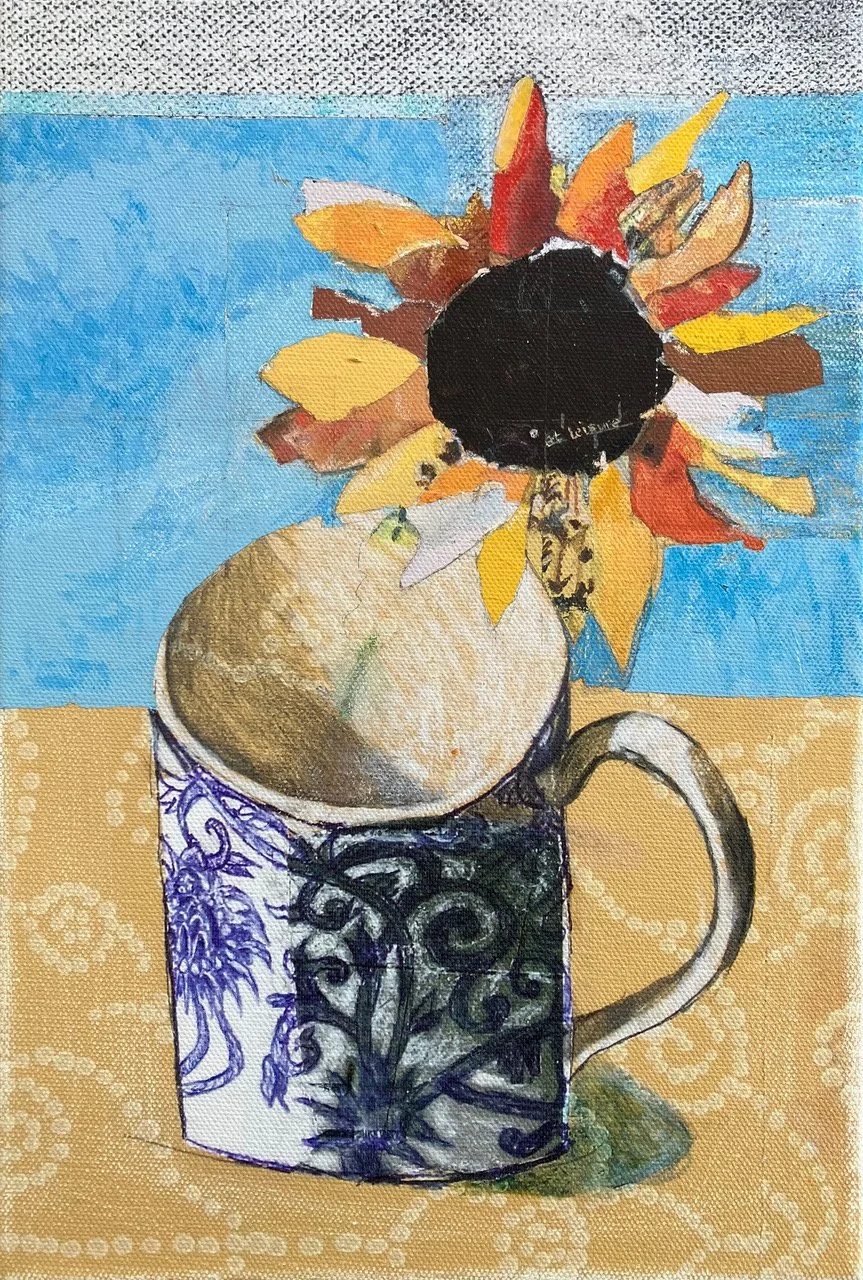
At Leisure by Kate Newington. Image courtesy of The Society.
AK: Please tell us about the rich history of the Society of Women Artists. It was founded as the Society of Female Artists (SFA) in 1855 by Harriet Grote, offering women artists the opportunity to exhibit and sell their works, which at the time was extremely difficult due to the limited opportunities open to them. What impact do you think this had on the artistic and social rights of women in the 19th century?
RP: The Society was founded under the name of the Society of Female Artists in 1855 by Harriet Grote. It was founded at a time when women were largely excluded from the mainstream art world, from formal art training, and from exhibition opportunities.
Its impact on women in the 19th century was twofold. It had a practical impact, providing an opportunity for women to exhibit and sell their work and to build their reputations as professional artists. It also had a symbolic impact, challenging the assumption that women's work was secondary and decorative. Exhibiting women's work of a consistently high standard started to break down those barriers and change perceptions.
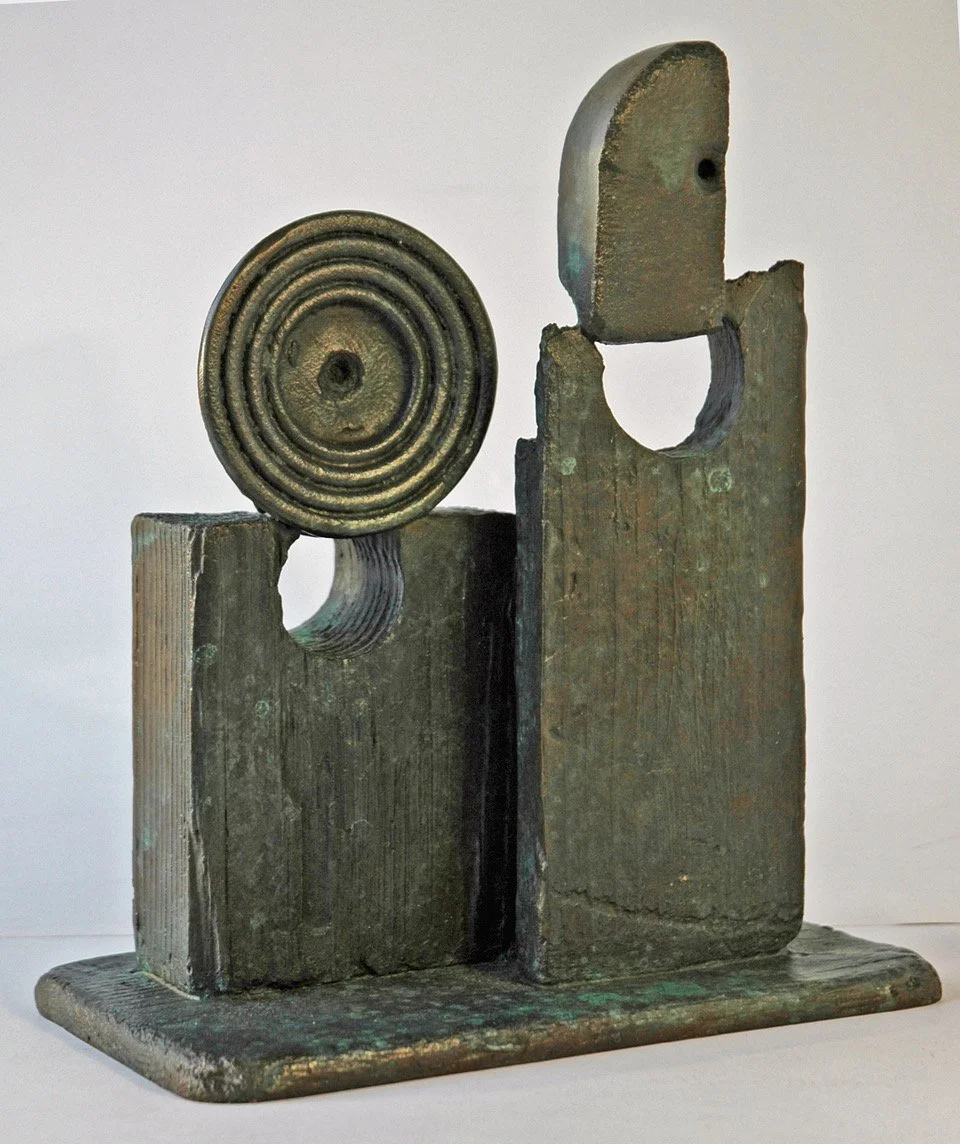
Modern Marriage by Helen Sinclair. Image courtesy of The Society.
AK: Can you tell us about the charitable focus of The Society? The Society works with charities, including Breast Cancer Now, supporting them with donations funded by art sales. Please elaborate on the relationship with these charities and the impact they have on the community.
RP: The Society is united by a strong sense of mutual support and shared purpose. In recent years, it has collaborated with numerous charities, including Breast Cancer Now and Meningitis Now. This year, The Society is working alongside the charity UN Women UK. We support these charities by building events within our annual exhibition week to raise awareness and help with fundraising activities. The SWA directly contributes by gifting artworks for an auction or raffle, as well as contributing a percentage of its sales proceeds during the exhibition. Our members also raise awareness for these causes through their own social media channels. By collaborating in this way, we are aiming to link creativity with a wider social impact, allowing our members to be part of something bigger.

A Cup of Summer by Ginny Page. Image courtesy of The Society.
AK: The society has a young people’s initiative that was introduced in 2016/17 by Sue Jelley, the PPSWA, which aims to encourage and nurture young, talented artists to fulfil their potential. Please tell us how The Society supports the careers of emerging artists.
RP: The initiative was set up by past president Sue Jelley in 2017 to support and nurture young emerging artists by providing opportunities for their work to be seen and exhibited. Around 25 recent graduates and students from across the country will be participating in this year’s exhibition, including recent graduates from Glasgow School of Art, Camberwell School of Art, and Edinburgh College of Art, to name a few. Encouraging the next generation to see themselves as artists—and to recognise that their work belongs in public spaces—is fundamental to our mission.
AK: Can you tell us about the royal patronage of HRH Princess Michael of Kent, who has supported the society since 1980? As well as the many notable artist members, including Dame Laura Knight, former President of the SWA in 1932, and the first woman to be admitted full membership to the Royal Academy.
RP: We are very grateful for the patronage of HRH Princess Michael of Kent. She has been a loyal and long-standing patron of The Society since 1980. Royal patronage is important because it increases visibility, attracts a wider audience, and shapes our identity as a society. The SWA has received royal patronage since 1865.
Notable members of the society include Dame Laura Knight, SWA President from 1932. She was the first fully elected female member of the Royal Academy in 1936 and is an example of how the support of The Society helped women progress and break through barriers.
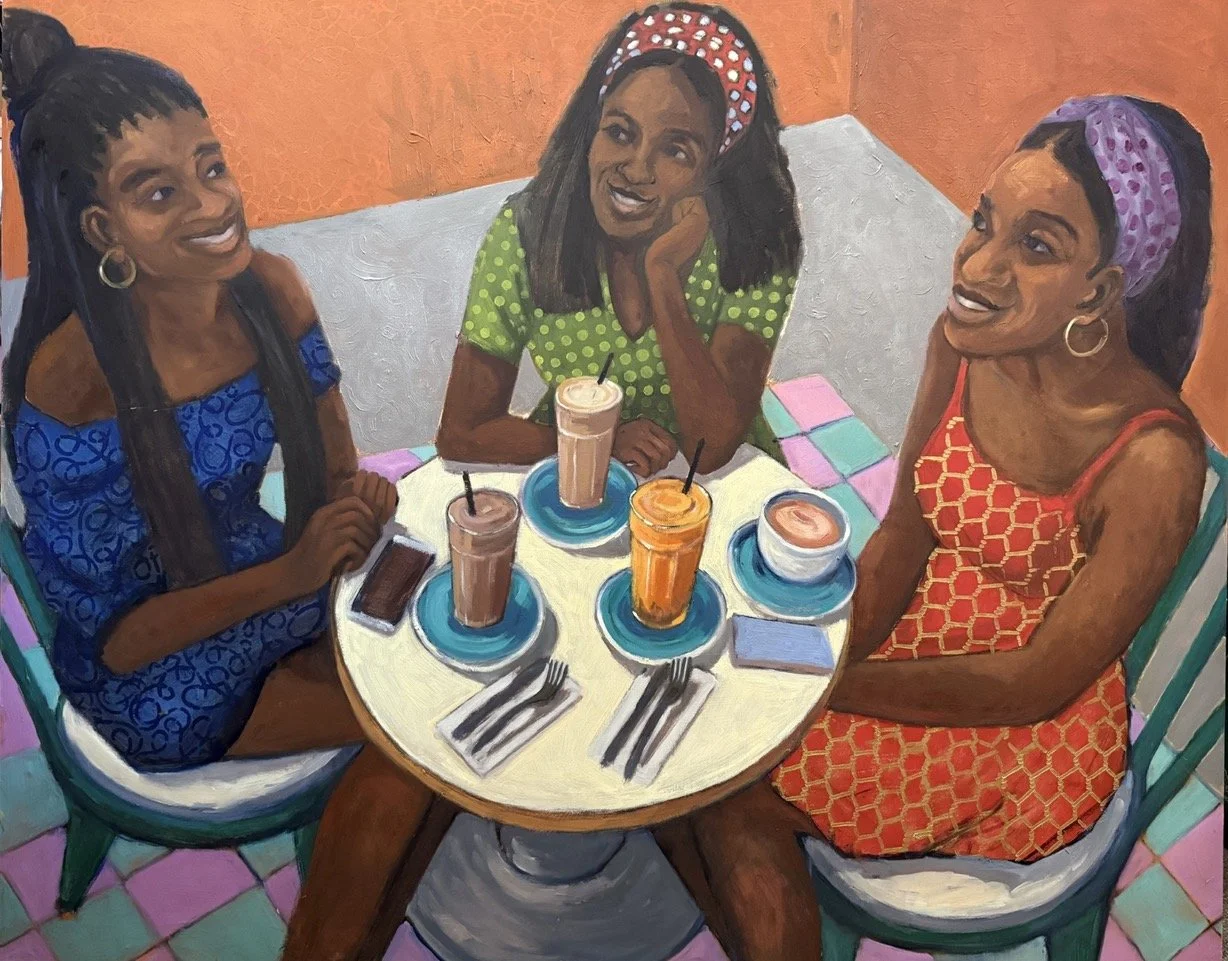
Allegory of Belonging II by Anne Blankson-Hemans. Image courtesy of The Society.
AK: Can you tell us about the historical relationship between the Royal Academy and the Society of Women Artists? How has this relationship benefited your society, and do you believe it would have developed differently without this relationship?
RP: The relationship between The Society and the Royal Academy was shaped by exclusion and response rather than collaboration. In the mid-19th century, women were excluded from the mainstream art world and did not have the same exhibition opportunities as male artists. The Society was formed to provide a professional platform for women. I think if the relationship between The Society and the Royal Academy had been different at the time, the SWA would not have developed such a clear purpose and had such a transformative impact. The Society was established to fill a gap created by institutional inequality and showed that women could work at the highest professional level. It shifted perceptions and broke down barriers, and gradually, women were allowed to exhibit in these elite spaces.
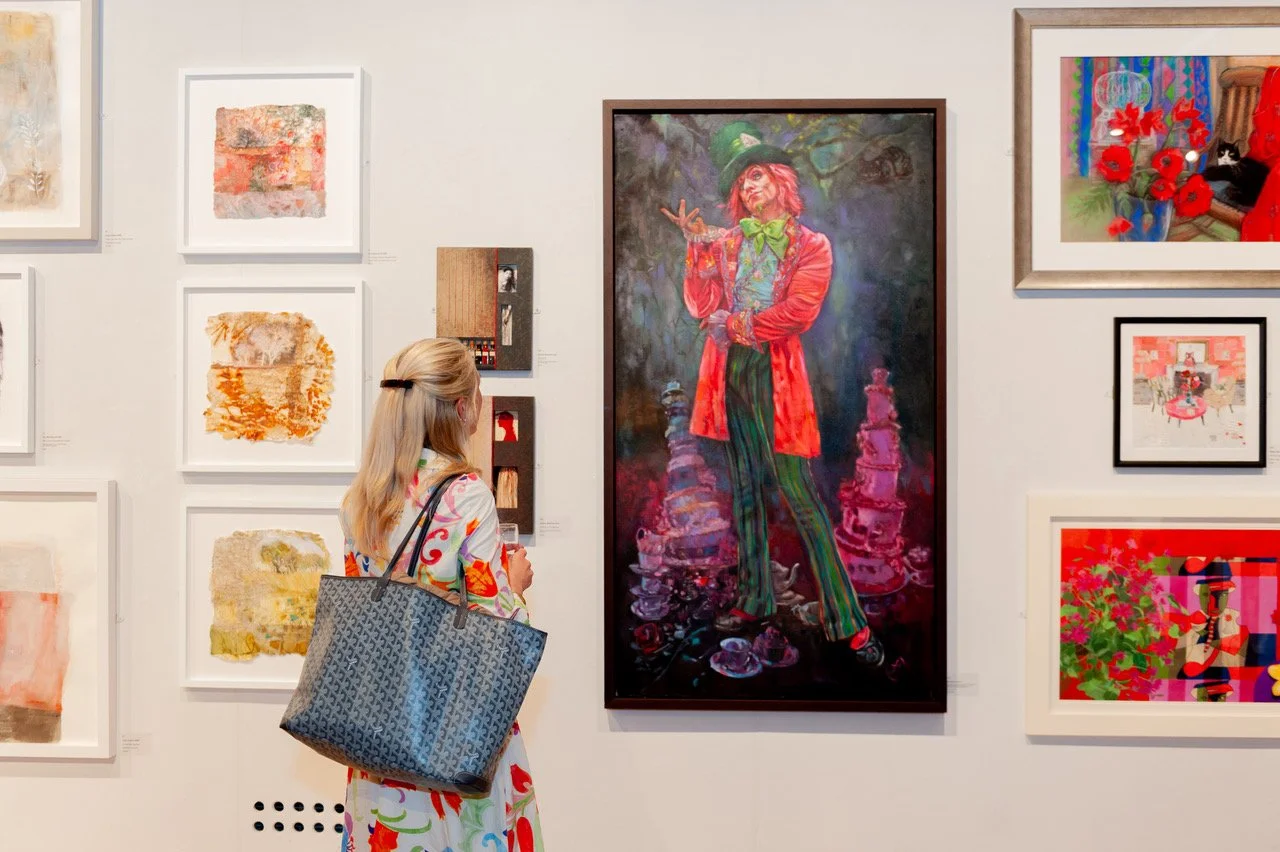
Image of the 164th Annual Society of Women Artists Exhibition. Image credit Helen Mulvaney.
AK: Please tell us about the 165th Annual Exhibition by The Society. What was the selection process and the inspiration behind the theme of the exhibition?
RP: Our annual exhibition in London lies at the heart of everything we do. This year will be the 165th annual exhibition held at the Mall Galleries in London, SW1, running from the 23rd of June to the 27th of June.
The exhibition reflects the SWA’s commitment to showcasing the diversity, quality, and talent of women artists working today. There is no fixed theme, and we will have over 450 works on show, including oil paintings, drawings, etchings, prints, sculptures, and ceramics, offering a rich balance of large and small pieces, abstract and figurative, traditional and quirky.
It is an open exhibition, and we received over 2,500 submissions this year. The selection process is highly competitive and done digitally, with artists submitting work online for review by a panel. Works are chosen based on quality, originality, and suitability for exhibition. There are so many works of merit, and we really wish we could accept more, but we are constrained by space.
AK: Please tell us about the exhibition demonstrations. Have these always been part of the annual exhibition? Are they an effort to make art more accessible to the community or inspire future artists?
RP: The demonstrations are an important feature of the exhibition. By allowing visitors to watch artists at work, they help demystify the creative process and make art more accessible. Fellow artists can also learn about the techniques and materials used.
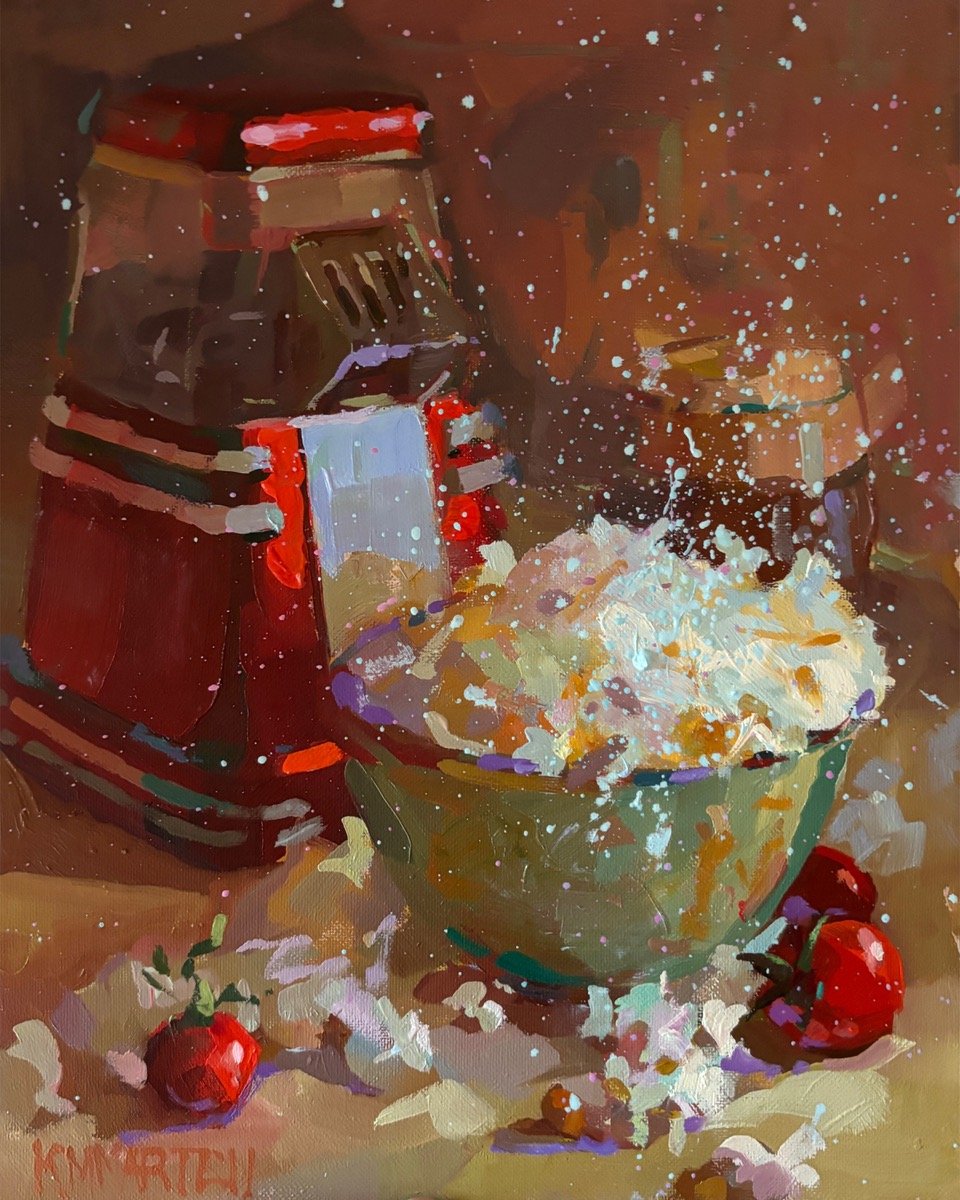
Popcorn Magic by Kayla Martell. Image courtesy of The Society.
AK: Please tell us about your Young Artists Initiative fundraiser. What does the fundraiser benefit? Is there a particular charity, or is it meant to support young and emerging artists' careers?
RP: The Young Artists’ Initiative programme aims to support, nurture, and encourage young emerging artists. We try to remove the practical and financial barriers they face when it comes to exhibiting work at our annual exhibition by providing financial assistance in areas like framing and transportation. Our members are very generous with their support and time, and that makes a huge difference.
AK: Do you believe that women would have the same social and academic rights as artists that they do today if the Society of Women Artists had not been at the forefront of women’s efforts in the arts and functioned not only as a professional society, but also as a community that supported women in their careers and upheld the feminist values they did?
RP: The efforts of The Society demonstrated that women could work at the highest level as professional artists and could be economically independent. That in itself helped break down barriers and contribute to the wider momentum for change. However, lots of factors had an impact, whether social, educational, or political. The Society could thus be seen to act as a catalyst, helping accelerate change and feed into the wider movement that was happening at that time.
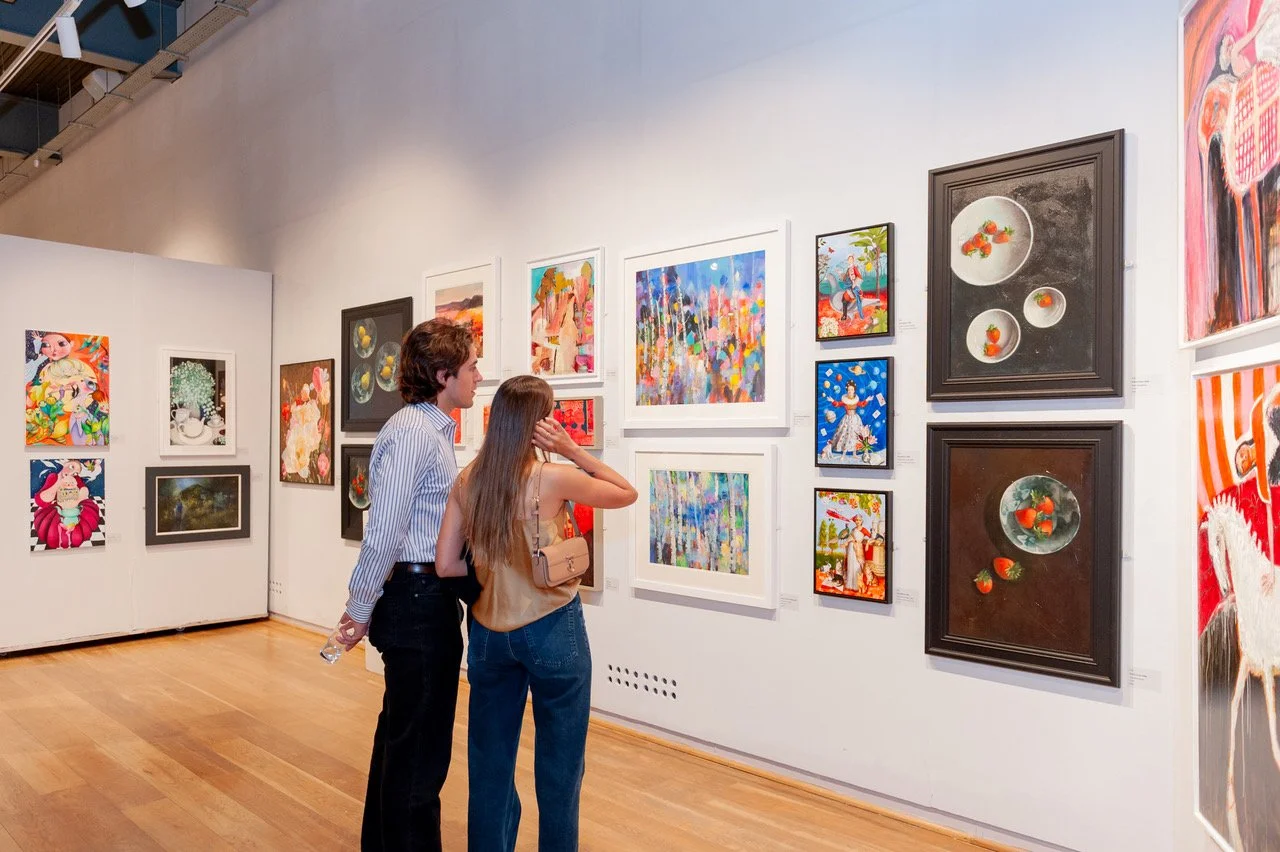
Image from the 164th Annual Society of Women Artists Exhibition. Image credit Helen Mulvaney.
AK: There are very few organisations that record the history of women artists. Do you believe that this core purpose of the Society of Women Artists has been important to the development of female artists' careers? Does having records of female achievement impact how future female artists view themselves and the opportunities they have?
RP: Preserving and recording the history of women artists demonstrates a continuous public presence and creates a visible lineage of women’s artistic achievements. Women artists must be embedded in the art history narrative; this makes a huge difference in determining who is exhibited and critically discussed, as well as strengthening credibility.
That legacy is not only preserved, but actively extended. This way, The Society not only documents the past but also reinforces a sense of continuity and belonging. Artists can see themselves as part of an evolving story, expanding their sense of what is possible within the art world.
Rachel will continue to lead The Society of Women Artists in their mission to bring attention to women artists and their art, and opening new opportunities to emerging artists.
All of the works featured in this article will be exhibited at The Society of Women Artists’ 165th Annual exhibition, held at Mall Galleries, London, SW1, from 23rd-27th June. Please visit www.society-women-artists.org.uk for details of the exhibition opening times.
Alexis Kleeman
Interviews Co-Editor, MADE IN BED