Eliza Palmer in Conversation with Sue Dray
Join us as we sit down and discuss the film-worthy life and career of internationally-acclaimed Artist, Teacher, and Rebel—Sue Dray. From discussing a childhood lived across several continents and countries, from Nigeria to Germany, to giving us advice about navigating the world of art, we dive into the life of Sue.
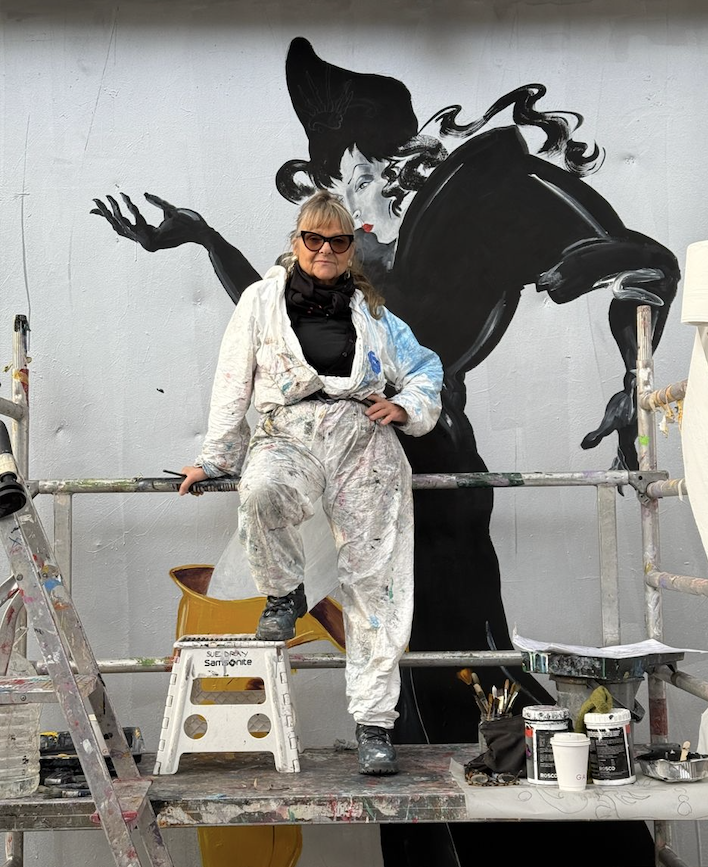
Sue Dray in front of her King’s Road mural, 2025. Photo courtesy: Sue Dray
Eliza Palmer: Throughout your career, you have worked on and produced an impressive body of work. This creative body includes magazine and book publications, 20-meter murals, national and international fashion week collaborations, music-making, art for film, textile work, higher education instruction and scholarship, artist residencies, live drawing, charity commission pieces, and more. If you can choose, during which period was your biggest moment of personal artistic growth?
Sue Dray: Being the age I am and that I have been in the arts for over 45 years there have been numerous pockets of growth. My works have grown accordingly side by side with my life experiences and personal achievements as an artist. But if I have to name one it would probably be going back into higher education at the age of 40 which coincided with the birth of my second daughter.
The MA experience gave me the opportunity to build on my work though intensive research and my desire to change the content of my thinking. I delved into psychotherapy and Art Therapy which opened up a whole new approach to storytelling and gave meaningful content plus the freedom to experiment with drawing with my non-dominate hand using inner child therapy as a platform to draw out emotions and underlying psychological reactions. Another elevated period in my career was being catapulted into the madness of the fashion world and being the Course Leader of BA Fashion Illustration at London College of Fashion 20010-2018. I was actively drawing, recording and reacting to live events during London fashion week which challenged my eye-hand co-ordination to the extreme, as you only have fifteen minutes to capture a collection and the predominate silhouette of the designers vision. The thrill of zoning out and focusing in and being captive in your own mind, trusting your skills and knowledge—to be honest nothing thrills me more than being in this moment.
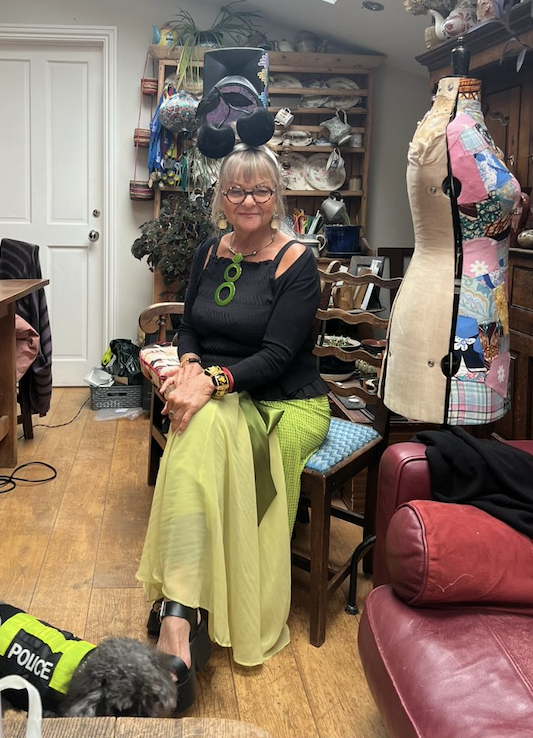
‘Sue Dray and Yoko’ - Eliza Palmer, 2025. Photo courtesy: Eliza Palmer
EP: Because of your childhood, during which you moved around the world, what international styles of art (those being non-English) do you remember encountering? What were your impressions of them?
SD: We lived in Nigeria in the late 50s and upon arriving in the country my memory, love of light and colour was triggered and my eyes were opened wide; having arrived from a rather dull grey English landscape the warmth and colour just blew me away. As a young girl I fell in love with the sound, smells and colour of the country.
I have an original painting by an Yoruba Artist which continues to fascinate me with its minimal brush strokes that describe people and animals in their glory.
We then moved to America between 1963-1966, the height of the civil rights movement. The painting by Norman Rockwell—The Problem We All Live With’ . This painting just said everything with its commentary on segregation and the reality of racism in America. Also Edward Hopper for his neon lights and atmospheric yet ominous settings.
Also years later the incredible Frida Khalo. I was first introduced to her work whilst I was living in Santa Barbara California in the very early 80s. Her storytelling, her vibrant, passionate and personal voice gave me an understanding of myself and place in the world as a creative woman.
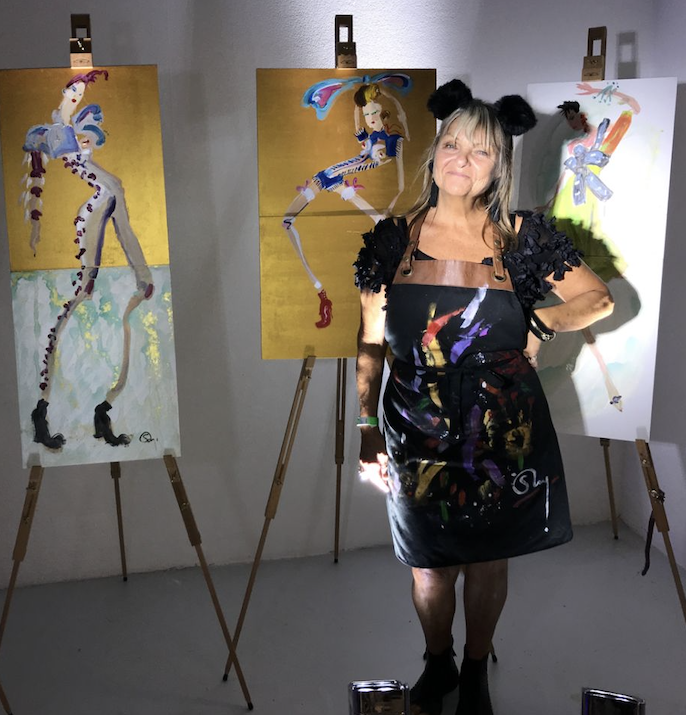
Sue Dray during LFW 2019. Photo courtesy: Sue Dray
EP: What has your impression of the global art market been like over your art career? English, American, German, etc.
SD: This is a hard question for me to answer but to be honest I am not overly impressed with the British art market: too conservative overall and fails to really celebrate young art. Globally our collective thinking and attitudes take time to change. However I have recently been surprised by the upsurge of female-focused Art; its been a slow journey but I feel we are making progress. We must thank the likes of Tracy Emin whose unmade bed had a profound effect on me, yet it received such negative commentary at the time and still does. Also the conceptual artist Yoko Ono. She, as we know being at the time, cast aside and overshadowed by her partner. The list goes on and in my memory as a young art student there were not many female artists talked about in the Art history classes, and even Artemisia, the brilliant Baroque iconic artist was never truly celebrated for her work until recently. She was kept hidden in the history books’ back pages. When we are all on an equal footing, then will the art market move forward. But my fear is that the focus these days is about manufacturing artists and elevating their profiles artificially so they can demand higher and higher prices. I sometimes feel its all ‘smoke and mirrors’ and feeding off the power of social media and the ‘likes’ often neglecting sheer hard-earned talent.
EP: If you’re willing to discuss them, what personal relationships have you had that you feel significantly impacted you as an artist in your artistic works?
SD: No one person has featured or impacted my work in a huge way, but subcultures have definitely played a huge part in my thinking as has fashion and music—in particular the punk movement which was at its height in the 70s. I was a young impressionable women at art school during this period and believe my brutal approach to drawing and singular sharp hard line is a direct result to that time with its anarchistic ‘don’t fuck with me’ attitude.
As I have mentioned above, it’s the experiences we have in our lives that influence us. World movements, people rising up and having voices, changing attitudes, cultural awareness and understanding are all powerful influences. No relationship goes without leaving its mark on you which in turn filters into your soul and is reflected in your vision.
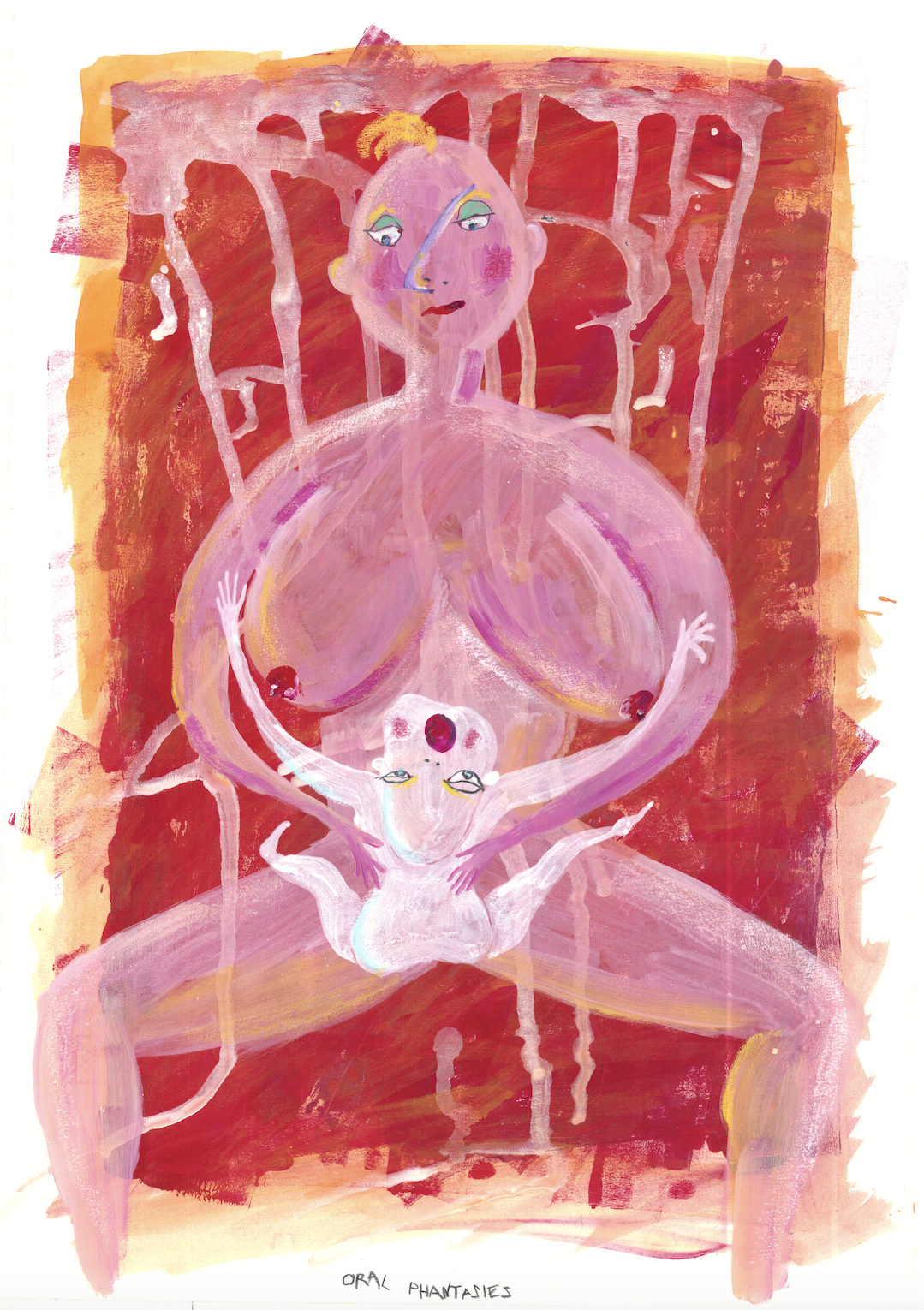
Art Therapy—Oral Phantasies - Sue Dray. Photo courtesy: Sue Dray
EP: If you can narrow it down, who are three artists you think of most when you practice your own art?
SD: Antonio Lopez and Tony Viramontes: both fashion illustrators from the 70/80s, both brilliant draughtsman and both died too young from AIDS related illness.
David Hockey of course—he is a genius in all his work. But the list is endless, hard to just say three. And I have to make a nod to the work of Sophie Calle whose work I first saw in the Venice Biennial 2007 where she represented France with her major exhibition of work which in my mind was outstanding—Prenez Soin de Vous (‘Take Care of Yourself’). If you don’t know the work you must investigate it for yourself as its one of the most personal and powerful pieces, or should I say, several pieces of work that touch us all in its truthful, insightful representation of the human condition, love and relationships.
EP: What is a part of your practice you feel most confident in?
SD: Dressing up, going out and meeting people! But seriously I am never truly confident in my work. I always think I can do better.
I do love drawing live so that’s my happy place. But to be frank it is always the moment, the event, turning up, being prepared, looking good, being the part and then getting lost in the temporal of time whilst you create. That’s my confident place.
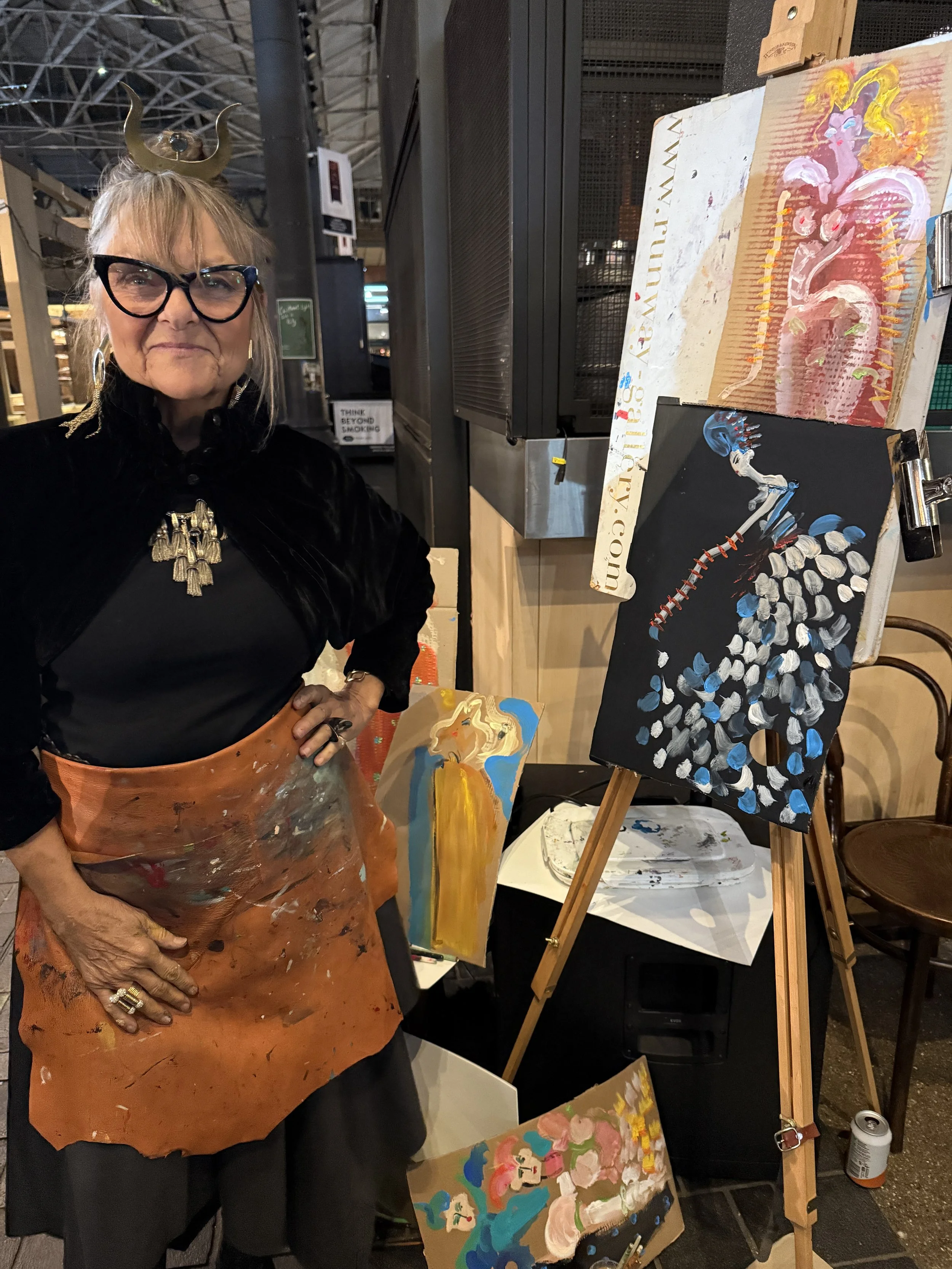
Sue Dray live drawing work, 2025. Photo courtesy: Sue Dray
EP: What is the part of your practice you feel least confident in?
SD: When I get a serious commission and the brief and client are fixed in their thinking and want to direct the image too much. Then I get nervous and I tend to tighten up which is the kiss of death for most artists.
EP: So far, what is your personal favourite piece of art you have created and why?
SD: Its a large AO painting on gesso wood board which I painted live at one of Pam Hogg’s catwalk shows; it took me 15 mins to do but I relied on my life experience as an artist to go with my instinct and trust my practice. No mistakes, no altering later in the studio—just raw as I saw and experienced her collection.
EP: So far, what is your personal least favourite piece of art you have created and why?
SD: I throw away all my least favourite work so I don’t know. But I do know when a piece of work is good. I am super critical of my work as most artists are. My early work sometimes makes me cringe, and the arrogance that I thought at the time it was good.
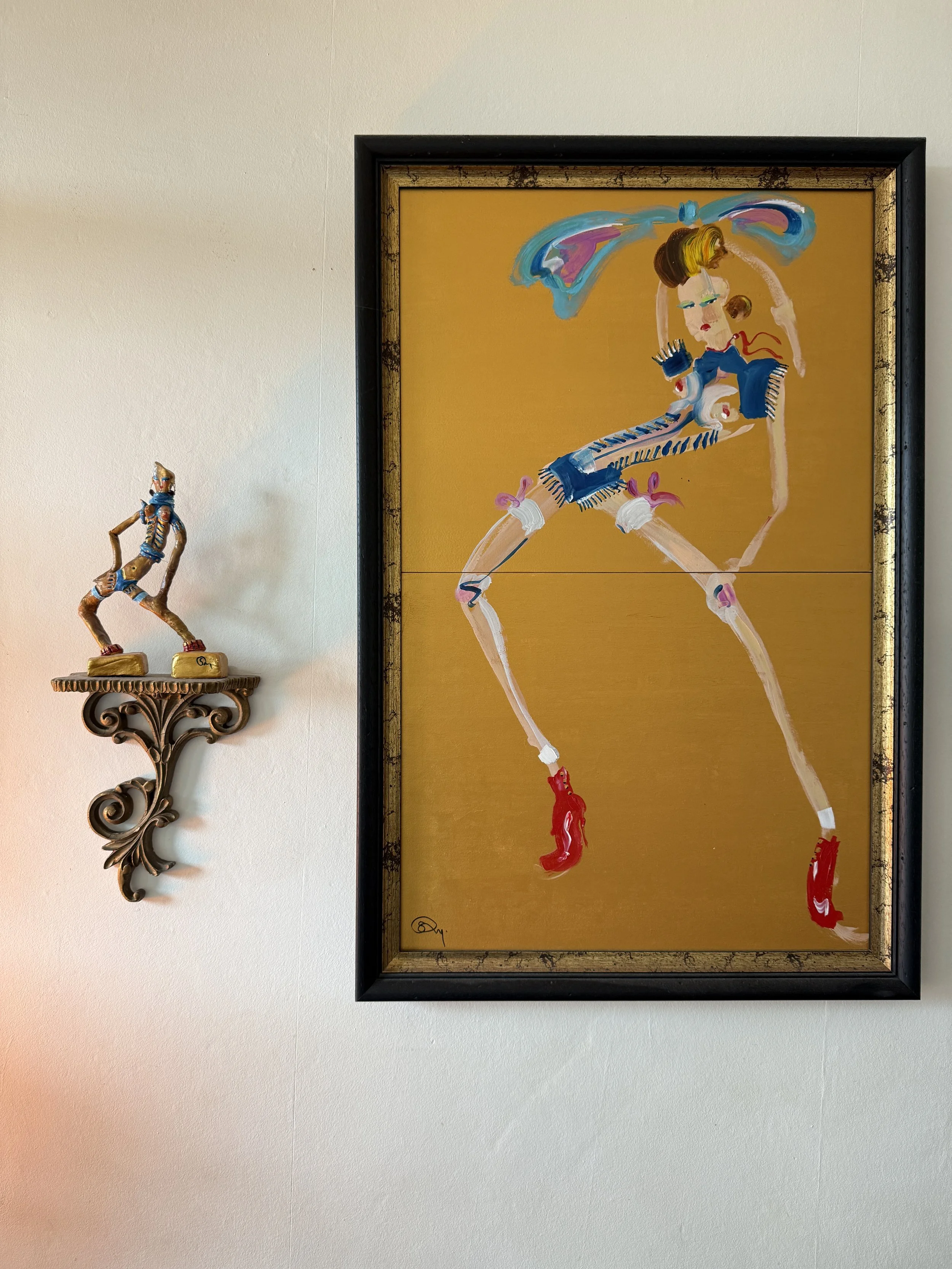
‘Pam Hogg live drawing SS2020 and sculpture’ - Sue Dray, 2020-2023. Photo courtesy: Sue Dray
EP: How has motherhood affected your practice as an artist?
SD: It’s given me a sense of humour in my work and the importance of nostalgia and recording the moment. To be honest, and this might sound like being a mother is not actually one of the most important jobs a woman can do. I think I had two heads on me: one being a mother and the other being an artist/educator. I hardly ever draw my girls or my dog for that matter and I love them all dearly, but drawing them never comes into my remit. I did however produce a children’s book in 1996, written using their words and their voices about the odd funny and sometime dysfunctional happenings in the household, which I illustrated by drawing with my non-dominate hand and rendered with my dominate hand—that being the critical parent hand. I do think my children gave me a reason to work hard and to provide for them. In my fantasy, I often thought that by them seeing me be creative would inspire them not necessarily to become artists themselves, but for them to be creative out-the-box thinkers.
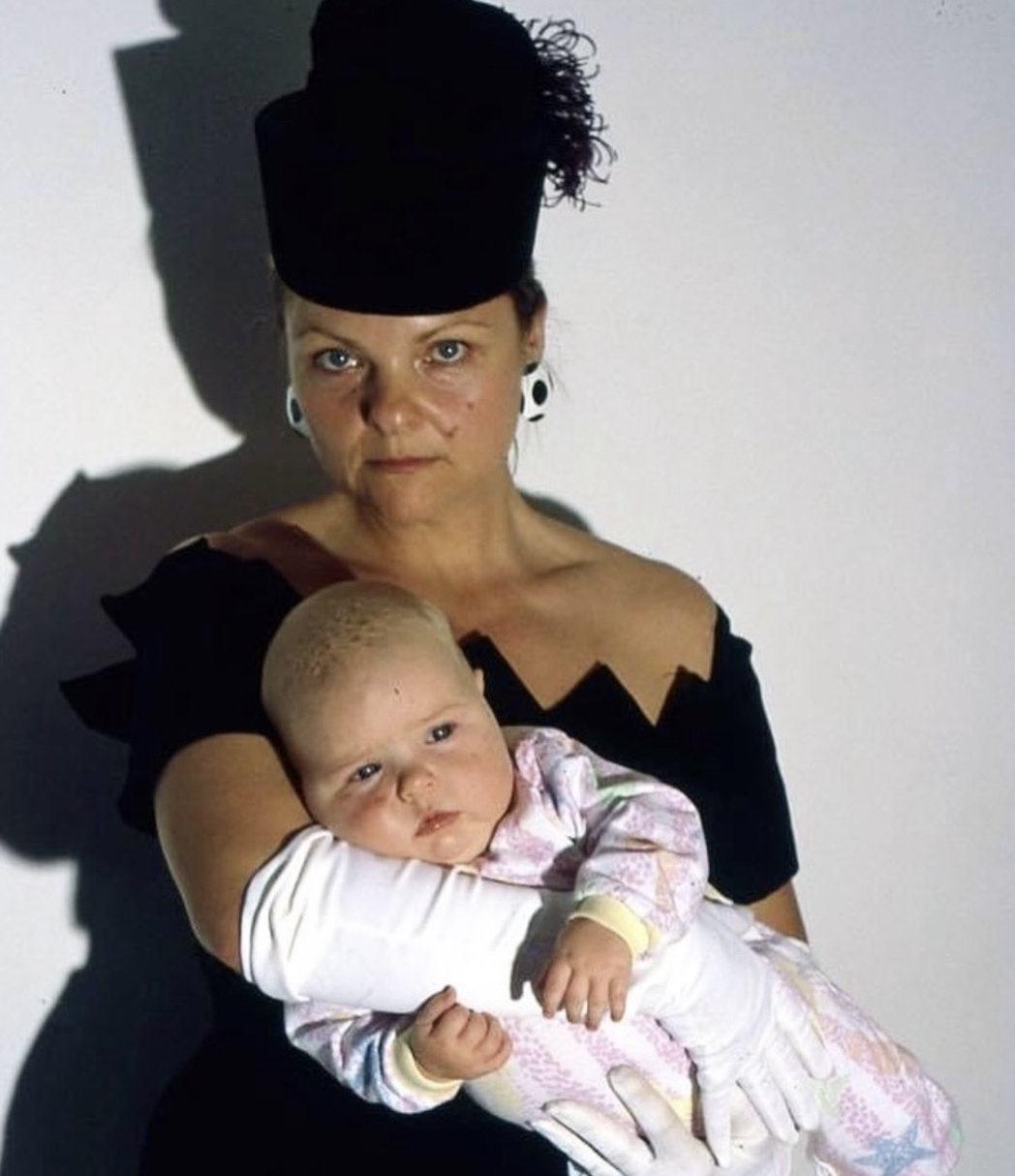
Me & Child - Sue Dray, c. 1991. Photo courtesy: Sue Dray
EP: How has the art world evolved, in your experience and opinion, concerning sexism over time?
SD: This is hard to answer as I was a child of the 50s I knew my place was always under the influence of men and I was raised to be a good mother and wife. The work I did for my M.A. final show at Central Saint Martins depicted the sexual abuse that I experienced as a child by a baby sitter, and I remember some of my tutors being uncomfortable with my subject and did not fully understand what I was doing. I still think to this day that the work I did then was my most powerful, but unrecognised and misunderstood.
EP: Throughout your practice, you seem to have switched between different media in your art—pen, pencil, digital sketches, paints. What are some of your reasons for implementing different media in your art?
SD: Mainly boredom and the desire to try new things, and my love of experimentation, making a mess, finding new avenues and surprising myself. I was a successful working mainstream illustrator all through the 80s working for Fay Weldon, Margaret Atwood and John Mortimer. The beginning of the 90s saw the advent of Photoshop and digital imaging; literally overnight us illustrators lost our jobs. It was a devastating period for our profession. Funnily enough 22 years later in 2013 I was asked by Apple to test their digital drawing platform on the iPadPro and use it to draw during London Fashion Week, and to give demonstrations and lectures in their flagship store in Regents Street. This catapulted my work back into fashion and gave me another tool to play with. The irony is not lost on me, with digital imagery being both my downfall and saviour.
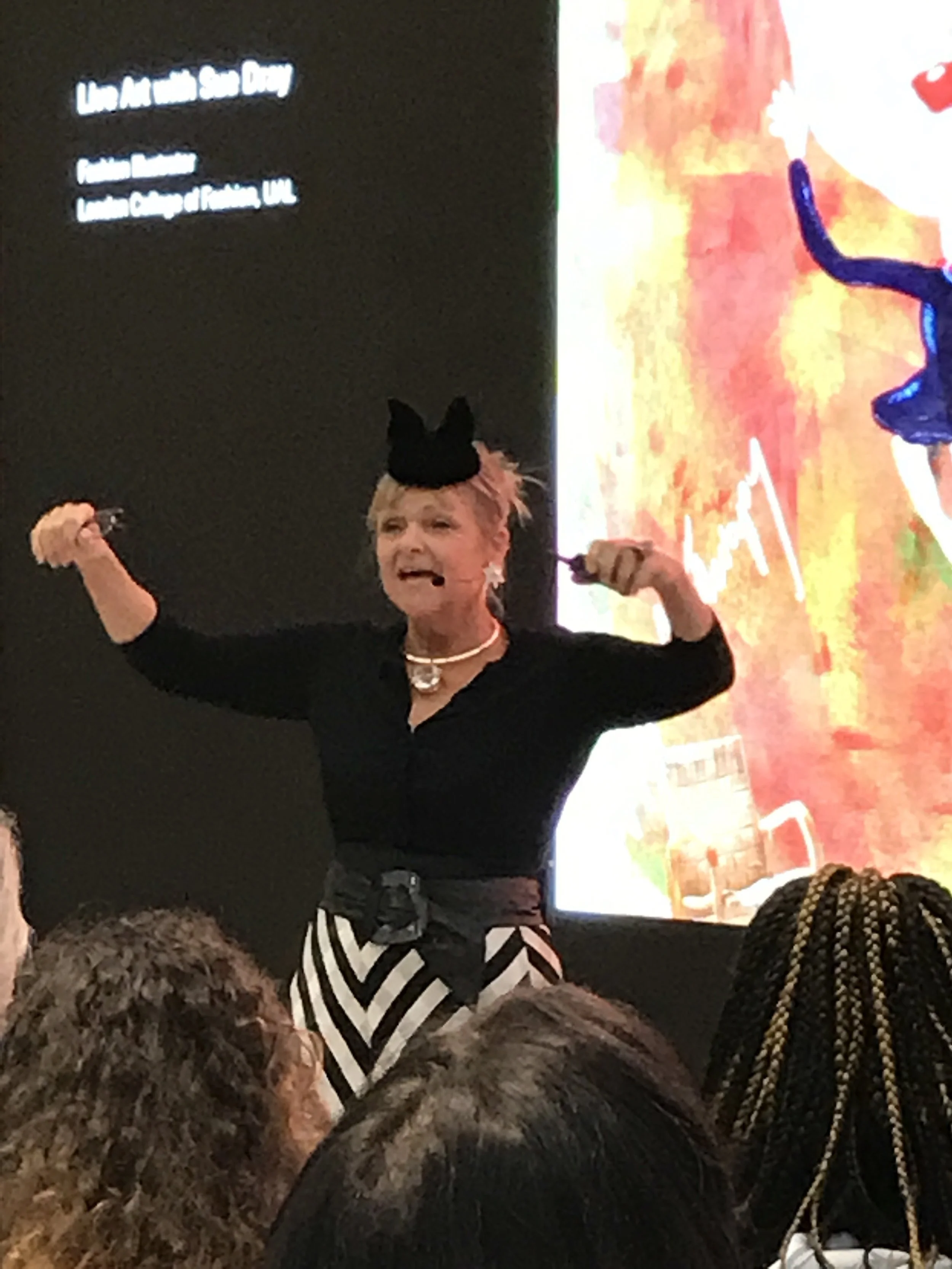
Sue Dray delivering a demo for Apple’s launch of the iPad pencil, 2013. Photo courtesy: Sue Dray
EP: What is a style of art you would like to try?
SD: Oil painting is the ultimate challenge. I have dabbled with it but with limited success. Abstract art fascinates me. Also hyper realism and more mural work as I love going large!
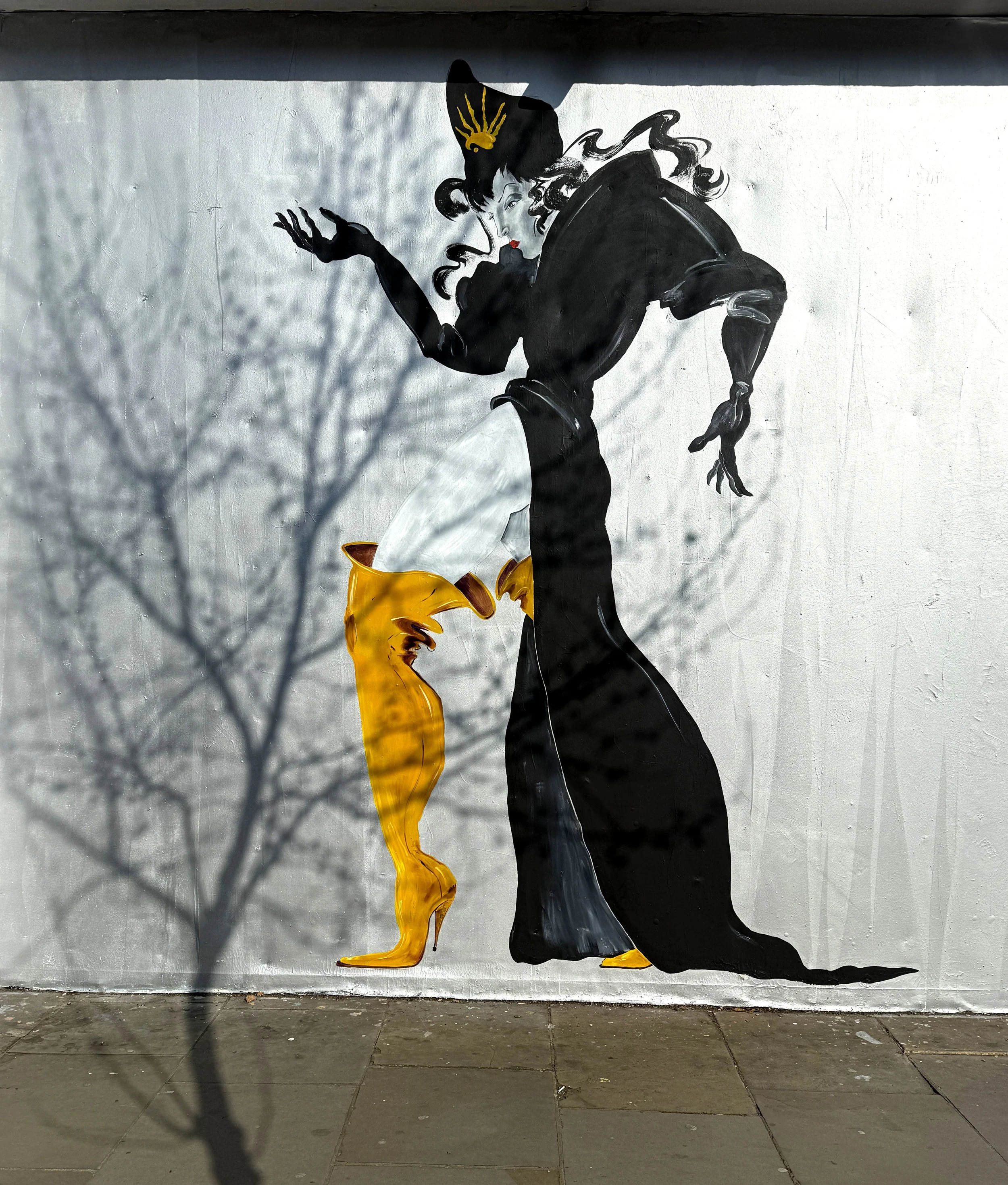
Figure from King’s Road mural by Sue Dray, 2025. Photo courtesy: Sue Dray
EP: As an artist who has also taught art practices, what do artists who potentially may have never formally studied art perhaps miss out on?
SD: Working as a group in a studio, answering the same brief and problems to solve. It’s about the comaraderie of being with other individuals and witnessing the collective growth together. I tell my students that you learn more from each other than you learn from your tutor. Its important to be an active student and engage in critique and evaluation and witness each others’ success and failures. Also its a great networking opportunity.
EP: What has been your most challenging work so far and why?
SD: Painting the mural in the Kings Road Chelsea, London, 2025. It was 25 x 4 metres and it was terrifying because I had never done one before and never worked this large. I learnt so much about almost everything and it was both physically and mentally challenging in every aspect. But I loved every minute of doing it. And I learnt about projection mapping which has always eluded me and I learnt about paints and about the weather and its effect on said paint! Plus how much I enjoyed being part of a public performance and the interaction of the people passing by and seeing the joy it brings.
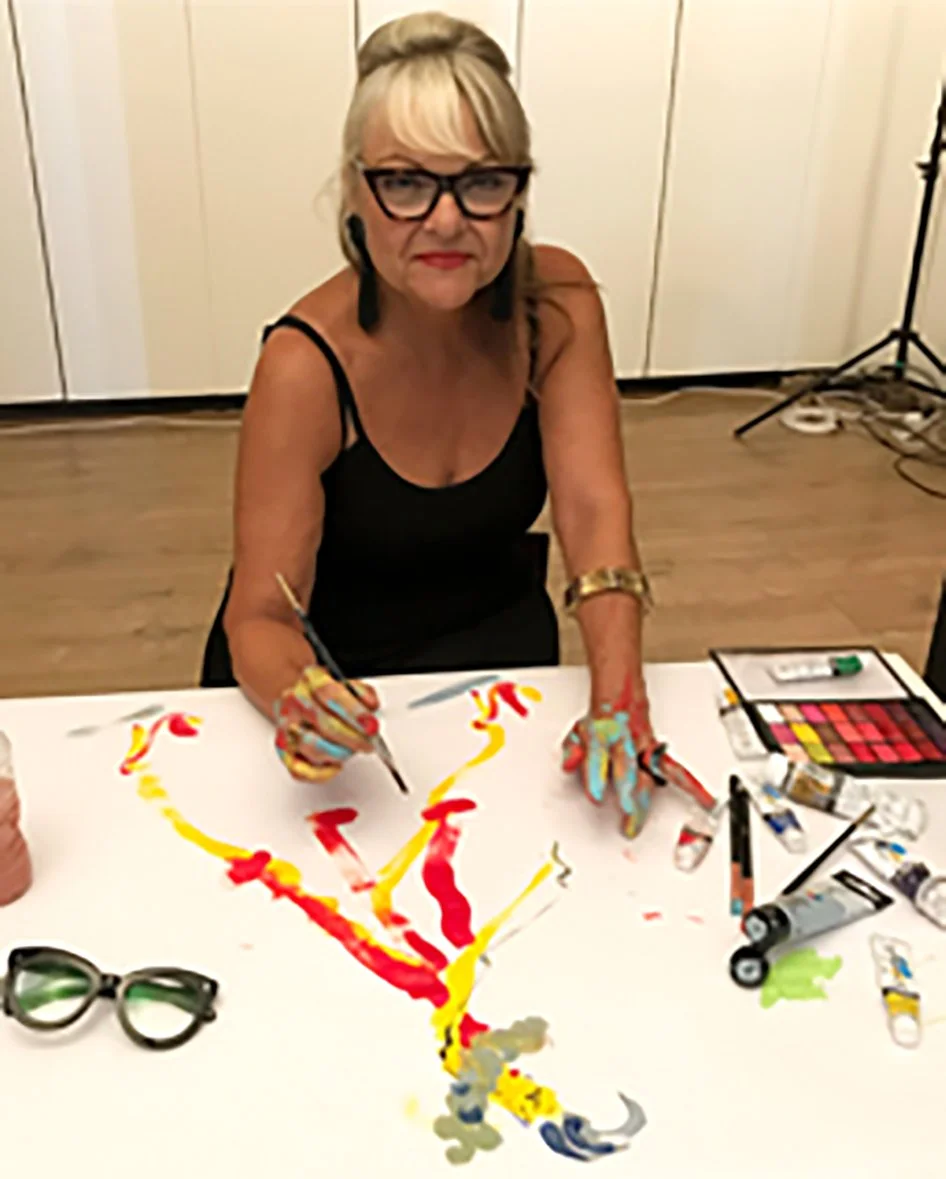
Sue Dray, c. 2017. Photo courtesy: Sue Dray
EP: What do you feel is the most important pearl of wisdom every artist should know?
SD: Don’t be afraid of making that first mark and never give up if you truly love it because it will save you in the end.
EP: What is your favourite colour?
SD: Orange, and of course you know how much I love black as it is all colours combined.
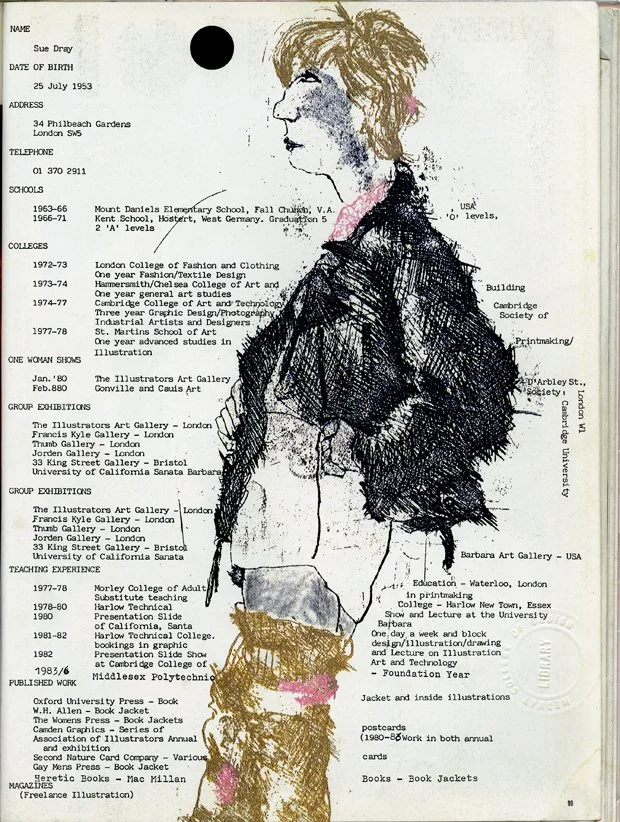
Punk School of Art - Sue Dray, c. 1990. Photo courtesy: Sue Dray
EP: Who is your favourite artist right now?
SD: Hard to answer as there are so many, but I saw Kerry James Marshall yesterday at the Royal Academy and was blown away by his consistency, his ability to tell stories, his perseverance as a black artist who just never gave up. His storytelling, his narrative, and his ability to tell his narrative in a way that people can view without offence or bitterness, but just telling it with clarity in a calm and symbolic way. I heard him talk on BBC Radio 4 and was mesmerised by how he talked about his journey, his life, and his experiences; it was truly humbling.
And he used a lot of black paint!!!!
EP: If you could claim one famous piece of art as your own, which would it be?
SD: A Johannes Vermeer because of his beautiful and honest depiction of everyday life and the common man.
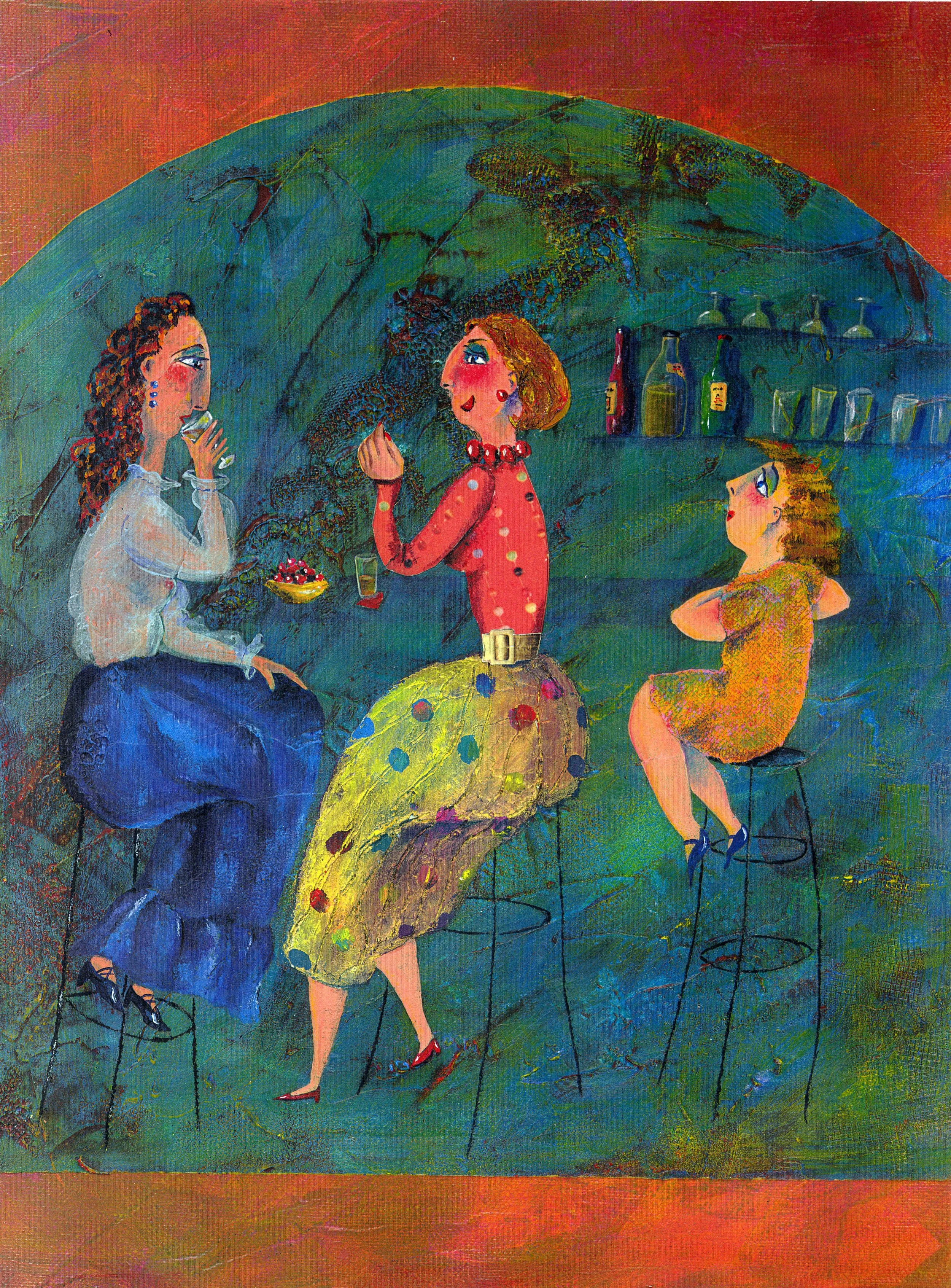
Children’s Book - Sue Dray, 1990s. Photo courtesy: Sue Dray
EP: If you could only use a pencil or paint for the rest of your career, which would you choose?
SD: Can’t, I want both! Maybe pencil, but has to be 14B please, as it’s soft, easy to carry anywhere, anytime and anyplace.
EP: Thank you, Sue Dray, for taking the time for us to get to know your practice and yourself a bit better. It has been a pleasure.
SD: Thank you, Eliza, I have loved talking with you and reliving my career, and digging up memories and feelings and most importantly thoughts.
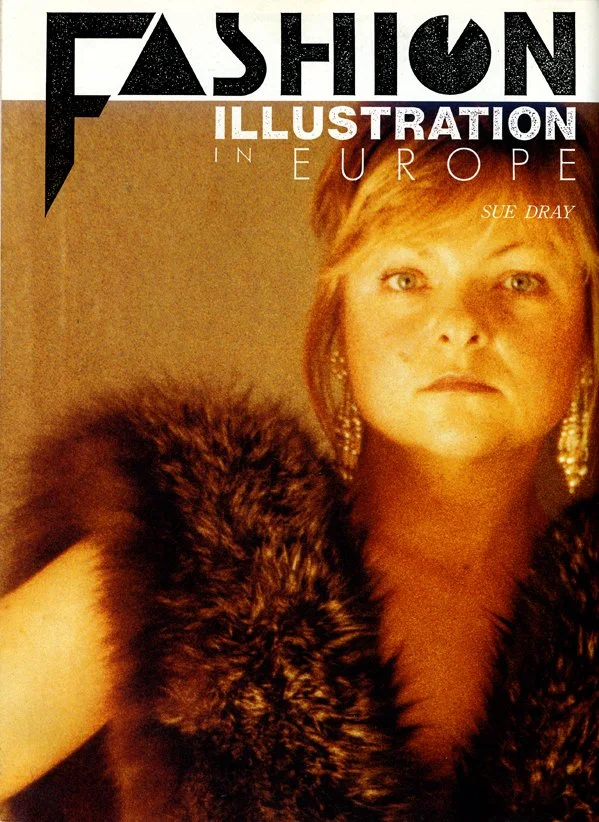
Me 1983 - Sue Dray, 1983. Photo courtesy: Sue Dray
Disclaimer: The views, thoughts, and opinions expressed in MADE IN BED are solely those of the individual authors and not those of MADE IN BED magazine or of Sotheby’s Institute of Art.