

Alexis Kleeman in Conversation with Millie Jason Foster, Director of the Gillian Jason Gallery
Millie Jason Foster is a University of Cambridge and Sotheby’s Institute of Art graduate with a background in finance. Recognised on the Forbes 30 Under 30: European Arts & Culture list in 2025, she is the Founding Director of Gillian Jason Gallery in London. Originally established in 1980 by her grandmother, Gillian Jason, as a Modern British gallery, the space was re-established in 2021 by Millie and her mother. Its new vision marked a bold shift, becoming London’s first commercial gallery dedicated exclusively to championing art by women. Today, the gallery embodies the spirit of strong women in the arts while addressing the challenges female artists face in the current art world climate. Gillian Jason Gallery will be continuing this legacy at the London Art Fair on the 20th-25th January 2026.
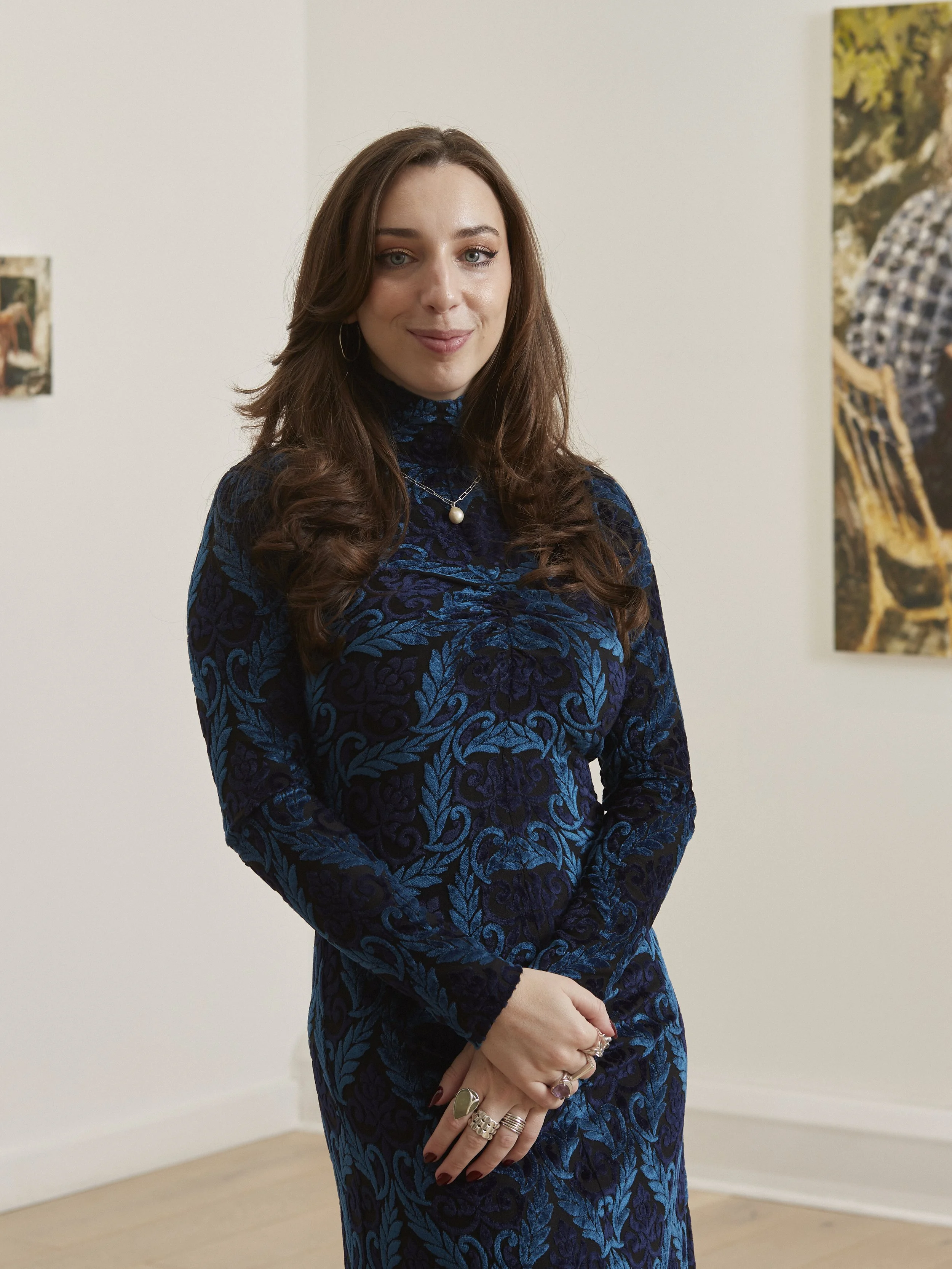
photo courtesy of Millie Jason Foster
Alexis Kleeman: Tell us about your education and accomplishments. I understand that you have a degree from Cambridge and the Sotheby’s Institute of Art. What are the most valuable things from these degrees that you use in your day-to-day gallery practice?
Millie Jason Foster: I hold an undergraduate degree in Human, Social, and Political Sciences (HSPS) from the University of Cambridge. The diversity of this course helped me to better understand group and individual thinking, as well as social interactions and I became interested in applying this to art, the emotional value of art, and what makes artists and collectors tick.
My first job after graduating was in Investment Banking with JP Morgan Chase. Although I enjoyed it, I felt there was a world beyond finance that I wanted to be part of. So when my grandmother passed away during the pandemic I decided to reopen her gallery and continue her legacy. I enrolled in the Art Business course at Sotheby’s Institute of Art, where I learned many skills essential to running a gallery, including art law. Sotheby’s not only gave me insight into the art business world, but also helped me network and make professional connections I would not have otherwise.
AK: I would like to congratulate you on being on the Forbes 30 Under 30: European Arts & Culture 2025 list. Please tell us about this experience and how it has impacted the gallery.
MJF: I am really proud to be included on the list - it has enhanced the gallery’s reputation and the recognition my team and I receive. It shows that we are making headway in the industry and gives our artists the recognition and opportunity they deserve. We are doing something essential and pioneering, and being on the Forbes list has been a solidifying force, showing that we are on the right track. It's been an absolute honor.
AK: Please tell us about your involvement with Studio Voltaire and your initiative, 'New Vanguard,' which provides access to and insights into the arts for young collectors and artists.
MJF: Studio Voltaire champions emerging and under-represented artists, curates exhibitions, runs artist development programmes, and collaborative projects. The mission is to identify brilliant artists and provide them with an institutionally backed platform. One of the reasons I got involved with Studio Voltaire is their arts education programme for children in South London. The programme heavily supports youth engagement and education in the arts, something that I believe is an important cause.
I founded New Vanguard as a private group of young professional collectors and artists who want to learn about and engage with the arts in a genuine and supportive way. We host studio visits and talks on collecting, among other events, which are crucial for enabling and educating young collectors on how to engage with the Arts.
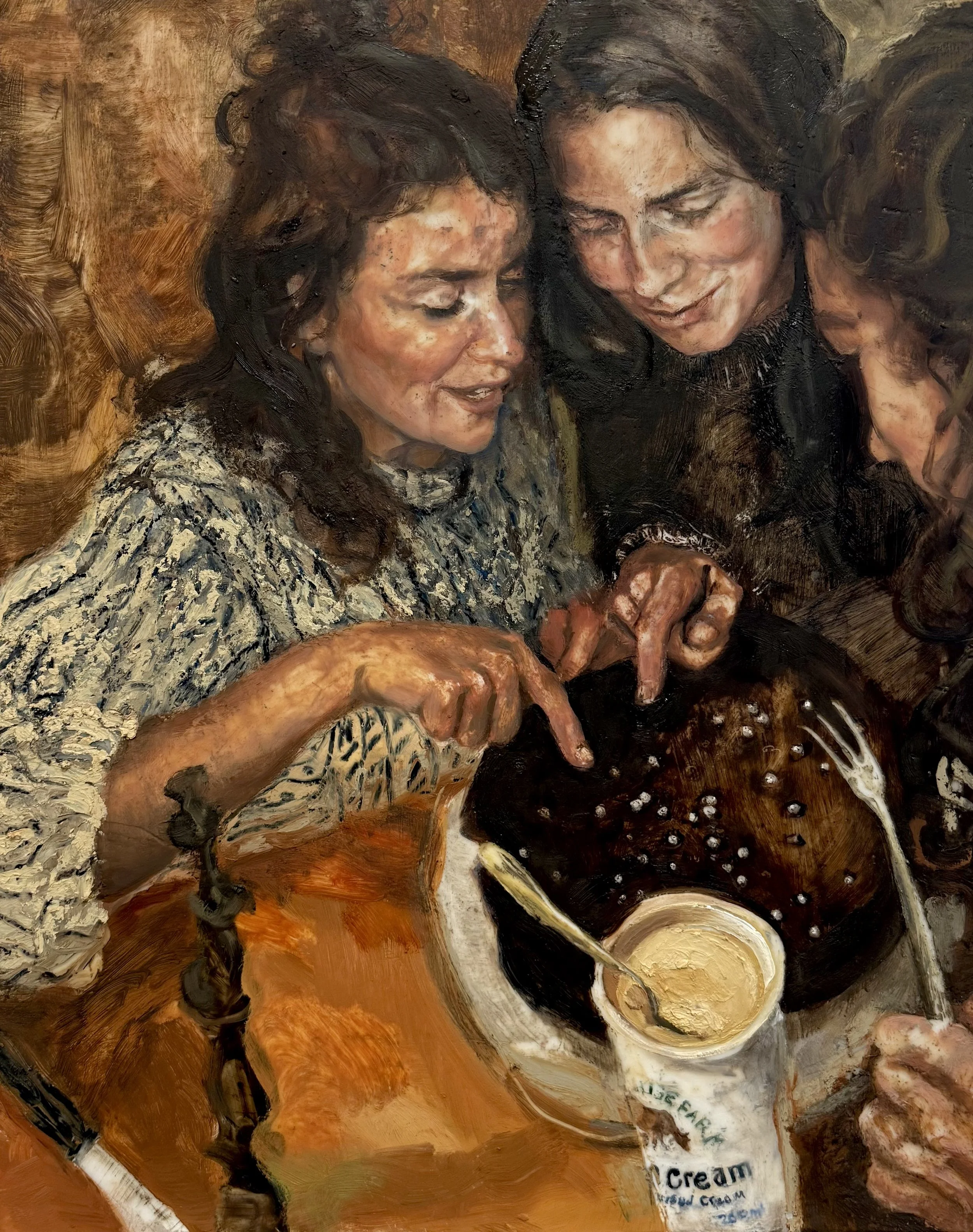
Emily Ponsonby. Silver Ball and Cream. Courtesy of Gillian Jason Gallery
AK: Your gallery sponsored the first all-female artist exhibition at The Tate in 2024. Please tell us about the inspiration behind this collaboration and your experience working with such an iconic institution.
MJF: I feel that the only way to create an artist's legacy is to work in the institutional sphere and have their work collected, logged, and written about in the public sphere. So when Linsey Young, the curator of the Women in Revolt: Art and Activism in the UK 1970-1990 came to us, we were thrilled to sponsor the exhibition. Our funds were used to recreate and restore seminal pieces of art that were so important to many female artists' careers but had fallen into disrepair.
AK: Are there any unique challenges working in such a niche market?
MJF: A challenge that we initially faced was making sure that we did not look like we were following a trend, and the more curatorial work that we do, the more we're showing people that The Gillian Jason Gallery is not jumping on a trend or a wave; we are the flagship for supporting female artists in the long term. The other thing I always try to make sure people understand is that we don't necessarily show only Feminist art; it is about showing the best of what women can do and giving them the international visibility that a successful artist's career needs. But also, a unique challenge we face is how to build career longevity for the artists we support and work with. We face unique challenges: how do we help women have children while sustaining their careers and artistic output, and ensure they continue to be shown in the market. Challenges that are historically ignored. It's a big part of our ethos, so we face unique challenges in ensuring we do our best to support the artists we work with.
AK: I love your philosophy that "The art world can't remotely reflect the kind of equality society should be striving for until it includes artists of all genders as equals rather than as additional considerations." Can you speak to the inspiration behind this? And how does the gallery work to embody these values?
MJF: Historically, the art market reflects the way society functions. It can be a controversial topic, but I think the bias is still relevant today and reflected in auction sale prices between male and female artists' work - the gap is millions of dollars apart for record-breaking work between the genders. So, if Gillian Jason Gallery can do our part by trying to make a shift within the art market, I hope that will create some parity within society as well.
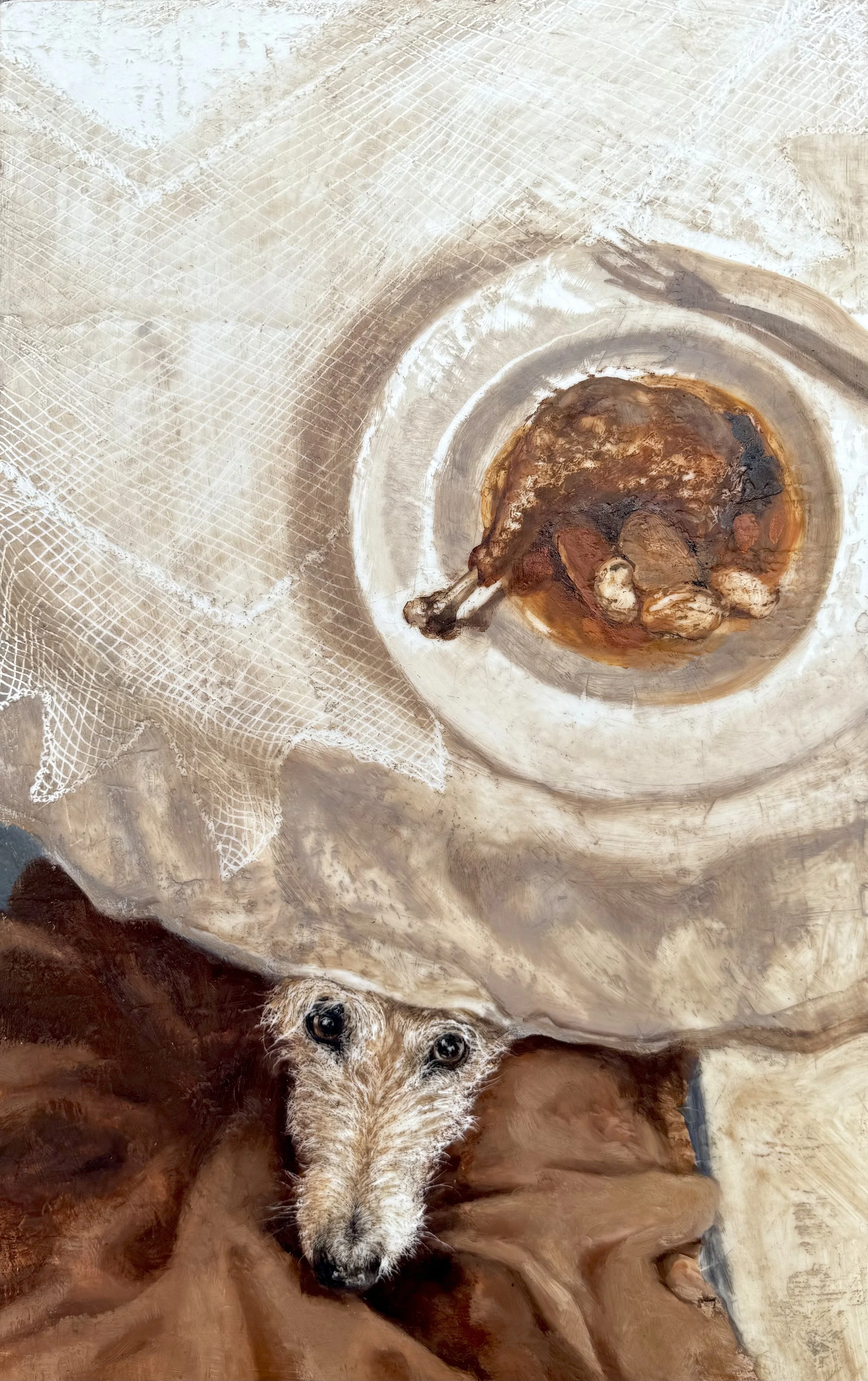
Emily Ponsonby. Hard To Paint Duck When You’re Hungry . Courtesy of Gillian Jason Gallery.
AK: Your gallery is currently celebrating its 4th anniversary since its re-establishment in London, featuring Megan Baker, Jess Cochrane, Jenya Datsko, Georgia Dymock, Alice Irwin, Eleanor Johnson, Colette LaVette, Clare Shenstone, Berenice Sydney, and Milan Young. Please explain how the presentation unites established and emerging voices whose practices collectively shape the gallery's identity.
MJF: GJG mainly works on two ends of the spectrum - with artist estates and emerging artists. That is the reason a lot of our exhibitions span across generations to support women at every stage of their careers; from artists who have just graduated from art school, to self taught artists such as Milan Young, through to estates like Berenice Sydney, celebrated for her printmaking techniques, and Clare Shenstone, who is still alive and with whom we are actively working to regain recognition in the market for her extraordinary practice.
The concept of our anniversary exhibition was to ask all ten of the artists whom we represent. The intention was to highlight the distinct voices of the artists we work with, the dialogue between them, and how this reflects our curatorial philosophy. The exhibition offered a clear expression of what Gillian Jason Gallery stands for, and how this is realised through our gallery practice and ethos.
AK: Do you have a favorite work in the exhibition? What is it and why?
MJF: I don't have a favorite work in the exhibition, but I would like to highlight the works by Berenice Sydney. We have been rebuilding Berenice’s estate for the last three years. Berenice passed away too soon at 38 years old and had already accomplished so much. She was extraordinary in terms of color, technique, and the understanding of shapes. We will be having a retrospective of Berenice’s work in October 2026 at GJG.
AK: Your gallery is representing a piece listed on The London Art Fair Platform 2026: “The Unexpected,” Emily Ponsonby. Could you tell us about this?
MJF: We are taking part in the London Art Fair for the first time since reopening the gallery. My grandmother used to take part in the Fair annually when she was representing Modern British artists, so this collaboration has a long-term legacy for us. GJG is presenting a solo booth by Emily Ponsonby, who is primarily known for working with beeswax, a technique which builds upon the Ancient Egyptians’ Encaustic process – buffing, binding and scraping pigment into layers of wax. The rawness and malleability of beeswax harmonise with the bodies she portrays, set against the ever-changing landscapes of the Southwest of England.

Image provided by The Gillian Jason Gallery.
Emily Ponsonby
Hold On, But Not Too Tightly. Let Go, But Not Too Soon, 2025
beeswax and oil on panel
24 x 18 cm
The Gillian Jason Gallery will represent Emily Ponsonby at The London Art Fair, booth P5, in January 2026, where the GJG will continue its mission as the UK's first commercial space, solely championing art by women and female-identifying artists across generations, presenting engaging exhibitions on the most resonant ideas of our time. A combination of attuned cultural consciousness, people-first relationships, and a 40-year history of exhibiting work by pioneering artists makes GJG a go-to reference point for those looking to support and collect art from beyond the white male canon that addresses today’s critical shifts.
Disclaimer: The views, thoughts, and opinions expressed in MADE IN BED are solely those of the individual authors and not those of MADE IN BED magazine or of Sotheby’s Institute of Art.