Eliza Palmer in Conversation with Virginia Damtsa
In this interview, I had the privilege to talk to Virginia Damtsa about her successful career in the world of art. We discuss Damtsa’s various responsibilities, Town Hall’s upcoming exhibition curated by Damtsa, as well as some of her personal favourites.
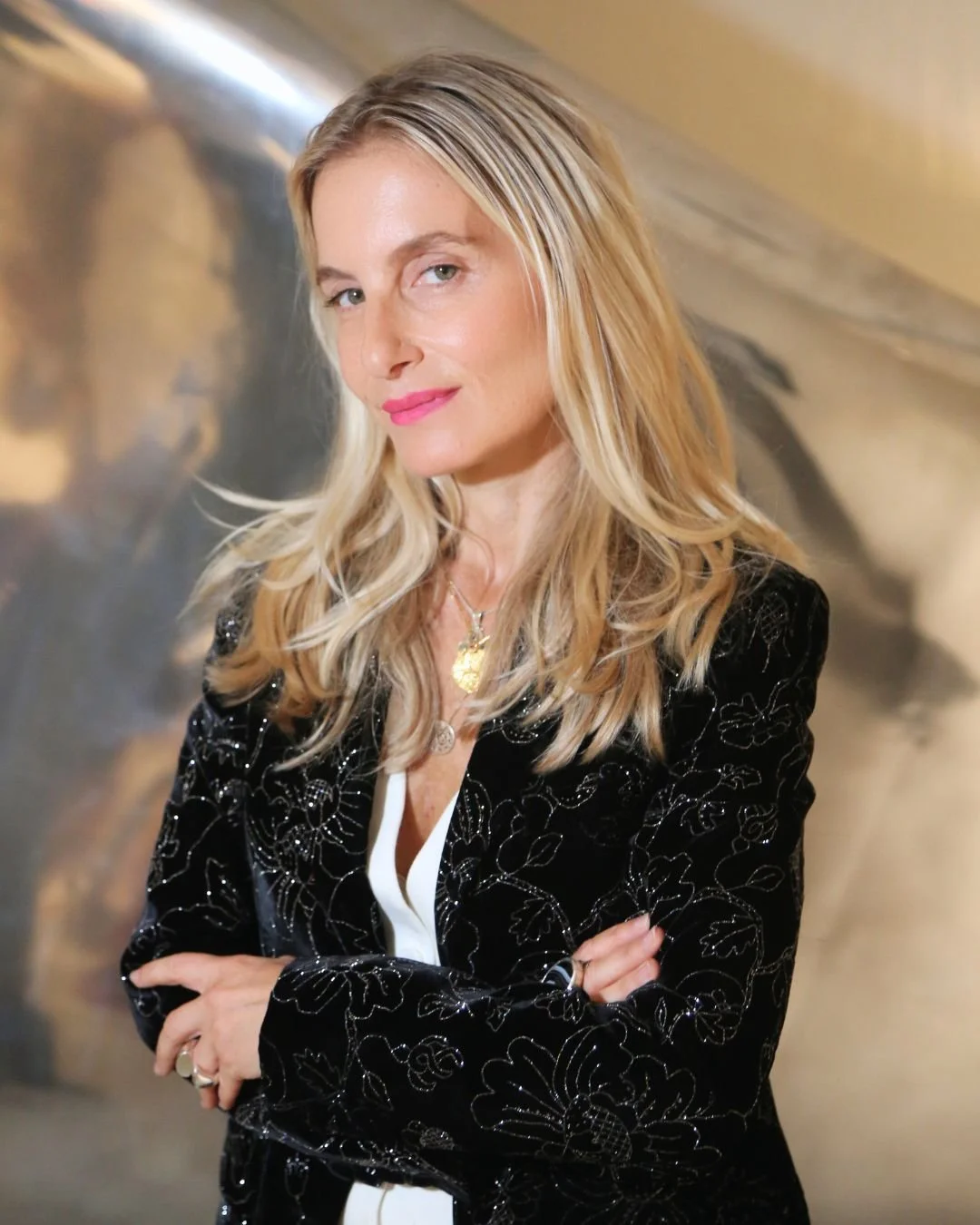
Virginia Damsta, Director of VVA Virginia VisualArts Ltd. Photo courtesy: Virginia Damtsa
Eliza Palmer: You juggle many different roles, including art advisor, art agent, gallerist, curator, and art dealer. How do aspects of these roles help you put on an exhibition like HER STORIES UNTOLD?
Virginia Damtsa: Ultimately, everything begins with the art. It is inseparable from who I am, so I don’t experience my roles as fragmented. Advising, curating, dealing, representing—they are all facets of a single practice centred on championing artists and shaping meaningful cultural narratives. Each role informs the other, and together they allow me to build exhibitions with depth, coherence, and intention.
EP: How did the idea for this exhibition come about?
VD: From a long-standing desire to support women and amplify their stories—their complexities, their contradictions, their inner worlds. I am always interested in pairing art with a higher purpose, using it as a vehicle for awareness and change. Collaborating with The Circle—a charity founded by Annie Lennox and deeply committed to women’s rights, economic empowerment, and the fight against gender-based violence—created the perfect synergy for an exhibition rooted as much in advocacy as in artistic discourse. I deeply believe in their mission of Global Feminism in Solidarity and Action.
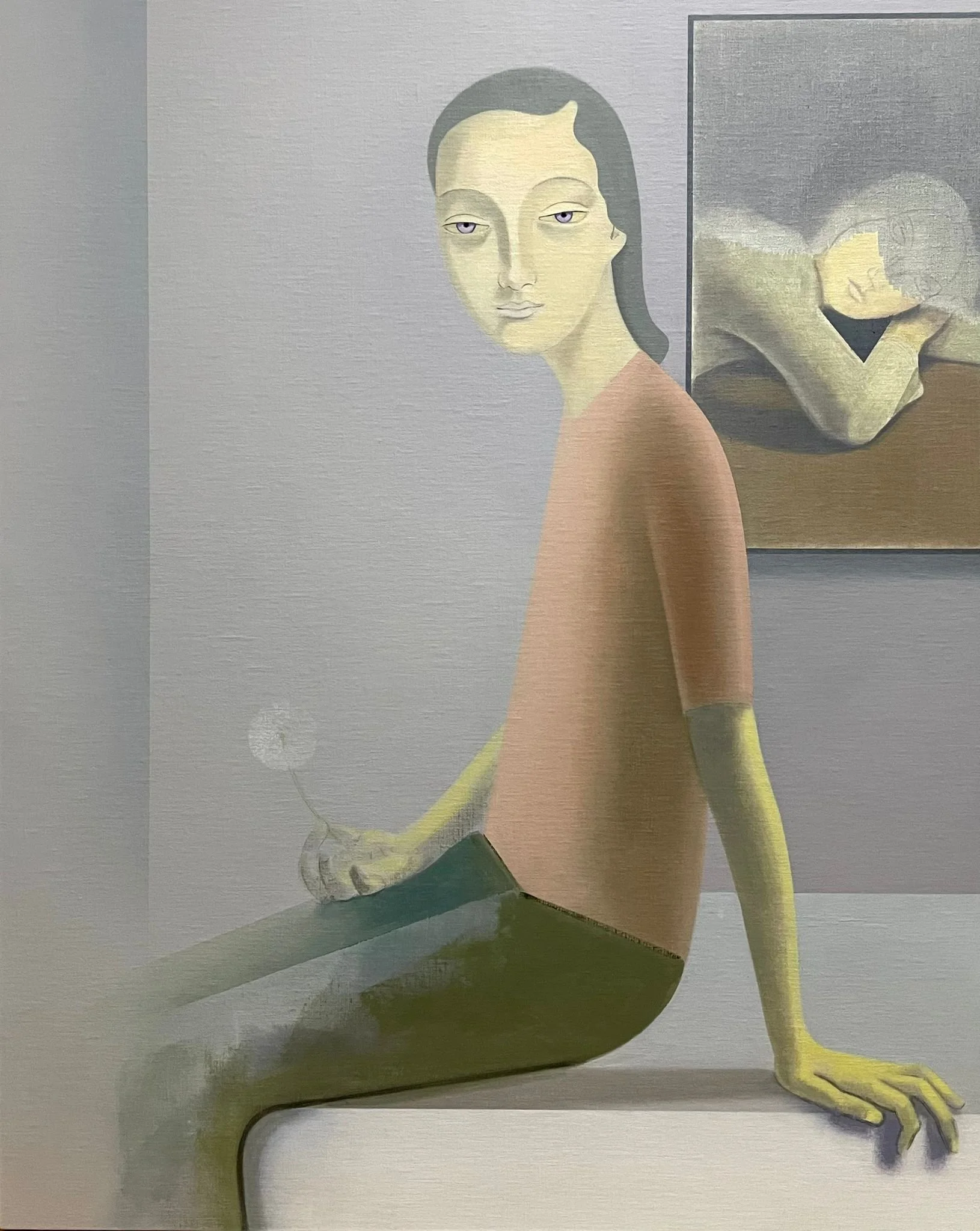
Richard Wathen, Cypsela, 2024. Photo courtesy: Virginia Damtsa
EP: Did you approach the artists, or was there an open call for submissions?
VD: After three decades in the art world, I’ve had the privilege of working with an extraordinary range of artists, but I am always searching for new voices. For this exhibition, I brought together both artists I know well and artists—emerging and established—who I felt could speak powerfully to the show’s themes.
EP: How has the depiction of women evolved from historical to contemporary art?
VD: Today, women are depicted with far greater agency, complexity, and breadth. Contemporary artists resist the traditional canon; they reject singular narratives. Women are no longer confined to one archetype—they are multifaceted, powerful, ambiguous, vulnerable, resilient. The visual language has expanded to reflect the reality that we contain multitudes.
EP: Why include male artists in an exhibition centred on women? Was that a deliberate decision?
VD: Absolutely. It was important to demonstrate that the celebration of women is not exclusive to women artists. Jonathan Yeo’s portrait of Pakistani activist and the youngest Nobel Prize laureate in history Malala Yousafzai, for example—with the original held at the National Portrait Gallery—is a testament to how male artists can honour female narratives.
Richard Wathen’s portraits explore gender ambiguity, which resonates with contemporary conversations around identity. And placing Conrad Shawcross’s Paradigm in dialogue with Carolina Mazzolari’s embroidered totems creates a conversation about growth, evolution, courage, and transformation—themes that transcend gender while remaining deeply relevant to the female experience.
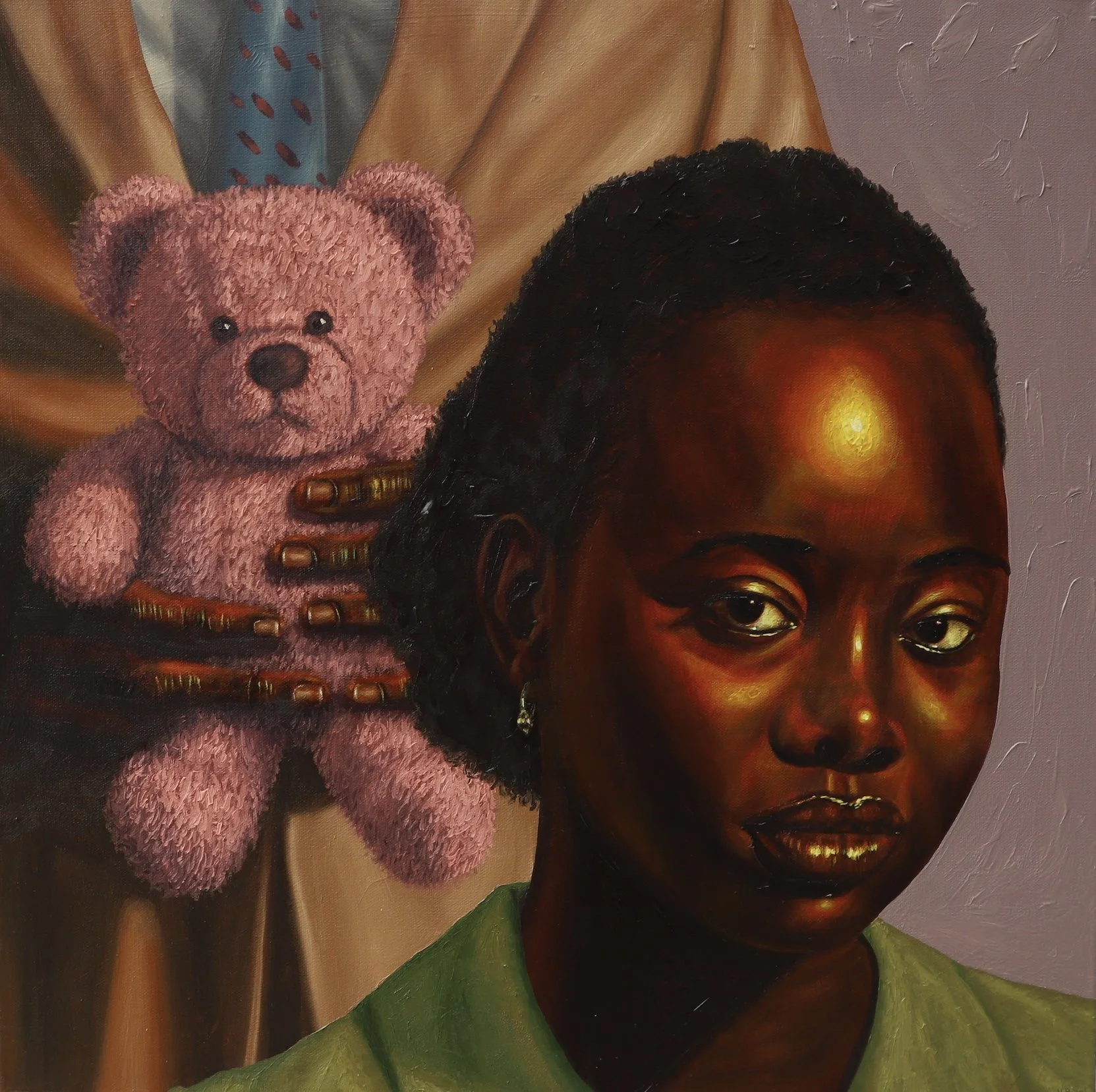
Barry Yusufu from Where We Left Love series, 2025. Photo courtesy: Virginia Damtsa
EP: What other themes will the audience encounter?
VD: Resilience, vulnerability, strength, introspection, emotional rawness—and importantly, the space between those states. Many works speak to women’s stories that remain unheard or under-acknowledged. Also addressing themes that span nationalities and generations, the exhibition speaks to a vision of global feminism. The exhibition invites viewers to witness these narratives with openness and care.
EP: Town Hall Presents spans Culture, Innovation, Impact, Community, and Big Ideas. How do these facets appear in this show?
VD: Each exhibition I curate engages, in some way, with a cause or social issue that we feel deserves greater visibility. Art becomes the catalyst for dialogue and transformation.
Together with our cultural team, Michael Harris and Romy Westwood, we are crafting a programme of talks and events that expands on the exhibition’s themes. Our Managing Partners, Emilie Edberg and Joseph D’Anna, are passionate about positioning Town Hall Presents as a kind of “School of Big Ideas,” and this exhibition is very much aligned with that vision.
EP: What impact do you hope the show will have on audiences?
VD: Awareness, reflection, and—ideally—a sense of meaningful impact. If visitors leave seeing the world, or themselves, even slightly differently, then the show has done its work.
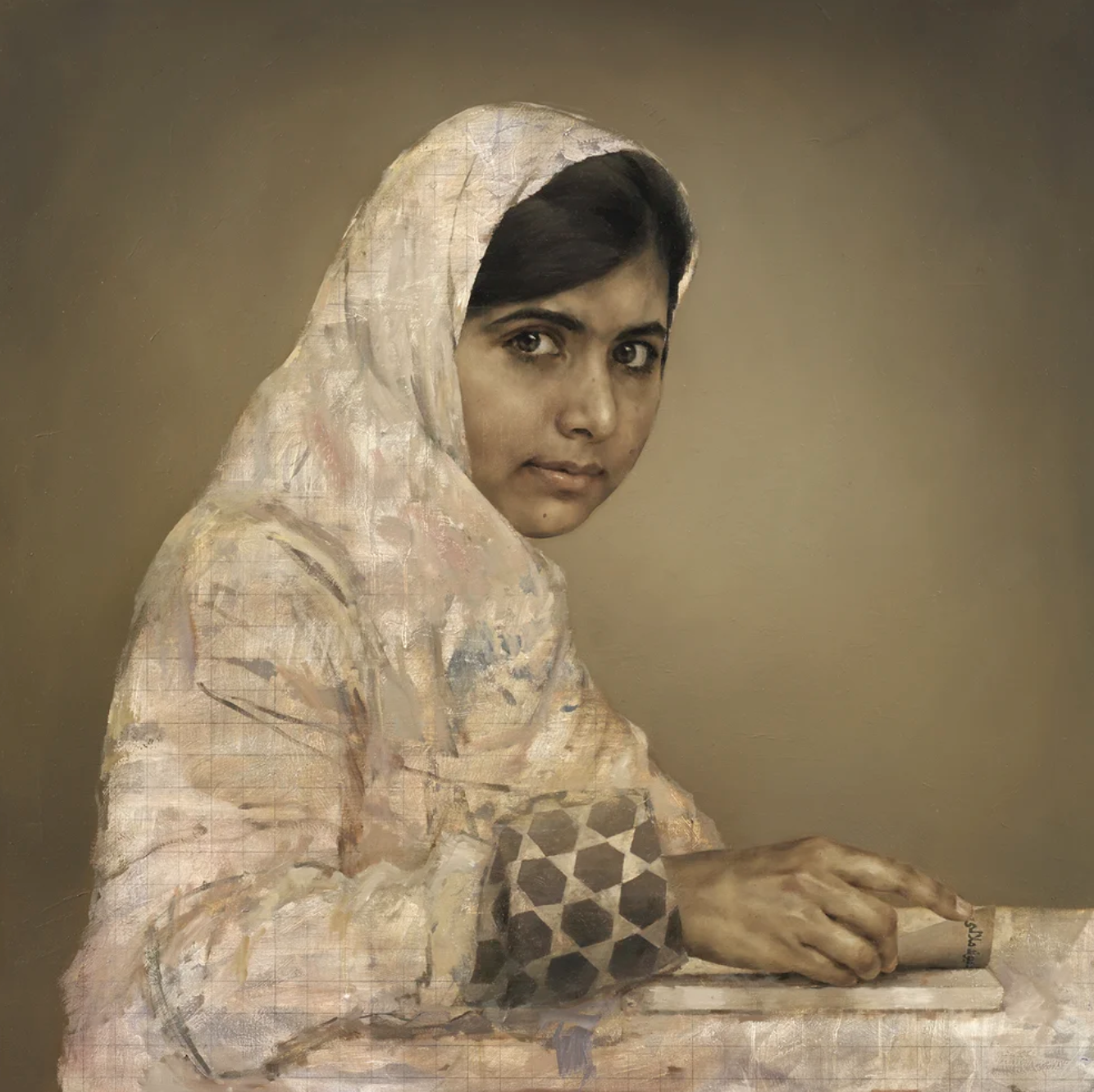
Jonathan Yeo, Girl Reading (Malala Yousafzai), 89×89 cm, 2013. Photo courtesy: the artist
EP: What excites you most about the exhibition?
VD: The collaboration with The Circle. I care deeply about protecting women’s rights, and bringing that mission into conversation with the artistic portrayal of women feels profoundly meaningful.
EP: How has curating this show affected you personally?
VD: I curate around twenty exhibitions a year, and each one shifts me in a different way. This particular show is one I am especially eager to bring to life, because its themes feel timely and universal.
EP: Has it taught you something new?
VD: Not something entirely new, but it has reaffirmed my conviction that art is a catalyst for change—for consciousness, for empathy, for action.
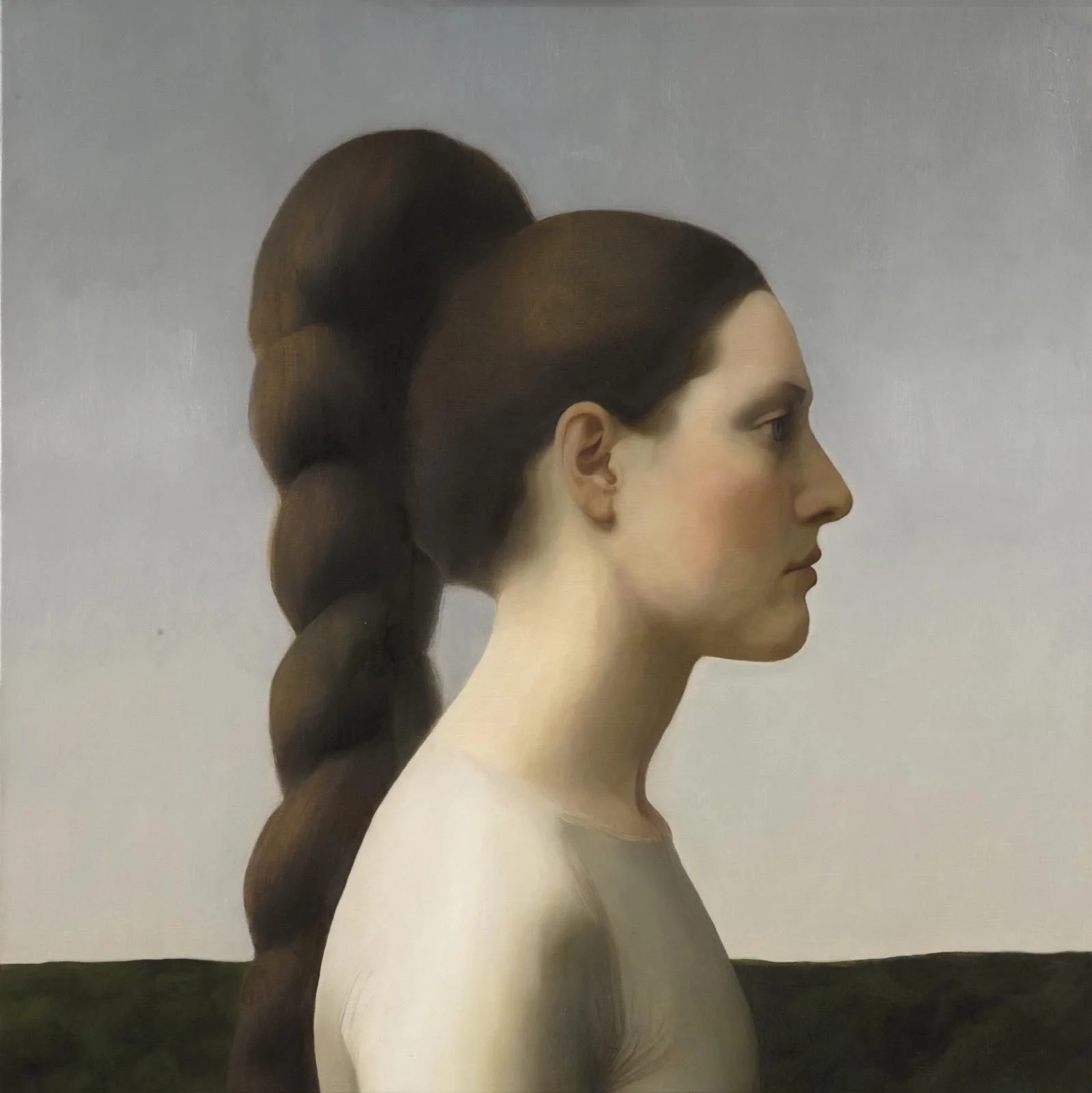
Poppy de Havilland, Colossus Reimagined, 53 × 53cm, 2024. Photo courtesy: the artist
EP: Now, I would like to ask about some of your favourites in the world of art. Which era in art history is your favourite?
VD: Surrealism. I love its freedom—its embrace of the imagination, the subconscious, and the poetic strangeness of being human.
EP: Your favourite colour?
VD: My favourite colour is what happens when several colours merge into one—when they blend, transform, and create something unexpected.
EP: Your favourite artist?
VD: Impossible to choose—we would be here forever.
EP: Now, here is a bit of a cheeky question—If you could claim one artwork as your own creation, which would it be?
VD: René Magritte’s The False Mirror, and last year’s Surrealism exhibition at the Centre Pompidou in Paris—a remarkable show that wove together painting, photography, film, and literature from both the major figures of the movement (Dalí, Magritte, de Chirico, Ernst, Miró) and the extraordinary women Surrealists such as Leonora Carrington, Dora Maar, and Ithell Colquhoun. That world continues to inspire me.
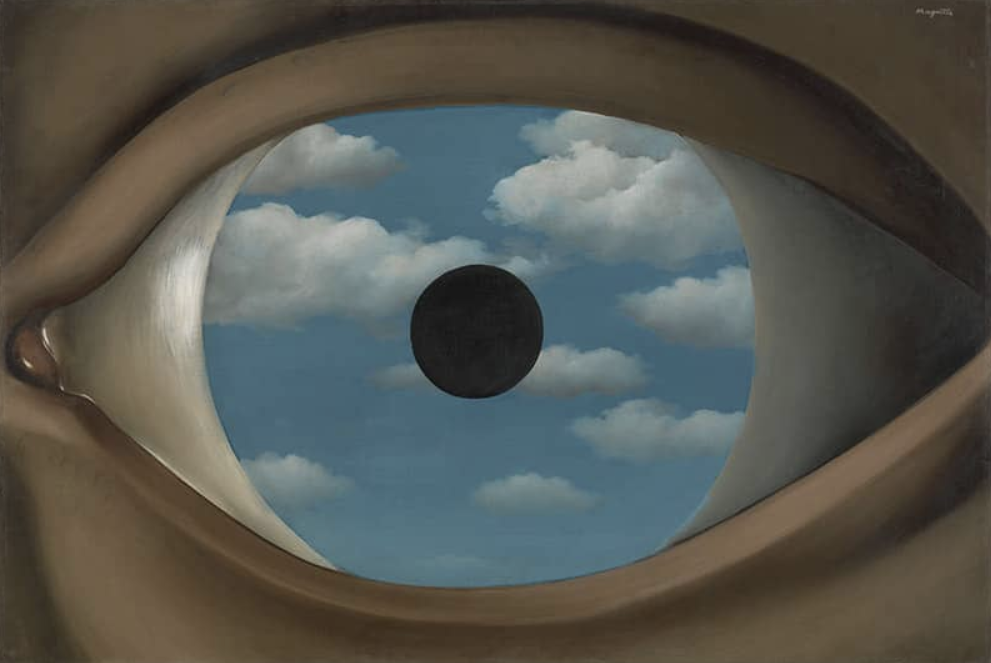
René Magritte, The False Mirror, 54 × 80.9 cm, 1928. Photo courtesy: MoMA
HER STORIES UNTOLD will be shown at Town Hall Kings Cross, early 2026, and you can find Virginia at @virginia_damtsa and Town Hall at @townhall_kingscross on Instagram. Stay up to date with Town Hall’s upcoming exhibitions at www.townhall.co.uk
Many thanks to Virginia Damtsa on behalf of MADE IN BED.
Eliza Palmer
Social Media Manager, MADE IN BED
Disclaimer: The views, thoughts, and opinions expressed in MADE IN BED are solely those of the individual authors and not those of MADE IN BED magazine or of Sotheby’s Institute of Art.