

Karim Farhat in Conversation with Artist RJ Weaver
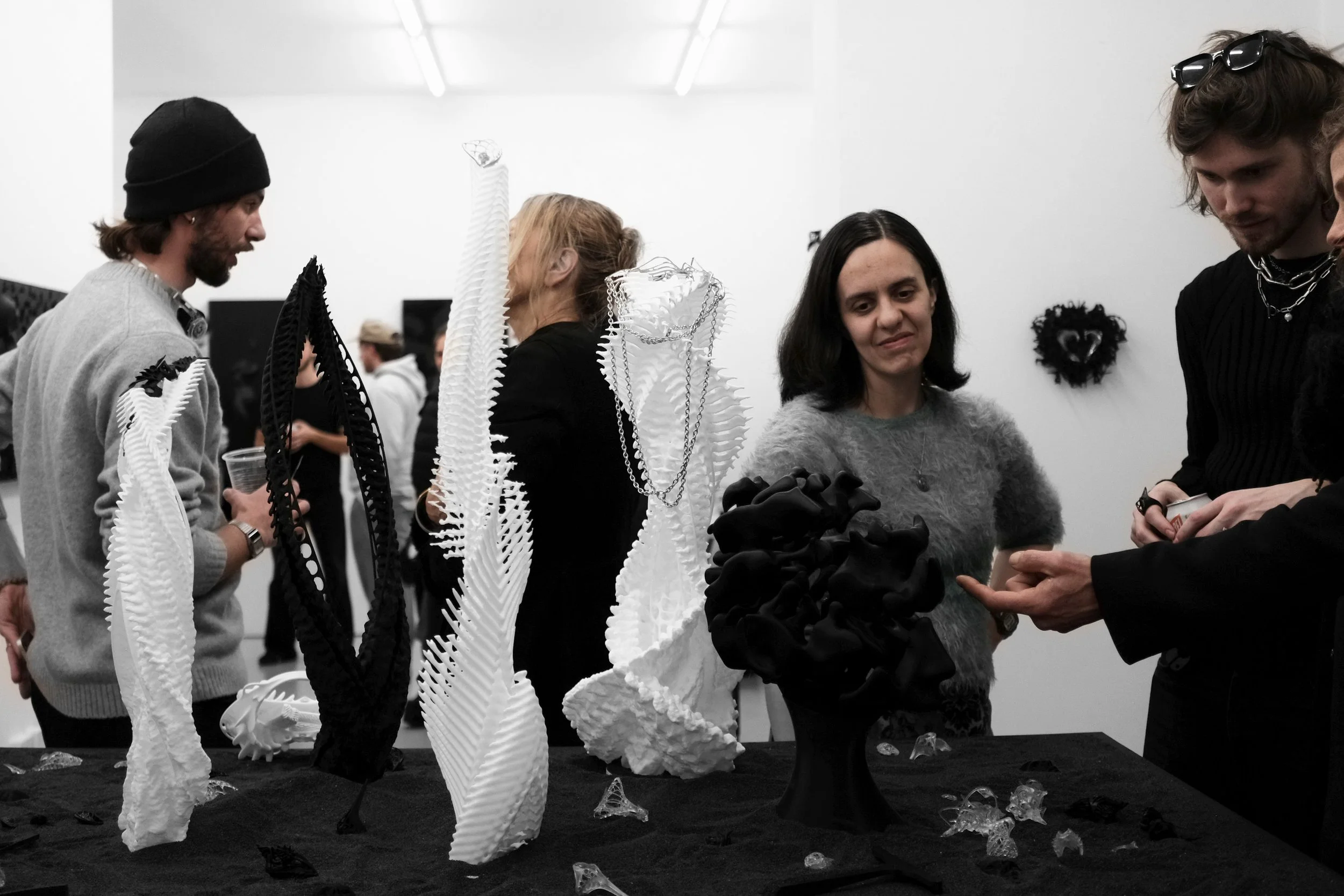
RJ Weaver, Sinew Ring (2025), Gauntlet (2025), Pebble Ear Cuffs (2025), Nautilus Ear Cuff (2025), and Eye Shroud (2025) BIOPHILIA installation view. Photo courtesy of Lorenza Di Battista.
RJ Weaver is a computational designer and artist who makes jewellery, purses, and sculptures using 3D printing. We first met RJ at a group exhibition in London where he was wearing one of his own handbags, and were drawn by the coral-like composition of his accessory—organic in appearance, yet unmistakably artificial.
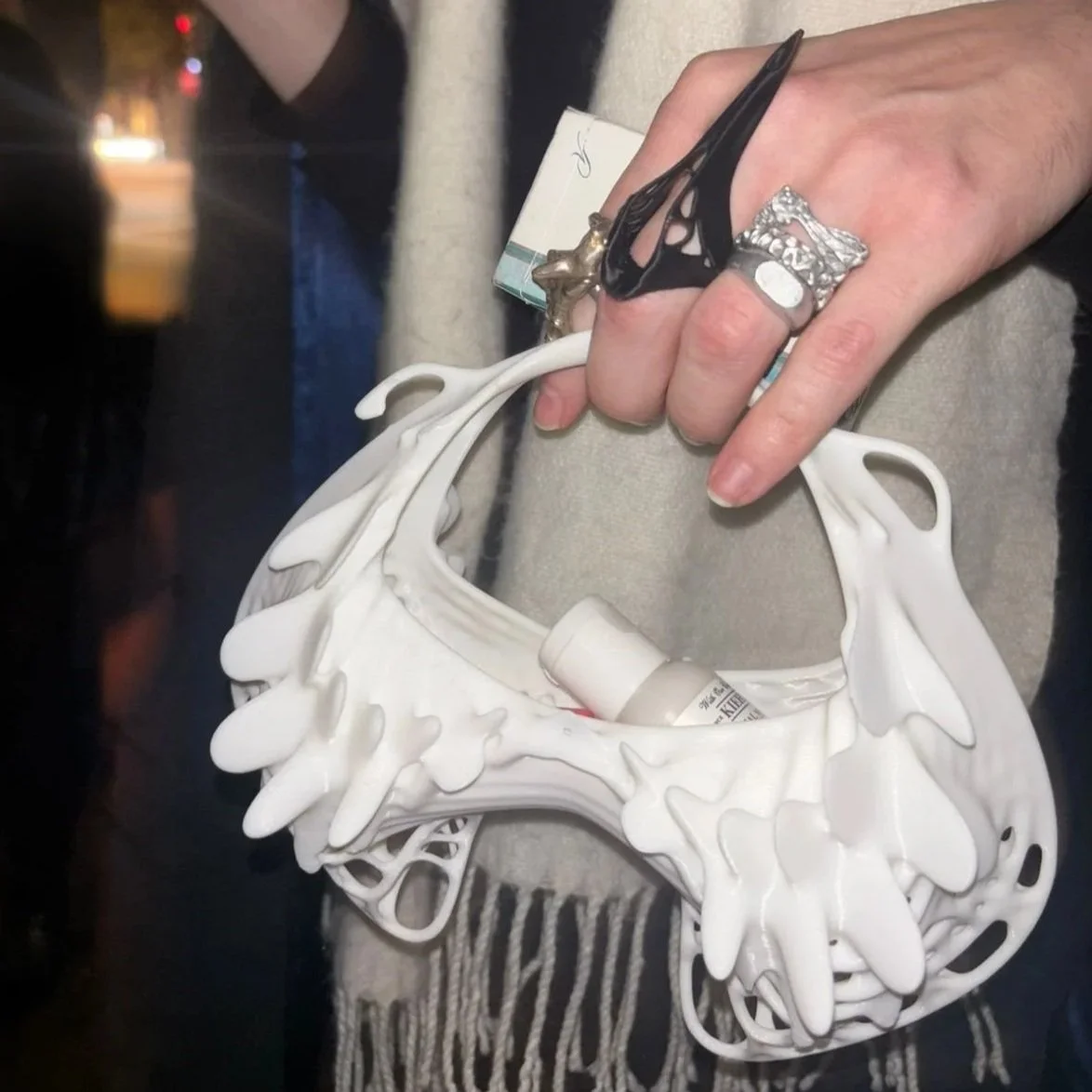
RJ Weaver, Clutch Bag (2025), Avian Ring (Resin Edition)(2025), Bubble Ring (2025). Photo courtesy of the author.
RJ and his brother Tyler share an Instagram account through which they sell their 3D printed wearables. The duo is showing their work at Seager Gallery in an exhibition titled BIOPHILIA alongside work by Kirsten Tingle, RJ’s studio partner and collaborator.
A week after the private viewing of BIOPHILIA, RJ invited us to his studio where we got the opportunity to see how he and Kirsten work behind the scenes. This interview was conducted over a bottle of white wine and home-made hummus, accompanied by bread baked by a robot RJ programmed. This intersection of the domestic and the computational appeared as a recurring theme in RJ’s practice.
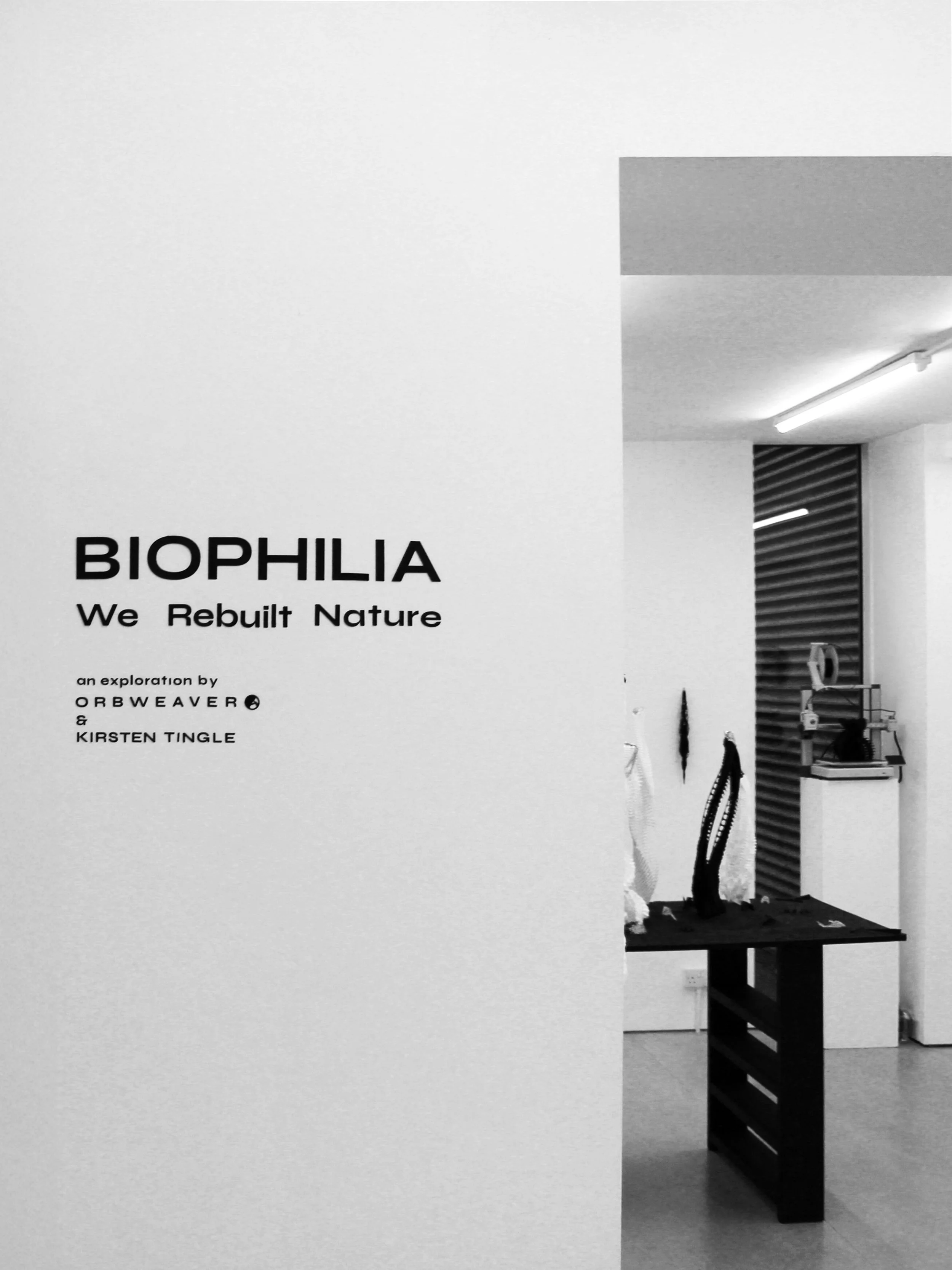
BIOPHILIA installation view (2025). Photo courtesy of Lorenza Di Battista.
Karim Farhat: There is a conversation between the organic and the computational in your art. What do you think about that relationship? Is there a point within the process where the ‘organic’ ends and the algorithm begins, or are they intertwined from the start?
RJ Weaver: A nice answer would be that we're inspired by nature, and we'll make something to raise awareness about it. But I think it's deeper than that. And I think with a lot of stuff, like we did for BIOPHILIA, the show at Seager, we can take a step back from being inspired by what nature has made but be more inspired by how nature makes something.
If you look at how a tree grows outside, it starts with a seed, it has food in the soil and water and things, and then it has sunlight. It’s using those basic inputs to grow towards the sun and flourish and become a big tree.
With computational design, we can do things very similarly, where we have very simple inputs, like with some of the statues that we made. We had the piece of jewellery as the input, and we gave it a direction to grow in. And it grew to the floor, which was its goal. And then if you just vary those inputs very slightly, then you go from having one statue to having a very different statue.
It's maybe important to stress nowadays that there's no AI in the computation.
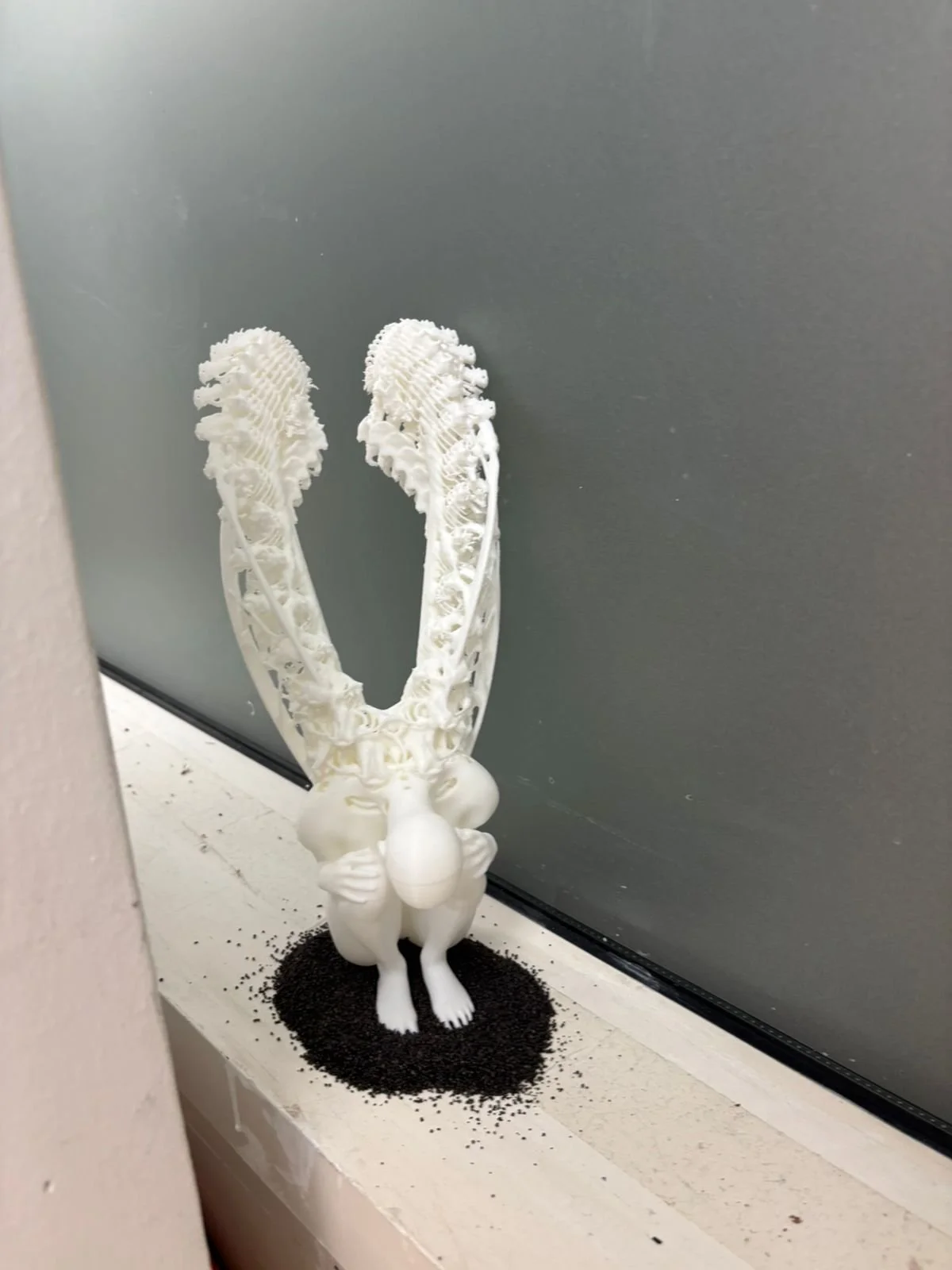
RJ Weaver, Winged Human (2025), hidden away as an exhibition easter egg. Photo courtesy of the author.
KF: How did you decide to move to London from Virginia?
RJW: I was teaching at Virginia Tech from 2022 to 24, and then I did a master’s degree in computational design in Sophia, Bulgaria. There were only two programs at that time that were accredited in the world for computational design. So I did one of them, and that's the coding plus design workflow, which involves the 3D printing, a bunch of coding, and the sculpture work.
It's a fun program. I met people there from all around the world and then realised that London was awesome. I think I met Kirsten as well. I don't know if that was a big thing to go to London, because [Kirsten was] doing [her] master's there, but it worked out well.
KF: Tell me about your path into art, when did you first start creating?
RJW: My mother is very artistic, and she's always taught art through mostly high schools in the U.S. So she was always a big force for doing creative things, and then my father is much more analytical, the math side of things.
Combining those two together is maybe one of the reasons why I think interdisciplinary work is so powerful, because there's a lot of overlap that can be cool and unique there. Going from that, I was doing a lot of science and engineering stuff in high school; looking towards college, it was a question of what to do, and the engineering never looked that interesting because you're doing math all day and you're not actually making anything with your hands. I found that I don't like to make things with my hands, but it's more hands-on than just writing equations all day—even though it's a 3D printer.
As RJ described the tension between art and engineering, we noticed that this hybridity had been present early on in his life.
RJ: But my mother found out that there was a thing called industrial design in 2017: the design of products that we use in everyday life, where you’re making a product that solves a very specific problem.
That didn’t sound like the most fun thing to me so instead of doing that I did a fashion show for my thesis. I did that fashion show with an industrial designer and two biomedical engineers, but it had wearable technology embedded in the dresses we were making, so some had brain sensors, others had heart rate sensors, or muscle sensors. The models that were wearing them, if they flexed their muscles, we’d have motors or lights in the garments that would move and change, and we 3D printed a lot of structures to make that possible.
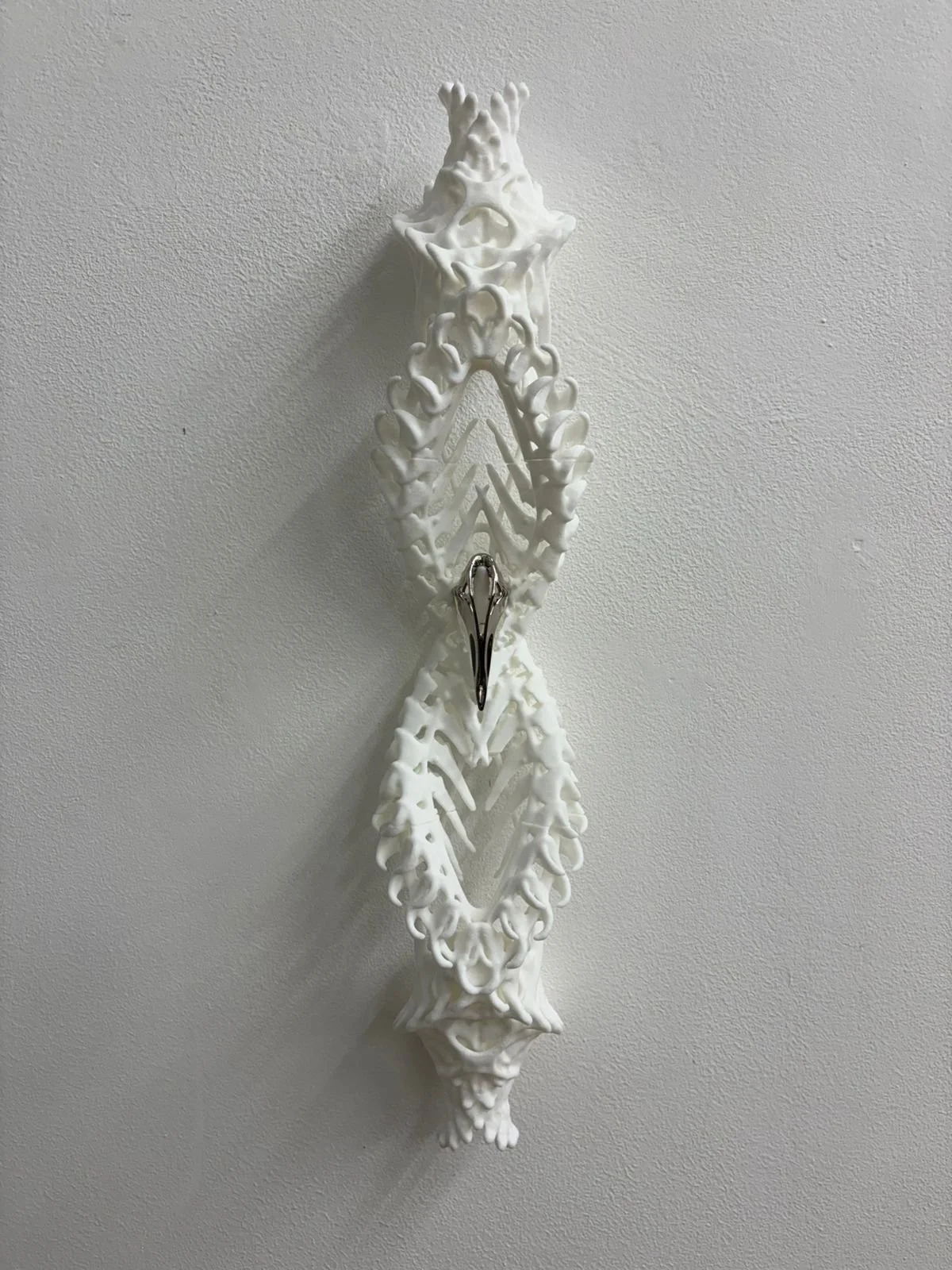
RJ Weaver, Wall Pedestal - Avian Ring (2025). Photo courtesy of the author.
KF: Your display choices feel very intentional, especially the wall pieces that seem to cradle a piece of jewellery. What led you to that decision?
RJW: We were thinking about how to put it on a wall. It kind of just came from that.
RJ and Kirsten worked collaboratively in both the creation of the objects, and the curation of BIOPHILIA.
Kirsten Tingle: Well, we were brainstorming how RJ's work could be sort of fused with sculpture and painting. And so then thinking of how it could be placed on the wall was quite interesting. But then [RJ] came up with the workflow of making the stand be of the jewellery piece itself.
But it's kind of this nice double wear. You can buy this piece for your wall, but then you also get to take a part of it out into the world.
The double wear concept stood out to us; the clear duality between wearables and sculptures felt original—we had not encountered it anywhere else before.
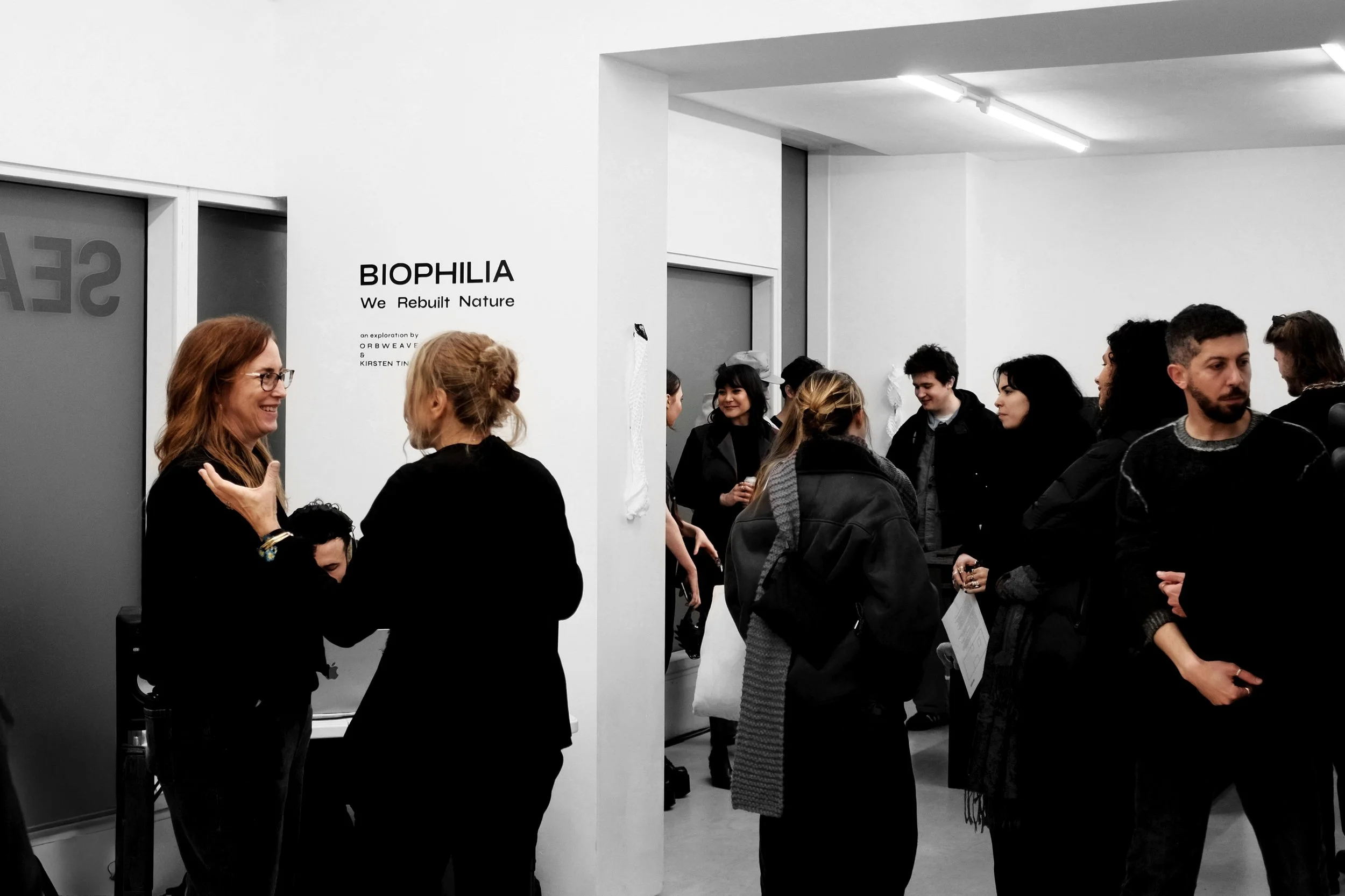
BIOPHILIA opening night (2025). Photo courtesy of Lorenza Di Battista.
BIOPHILIA is on at Seager Gallery until the 15th of January. You can find out more about RJ Weaver’s work on Instagram.
Special thanks to RJ Weaver, Kirsten Tingle, and Seager Gallery on behalf of MADE IN BED.
Interviews Co-Editor, MADE IN BED
Disclaimer: The views, thoughts, and opinions expressed in MADE IN BED are solely those of the individual authors and not those of MADE IN BED magazine or of Sotheby’s Institute of Art.