Eliza Palmer in Conversation with Errol Theunissen
MADE IN BED has the privilege to be joined by Errol T for this interview, as we ask the up-and-coming artist some questions about his recent rise in popularity. His works paint scenes of intimate domesticity, the safe joy of childhood, and the warmth of interpersonal connection. Errol T tells us of his experience in the art world, his close connection to his Zimbabwean heritage, and his goals for the future.
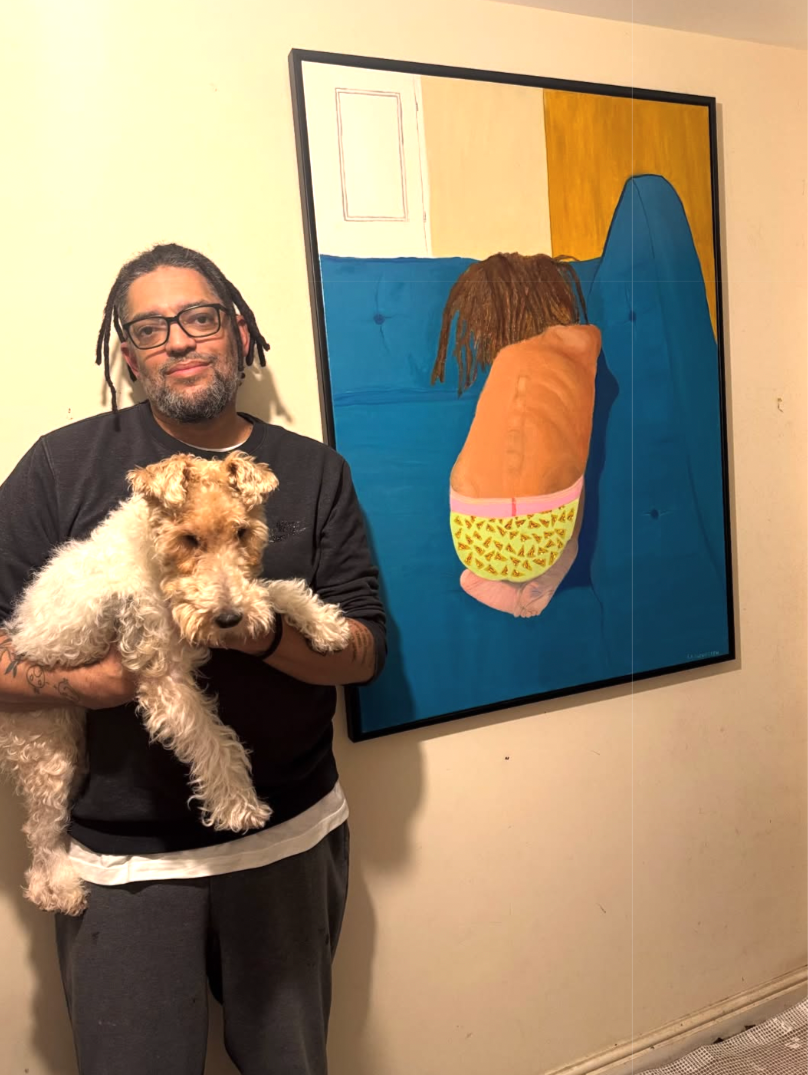
Errol T next to I Am Not Going! - Errol T. Oil on canvas. Photo courtesy: Errol T
Eliza Palmer: How have you found the experience of gaining more visibility and selling more art?
Errol T: It has been a bit of a whirlwind, as I had never really expected to be in the position I am in now with my art. I don’t take it for granted and am still hyped every time I show a piece or make a sale. It is a wonderful thing, as an artist, to know that your work is speaking to people and that they want to show it and own it, putting it up in their living spaces.
EP:Per the information I’ve found, I believe you are from Zimbabwe. What is the art world like in Zimbabwe?
ET: The Art world in Zimbabwe is incredibly vibrant and is an integral part of society. Shona sculpture is world renowned, and the country has produced several highly regarded contemporary painters, photographers and textile artists.
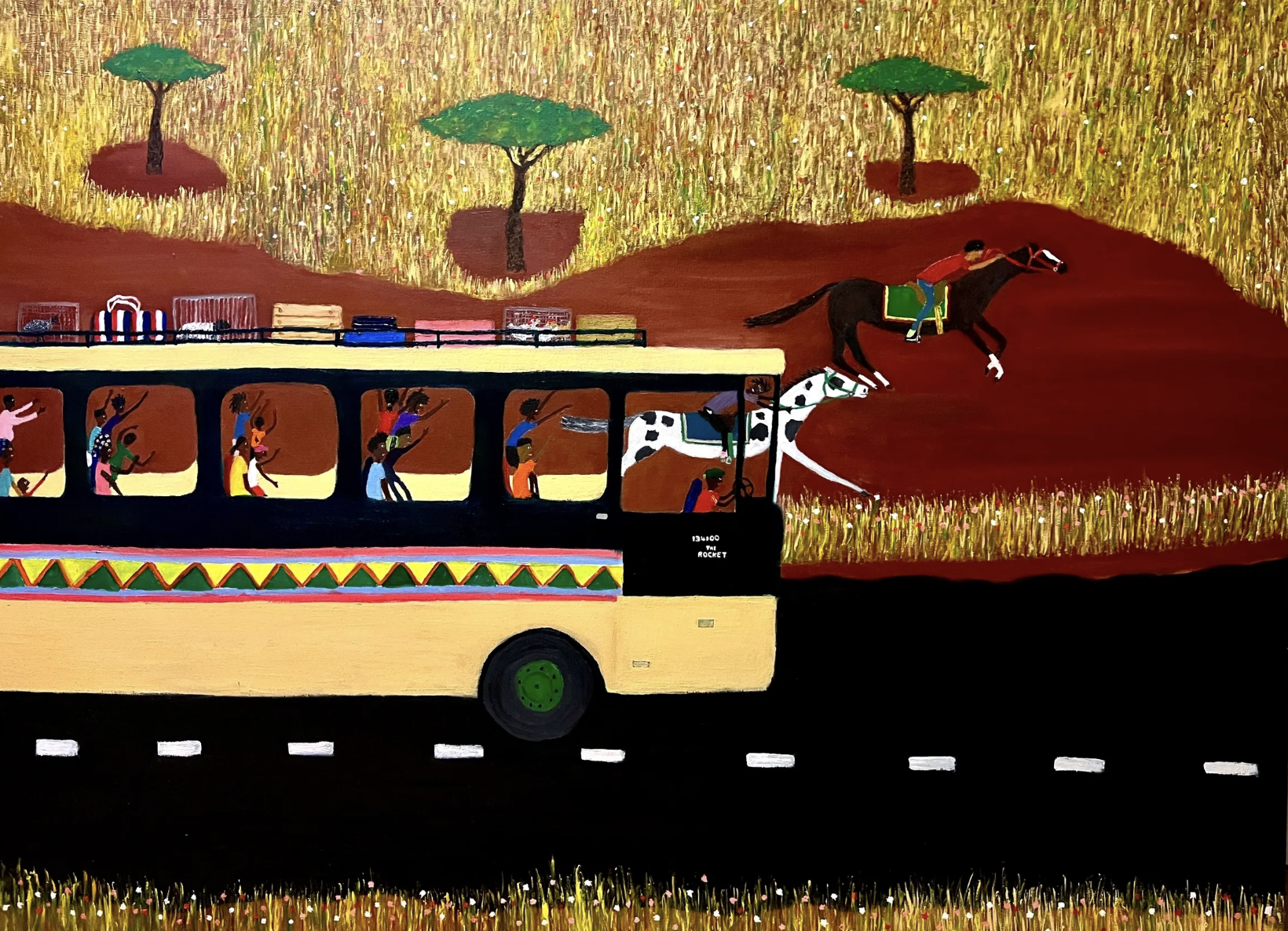
The Race! - Errol T. Oil on canvas. Photo courtesy: Errol T
EP: What is something from your heritage that you find has appeared in your art, consciously or unconsciously?
ET: My maternal grandmother belonged to the Shona Tribe, the largest tribe in Zimbabwe and in my works, I will sometimes use Traditional Shona symbols such as the chevron design that was used in the incredible dry wall construction at Great Zimbabwe, the Majestic remains of an ancient City and Capital of the Kingdom of Zimbabwe and also features on traditional Shona clay pots and headrests. I have also used the Ndoro in my work, which is an ancient symbol of the Shona people and represents wealth, spiritual status and continuity. It was traditionally crafted from the swirly pattern on the back of the Conus Virgos seashell.
EP: What is your favourite medium of art?
ET: My favourite medium of art is painting. The colours, the different textures that we use to tell these visual stories. I am obsessed with painting.
EP: You are a self-taught artist. What does this mean to you in the context of today’s art world?
ET: I am very proud to be a self-taught artist. I often wonder how different my style would be if I had formally studied art. I am certain it would not be what it is today. I am not certain, but maybe it may have lost exactly what it is that seems to speak to people.
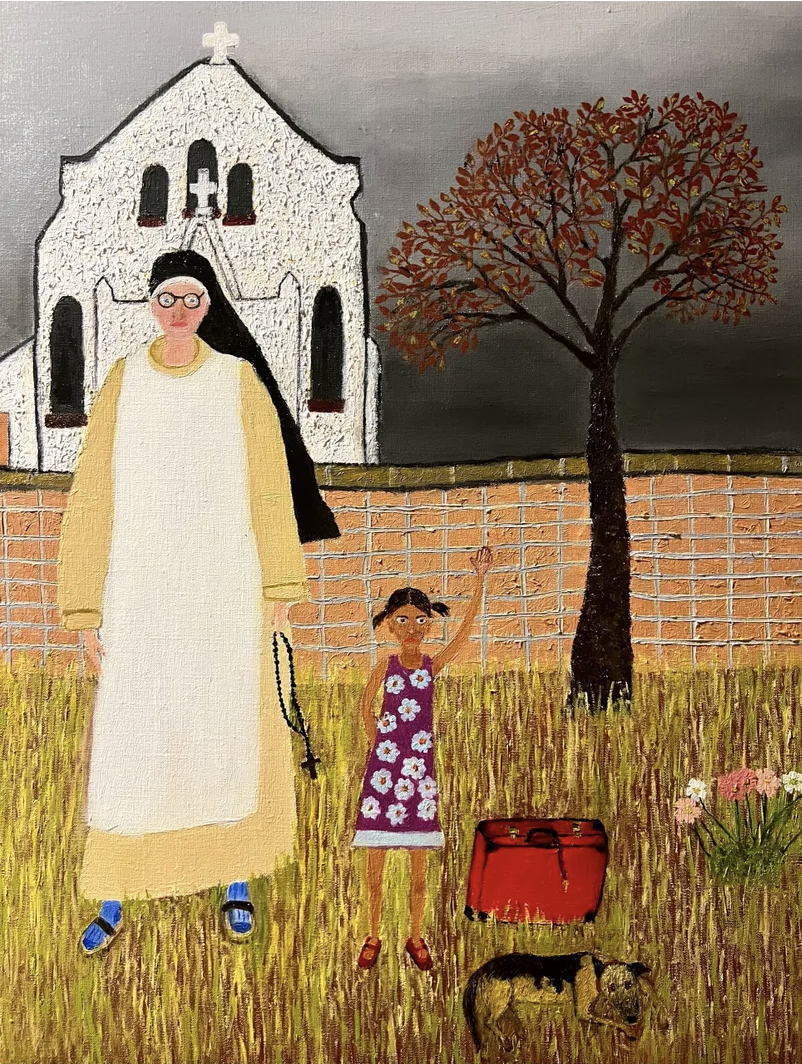
The Drop Off - Errol T. Oil on linen. Photo courtesy: Errol T
EP: When did you start publishing your art?
ET: I only started showing my art to people online in 2021, and first showed a piece in an actual show at the Bankley Open in Manchester in 2021.
EP: In which museum or gallery is it a dream of yours to one day exhibit your work?
ET: There are actually two places that I would love to one day exhibit my work. They are two very different spaces. The first one is the National Gallery of Zimbabwe in Harare, as I have never shown my art in the town of my birth. The second is the Museum of Modern Art in New York.
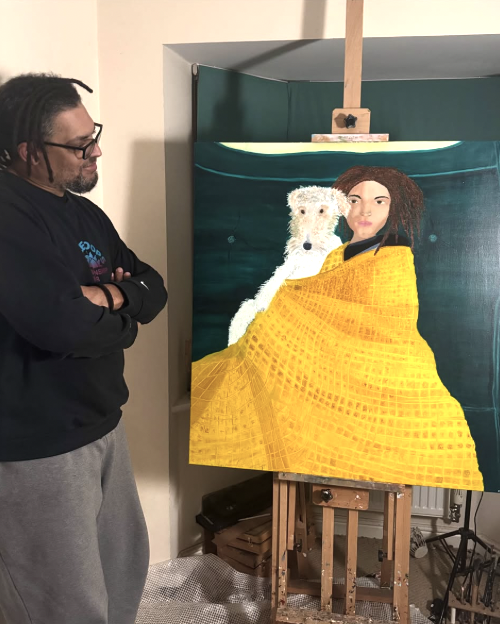
The Boy in the Blanket - Errol T, 2025. Photo courtesy: Errol T
EP: How do you find the reception of a self-taught artist to be different from that of an artist who formally studied art?
ET: I am not sure, to be honest. It has never really been something that galleries, curators or collectors have dwelled on when approaching me. We usually talk about my work and practice rather than whether I have studied art. I do not think that my self-taught status has in any way held me back.
EP: Who are the figures in your work? Are they family/friends/representations of people in your life, without being the literal drawing of these people?
ET: The figures in my work are often family, or they may be based on my family or people that are in my life. I do, however, sometimes create figures from my imagination for certain pieces. These are usually pieces that are not real moments captured or remembered, but work I have created around a certain theme.
EP: The moments captured in your work bring a bloom of warmth to my mind, thanks to their sweetness and intimacy. Do your pieces create this same sentiment in yourself?
ET: Yes, warmth is present in most of my work. I love the connectivity between people and between people and animals, and the warmth and intimacy that often come from these connections. I try to capture this in my paintings and drawings.
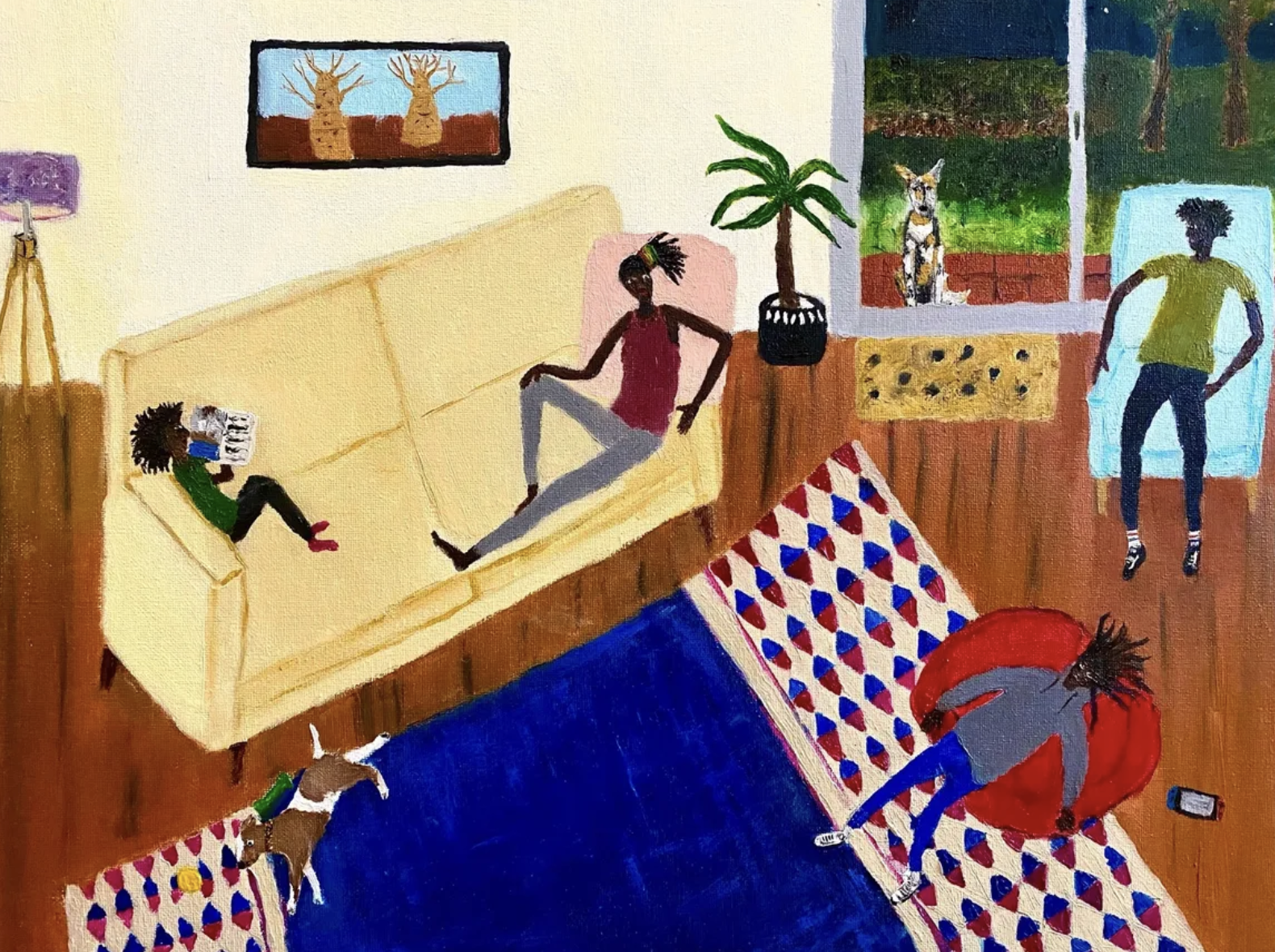
The Visitor - Errol T. Oil on canvas. Photo courtesy: Errol T
EP: You said in your artist statement for New Blood Art that you don’t have to go searching for inspiration because you take it from moments that already happen in your day-to-day life. Do you think that this is a source of inspiration you will stick to, or do you think you may begin to reach for further inspiration outside of your quotidian life?
ET: For now, I will continue to capture the moments around me, in my home, and in my town, there are so many moments I see. However, I am a people watcher, and I am so aware of all the moments that I could see and capture in some other places that speak to me. I love Hackney in London, where I have been lucky enough to show my work through BSMT and spend time walking the streets. I love the mix of people, cultures, and styles all coming together. I would love to spend some time in Hackney and do a series of works of captured Hackney moments–so watch this space.
EP: I really liked your stance on the importance and the benefits of having animals in our lives, and the positive impact they have on us. You often feature animals in your paintings. With to your self-taught technique, do you find it more or less difficult to paint animals compared with people?
ET: I enjoy painting both humans and animals, and don’t find it more difficult to paint animals; I just paint them as I see them in my head, in the same way I paint people.
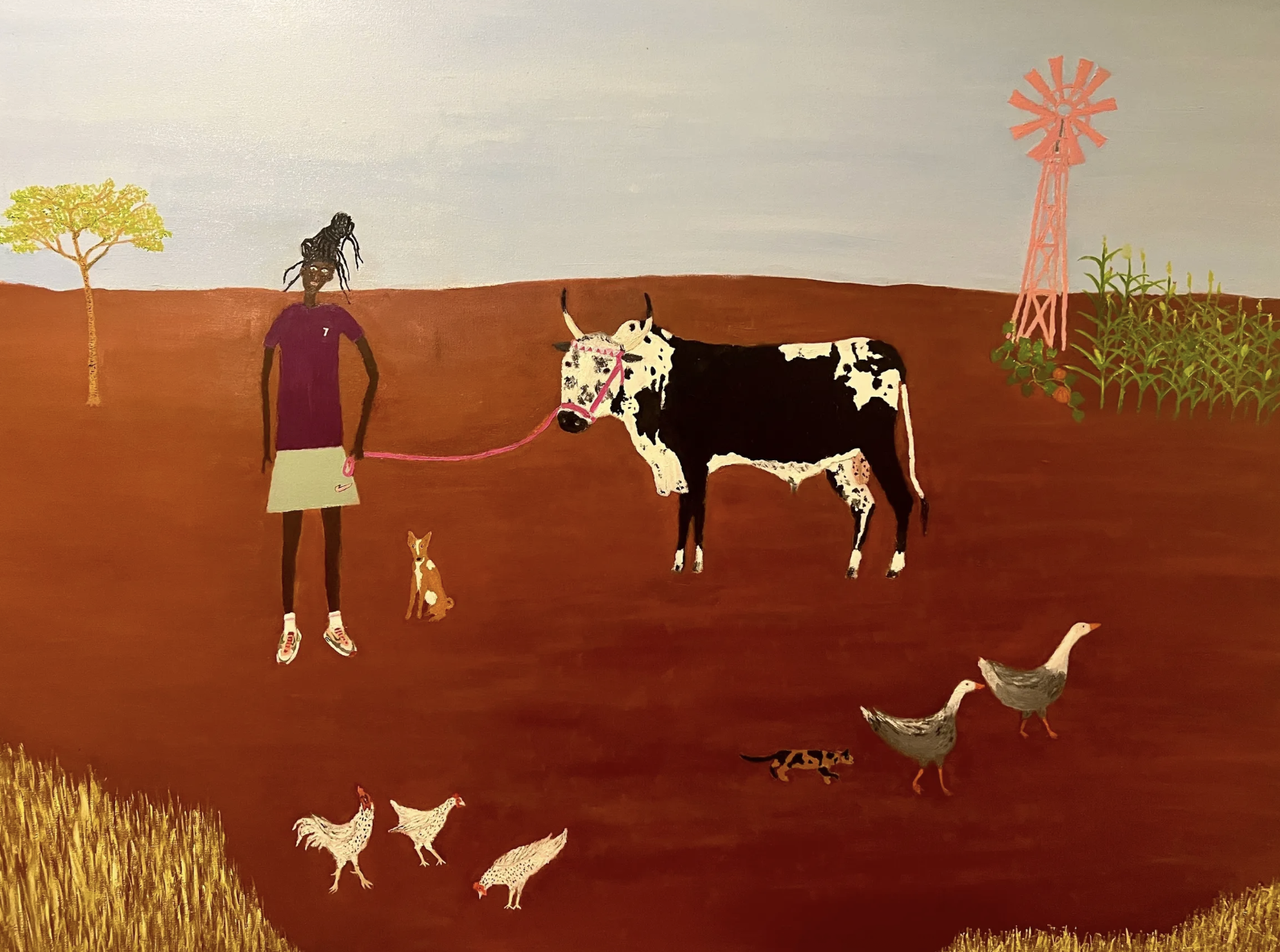
The Girl and her Nguni Bull - Errol T. Oil on canvas. Photo courtesy: Errol T
EP: Who are some African artists who have influenced your work?
ET: I love the powerful figurative work of Kudzanai-Violet Hwami from Zimbabwe, and also love the colour and humour in the work of the Cameroonian artist Enfant Pre’coce.
EP: Since you have lived in England, have you seen a change in your art, whether that change be in your techniques, styles, or the actual subject matter of the painting?
ET: My style of painting and drawing has not changed, but significant life experiences such as having children, leaving my homeland and being separated from my extended family have changed the subject matter.
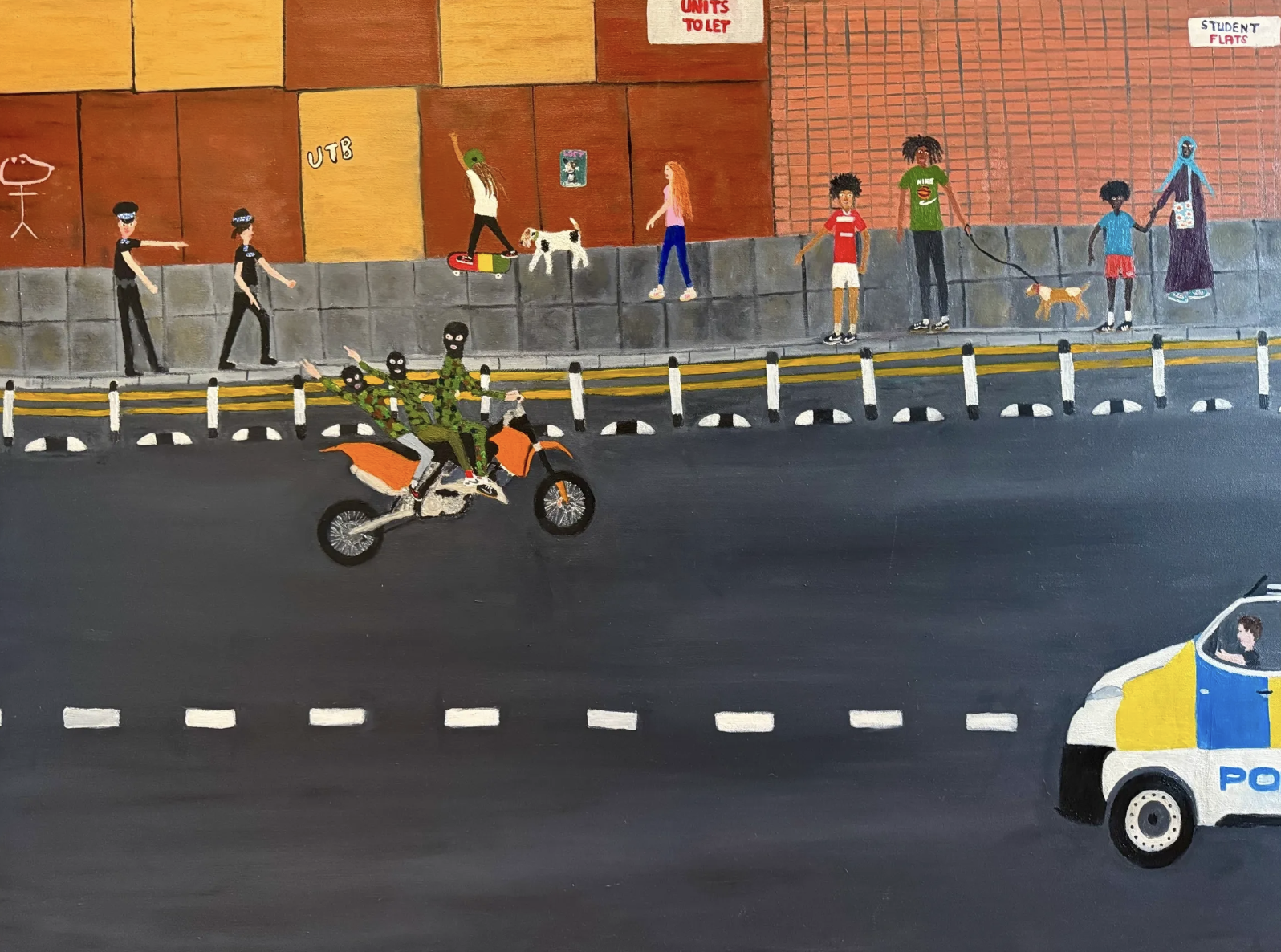
Police! Where? - Errol T. Oil and spraypaint on canvas. Photo courtesy: Errol T
EP: What is your favourite part of the creative process when you are making a piece?
ET: My favourite part of the process is when I see the idea or image in my head as a painting. I carry a little drawing book with me all the time so I can make a sketch and make some notes of the image I have seen in my head, positioning, colour, light, and clothes. I sometimes feel so excited that I feel I need to get to the easel and get painting as soon as possible.
EP: From start to finish, how do you make a piece of art?
ET: I usually do a little drawing in my drawing pad and think about position and colour. I sometimes go as far as using oil pastels to get an idea of how my vision of the colours will work. I then do a rough sketch using charcoal on the canvas, and then get down to painting the piece.
EP: What time of day or night do you feel most creative?
ET: As a result of my caring responsibilities, I often get most of my painting done late at night, 11 pm to 3 am. I am very hyperactive and, since childhood, have always slept very little.
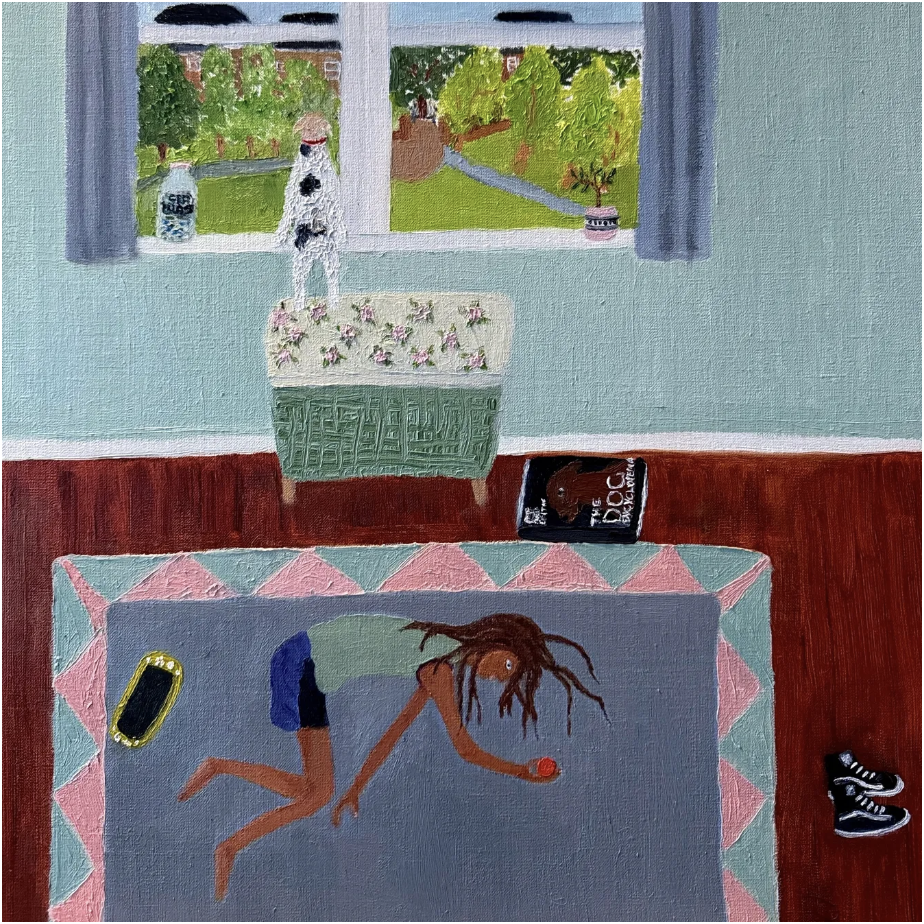
I would play ball with you, but there is so much to look at! - Errol T, 2025. Oil on linen. Photo courtesy: Errol T
EP: What is your favourite colour?
ET: My favourite colour is Tropical Green.
EP: What did you do before you began working as an artist?
ET: I still currently work alongside my art as a student adviser at a university.
EP: How did you establish yourself as an artist so that you could devote your time to your work?
ET: I entered as many open calls as I could and made the effort to attend the openings so I could meet the curators, gallerists and very importantly, the people who came to see the shows. It enabled me to speak to them about my work and my practice and answer any questions they may have. I still try to attend any show my work is in, be it a solo show or a group show, in which I have one painting. This has enabled me to have strong relationships with a number of galleries and collectors.
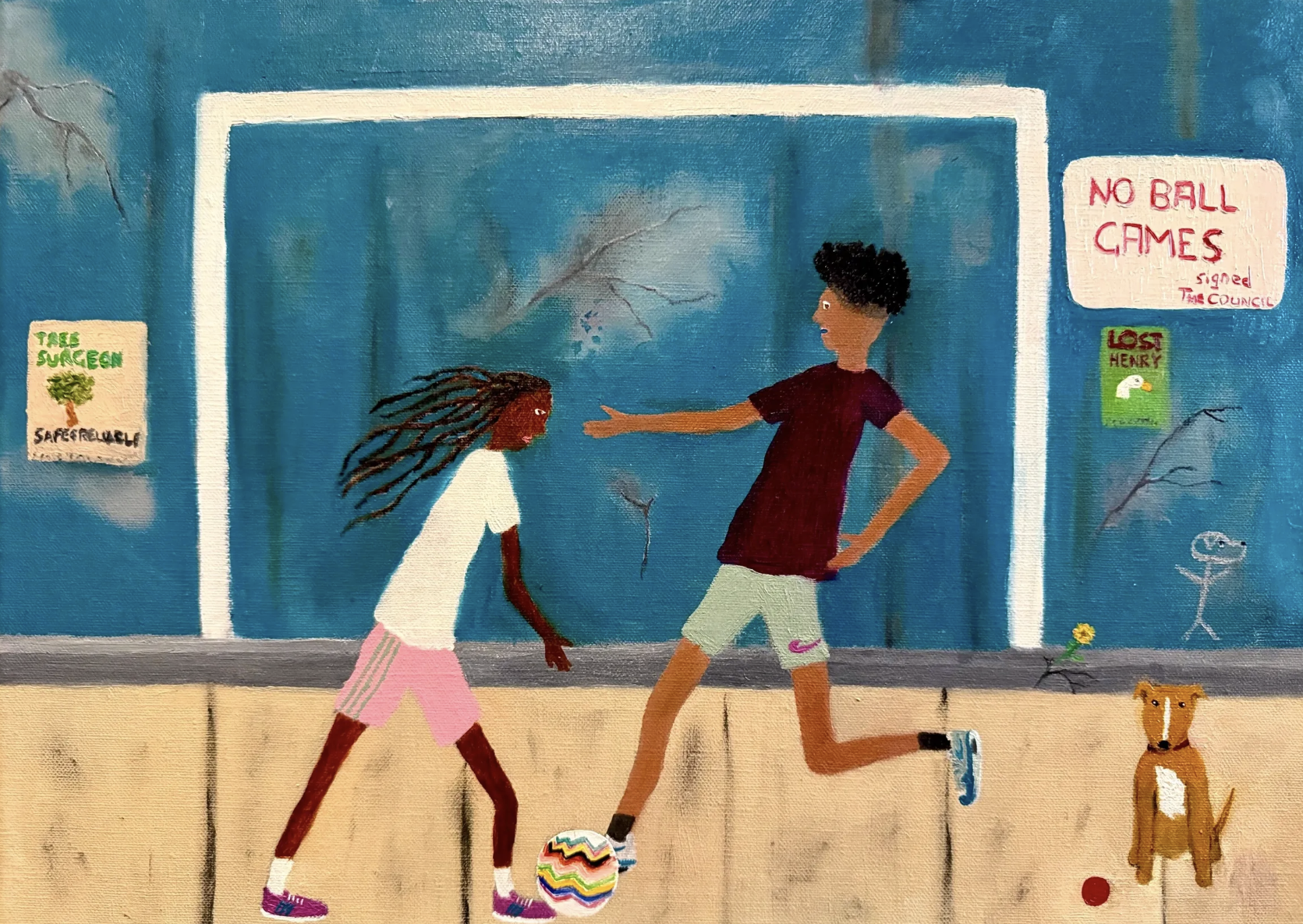
No Ball Games! - Errol T. Oil on linen. Photo courtesy: Errol T
EP: Outside of your own works, what is your ‘favourite’ piece of art?
ET: My favourite piece of art is 40 Acres and a Unicorn, by the incredible artist Noah Davis.
EP: Do you have an ultimate ‘goal’ as an artist? If so, what is it?
ET: My ultimate goal as an artist is to be able to continue to grow my practice and increase my audience, painting what I love to paint, but to also look outwards and use my art and experience in the art world to make art more accessible to people and communities who do not have access to the means to create art or to simply enjoy seeing art.
EP: What would you like to see more of in the mainstream discussion of art?
ET: I would like to see more discussion and analysis on the barriers that exist that prevent artists in the UK maintaining a viable practice. The two elements that seem to affect this are the ability to make a basic living from art and the ability to find the time to create. I know too many talented artists who give up because they simply cannot afford to produce their work. It has been interesting to follow Irelands landmark Basic Income for artists scheme which has come into being after a successful 3-year pilot.
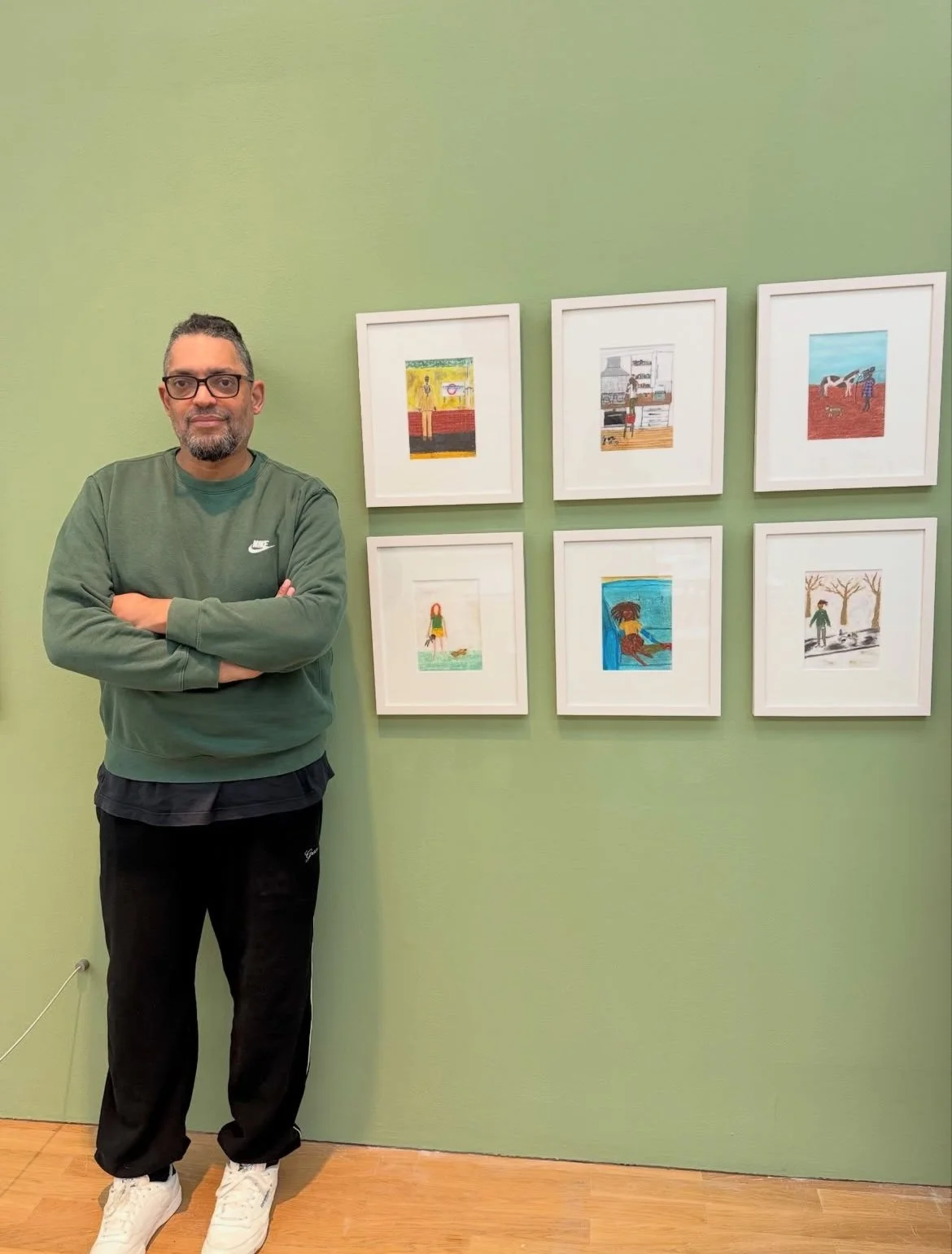
Errol T at MIMA next to his works. Photo courtesy: Errol T
EP: What is a piece of advice you would like to give to other self-taught artists?
ET: I would like to advise other self-taught artists to proudly fly their non-conformist flag and to use being self-taught as a strength. Remember that it is not a formal path of art education that makes you an artist or gives you the right to call yourself an artist. I firmly believe we all artists, the art , the creative urge is in all of us it just needs to be encouraged and have enough space to find its way out.
EP: How do you know when an art piece is ‘finished’?
ET: I used to struggle to know when the piece was complete but after studying the work of Noah Davis and attending his show at the Barbican, I noticed that in his work there are elements that appear unfinished but it in no way take away from the work- this has made me a lot more relaxed in choosing when I see the work as complete.
EP: How do you go about pricing your works?
ET: Pricing work is tricky. I started off researching the market and looking at what comparable works by Artists in the same stage of their careers were being sold for. I was able to use this along with the (hourly wage x hours spent)+cost of materials formula to ensure my prices are realistic to my market and I am adequately paid for my work and time.
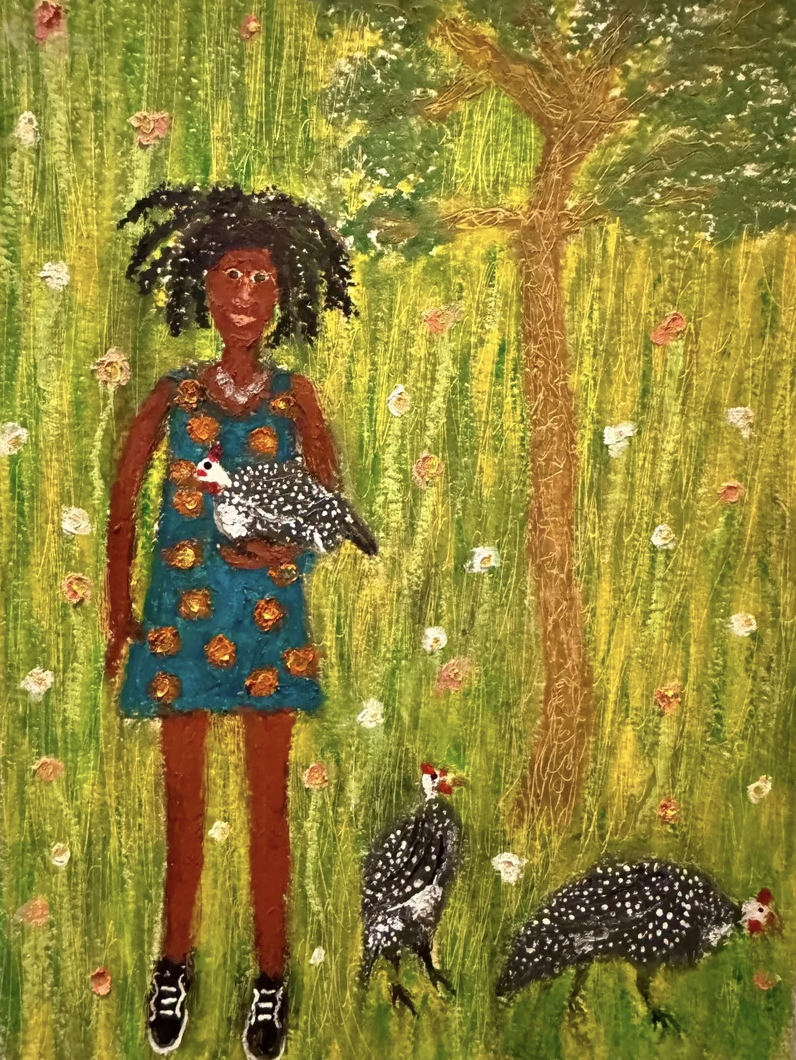
The Girl and her Guinea Fowl - Errol T. Photo courtesy: Errol T
EP: If you had to describe your work with one word, what would it be?
ET: Apricity- The warmth of the sun on a chilly day. I like this word to describe my art as I hope that in this world that can so often be very difficult and sometimes dark to exist in my art offers some respite and warmth.
You can find more on Errol T on his Instagram and on his website.
Many thanks to Errol T on behalf of MADE IN BED.
Eliza Palmer
Social Media Manager, MADE IN BED
Disclaimer: The views, thoughts, and opinions expressed in MADE IN BED are solely those of the individual authors and not those of MADE IN BED magazine or of Sotheby’s Institute of Art.