Eliza Palmer in Conversation with Barry Yusufu
We are fortunate to have the opportunity to ask the incredibly talented, rapidly growing Nigerian artist, Barry Yusufu, a variety of questions. We ask about his practice, his collecting habits, and his reflections on the differences and similarities between Nigeria and England. From the birth of an idea to the finished piece, we see inside the world of this inspiring artist.
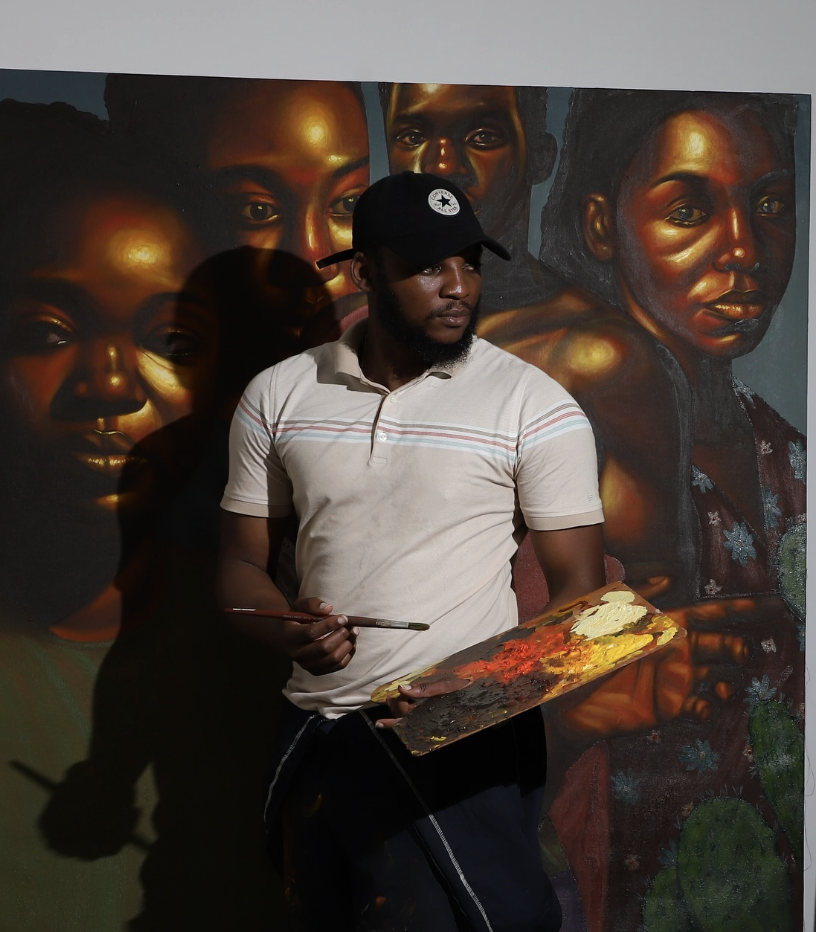
Barry Yusufu in his studio. Photo courtesy: Barry Yusufu
Eliza Palmer: Most of your work is figurative. Either one person or people caught in a moment in time. You stated once, “Every painting I make is a self-portrait.” In what specific ways do you mean this?
Barry Yusufu: In my work, I focus mainly on the Black figure. I paint mostly people from my background, people whose experiences I share. When I started my career, I was painting Nigerians, and even until today my work revolves around the Black experience, the African experience.
For me, as a Black person navigating the world we live in today, every Black person’s experience is connected. I don’t step out of my house and think I will be treated differently from any other person who carries the same skin colour and identity as I do. So in that way, every figure I paint carries a part of me.
That is also why I paint my figures in bronze tones, to remove the idea that Black skin is their only identity. I want people to experience the African man for who he truly is human.
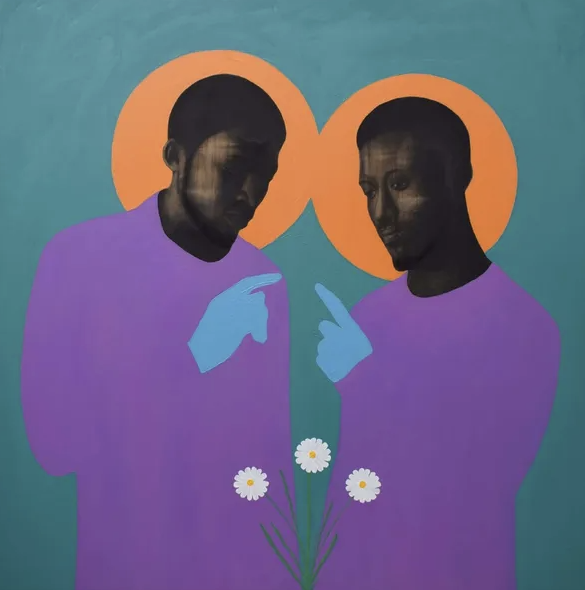
Make Thy Brother - Barry Yusufu, 2020. Photo courtesy: Barry Yusufu
EP: Your use of colour in your current signature style is one of the obvious flags to recognise a Barry Yusufu piece. Since coming to England, do you think your colour palette has changed?
BY: Yes, my use of colour has always been very intentional. I try to portray the Black figure as someone present in time, someone experiencing time. In the past few years, my works have been very vibrant and bold. But more recently, I have also begun to calm the palette a bit. I want viewers to look at a piece and feel ease in whatever they are experiencing.
My work has always been evolving. There has never been a time when I was stuck doing just one thing without wanting to try something new. Since moving to England, I’ve been inspired deeply by the architecture, especially the bricks, the breeze blocks, the terracotta tones. Interestingly, these are also colours I grew up with in Nigeria. Old Nigerian architecture is full of breeze blocks and earthy tones, and those visuals take me back to childhood memories.
Every place I travel to inspires me. I’ve done residencies in different places, and each environment, the architecture, the creative culture, the people, the colours around me, influences my palette. So yes, moving to the UK has definitely inspired and expanded my colour language.
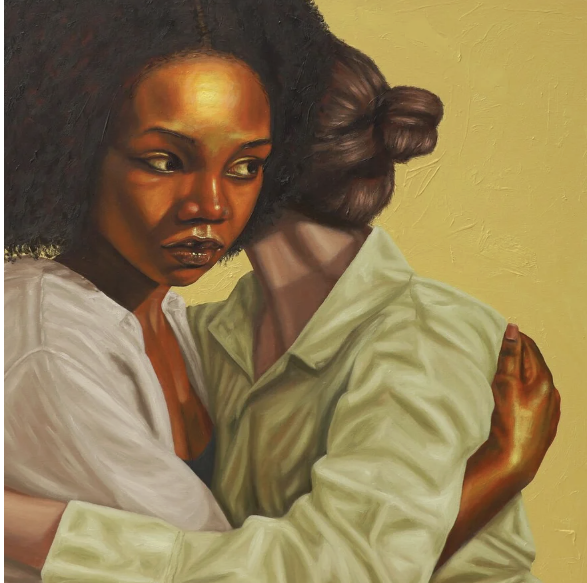
It’s alright, love - Barry Yusufu, 2025. Photo courtesy: Barry Yusufu
EP: What was your first introduction to art?
BY: Honestly, I believe I was born an artist. As a child, I was always the one in class helping classmates draw. My siblings and I would make portraits of our parents. At some point, when we were younger, my mum took us to work with a local artist called Tk Okandua, where we learned how to mix colours and handle paint.
Years later, after leaving school, I truly discovered myself. In 2017, I woke up one morning and decided to sketch my friend. When I showed her the drawing, she was so excited. That was the moment everything changed for me. I realised I could create more than just portraits. I could inspire people. That was the day I picked up my pencil and told myself I was going to be an artist.
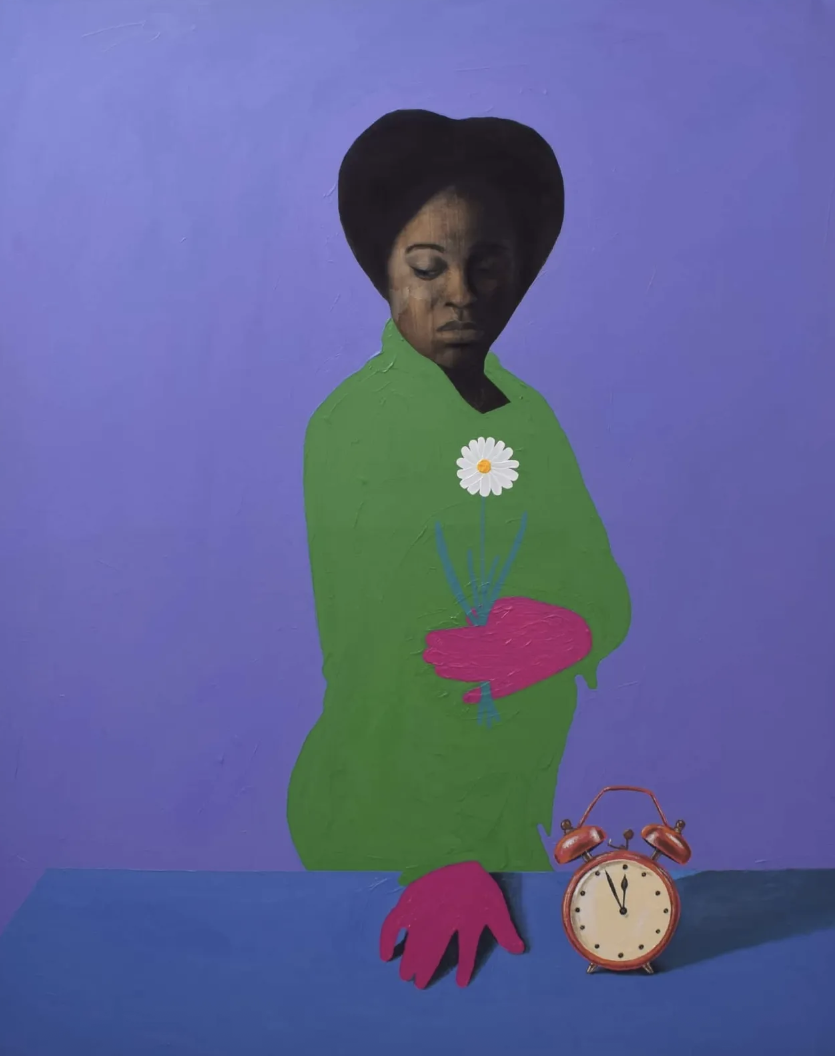
Lady for Red Alarm Clock - Barry Yusufu, 2020. Photo courtesy: Barry Yusufu
EP: Why do you predominantly paint people?
BY: Figurative art is the only kind of art I naturally knew how to do. As a child, I started by painting my mum. I had no formal knowledge of different art forms. I just wanted to paint her.
More importantly, I paint people because I want to tell their stories. I don’t know how I would tell those stories through abstraction. Once I capture a person’s gaze and their facial features, you can almost read their experience. That is very important to me. Figurative art allows me to speak clearly.
EP: If you could keep every piece of art you make, would you?
BY: Yes. When I first started creating, it was very hard for me to let go of my work. After finishing a painting, I would sit down and marvel at what I had created with my own hands. Art was the only thing I had, and in many ways, it still is.
But it’s not practical to keep everything. If you want to grow and keep creating, you have to let go. Over time, I learned that the more my works left me, the more I felt the need to create something even better.
EP: What is your opinion on how black portraiture is being recieved in the present day?
BY: Honestly, how Black art is perceived today doesn’t matter much to me. Some people call it a trend. Some people don’t see it as serious art. But that is not important.
What is important is that artists like myself remain true to our craft and our stories. We are not going to wake up one day and suddenly change who we are just to fit into something else. We are painting from the heart of Africa. We are telling stories that are rooted deeply in our history and identity.
Black portraiture has always been here, and it will remain as long as the Black experience exists.
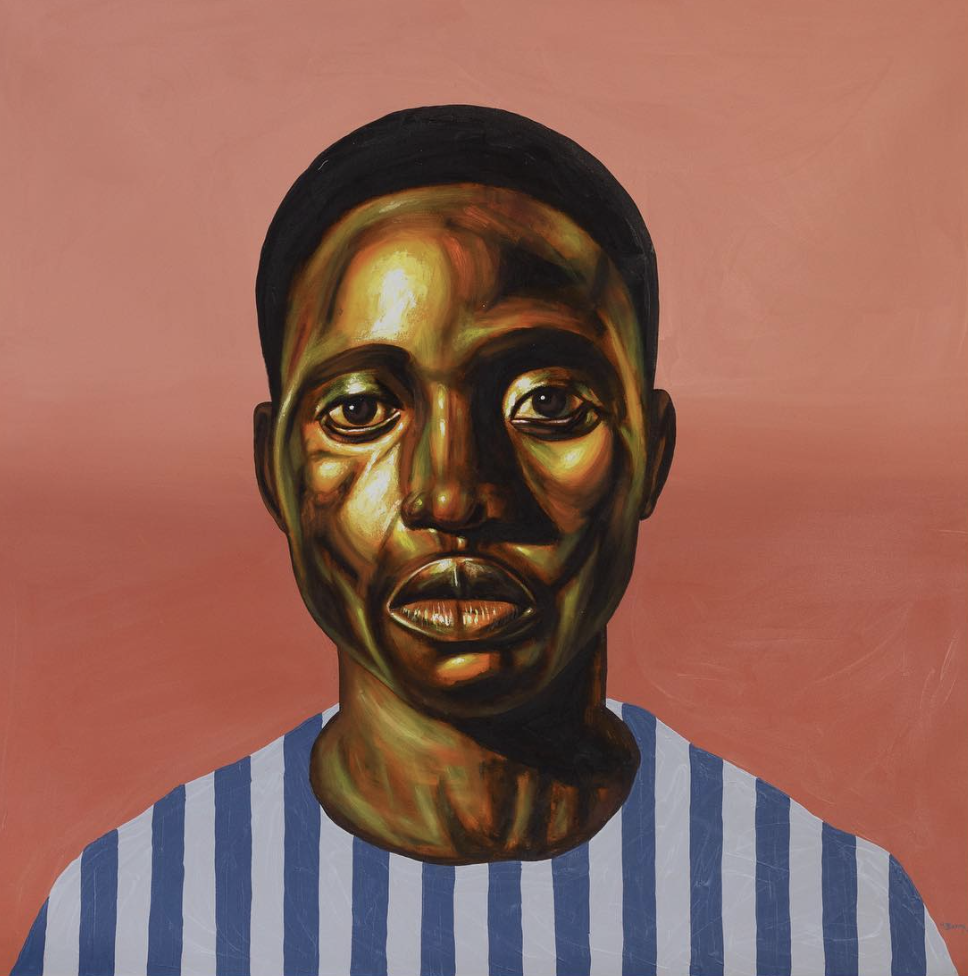
Moses - Barry Yusufu, 2022. Photo courtesy: Barry Yusufu
EP: Your work has been compared to the works of artists like Amy Sherald, the artist chosen by Michelle Obama for her portrait. How do you feel about being compared to other artists, whether they be established, successful artist, or emerging undiscovered artists?
BY: I don’t have a problem with comparison. I think it’s simply people’s way of understanding something. They compare it to something they already know.
For me, I know I am on my own path. I am building a name that will stand the test of time. I’m not in competition with anyone. I’m trying to pass on a message through my work.
Amy Sherald may have her own narrative, and I have mine. My work stands on its own. If comparisons help people understand who Barry Yusufu is, that’s fine with me.
EP: What are some of the main differences in the attitude towards being an artist in Nigeria and England?
BY: Being an artist based in Nigeria can be limiting compared to being in England. In England, there is access. Access to spaces, exhibitions, collectors, and conversations. People can easily visit your studio or engage with your work.
In Nigeria, there is still stigma attached to certain professions, and that affects access. Even though I started my career there and exhibited in many shows and fairs, I find it easier to navigate the art world here in England because of the infrastructure and openness.
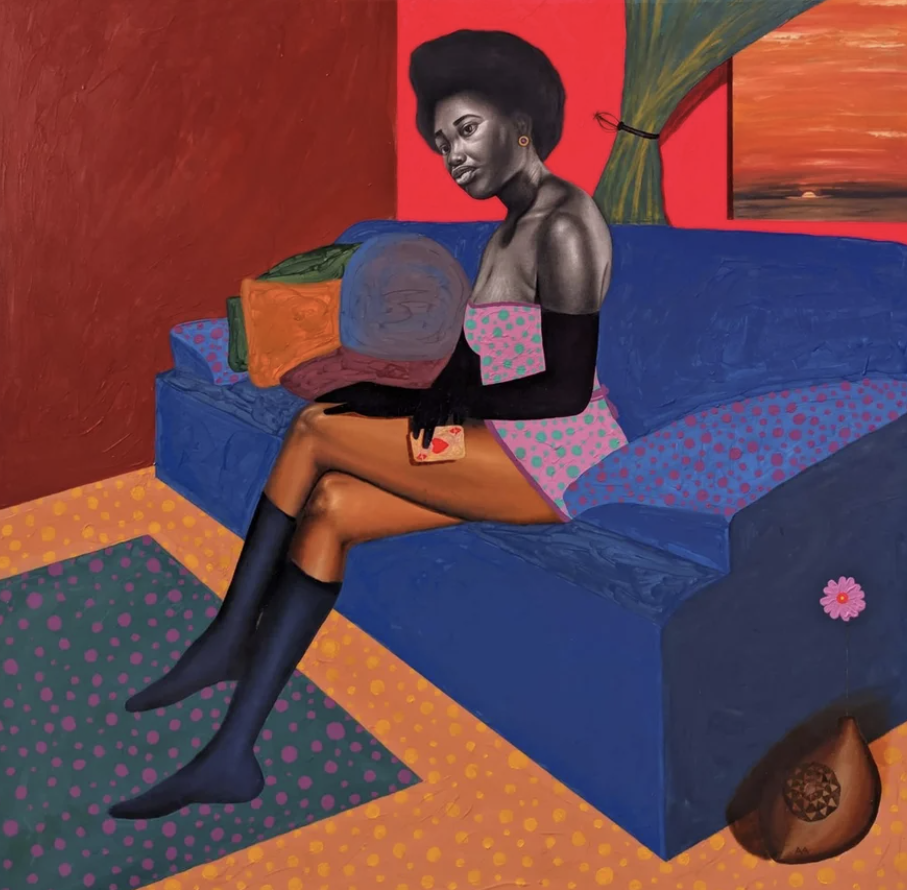
Deborah and Her Last Card - Barry Yusufu, 2020. Photo courtesy: Barry Yusufu
EP: What are some of the main similarities between Nigeria and England concerning art, in your opinion?
BY: They are quite different. England is a melting pot of cultures, styles, and voices. Nigeria, on the other hand, is often rooted deeply in culture, tradition, and storytelling tied to identity.
But the similarity is simple. Artists want to create. Whether in Nigeria or England, artists are driven by the need to express themselves. That desire is universal.
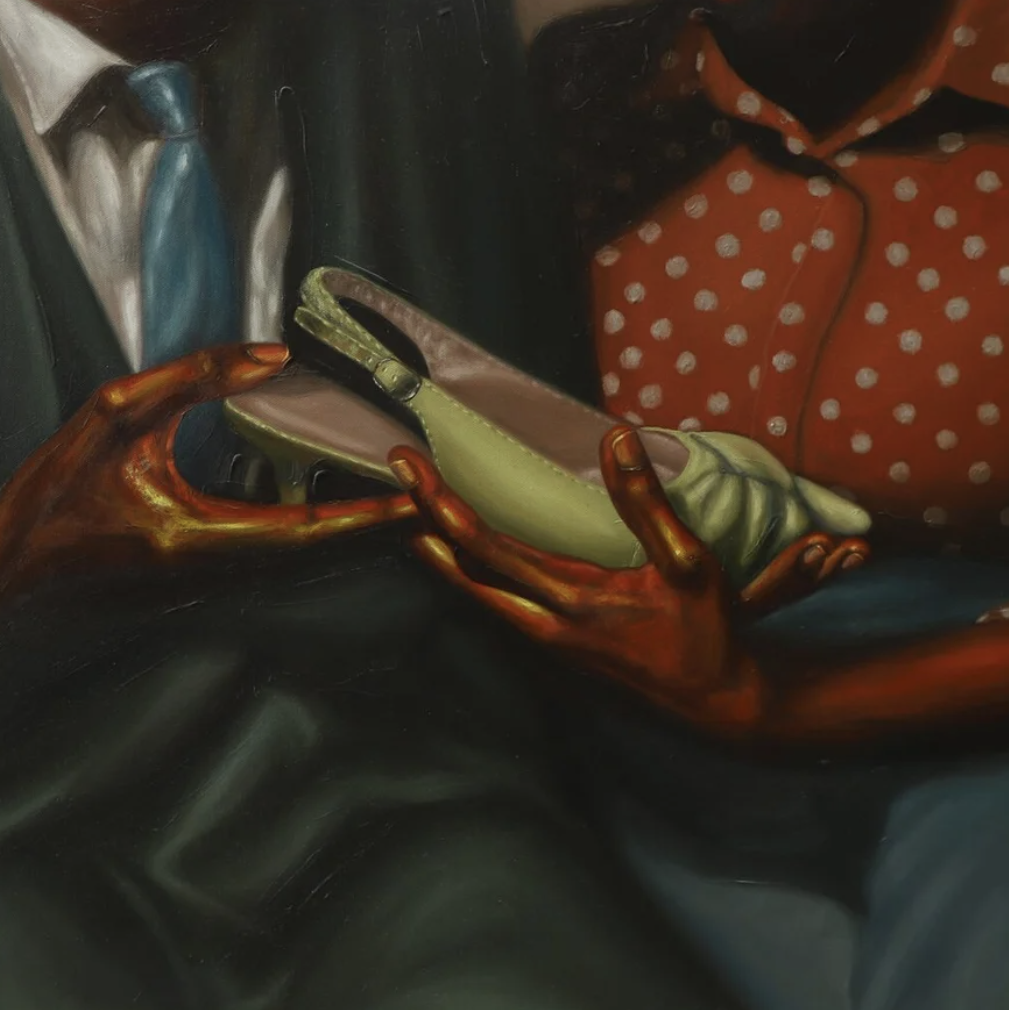
I hope it fits - Barry Yusufu, 2025. Photo courtesy: Barry Yusufu
EP: If you could spend a day with any artist, living or dead, who would it be?
BY: Leonardo da Vinci.
His understanding of anatomy and figuration is on another level. To imagine that he achieved all of that without the digital tools we have today is incredible. The human mind is powerful.
EP: Where do you find most of your inspiration comes from?
BY: My inspiration comes from lived experiences, mine and those of people around me. I am always asking questions. Why is this person poor? Why is this person privileged? Why are women treated a certain way? Why do young men suffer silently?
I ask these questions constantly, and my paintings become my way of processing and answering them.
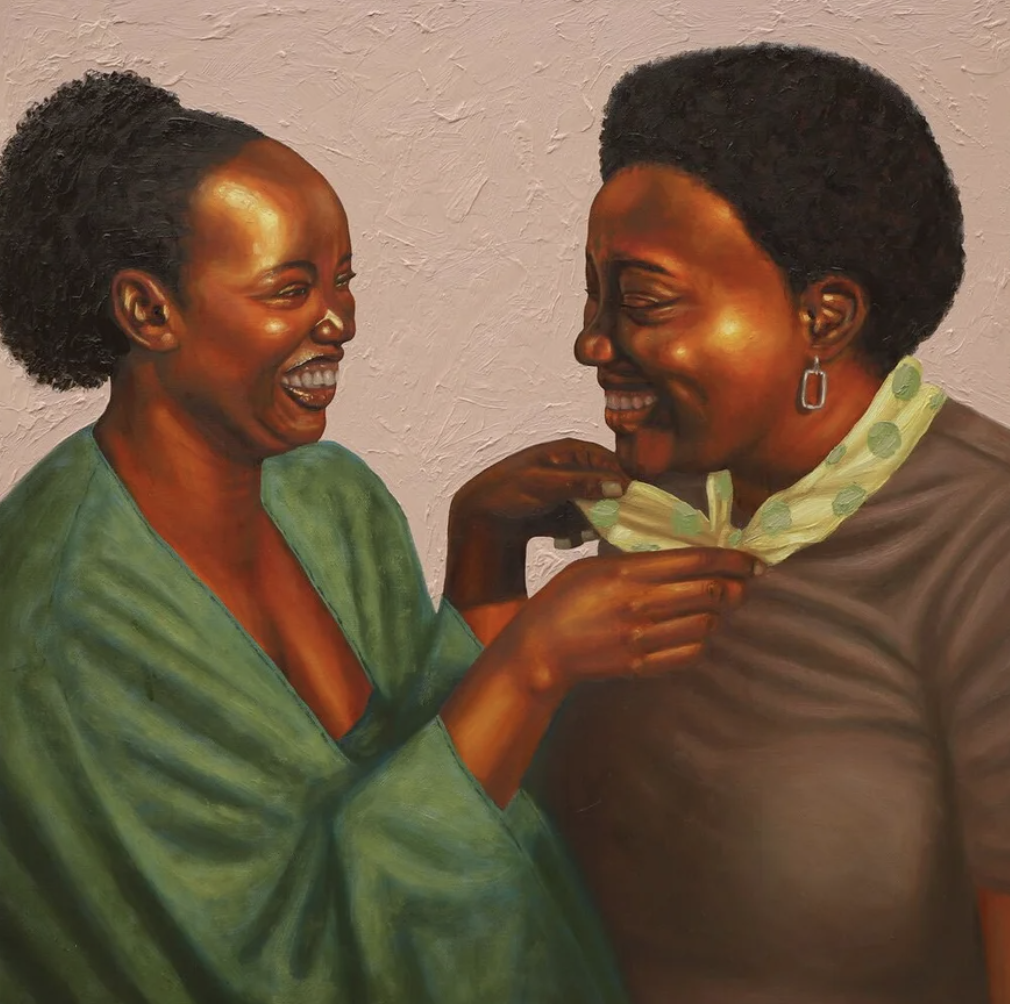
Dearest Sister - Barry Yusufu, 2025. Photo courtesy: Barry Yusufu
EP: How long does it take you on average to finish a piece? When do you know it is finished?
BY: On average, two to three weeks, depending on the size. But I don’t think a painting is ever truly finished. I just stop. I tell myself it is enough. Otherwise, you could keep going forever.
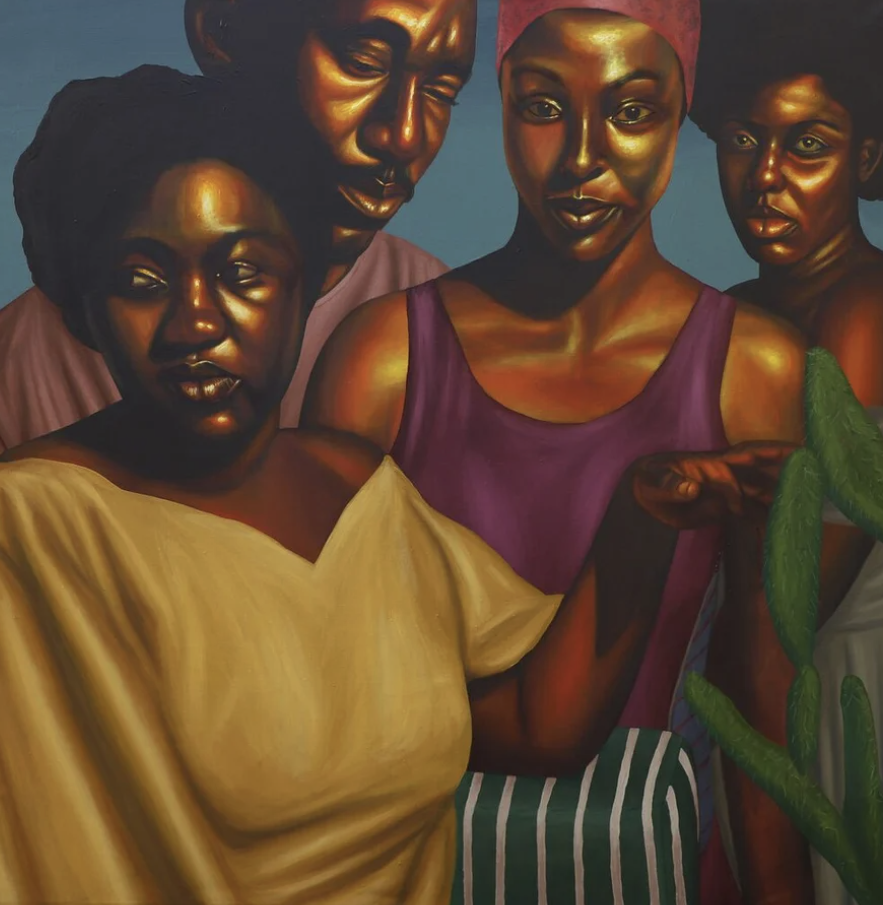
If the Cactus Pricks II - Barry Yusufu, 2024. Photo courtesy: Barry Yusufu
EP: How does creating a piece for a commission feel differently to creating a piece simply because you want to?
BY: I take commissions sometimes, but my practice is mostly based on what I want to paint. Commissions can feel limiting. I don’t like being told exactly what to create. I create what I believe in, and if that works for you, that’s good.
EP: As someone who practices in a more ‘traditional’ style of creation by painting on a canvas, what do think about NFTs and ai art?
BY: I am a traditional painter, and I will always be one. The value of a painting cannot truly be transferred into a digital copy. A digital piece created digitally is different, and that is fine. But it does not replace a work made by hand with physical material.
I don’t think NFTs deserved the spotlight they had. There is no real comparison between NFTs and original works made by hand.
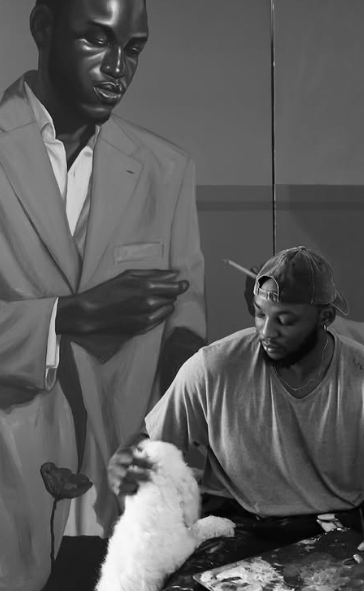
Barry Yusufu in his studio. Photo courtesy: Barry Yusufu
EP: Who are some of your favourite Nigerian artists right now?
BY: My favourite artists are actually my contemporaries, artists I grew with in the arts. Eniwaye Oluwasheyi, Kelejaye Tosin, Enoch Jnr Chinweuba, and others. I have deep respect for them.
EP: How was the African Art Market changed recently from your perspective?
BY: The African art market has changed a lot. The attention it received some years ago made people label it as a trend. But African art existed long before us and will continue long after us.
Trend or not, the market does not control creativity. Artists like myself will keep standing at the forefront until it is no longer reduced to a trend.
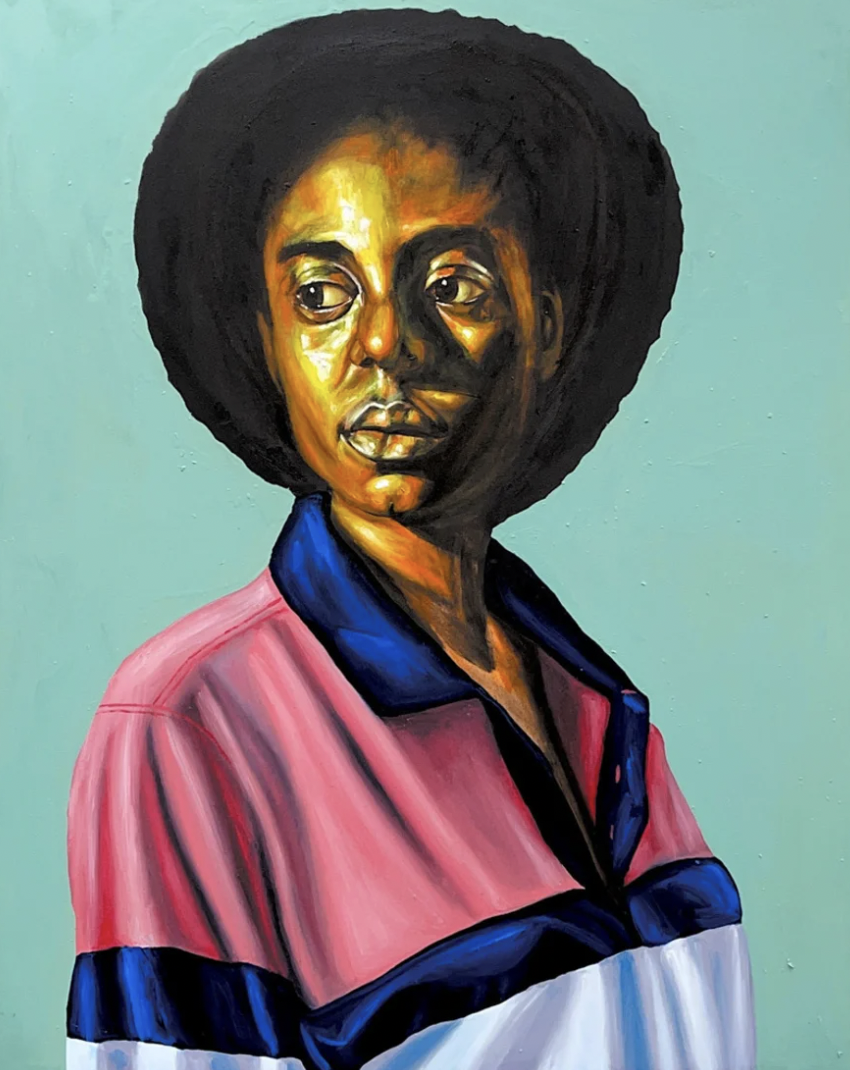
Homegirl - Barry Yusufu, 2021. Photo courtesy: Barry Yusufu
EP: If you had complete control over one English museum for one year, which museum would it be and what would you choose to show that you think would create a lasting impact on the English public?
BY: Tate Modern.
I would create an immersive exhibition from my current series, The People from Cottons to Clouds. It is a body of work I believe the world needs right now.
EP: What is your favourite part of the creative process?
BY: My process is not straightforward. I work with people. From meeting the right muse, getting to know them, sharing my vision, staging them, photographing them, and then painting, it is layered.
My favourite part is getting to know the muse. Hearing their stories and understanding their experiences is the most powerful part for me.
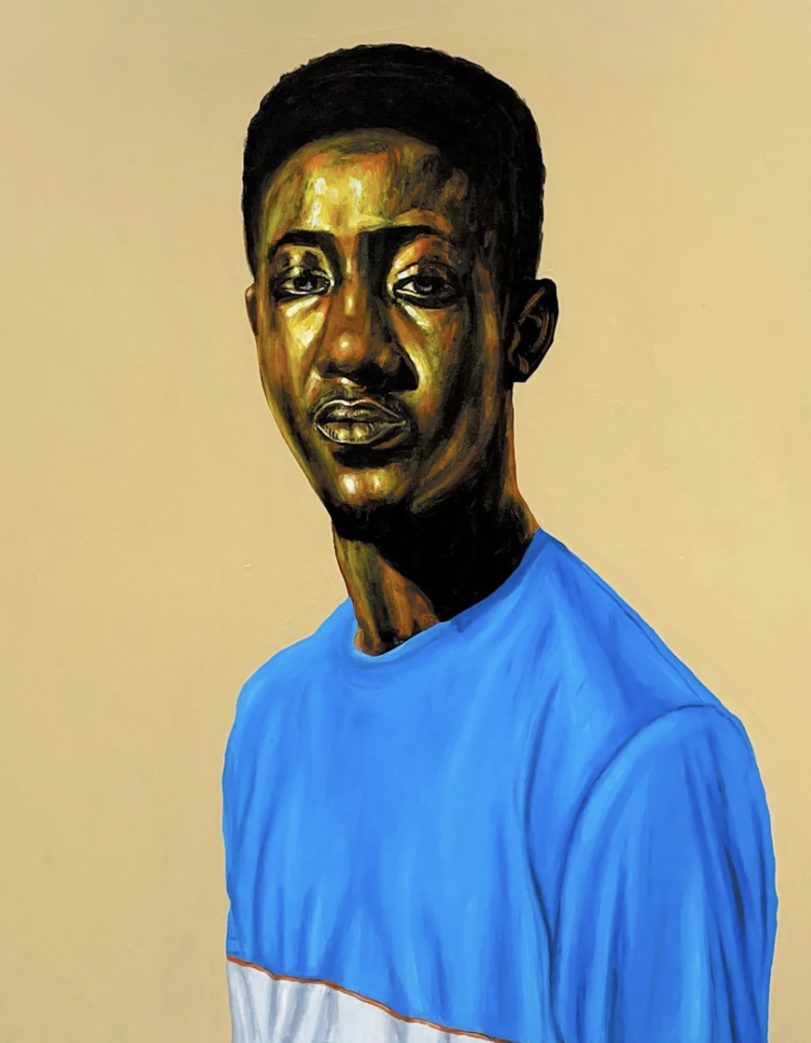
Homeboy - Barry Yusufu, 2021. Photo courtesy: Barry Yusufu
EP: What is your least favourite part of the creative process?
BY: Sketching and preparing the canvas.
EP: Do you collect art? If so, what are you currently collecting?
BY: Yes, I collect art. I have works by Collins Obijiaku, Okolo Oliver, Ikeorah Chisom, and Adaeze Okaro.
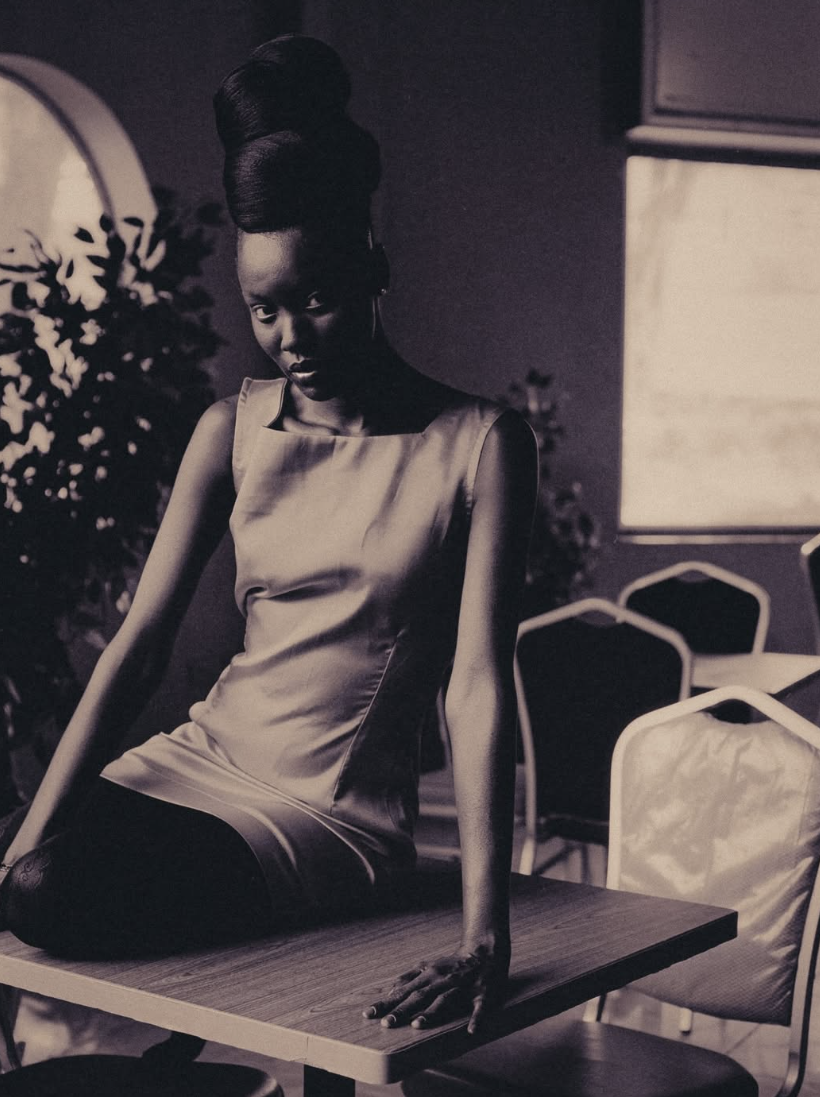
Untitled - Adaeze Okaro, 2025. Photo courtesy: Adaeze Okaro
EP: If you could claim one art piece done by someone else as your own, what would it be?
BY: As the Sun Breaks by Anna Savvi.
EP: What time of day or night do you feel most inspired to work on a painting?
BY: Anytime. My mind is always working.
EP: What is one of your goals for your art career?
BY: To create a foundation in the future that allows children to discover themselves and find their path. Something I wish I had growing up.
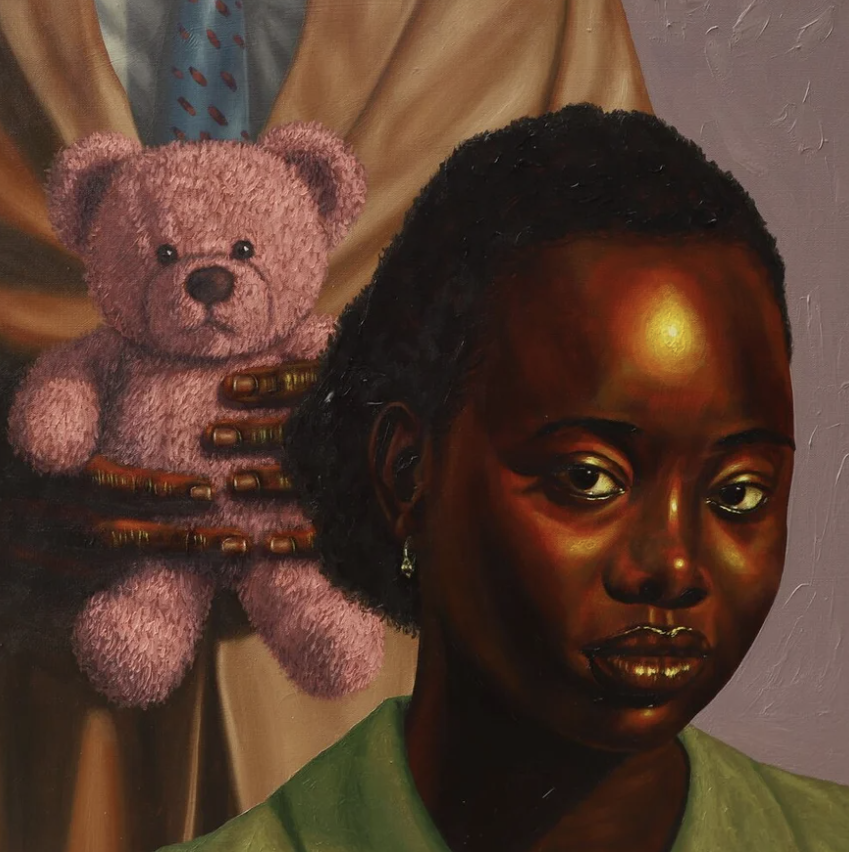
Behind you, Darling - Barry Yusufu, 2025. Photo courtesy: Barry Yusufu
EP: What is your favourite piece of art you have created so far?
BY: Don’t Worry, I’ll Fix It for You
Medium Acrylic on Canvas
Date 2023
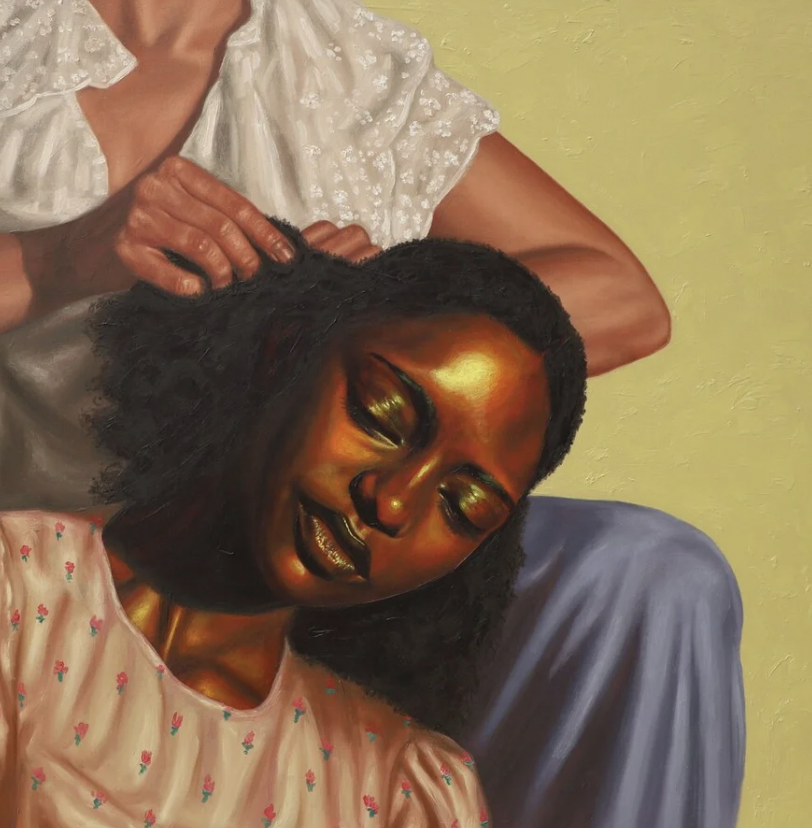
Don’t Worry, I’ll Fix It - Barry Yusufu, 2025. Photo courtesy: Barry Yusufu
EP: What is your favourite colour?
BY: Green.
EP: What is your kind of paintbrush?
BY: I love working with hard paintbrushes.
Disclaimer: The views, thoughts, and opinions expressed in MADE IN BED are solely those of the individual authors and not those of MADE IN BED magazine or of Sotheby’s Institute of Art.