Eliza Palmer in Conversation with Richie Nath
As an artist living in Paris, whilst mentally and emotionally remaining in part in his native Burma, Richie Nath holds space for difficult emotions to feature in his beautiful, colourful, and narrative art. Nath’s stylized imagery evokes romance across various scenes, featuring active rather than passive figures in his tableaux. We discuss his experiences as a young artist having lived in Burma, in England, and in France, as well as his life now, managing turbulent times in many senses of the word. Nath’s art creates the visual story of his reception of such times.
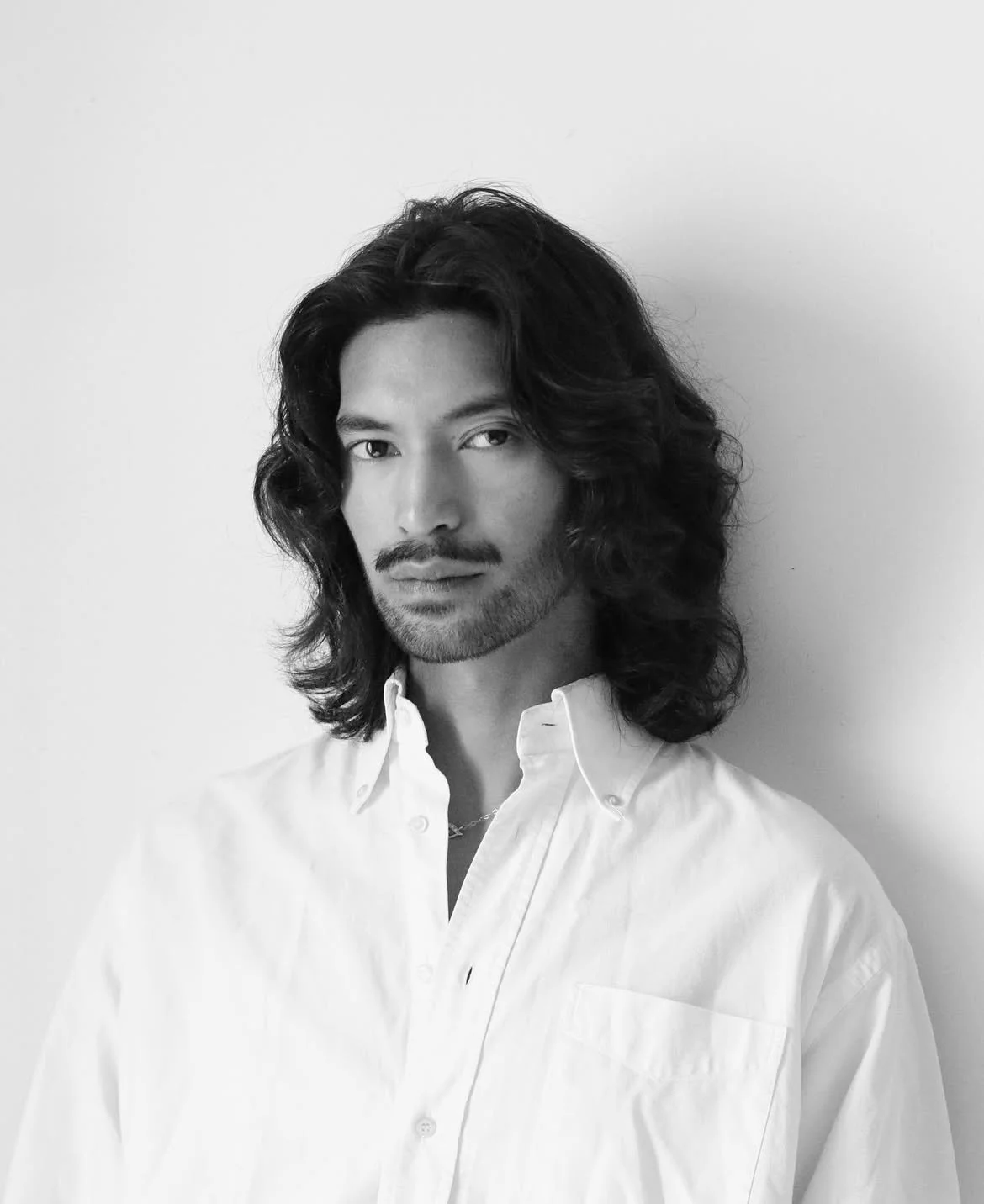
Richie Nath. Photo courtesy: Richie Nath
Eliza Palmer: Why did you decide to go into fashion illustration for your artistic education rather than fine arts?
Richie Nath: Growing up in Burma, there have always been societal taboos associated with pursuing a career in fine art. At that moment in my life, I knew I wanted to pursue a profession in something creative. I was already going against the line of work my parents expected of me. I felt going into fashion illustration was a good compromise, as I could easily obtain a more commercial line of work after university while doing what I love, painting figurative works.
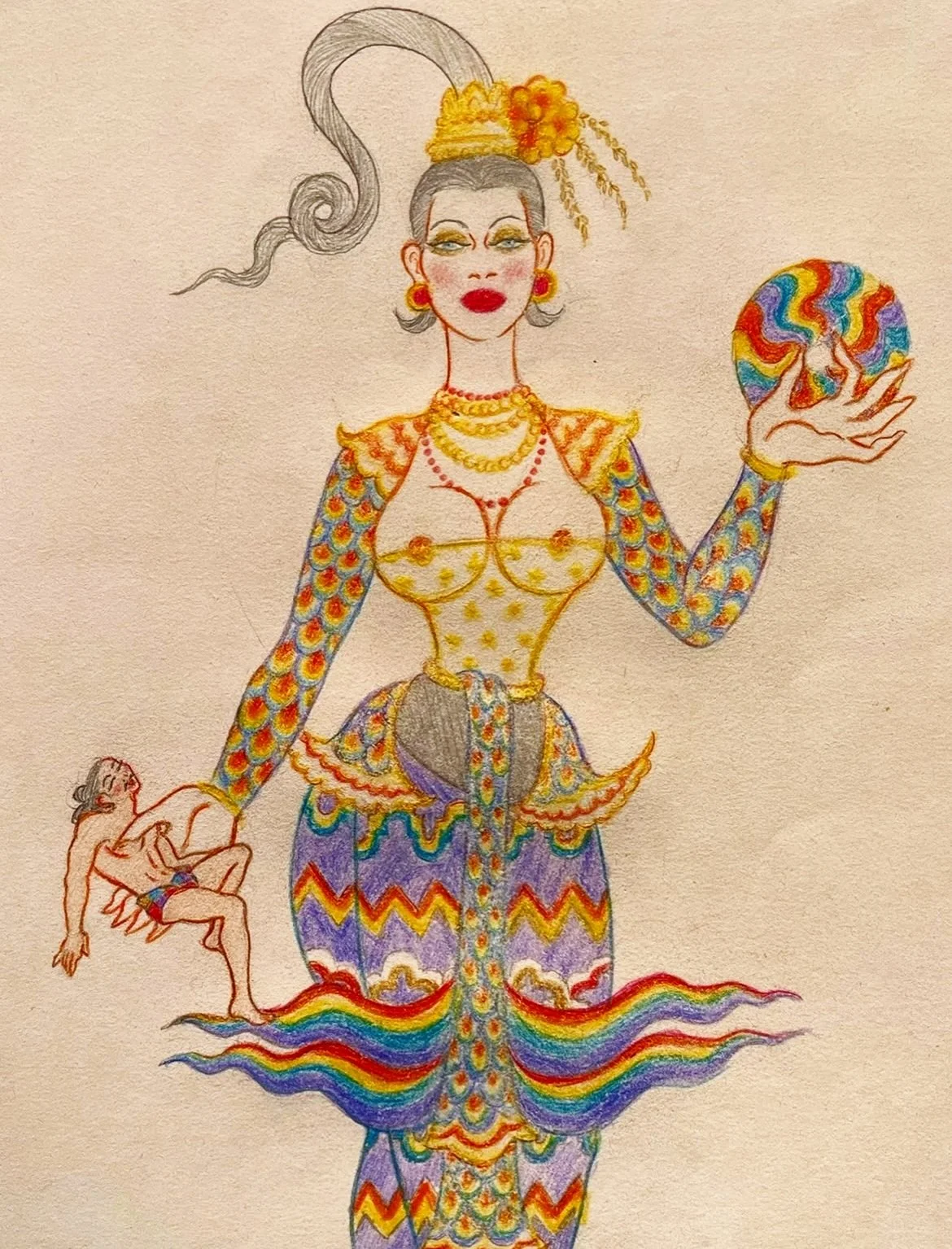
Sketches - Burmese Nats - Richie Nath, 2025. Photo courtesy: Richie Nath
EP: Your figurative work depicts what one could consider to be people at a level of extreme physical fitness. Which artists or artworks do you think have directly inspired your style of illustrating the human body in this extremely sculpted aesthetic?
RN: It comes from my love for the works of Tom of Finland. I’ve always been inspired by classical sculpture, especially of the idealised male form. During my childhood in Burma, there was a lack of resources regarding the arts, whether it was history or exhibitions. I would have to use whatever limited knowledge or resources I had to find and cultivate my own interests. Being gay in a conservative society, it felt like a cheat code for me to ogle at nude male bodies.
EP: When did you begin illustrating erotic scenes? How did you feel when you began publishing these scenes in your art?
RN: I believe it was mid-way through uni. University opened my eyes to a whole new visual landscape, and it encouraged me to explore the erotic works I’ve always been interested in. It was also at uni that I realised my skill level was not on par with my peers, and I had to catch up quickly. It was extremely liberating to find a space where I could explore concepts that I was too afraid to create before.
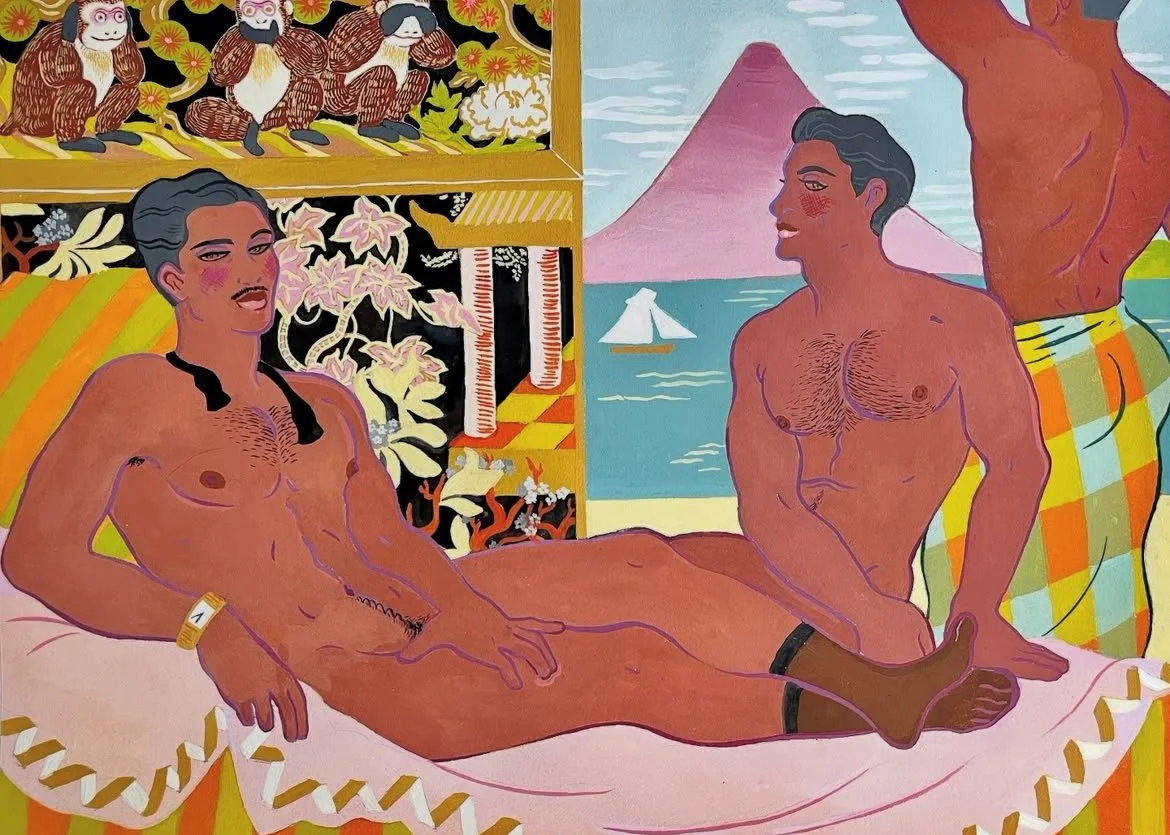
Consummation - Richie Nath, 2025. Photo courtesy: Richie Nath
EP: What medium did you begin creating with? What is your current preferred medium to create with?
RN: I've always loved gouache, and it is still my favourite medium to this day. I’ve recently been experimenting with colour pencils and have loved the outcomes so far.
EP: What periods in time do your artistic practices take inspiration from?
RN: I have a wide sphere of inspiration, but the periods I’m mostly drawn to are the artistic periods of the early 20th century. Post-impressionism, the illustrations, graphics, and styles of the 1910s, 20s, 30s, and 40s are some of the examples.
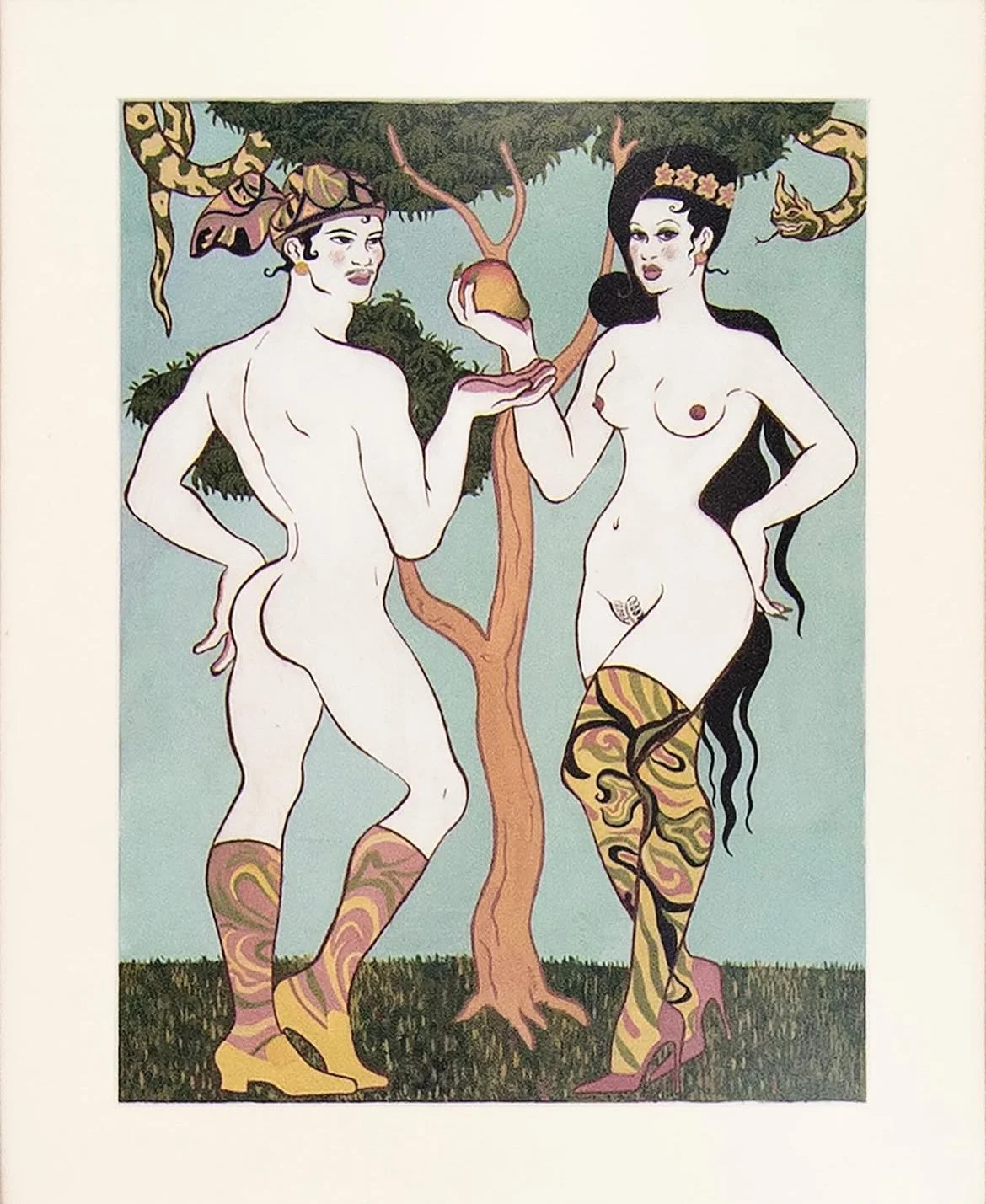
Adam and Eve - Richie Nath, 2023. Photo courtesy: Richie Nath
EP: You often feature a solid colour used for the background of your pieces. Do you choose the background colour before choosing the foreground colours, or do you choose the foreground colours first and then the background?
RN: I mostly paint the background first, but I already have a sense of the colours I’m going to use before I paint. It's really just an improvisation process; sometimes the colours look better in your head than on paper, and you always have to be open to changes.
EP: There are often many elements in your works that relate to your Burmese background. Are the colours you use also primarily and consciously inspired by your background? What do they represent for you?
RN: The Burmese influence is the skeletal foundation; the colours are all from my imagination.
EP: With the significant events in Myanmar over the past few years, what impact have they had on the artistic community currently situated there?
RN: Most of the artist community I know have all left for different countries and are in similar situations to me. It's no longer safe for most artists to work freely in the country.
EP: How have these recent events affected your own artistic productions?
RN: I have become more political, and my work has expanded to reflections of both the history that has led us to our current situation and my own mortality.
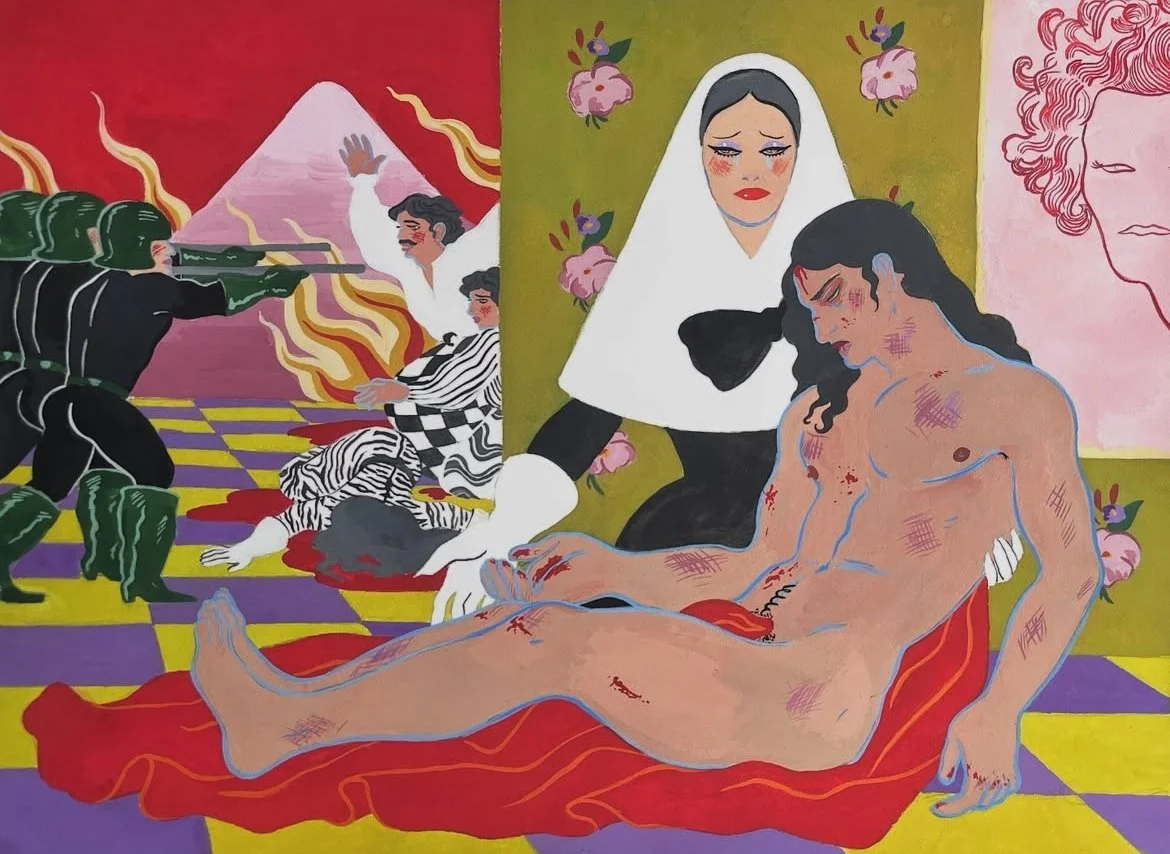
Destruction - Richie Nath, 2025. Photo courtesy: Richie Nath
EP: What are some things you think will stay with you from the civil war and the fragmentation of Myanmar over the past decade?
RN: Depression, a sense of hopelessness.
EP: What are some misconceptions about art in Myanmar?
RN: There’s much more to Burmese art than the traditional tableaus and souvenirs you see. The people there have to work with whatever limited resources they are afforded and still find creative ways to express themselves.
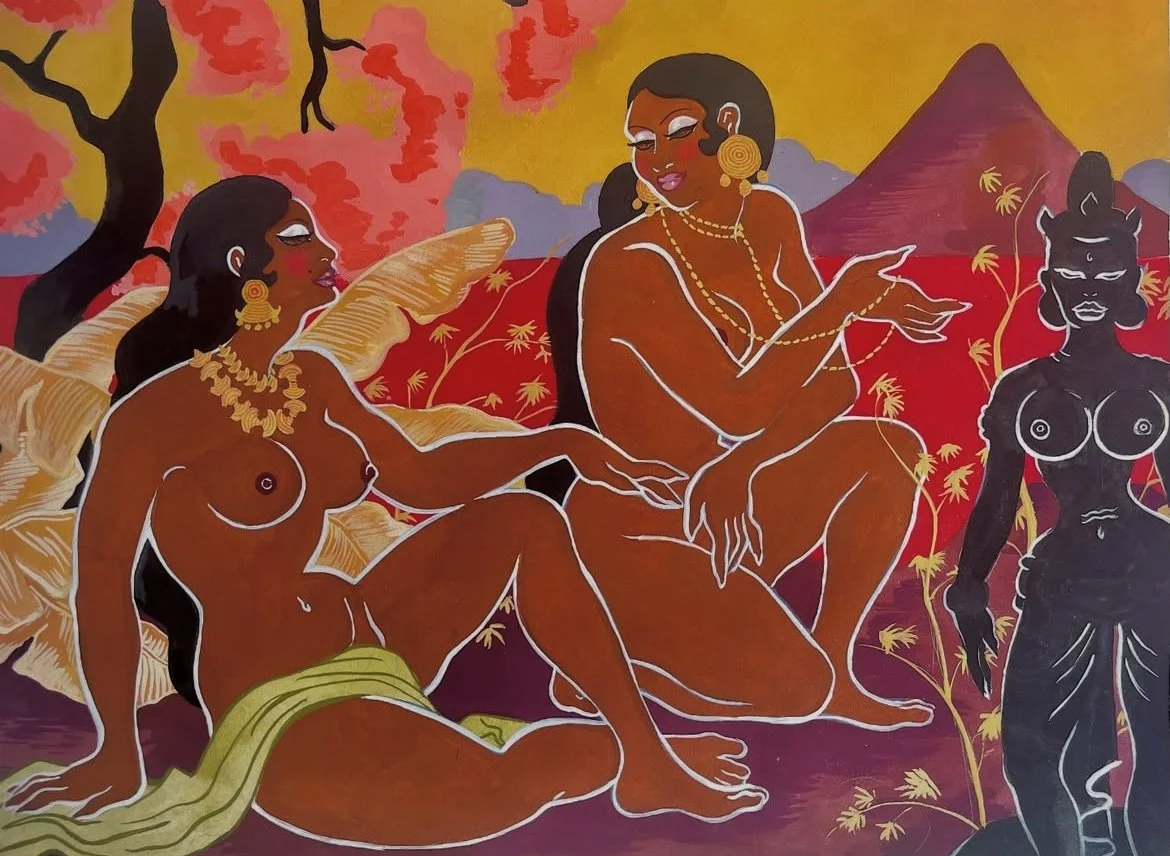
Commencement - Richie Nath, 2025. Photo courtesy: Richie Nath
EP: What are some of your favourite things about art coming out of Myanmar?
RN: Its hard to think about when all of the current news coming out of the country is turmoil and destruction.
EP: Who is your favourite Burmese artist right now?
RN: Bagyi Aung Soe, an amazing Burmese illustrator from the 60s, whose line work I love.
EP: After having lived a large part of your life in continental Europe, what are some of the main differences you have noticed between the Burmese art culture and the European art culture?
RN: I’ve been stuck here for so long, I don’t even know what to comment on. I guess the main difference is opportunity, access, and the liberty to create what you want. There are so many museums and cultural events to explore; there’s always something to do and be inspired by.
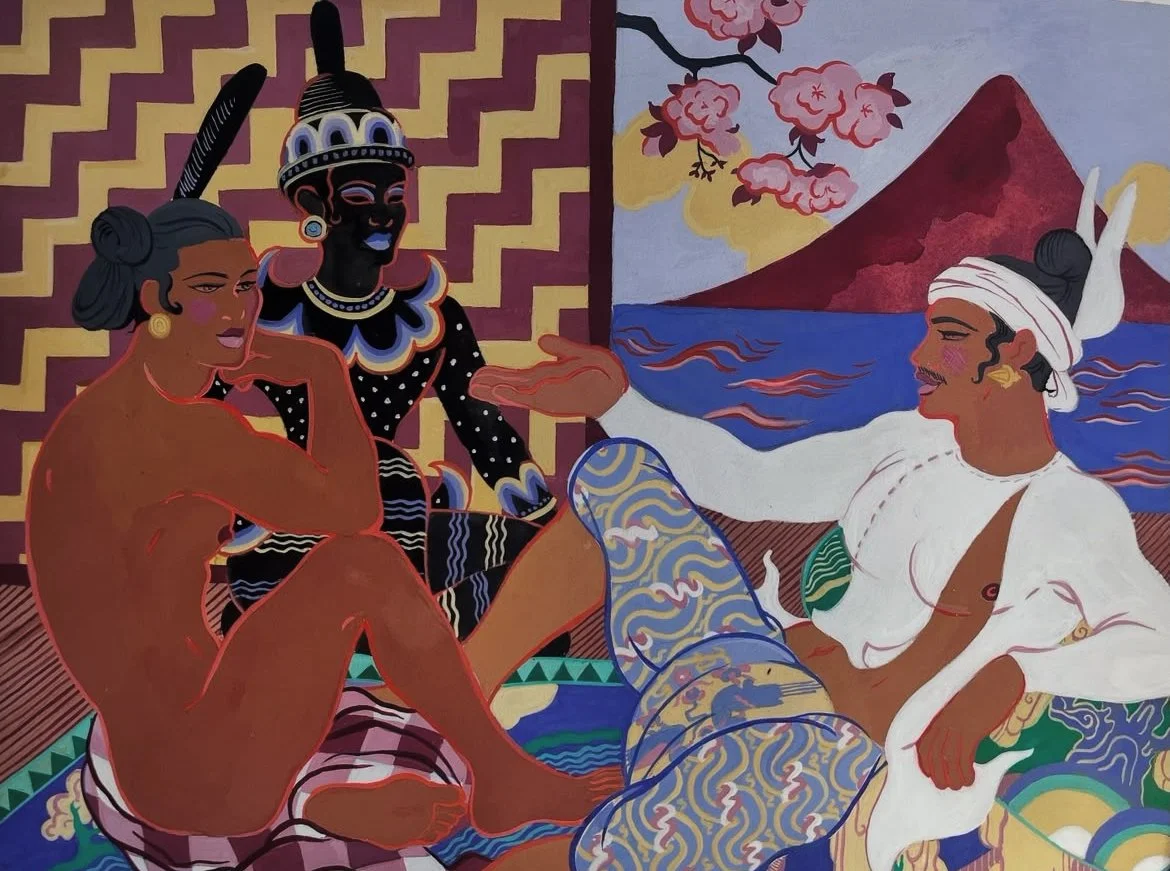
Arcadian - Richie Nath, 2025. Photo courtesy: Richie Nath
EP: What are some of the main similarities you have noticed between the Burmese art culture and the European art culture?
RN: I don’t want to come off as an asshole, but there’s so little funding in the arts in Burma, it’s hard to make this comparison.
EP: In your opinion, what is something Europe can learn from Myanmar, concerning the arts?
RN: Nothing, actually, let it be a lesson of what not to do.
EP: Which European artists do you see influencing your own work?
RN: Manet, Gauguin, David Hockney, Picasso, Tom of Finland, Andy Warhol, Botticelli, the illustrators for fashion magazines in the 20s and 30s… the list goes on.
EP: How have European audiences reacted to the often erotic imagery in your artwork?
RN: Its been mostly positive
EP: How have Burmese audiences reacted to these erotic images?
RN: Surprisingly, also mostly positive; I think with social media and current technology theres been more of an appreciation for the arts from the younger generations.
EP: What is your favourite part of the body to illustrate?
RN: The face, Ironic considering the number of bodies I have on display.
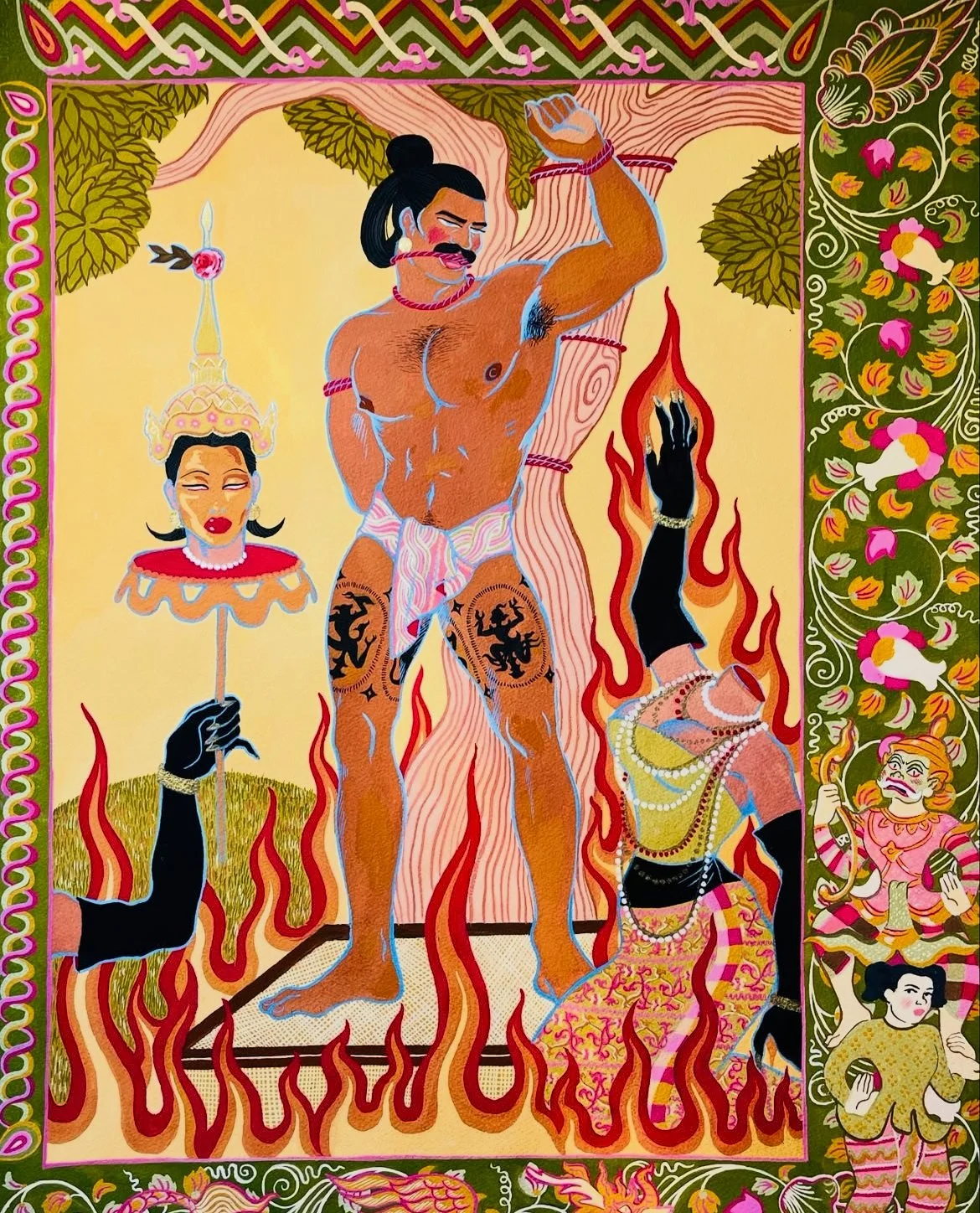
Heavy is the head -The Tale of Mahagiriand Shwe Myet hna - Richie Nath, 2024. Photo courtesy: Richie Nath
EP: If you could only draw figures with their bodies positioned facing forward or backwards, which would you choose?
RN: Facing forward
EP: How do you feel before a show you are in, or your own solo shows, are about to open up to the public?
RN: Its a combination of excitement and anxiety, I’m normally very shy and hate having to talk about myself or my work. It is part of the job description, so I do have to put on a brave face and dive right in.
EP: What is something you have learned about being in an art show open to the public that you wish you could tell every artist?
RN: Don’t get too drunk.
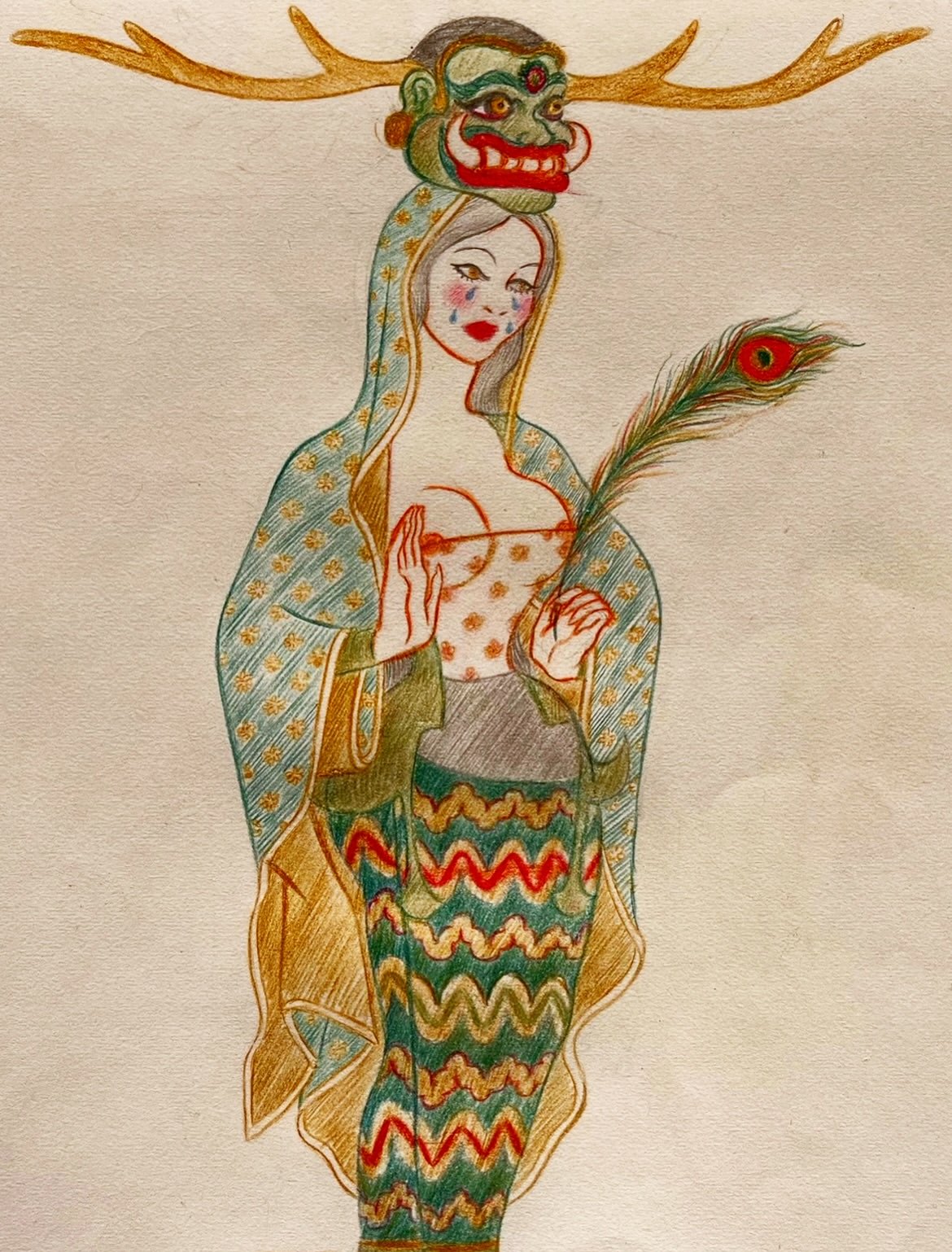
Sketches - Burmese Nats - Richie Nath, 2025. Photo courtesy: Richie Nath
EP: What is your favourite thing about making art?
RN: I like the parts of the painting process that require repetition. I find it meditative, and I can shut my brain off for a minute.
EP: What is a style of art you would like to explore?
RN: Less a style and more a medium. I would love to explore either tapestry or sculpture.
EP: If you could have one of your pieces hung permanently in any museum or gallery anywhere in the world, which gallery or museum would you choose?
RN: There isn’t one in mind. I think having my work hung up permanently in any museum would be a privilege.
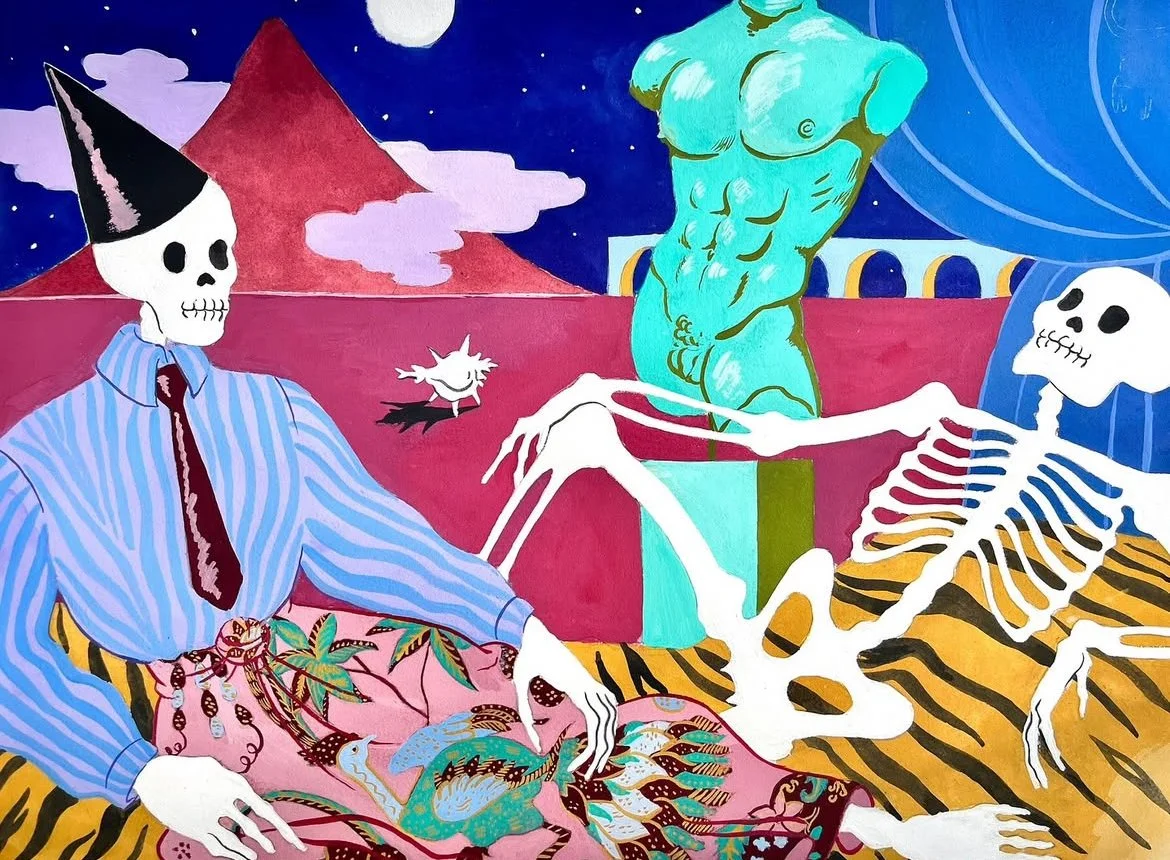
Desolation - Richie Nath, 2025. Photo courtesy: Richie Nath
EP: If you could claim one art piece created by another artist as your own, what would it be?
RN: I don’t think I could consciously do that.
EP: What is your favourite colour?
RN: I don’t really have a favourite colour; what I do like is colours in relation to each other: emerald green and pink, light cobalt blue and crimson, yellow ochre with everything.
Richie Nath currently lives and works in Paris.
You can find more on Richie Nath on their Instagram.
Many thanks to Richie Nath on behalf of MADE IN BED.
Eliza Palmer
Social Media Manager, MADE IN BED
Disclaimer: The views, thoughts, and opinions expressed in MADE IN BED are solely those of the individual authors and not those of MADE IN BED magazine or of Sotheby’s Institute of Art.