

Karim Farhat in Conversation with Sofía Serpa Arango
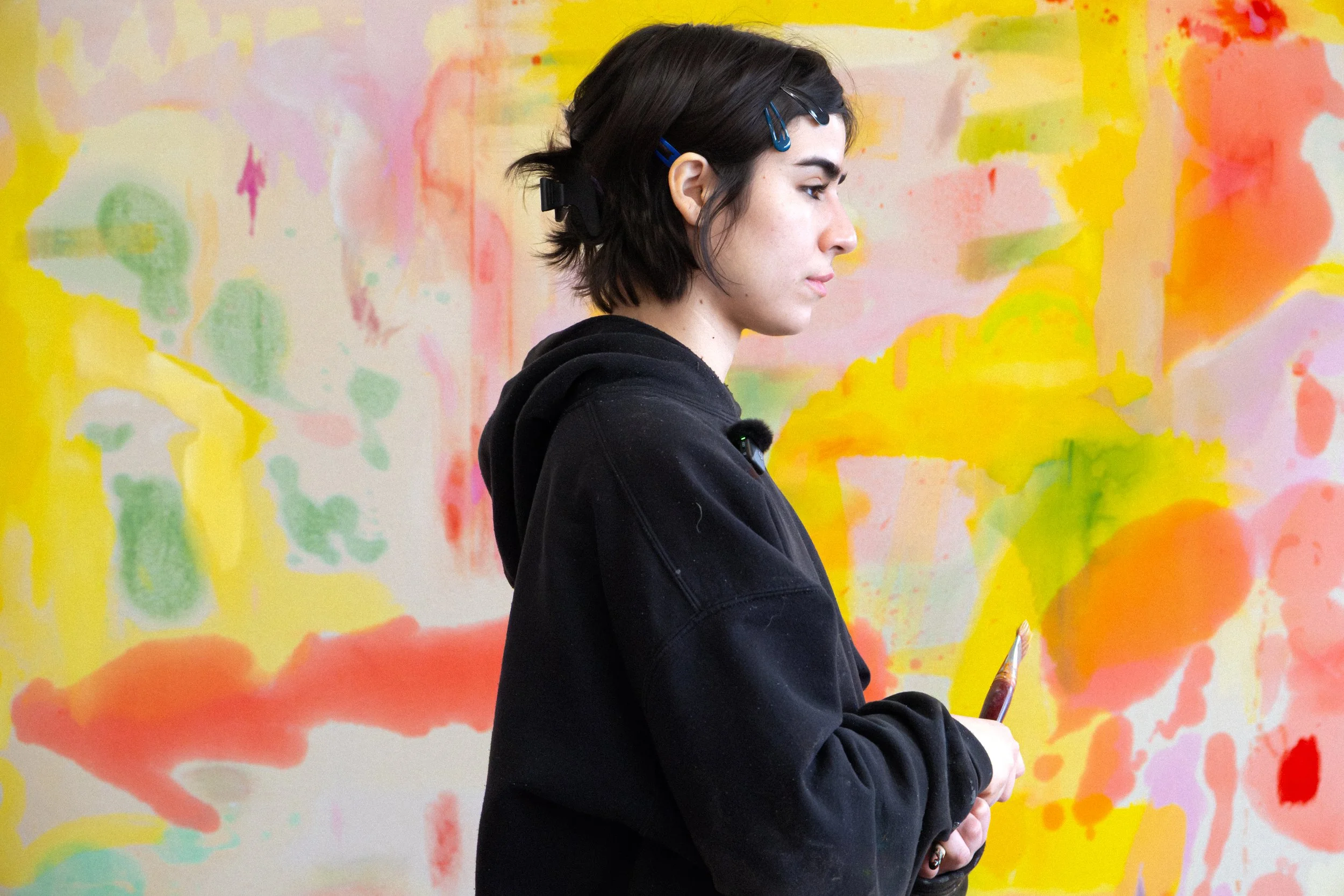
Photo courtesy of Lyp.Art.
Sofía Serpa Arango’s art feels like fragments of a place you can almost recognise. Based in South East London, Serpa Arango’s practice spans oil painting, sculpture, and woodwork, creating scenes shaped by memory, cultural liminality, and the subtle tension between past and present.
A graduate of Goldsmiths (2025), where she completed a Fine Art BA and was awarded the Lewisham Arthouse Residency Prize, Serpa Arango’s work is precisely constructed yet intentionally left open for the viewer’s interpretation. She has since gone on to receive the V22 x Goldsmiths Studio Bursary (2025–26) and the City & Guilds Woodworking Fellowship (2026). Prior to this, she studied International Relations at King’s College London.
We visited her studio as she continues to develop work that blurs cultural narratives and taps into a sense of shared nostalgia.
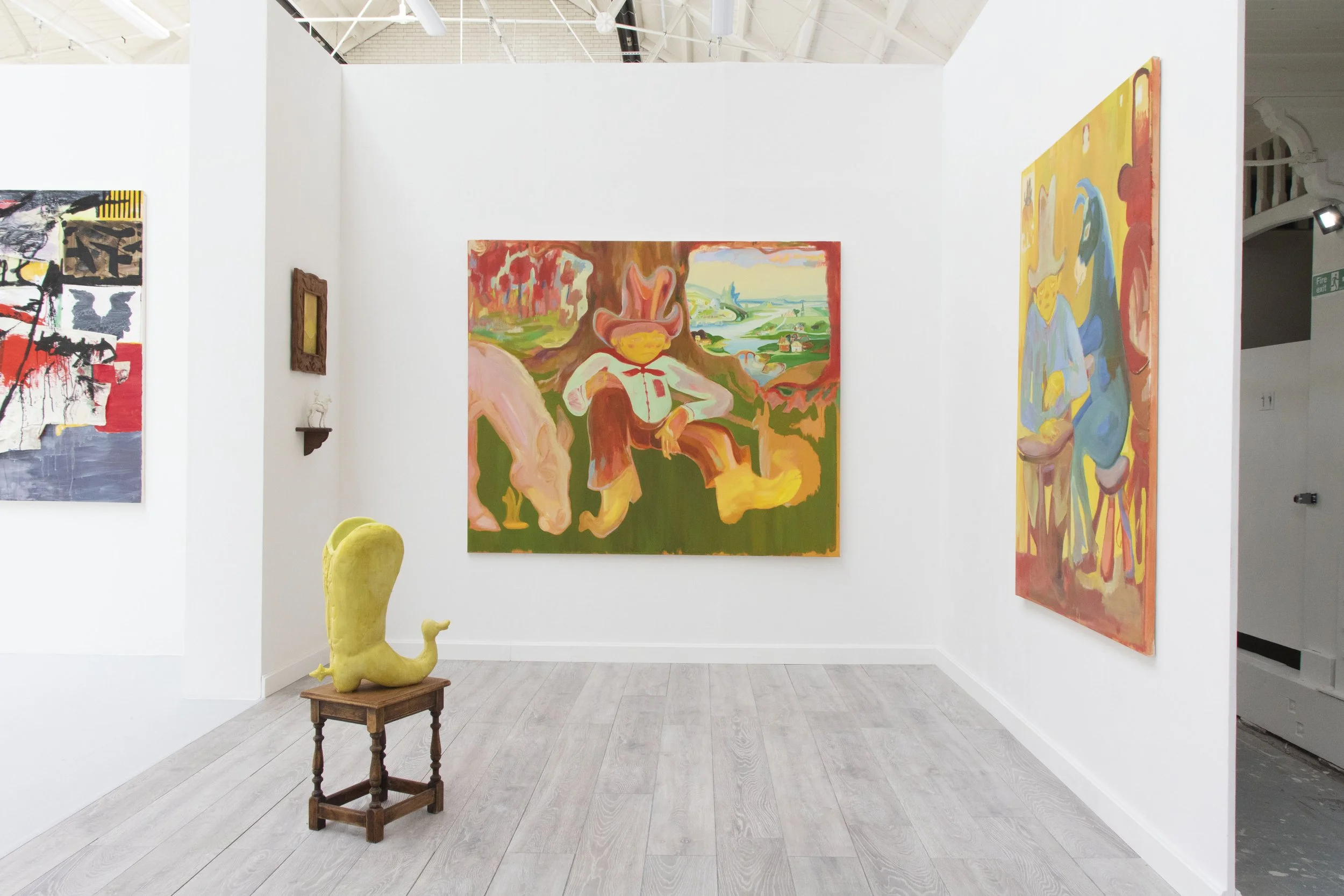
Goldsmiths BA Fine Art Degree Show; Large Pools, 2025. Photo courtesy of the artist.
Karim Farhat: How did growing up between cultures shape your understanding of ‘home’, and how has it translated into your work?
Sofía Serpa Arango: I lived in Austria for the first 18 years of my life, but the home that I stayed in was like a little Colombian island within Vienna. I guess I've been really shaped by those cultural influences.
There's an artistic movement called Costumbrismo, which depicts local customs in 19th-century Spain. This movement made its way to South America, where it became an important form of cultural expression for many nations in the post-independence landscape. Growing up, I was surrounded by images and paintings in that Costumbrismo style, and eventually this trickled down into something that I'm very interested in: the depiction of rural living.
I am Colombian, but it's because of my Austrian nationality and visa status that I am able to show work in London. I think a lot about the logistics and politics that allow people to migrate, and the lottery aspect of visas and immigration.
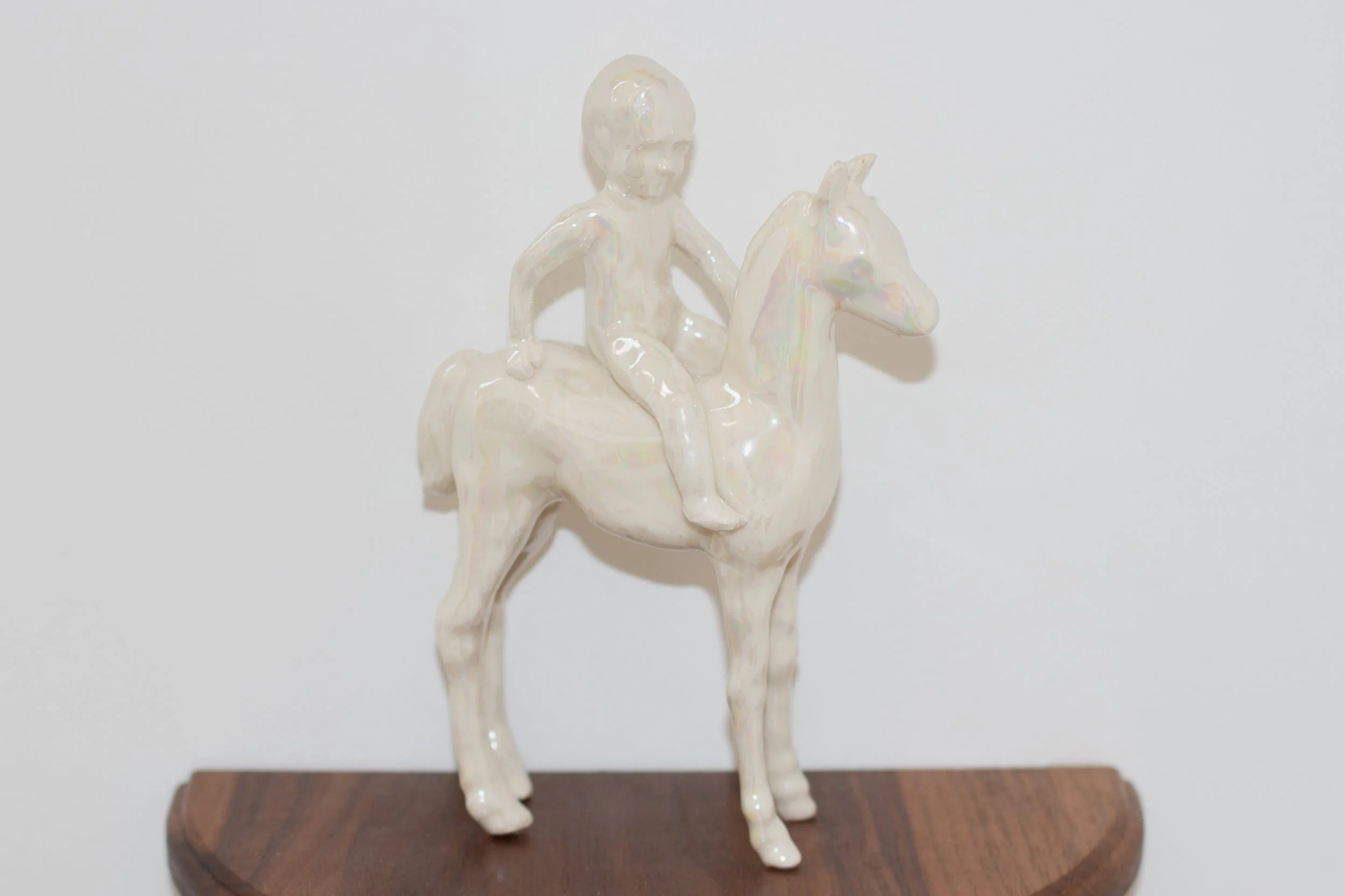
Sofía Serpa Arango, Cherub and Foal, 2025. Photo courtesy of the artist.
KF: Do you ever think of what is happening outside of the canvas? Is there a backstory for the scenes?
SSA: I create the scene first, and then begin to imagine what it could mean, almost from the same position as the viewer. I’m not in the business of fleshing out all the loose ends; I try to leverage the imagination of the viewer.
The real magic lies in that openness: Where is this character? Is he running through a forest? Many of the figures I paint are on journeys, caught at a kind of juncture in their lives.
Listening to her, it became clear that the paintings around us behaved exactly how she described: suspending figures in motion without fully resolving their meaning. Her way of speaking about the work followed the same logic.
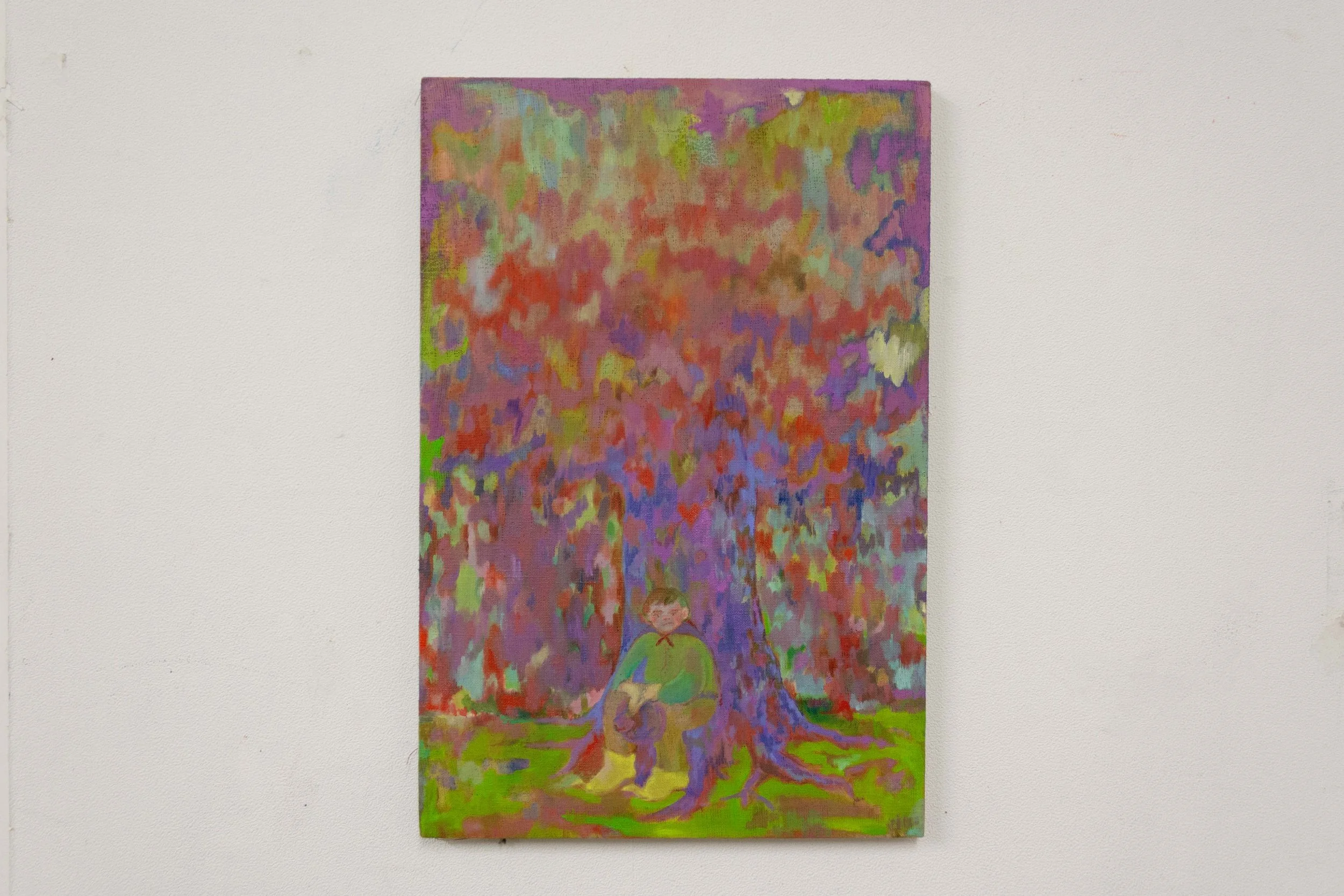
Sofía Serpa Arango, Bajo la sombra del arbol, 2026. Photo courtesy of the artist.
Unlike her imagery, which resists fixed narratives, Serpa Arango’s use of colour is shaped by memory and experimentation.
KF: Your colour palette feels very intentional. Where does it come from, and how has it evolved over time?
SSA: The colour palette is very distinctly mine, but it has definitely shifted over time.
For example, during a residency at the Lewisham Arthouse last August, I made seven paintings in a really intense period, and I found myself using a lot of yellow. Then, after returning from Mexico, I made a painting using heavy purples, turquoise, and pink.
The colours aren’t taken from my immediate surroundings. They tend to circle back to my childhood home, to yellows, oranges, and reds. I think a lot of it comes from a kind of Latin American colour sensibility, which I reconnected with in Mexico. The way colours are combined there really inspired me.
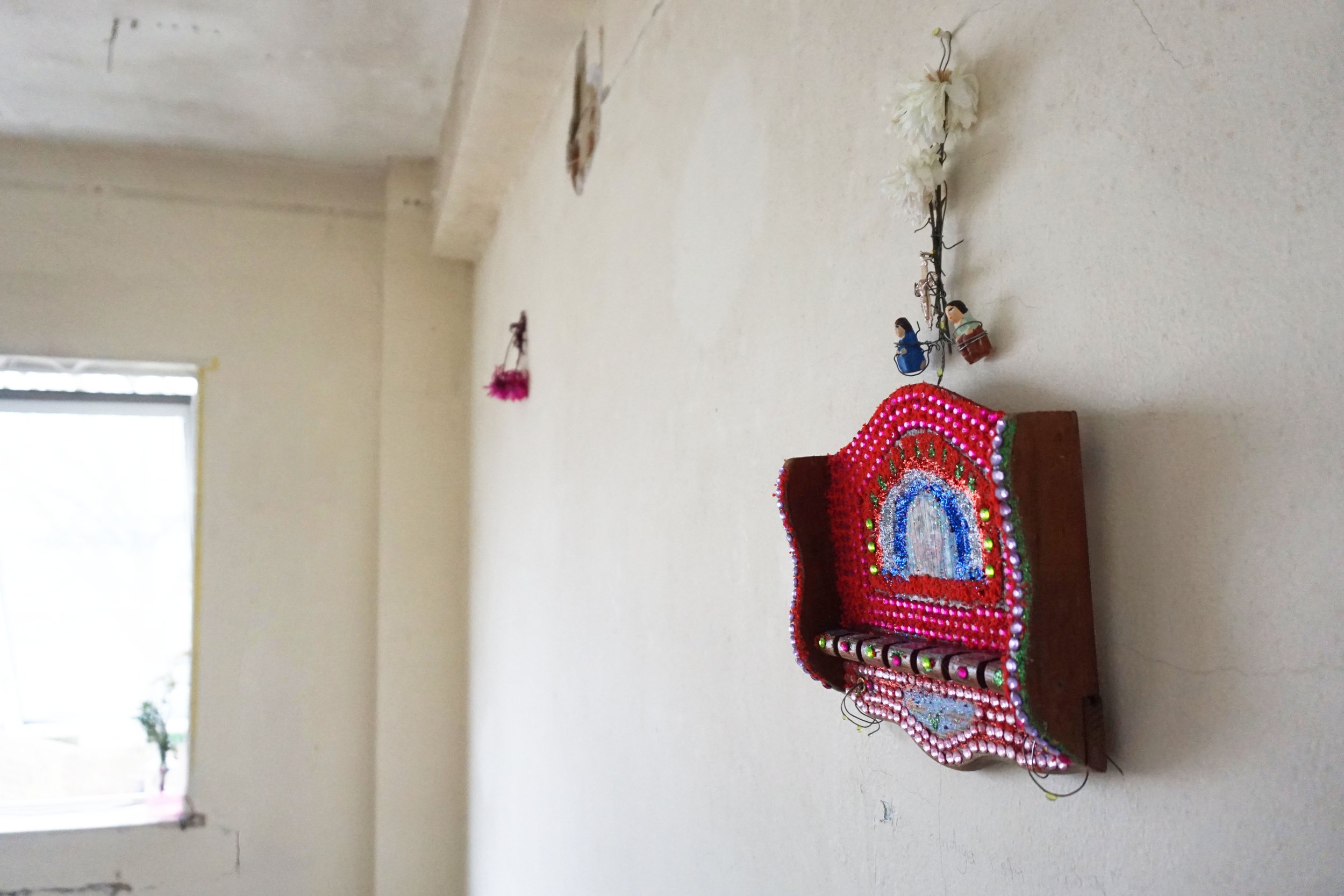
Sofía Serpa Arango, Que dios bendiga esta casa, 2026. Photo courtesy of the artist.
KF: How does material choice affect the way your work is perceived?
SSA: One of the most exciting parts of being an artist is experimenting with different approaches. At one point, I painted on the back of a canvas, letting the colour bleed through to the front in a faded, muted way, creating these blotches. I found real value in introducing an unknown variable for the paint to respond to.
When I make wood reliefs, the image emerges through carving away the negative space.
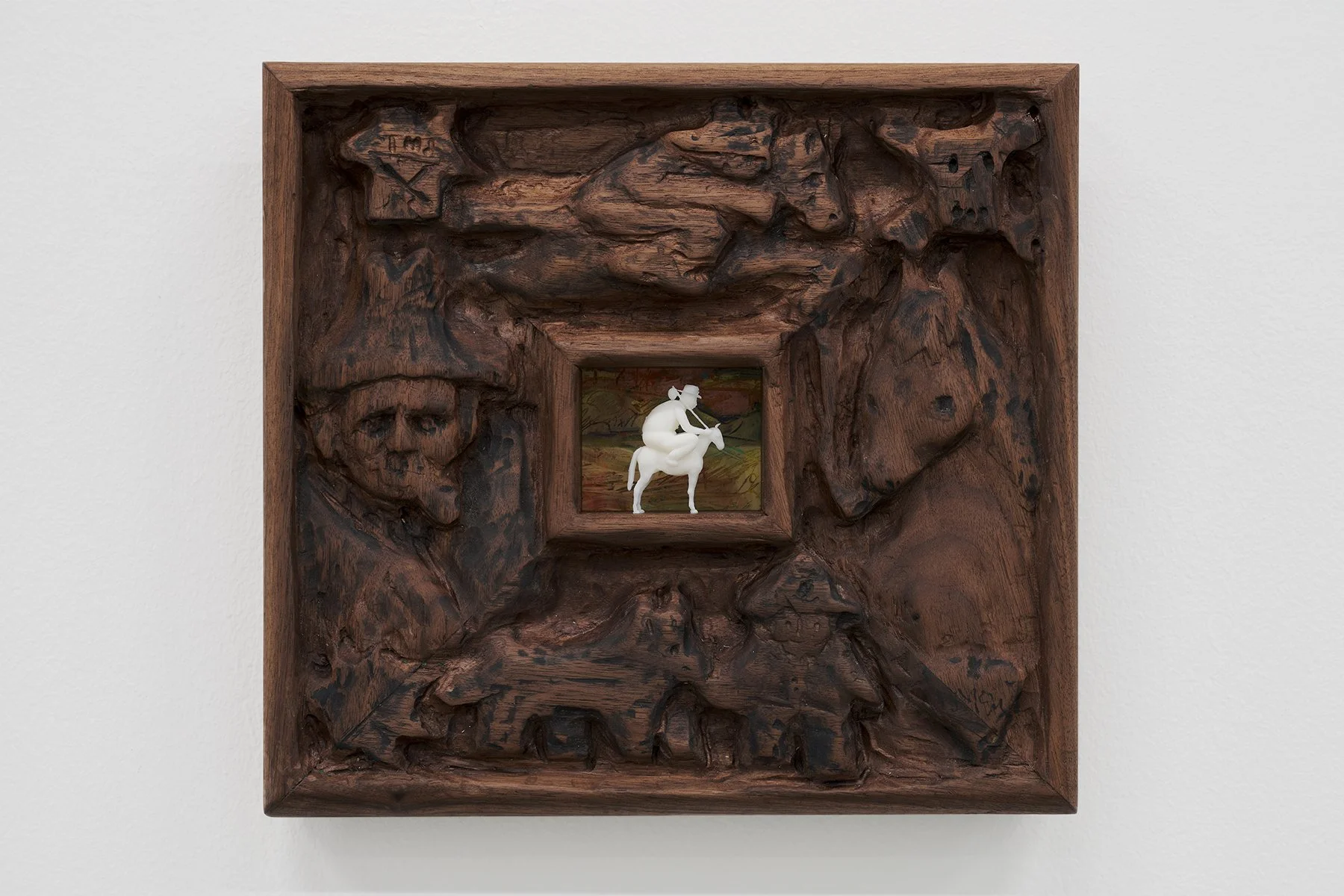
Sofía Serpa Arango, Schatzuche, 2024. Photo courtesy of the artist.
SSA: With wood, there’s a sense of gravitas, a kind of presence, and endurance. It reminds me of the past, of wooden church doors and furniture I saw in Austria—objects that carry a certain weight.
In her work that sense of weight reached beyond the physical; wood seemed to hold time and memory.
SSA: I’ve also used 3D-printed white resin which is closer to plastic, and feels disposable. And I think somehow putting it together with wood, it creates a combination you don't often see together. To me the figure at the center is reminiscent of toy figures you used to have as a kid.
I guess just seeing them together, they do something really exciting. The juxtaposition of something old like wood that has gravitas and then the Barbie-perfectness of plastic.
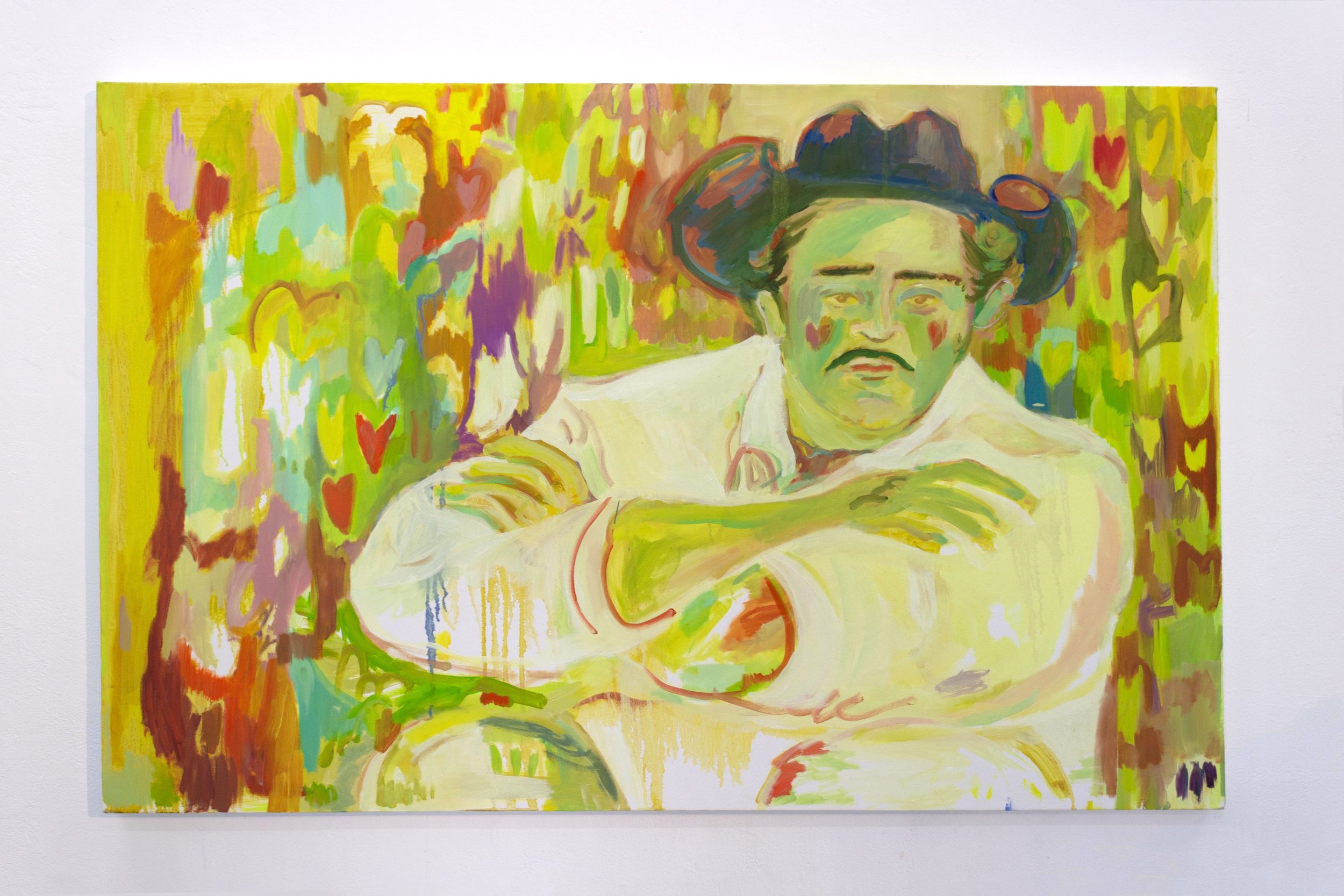
Sofía Serpa Arango, Todo se lo lleva el viento, 2025. Photo courtesy of the artist.
KF: Some of your Wild West scenes look like snapshots out of old cowboy movies. How has that imagery made its way into your work?
SSA: The idea of the cowboy: it's almost like it's digested and passed on through generations.
A few years back, over the Christmas holidays, I remember sitting at the dinner table with my family, sketching on a napkin—which is like my happy place—and I was drawing these cowboys when my brother looked at them and said, “oh, you're drawing El Llanero Solitario (The Lone Ranger)”.
Which was an American TV show that my parents watched as kids in the 1960s and 70s. It was one of the many examples of US cultural output that was consumed by Latin American audiences at that time. Although we had never watched it ourselves, my brother and I were still vaguely aware of it because of the latent influence it had on our parents, who had seen the Spanish-dubbed version in Colombia.
These are the kinds of dynamics of generational memory and cultural inheritance that I’m really fascinated by.
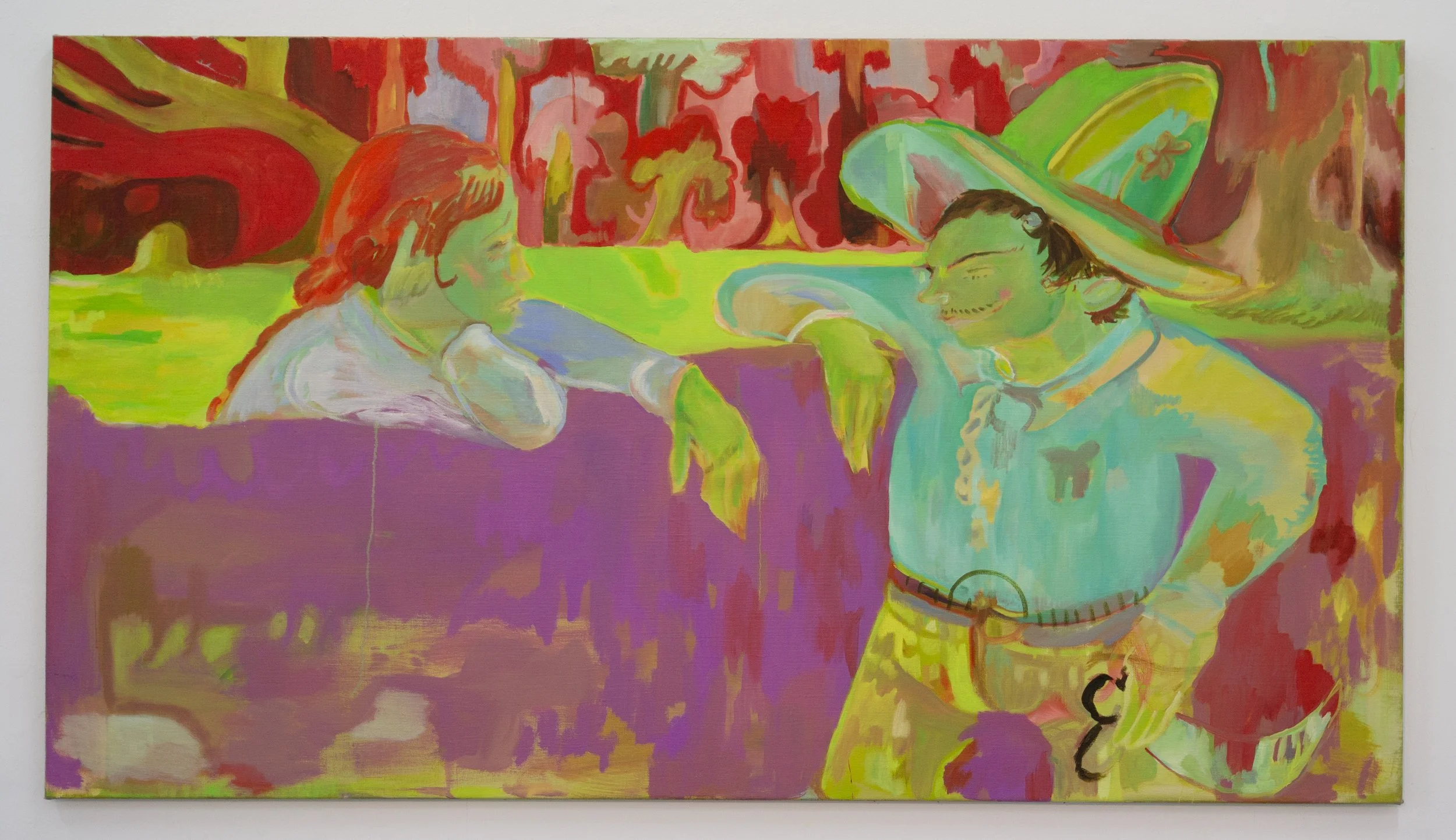
Sofía Serpa Arango, Así nos conocimos, 2025. Photo courtesy of the artist.
There was a stack of pictures of 90s Latin American album covers sitting on her desk, Sofía picked it up and showed us.
SSA: I'm so drawn to this selection of images as a starting point for a series of paintings. There's something about them that feels so sincere. We're living in a time where everything is infused with so many layers of irony, especially within internet subcultures. So looking at these images of musicians posing with such sincerity, promoting their work, is something I find really compelling.
I’m not entirely sure yet why I’m drawn to them, and that’s great. If I had already understood it, it probably wouldn’t be so exciting!
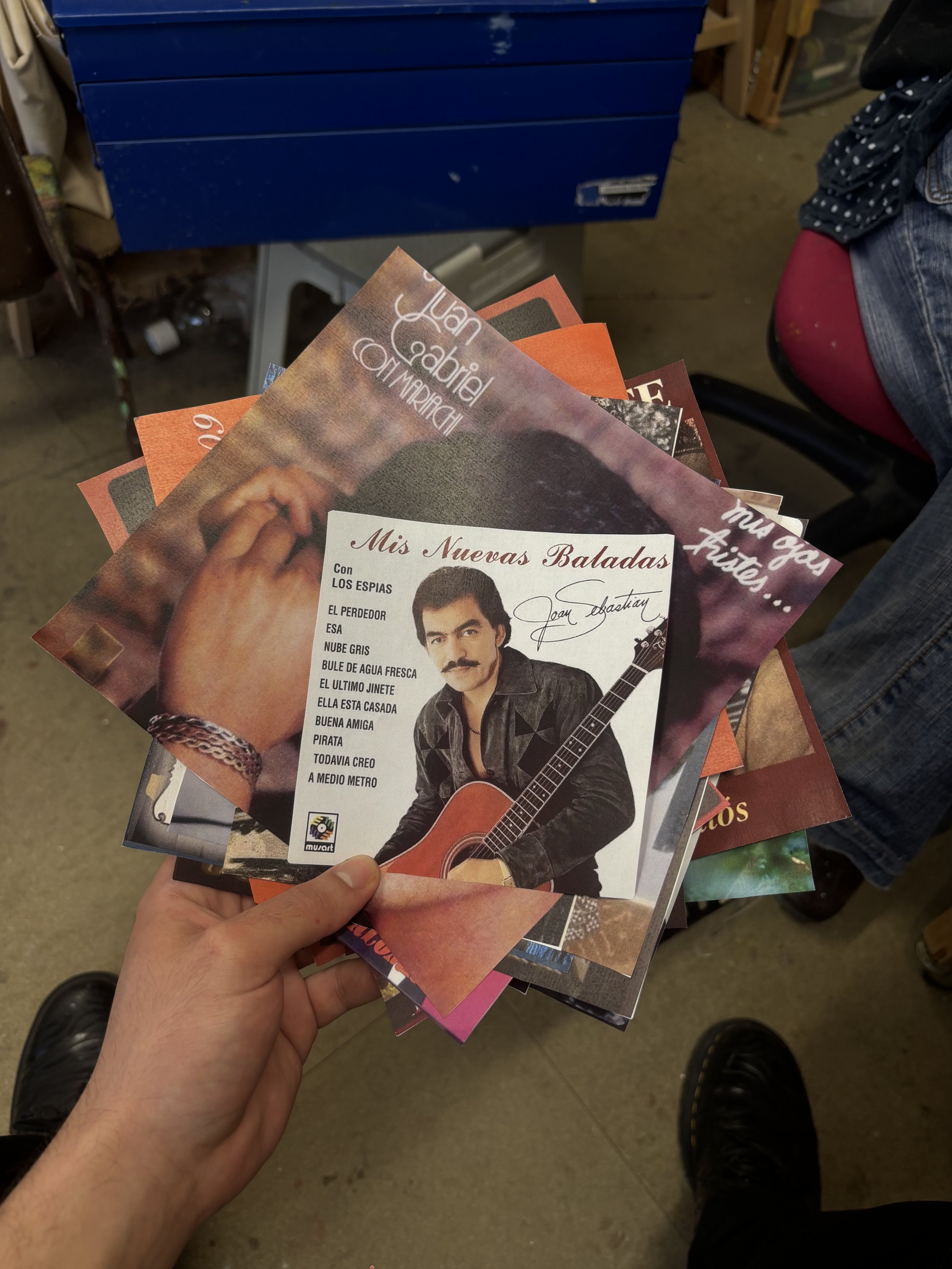
Photo from Serpa Arango’s studio; stack of album covers. Photo courtesy of the author.
Disclaimer: The views, thoughts, and opinions expressed in MADE IN BED are solely those of the individual authors and not those of MADE IN BED magazine or of Sotheby’s Institute of Art.