Karim Farhat in Conversation with Timothy Gatenby
At first glance, Tim Gatenby's paintings are disarmingly funny. Cartoon characters are juxtaposed with art historical compositions, fast-food logos appear beside religious iconography, and familiar images are distorted until they become faintly unsettling. The joke lands immediately, but rarely remains purely humourous.
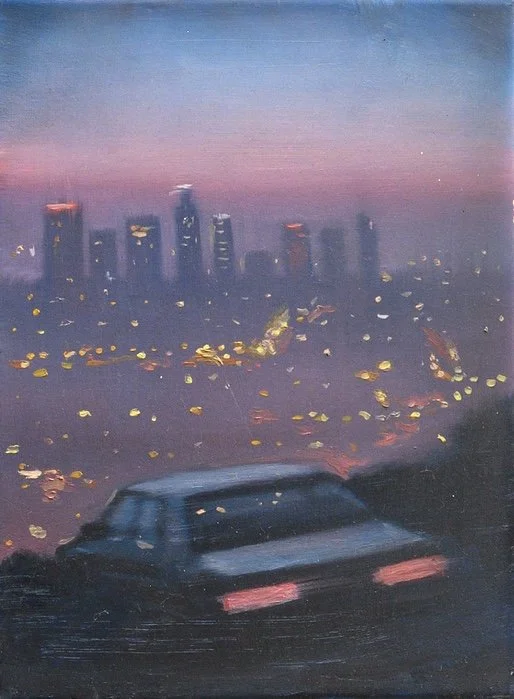
Timothy Gatenby, Sunset Spot, 2026. Photo courtesy of the artist.
We met Gatenby before the opening of his solo exhibition GREED at Souvenir 438 Space in Shoreditch. As we sat down surrounded by paintings hanging against the raw brick walls of the gallery, we began our conversation.
Karim Farhat: Many of your paintings are funny on the surface, but often point to something much darker. What interests you about this tension?
Tim Gatenby: I like the idea that these are the characters that w grew up with. When we were younger they felt innocent, but they've grown up with us and become vehicles for adult ideas. I’m interested in projecting contemporary issues onto these familiar characters and what they'd be doing now.
Timothy Gatenby, Just Key It, 2026. Photo courtesy of the artist.
KF: Does the humour in your paintings begin as a joke, or does it carry a broader idea?
TG: It depends on what I'm painting. Sometimes I'll just have a really funny idea and make it purely because it makes me laugh. But there’s usually an undercurrent… some sort of tale or idea sitting beneath it.
Take the painting of the Muppets doing cocaine in a toilet. It's funny because of the absurdity of the image, but then there’s also something darker in seeing these innocent childhood characters become so corrupted and distorted.
I don't like to push too much of a sense of interpretation onto the viewer. I’d rather leave things slightly ambiguous.
KF: What does humour allow you to say that a more serious approach would not?
TG: It's really about leaning into my own personality. I used to paint quite serious stuff—portraits and landscapes—but they always felt like they were missing a part of me. The funnier a work becomes, the more authentic it feels.
Humour also disarms people. It invites them in first, and then they can spend time with the ideas underneath. I don't think art always has to take itself so seriously.
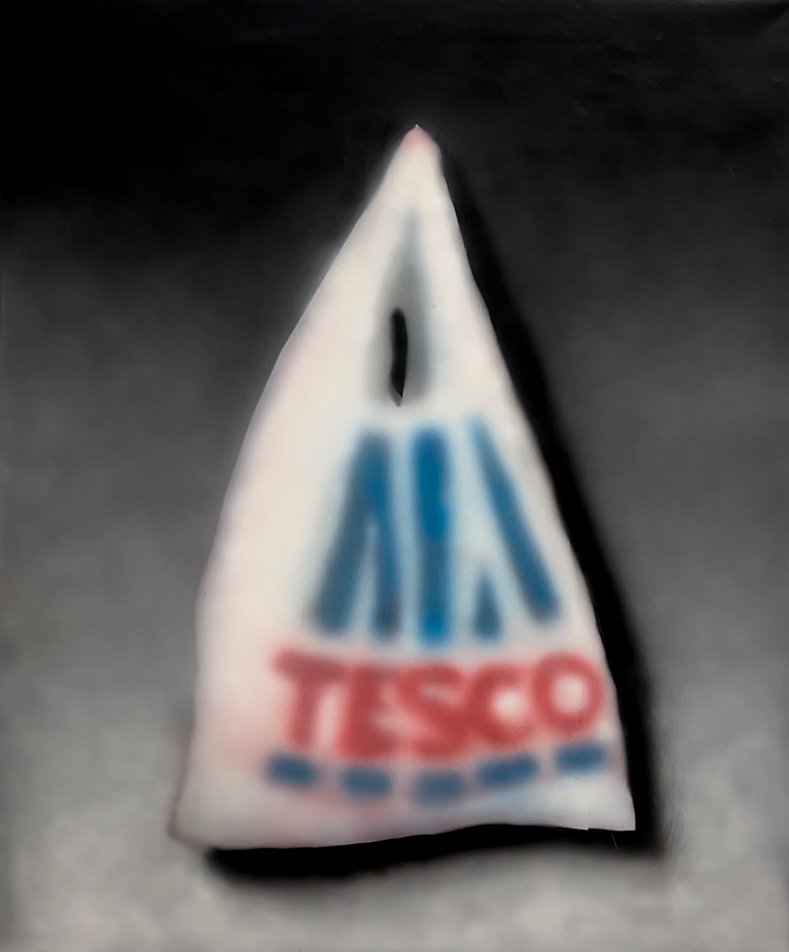
Timothy Gatenby, Every Little Bag, 2025. Photo courtesy of the artist.
Much like memes, Gatenby's work relies on shared cultural references. Familiar characters and symbols become vehicles through which contemporary ideas are projected and distorted.
KF: Do you think memes have become a kind of contemporary art?
TG: In a way, yes. I think they’re similar to the recurring imagery you’d find in early Renaissance paintings or frescoes. Images like Christ, the cross, or the Madonna and Child became visual symbols that everyone immediately understood.
Artists weren't necessarily painting those subjects because they wanted to, they painted them because they communicated what everyone already recognized. Memes work much in the same way today. They’re a shared visual language that allows people to convey ideas almost instantly.
KF: Your work sits somewhere between art history and internet culture. What is it that interests you about bringing those two worlds together?
TG: I like distorting really famous images because it's a reflection of how pop culture demolished the past, and how contemporary technology and imagery have smashed a hole through what was once considered traditional. There’s something playful about disrupting history and poking fun at the stuffiness of art.
As an artist I feel like you should describe the time you are living in, and at the moment everyone's so immersed in internet culture. But internet culture doesn’t exist in isolation, it still comes from looking at the past. My work is really about those two worlds smashing into each other and seeing what happens when they collide.
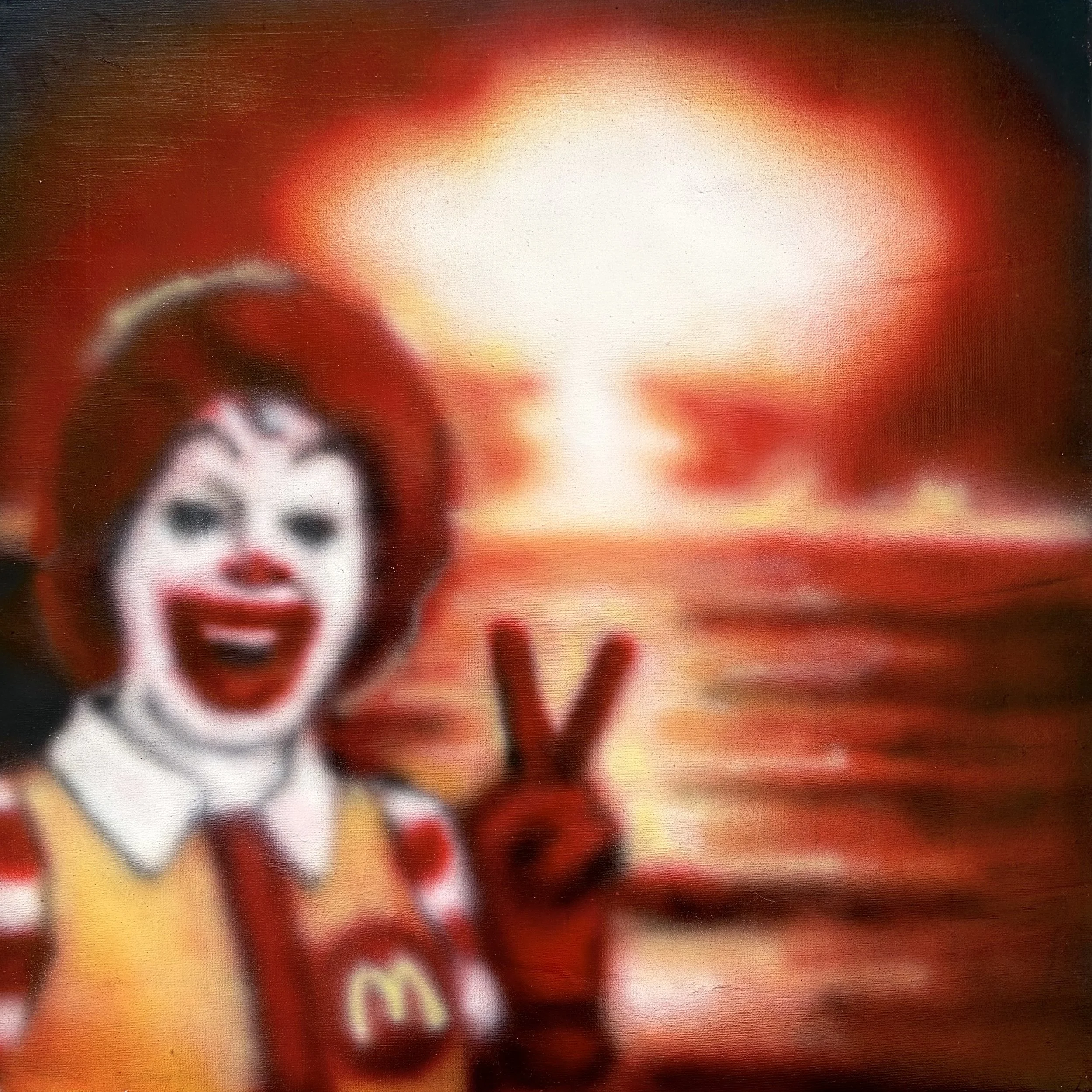
Timothy Gatenby, The Last Happy Meal, 2026. Photo courtesy of the artist.
KF: Fast food appears throughout your work, what keeps drawing you back to it as an image?
TG: It's rooted in consumerism. A lot of it has to do with how easily we can consume culture, information, or food. Everything's just on tap the whole time.
McDonald's has become an emblem of modern-day colonialism. You can go almost anywhere in the world and it’ll be exactly the same thing. It's trying to homogenize society in a way. It's become such a staple of modern life that it felt like the perfect vehicle for talking about indulgence and overconsumption.
KF: When you appropriate one of these familiar characters, do you feel like you're borrowing from the original creator, or from the collective memory that has formed around them?
TG: It's more to do with the collective memory. That's really how I got into using these characters in the first place, the idea that everyone can immediately relate to them. Once you have that shared understanding, you can project different ideas onto the character.
There's something interesting about taking an image that everyone recognises and slightly distorting it to communicate a message, an emotion, or an idea.
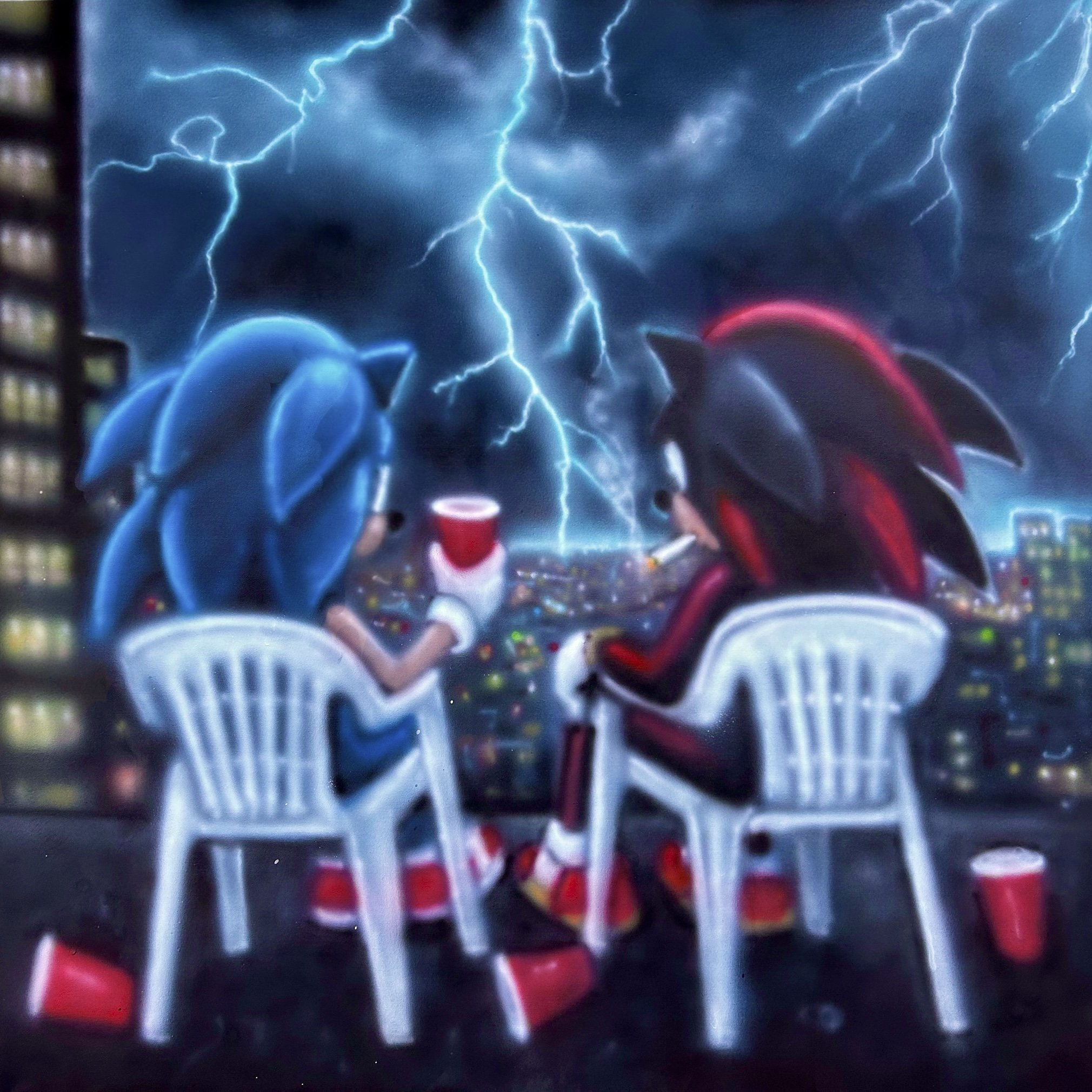
Timothy Gatenby, Rooftop Storm, 2026. Photo courtesy of the artist.
KF: There is a twisted sense of nostalgia in your work. Are you interested in nostalgia itself, or are you questioning it?
TG: I like the idea that memory isn't necessarily a memory. You can think back to something and realise it's been distorted by other people's opinions, or simply by the passage of time. Memory isn't really a fixed or reliable source of information.
You see it in people saying, ‘Oh, I wish we could go back to this time’, when that version of the past never really existed. It's an idea they've constructed in their minds.
I'm interested in how easily nostalgia can be manipulated and how far you can push an image or memory until people no longer relate to it. I'm not nostalgic for nostalgia's sake, otherwise I'd just paint the original image.
KF: Do you think people are nostalgic for the past, or for their memory of the past?
TG: I think it depends on whose past we're talking about. Everyone romanticises the '90s today; people dress like they're in the '90s, their favourite films are from the '90s. There's always this longing or yearning for it.
For my generation, that nostalgia comes from actually growing up during that time. But for younger generations who weren't around for it, nostalgia almost becomes a kind of performance. They're connecting with an idea of the '90s rather than the reality of it.
That's what I find interesting about nostalgia, it doesn't really exist in the way we think it does. It's an imaginary version of the past that people project onto their lives.
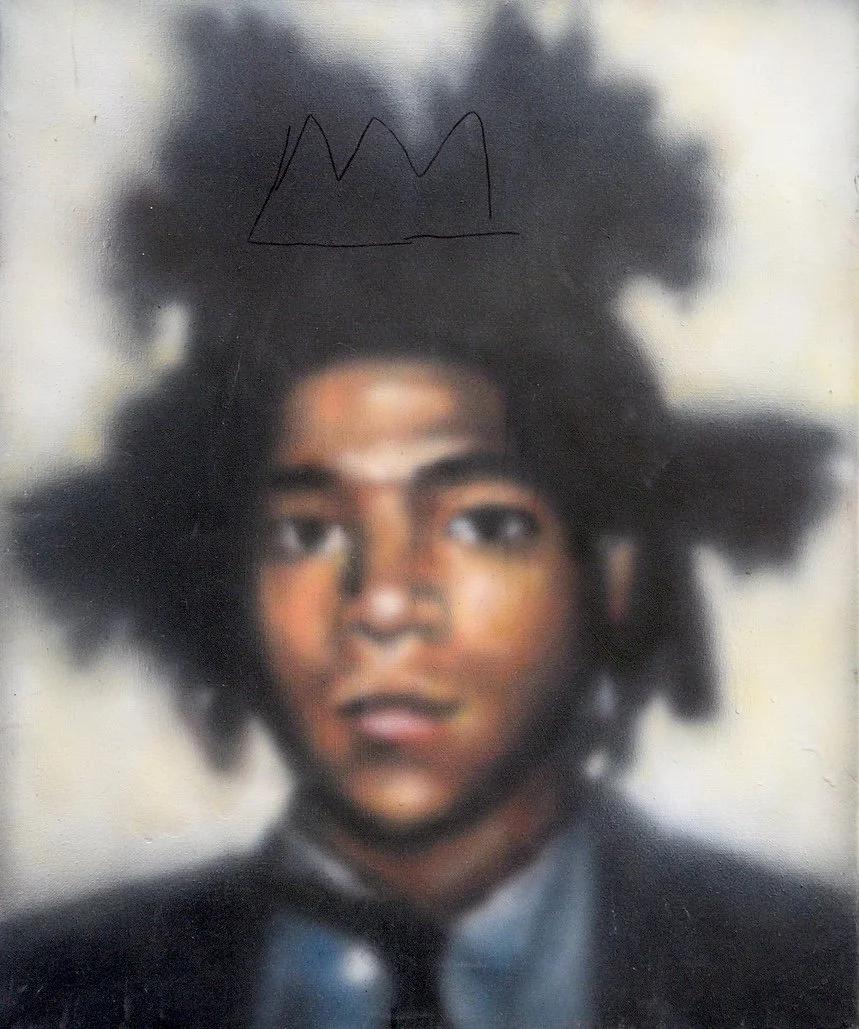
Timothy Gatenby, Basquiat, 2026. Photo courtesy of the artist.
KF: What does painting allow you to do that the internet cannot?
TG: One of the things I like about abstract art is that it slows down the way you consume an image. You have to spend more time with it and work out what's actually going on.
My work definitely slows down imagery, but it also heightens what could otherwise be seen as a stupid image and gives it more value than it's actually worth. I'm interested in projecting significance onto something that probably shouldn't be given so much thought.
KF: When somebody laughs at one of your paintings, do you feel like they've understood it?
TG: Yeah, definitely. They're meant to be funny. People should laugh. If they don't laugh, I don't think they've understood them.
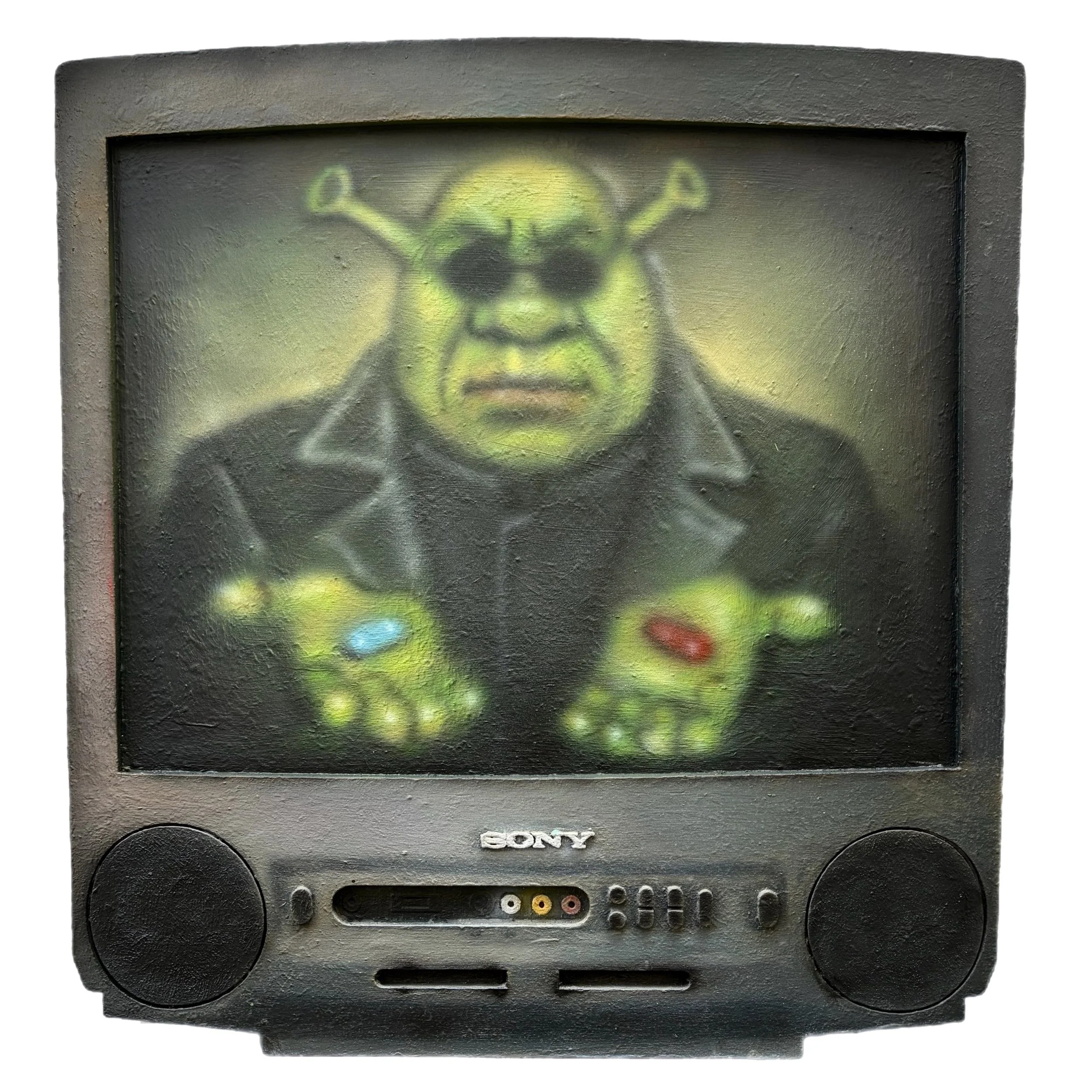
Timothy Gatenby, The Shrektrix, 2026. Photo courtesy of the artist.
It became clear, looking at the paintings surrounding us, that humour was never separated from the ideas they carried, it was an invitation into Gatenby’s satirical view on the indulgence of modern day consumerism.
GREED is showing at Souvenir 438 Space until 31 July 2026. You can find more on Tim Gatenby on his website and his Instagram.
Special thanks to Tim Gatenby, Trix, and Niya Ruseva on behalf of MADE IN BED.
Karim Farhat
Interviews Co-Editor, MADE IN BED